Great Lakes Indigenous Ribbon Work & Regalia Trends 2026
The Cultural Roots of Great Lakes Textile Arts
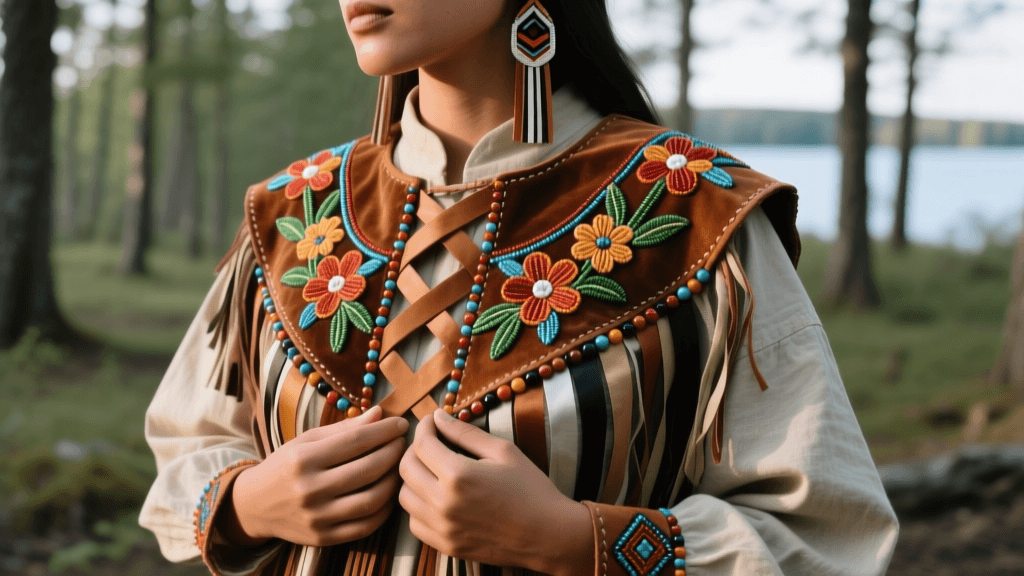
The Great Lakes region, encompassing the ancestral lands of the Anishinaabe (Ojibwe, Odawa, Potawatomi), Menominee, and Ho-Chunk nations, is globally renowned for its breathtaking floral beadwork and intricate ribbon work appliqué. As we navigate the cultural landscape of 2026, Indigenous North American dress traditions are experiencing a profound renaissance. Contemporary Native artists and regalia makers are not only preserving the meticulous techniques passed down through generations but are also actively innovating, integrating sustainable materials, and reclaiming supply chains to reflect traditional ecological knowledge (TEK). According to the Smithsonian National Museum of the American Indian, the Woodlands floral style remains one of the most recognizable and highly sought-after Indigenous textile traditions in the world, serving as a vital visual language of clan identity, medicinal plant knowledge, and spiritual connection to the land.
Historically, the introduction of glass seed beads and silk ribbons through the 18th and 19th-century fur trade fundamentally shifted Woodlands textile arts. Prior to this, Indigenous artisans utilized porcupine quills, moose hair, and natural dyes to create stunning geometric and early floral designs on brain-tanned hides. Today, in 2026, the synthesis of these historical mediums with modern, ethically sourced textiles defines the cutting edge of Great Lakes regalia. The garments created—from jingle dresses and fancy shawls to beaded moccasins and bandolier bags—are worn with immense pride at powwows, ceremonial gatherings, and community celebrations across the continent.
Floral Beadwork: Techniques and 2026 Material Shifts
The hallmark of Great Lakes beadwork is the raised, multi-dimensional floral motif. Unlike the geometric lane stitch (or lazy stitch) commonly associated with Plains tribes, Woodlands beadwork heavily relies on the two-needle appliqué technique, often referred to as the spot stitch or couching stitch. In this method, one needle threads the beads onto a string, while the second needle tacks the bead string down to the fabric or hide at regular intervals. This allows for the creation of sweeping, organic curves that perfectly mimic the natural world, including wild roses, strawberries, maple leaves, and sweetgrass.
In 2026, a major shift in material sourcing has taken hold among master beaders. While Czech glass seed beads (specifically sizes 11/0 and 13/0 Charlotte cuts) remain a staple for their uniform shape and brilliant light refraction, there is a growing movement to decolonize the beading supply chain. Many artisans are returning to locally harvested porcupine quills, dyeing them with botanically derived pigments such as goldenrod, bloodroot, and wild grape. Furthermore, Japanese Miyuki Delica beads are increasingly being used for their precise, cylindrical shape, which provides a smoother, more structured base for intricate petal work. The integration of recycled glass beads, produced by Native-owned cooperatives, has also surged in popularity this year, offering a sustainable alternative to imported mass-market beads while maintaining the vibrant color palettes essential to traditional Anishinaabe designs.
Ribbon Work Appliqué: The Geometry of Fold and Sew
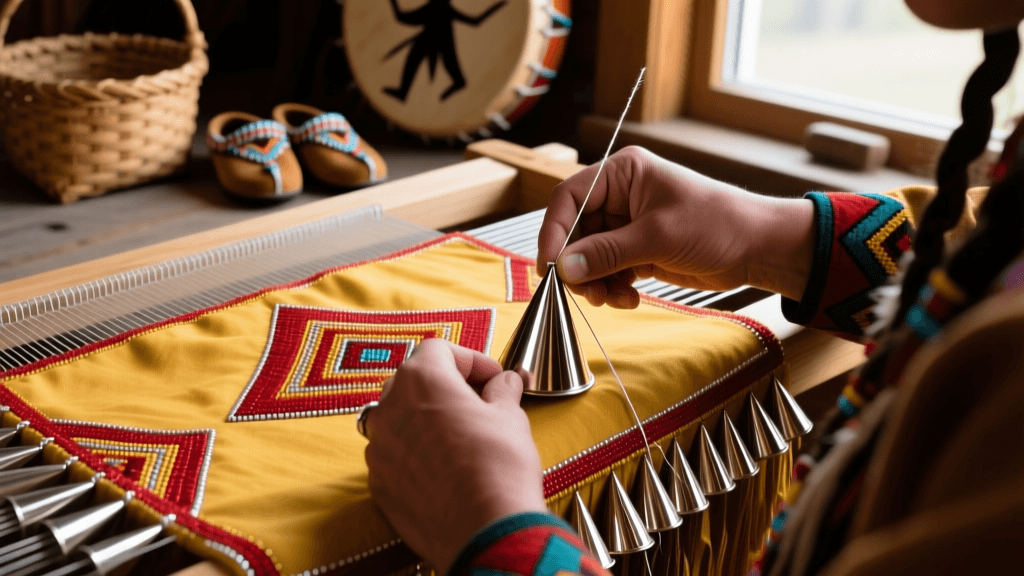
Ribbon work, or silk appliqué, is a masterclass in textile geometry and color theory. Originating as a way to utilize the silk ribbons traded by French and British merchants, Great Lakes women developed a complex method of reverse appliqué. By cutting, folding, and layering ribbons of contrasting colors, artisans create striking, kaleidoscopic patterns that adorn skirts, leggings, moccasins, and blanket coats. The process requires exact mathematical precision; ribbons are typically folded at 45-degree angles and stitched down with nearly invisible blind stitches, creating sharp, dynamic zig-zags and diamond motifs that frame the central floral beadwork.
The contemporary 2026 regalia market has seen a decisive move away from synthetic polyester ribbons, which are prone to fraying and lack the structural integrity required for heirloom-quality garments. Today, regalia makers are prioritizing 100% silk taffeta and silk organza. These natural fibers hold a crisp fold when pressed with a steam iron and possess a luxurious, subtle sheen that elevates the overall aesthetic of the garment. Because global silk prices have fluctuated over the past few years, many Native fashion collectives have begun bulk-purchasing silk directly from ethical mills, dyeing the raw white ribbons in community workshops using traditional plant-based dyes to achieve the deep reds, ochres, and indigos characteristic of historical Woodlands palettes.
Regional Variations Across the Woodlands
While the overarching Woodlands style is cohesive, distinct regional and tribal variations exist. Understanding these nuances is critical for anyone studying or collecting Indigenous textiles. The table below outlines the primary distinctions among four major Great Lakes and Woodlands nations as observed in contemporary 2026 regalia making.
| Nation / Tribe | Primary Motifs & Style | Signature Garments & Accessories | Distinctive Material Preferences (2026) |
|---|---|---|---|
| Ojibwe (Anishinaabe) | Highly stylized, symmetrical florals; heavy use of the wild rose and strawberry. | Jingle dresses, floral beaded moccasins, bandolier bags. | Size 13/0 Charlotte cut beads; naturally dyed silk taffeta ribbons. |
| Potawatomi | Bold, sweeping vines; slightly more abstract floral geometry with high color contrast. | Ribbon shirts, appliqué skirts, cradleboard covers. | Wide 1.5-inch silk ribbons; incorporation of brass tinkling cones. |
| Menominee | Intricate, dense floral clusters; extensive use of the sweetgrass and maple leaf motifs. | Leggings, pouches, ceremonial sashes. | Brain-tanned deer hide bases; porcupine quill and bead combinations. |
| Ho-Chunk | Elaborate spot-stitch beadwork covering large surface areas; distinct panel designs. | Bandolier bags (often fully beaded), moccasins, dance regalia. | Heavy use of size 11/0 seed beads; velvet backgrounds for high contrast. |
Sourcing Authentic Materials in 2026: A Practical Guide
For emerging regalia makers and textile artists looking to source authentic, high-quality materials, the landscape in 2026 offers both challenges and exciting new opportunities. Supporting Native-owned businesses and ethical cooperatives is paramount. Here is a practical guide to sourcing materials for your next Great Lakes regalia project:
- Silk Ribbons: Expect to pay between $14 and $22 per yard for high-quality, 100% silk taffeta in 2026. Seek out Native-owned textile dyers who offer custom, plant-dyed silk ribbons in traditional widths (3/8-inch for fine detail work, and 1-inch for broad appliqué borders). Organizations like the Native Arts and Cultures Foundation frequently highlight Indigenous fiber artists who sell directly to the community.
- Seed Beads: While standard hanks of Czech glass beads remain affordable (around $4 to $6 per hank), rare vintage colors and specialized Charlotte cuts can command premium prices. Purchase from established, reputable Native-owned bead shops that guarantee the authenticity and uniform sizing of their stock, avoiding cheap plastic or poorly molded glass imitations found on mass-market e-commerce sites.
- Backing Fabrics: For bandolier bags and heavy beaded accessories, wool broadcloth and cotton velvet are the standard. In 2026, heavy-weight, 100% cotton velvet (priced around $25 to $35 per yard) is preferred over synthetic blends, as it provides a sturdy, non-stretch foundation that can support the significant weight of dense spot-stitch beadwork without warping.
- Hide and Leather: For moccasins and traditional pouches, brain-tanned or naturally smoked deer and elk hides are essential. These are typically priced by the square foot, ranging from $12 to $18 per square foot depending on the thickness and the smoking process. Sourcing directly from Indigenous trappers and tanners ensures ethical harvesting and supports local tribal economies.
Preserving the Thread: Community and Continuity
The creation of Great Lakes Indigenous dress is rarely a solitary endeavor; it is a communal act of love, history, and resistance. In 2026, community beadwork circles and ribbon work workshops, often hosted by tribal cultural centers and institutions like the Minnesota Historical Society in collaboration with local Elders, continue to be the primary vehicles for transmitting this knowledge to the next generation. These spaces allow youth to learn not just the physical techniques of the spot stitch or the ribbon fold, but the accompanying songs, stories, and botanical knowledge that give the patterns their profound meaning.
As Indigenous North American dress traditions continue to evolve, the commitment to authenticity, sustainability, and cultural sovereignty remains unwavering. Whether it is a young dancer stepping into the powwow arena in a newly completed jingle dress adorned with ethically sourced silk and glass, or an Elder meticulously finishing a fully beaded bandolier bag, the textiles of the Great Lakes stand as a vibrant, living testament to the enduring brilliance of Indigenous artistry. By prioritizing Native-owned supply chains and honoring the deep ecological roots of their materials, today's regalia makers are ensuring that these magnificent traditions will continue to flourish for generations to come.