2026 Runway Kimono Trends: Global Fashion Week Silhouettes

The Kimono Silhouette Takes Center Stage in 2026
As the global fashion calendar moves through the 2026 Spring/Summer and Fall/Winter seasons, one traditional garment has unequivocally dictated the structural direction of avant-garde and ready-to-wear collections alike: the Japanese kimono. Moving far beyond the superficial motif-printing of the early 2020s, today’s leading design houses are deeply engaging with the architectural brilliance of traditional Japanese dress. According to the extensive archival research presented by the Victoria and Albert Museum's exploration of kimono evolution, the garment's T-shaped, straight-line construction is not merely an aesthetic choice, but a masterclass in textile preservation and zero-waste design. In 2026, with stringent European Union sustainability mandates fully in effect, the kimono’s foundational geometry has become the ultimate blueprint for luxury fashion houses seeking to eliminate fabric waste without sacrificing dramatic volume.
Paris and Milan: Deconstructing the T-Shape
During Paris Fashion Week for the Spring/Summer 2026 season, the runway was dominated by a radical reimagining of the obi (the traditional sash). Maison Margiela presented a collection that deconstructed the rigid, brocade obi into fluid, structural corsetry. By utilizing vintage, upcycled silk obis sourced from Kyoto’s historic Nishijin district, the house created wide, architectural belts that cinched fluid silk slip dresses, creating a striking contrast between rigid historical craftsmanship and modern, bias-cut fluidity. The obi, traditionally measuring around 30 centimeters in width and tied in complex knots at the back, was re-engineered for the 2026 runway to sit high on the natural waist, fastened with magnetic closures hidden beneath decorative, hand-tied bows.
Meanwhile, Milan Fashion Week’s Fall/Winter 2026 showcases saw a resurgence of Nishijin-ori, the luxurious, multi-layered brocade weaving technique native to Kyoto. Rather than using traditional gold and silver leaf, which carries a heavy environmental footprint, Milanese designers collaborated with Japanese master weavers to integrate recycled copper and upcycled metallic threads into the silk warp. The result was a series of heavy, structured outerwear pieces that mimicked the protective, enveloping nature of the winter kimono (awase), but tailored with sharp, dropped shoulders and sweeping, floor-length hems that echoed the trailing elegance of the uchikake (wedding kimono).
2026 Runway Adaptations vs. Traditional Elements
| Garment Element | Traditional Form & Function | 2026 Runway Adaptation | Everyday Styling Application |
|---|---|---|---|
| Obi (Sash) | Wide silk brocade, tightly bound, supports posture and secures the garment. | Deconstructed corsetry, magnetic closures, upcycled vintage textiles. | Wear a 15cm wide vintage obi over a tailored oversized blazer to define the waist. |
| Furisode (Sleeves) | Long, swinging sleeves (up to 114cm) denoting unmarried youth and formal status. | Detachable sleeve extensions on trench coats and evening gowns. | Look for outerwear with dramatic, wide-cut bell sleeves that mimic the swinging motion. |
| Haori (Jacket) | Hip-length silk jacket worn open over the kimono, fastened with a braided cord (haori himo). | Cropped, boxy outerwear with deep lapels and hidden internal pockets. | Layer a silk haori over a simple cashmere turtleneck and wide-leg trousers for evening. |
| Nishijin-ori (Textile) | Heavy, intricate brocade woven with precious metals for formal obi and Noh theater costumes. | Lightweight jacquards woven with recycled metallic threads for structured suiting. | Incorporate metallic-threaded brocade accessories, like structured clutches or wide belts. |
Tokyo Fashion Week: Honoring the Roots Through Technology
While European houses focused on structural deconstruction, Tokyo Fashion Week in 2026 became the epicenter of textile innovation. Emerging Japanese designers, deeply supported by the Japan Agency for Cultural Affairs through grants aimed at preserving traditional crafts, debuted collections that merged centuries-old Yuzen dyeing techniques with 2026’s 3D-knitting technology. By utilizing digital mapping, designers were able to replicate the intricate, hand-painted floral and seasonal motifs of Kyo-Yuzen directly onto seamless, 3D-knitted garments. This eliminated the water waste associated with traditional rice-paste resist dyeing while perfectly preserving the sweeping, dynamic lines of the kimono silhouette. The Kyoto Costume Institute has already acquired several of these hybrid pieces for their permanent archive, noting that this synthesis of heritage and hyper-modernity represents the most significant leap in Japanese fashion since the avant-garde movement of the 1980s.
How to Wear Runway Kimono Trends in 2026
The Modern Obi Belt
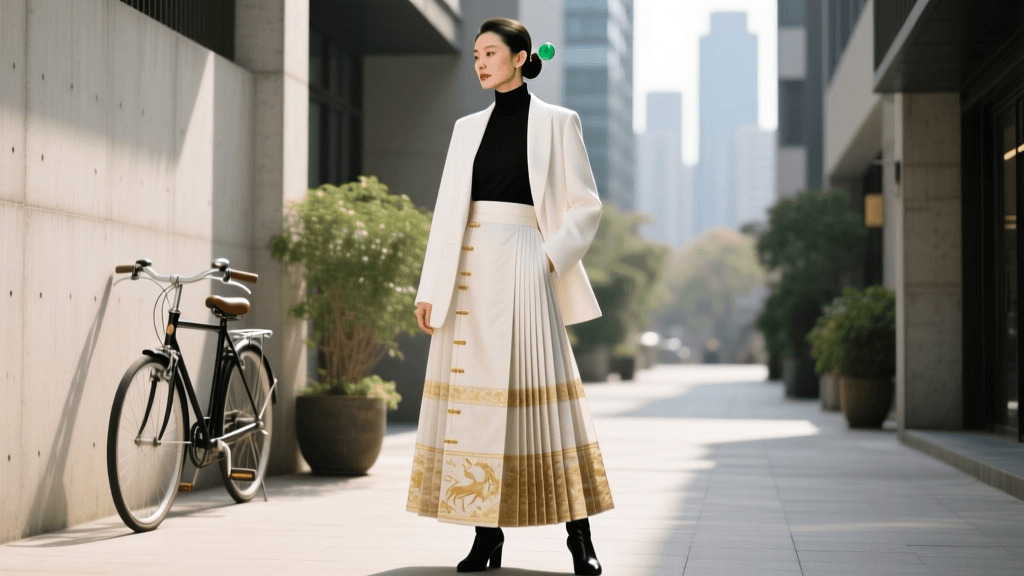
You do not need a runway budget to incorporate the obi trend into your 2026 wardrobe. The key is proportion and contrast. Search for vintage or reproduction obi belts that measure between 15 and 20 centimeters in width. Unlike the rigid, heavily padded formal maru obi, look for softer fukuro obi styles that offer flexibility. Wrap the belt high on your natural waist over a flowing, midi-length slip dress or an oversized, structured blazer. Instead of attempting the complex traditional taiko musubi (drum knot), utilize a simple, elegant half-bow secured with a discreet silk ribbon, allowing the intricate brocade patterns to remain the focal point of your outfit.
Haori Jackets as Evening Wear
The haori has transcended its role as casual loungewear to become a staple of 2026 evening layering. When sourcing a haori, pay close attention to the shoulder drop. Traditional haori feature a straight, unshaped shoulder seam that creates a beautiful, architectural drape. Pair a vintage, silk-lined haori featuring subtle, tone-on-tone damask weaving (rinzu) with a modern, minimalist base—such as a sheer black turtleneck and high-waisted, wide-leg crepe trousers. Secure the jacket using a minimalist leather cord or a simple metallic clasp in place of the traditional braided haori himo, bridging the gap between Edo-period elegance and contemporary minimalism.
Furisode Sleeves on Modern Outerwear
The dramatic, floor-grazing sleeves of the furisode have heavily influenced 2026 outerwear design. When shopping for coats this season, seek out silhouettes that feature a deep, rectangular armhole and a wide, un-tapered sleeve opening. This cut allows the fabric to pool and swing with movement, mimicking the emotional expressiveness of the traditional kimono sleeve. Opt for lightweight wool or heavy silk blends that provide structure without excessive weight, ensuring the sleeve maintains its striking, geometric profile throughout the day.
Sourcing Authentic Pieces and Runway Replicas
For those seeking authentic vintage textiles to incorporate into their modern wardrobes, the landscape of kimono sourcing has evolved significantly in 2026. Major online platforms now utilize AI-driven authentication and high-resolution macro photography to verify the weave density and dye quality of vintage Nishijin-ori and Yuzen pieces before purchase. When buying vintage, always request the 'shoulder-to-hem' and 'sleeve-to-sleeve' measurements. A standard vintage kimono will typically have a sleeve-to-sleeve width of around 125 to 130 centimeters. Understanding these precise measurements is crucial if you intend to have the garment professionally tailored into a modern coat or if you are purchasing it to be worn in its traditional form. Furthermore, supporting established recycling houses in Tokyo, such as the renowned Tansu-ya chain, ensures that you are participating in the circular fashion economy, giving these masterfully crafted textiles a vibrant second life on the global stage.
Conclusion
The presence of the kimono on the 2026 global runways is a testament to its enduring architectural brilliance. By moving past superficial cultural borrowing and embracing the zero-waste geometry, structural obi, and luxurious brocades of traditional Japanese dress, the fashion industry has found a sustainable and profoundly elegant path forward. Whether you are adopting a deconstructed obi belt for a night out or draping a vintage haori over modern tailoring, you are participating in a rich, evolving dialogue between centuries of Asian heritage and the cutting edge of global style.