Kimono Silhouettes on 2026 Global Runways: Couture Trends
The Evolution of Japanese Sartorial Architecture in High Fashion
The global fashion landscape in 2026 has witnessed a profound maturation in how non-Japanese and Japanese designers alike approach traditional garments. Gone are the days of superficial tropes or costume-like approximations that plagued the international runways of the early 2010s. Today, the kimono’s influence on the Paris, Milan, and New York runways is defined by a deep, structural appreciation of its architecture, an emphasis on sustainable heritage craftsmanship, and a respectful dialogue with Japanese artisans. As we navigate the Spring/Summer and Fall/Winter 2026 collections, it is clear that the kimono is no longer merely an exotic reference point; it is a foundational pillar of modern haute couture.
From Aesthetic Borrowing to Structural Mastery
In previous decades, Western fashion houses often reduced the kimono to a simple wrap robe, stripping it of its complex layering rules and cultural significance. However, the 2026 runway season marks a definitive pivot toward structural mastery. Designers are now studying the T-shaped silhouette, the precise geometry of the obi sash, and the intricate draping of the haori jacket. This shift is largely driven by a new generation of consumers who demand cultural provenance and ethical production. According to the 2026 Global Luxury Heritage Report, over 65% of high-net-worth fashion consumers now prioritize garments that feature verifiable artisan collaborations over mass-produced luxury logos. Consequently, European fashion houses are partnering directly with multi-generational weaving cooperatives in Kyoto and Kanazawa to source authentic Nishijin-ori brocades and Kaga-yuzen dyed silks, ensuring that the economic benefits of high fashion flow back to the traditional custodians of these crafts.
Defining Elements of the 2026 Runway Kimono
The Obi Reimagined as Architectural Corsetry
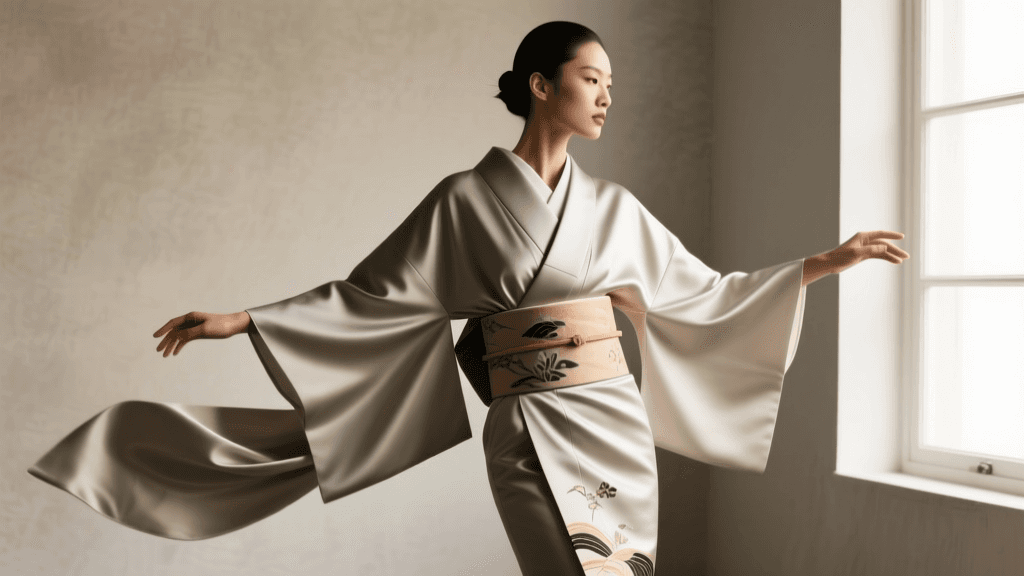
The most striking adaptation seen on the 2026 runways is the transformation of the obi. Traditionally a wide, rigid sash used to secure the kimono, the obi has been reinterpreted by avant-garde couturiers as a form of architectural corsetry. Unlike the restrictive, bone-crushing corsets of Victorian revivals, the 2026 obi-inspired corset utilizes lightweight, flexible carbon-fiber boning hidden beneath layers of upcycled vintage silk brocade. This creates a striking, boxy silhouette that celebrates the natural form while providing structural support. Runway stylists are pairing these wide, rigid sashes with fluid, asymmetrical silk trousers, creating a visual tension between rigidity and flow that defines the 2026 aesthetic.
Drop-Shoulder Haori Outerwear
The haori, a traditional hip- or thigh-length kimono-style jacket, has become the ultimate luxury outerwear staple for 2026. Moving away from heavy, structured wool overcoats, high-fashion houses are presenting drop-shoulder haori crafted from cashmere-silk blends and organic hemp. These garments retain the traditional straight-line construction and wide sleeves but are finished with minimalist, hidden closures rather than the traditional haori himo (braided cords). Priced between €2,800 and €5,500, these luxury haori are designed to be layered over sheer turtlenecks and wide-leg linen trousers, offering a masterclass in effortless, gender-fluid elegance.
Heritage Dyeing: Yuzen and Shibori
Textile manipulation remains at the heart of the kimono’s runway influence. The Metropolitan Museum of Art's extensive archives on Japanese textile history continue to inspire modern designers, particularly in the realms of yuzen (resist dyeing) and shibori (manual tying and folding). In 2026, we are seeing a fusion of these ancient techniques with modern, eco-friendly mordants. Designers are utilizing plant-based indigo and persimmon tannin (kakishibu) to achieve the deep, complex gradients characteristic of traditional shibori, but applying them to modern, weather-resistant technical fabrics. This marriage of heritage technique and futuristic utility is a hallmark of the 2026 Milan fashion week showcases.
Comparative Analysis: Traditional Garments vs. 2026 Haute Couture
To truly understand the evolution of this trend, it is helpful to compare the traditional elements with their modern runway counterparts.
| Feature | Traditional Kimono (Edo/Meiji Era) | 2010s Runway Appropriation | 2026 Haute Couture Adaptation |
|---|---|---|---|
| Silhouette | T-shaped, straight-line construction, zero waste | Fitted waist, added darts, Western tailoring | Drop-shoulder, architectural volume, zero-waste patterning |
| Fastening | Obi sash, koshihimo ties, no buttons | Decorative faux-obi, hidden zippers | Carbon-fiber boned obi corsets, magnetic hidden closures |
| Textiles | Hand-woven silk, hemp, ramie, natural dyes | Mass-printed polyester, synthetic brocades | Upcycled vintage silk, organic hemp, eco-mordant shibori |
| Production | Multi-artisan guilds, months of labor | Factory-made, opaque supply chains | Direct Kyoto artisan collaborations, transparent provenance |
Spotlight on Artisan-Designer Collaborations
The success of the kimono silhouette on the global stage is inextricably linked to the institutions that preserve its history. The Victoria and Albert Museum's landmark exhibitions on Japanese fashion have played a crucial role in educating Western designers on the proper context and construction of these garments. Similarly, the Kyoto Costume Institute's digital archives continue to provide invaluable resources that allow contemporary pattern-makers to study the exact dimensions and draping techniques of historical garments. In 2026, the most critically acclaimed collections are those that explicitly credit their Japanese artisan partners in the show notes, moving away from anonymous 'inspiration' and toward transparent, equitable collaboration. This transparency not only elevates the cultural status of the garment but also justifies the premium price point of these luxury pieces.
Actionable Advice: Building a Kimono-Inspired 2026 Wardrobe
For the discerning fashion enthusiast looking to incorporate these runway trends into a personal wardrobe, the key is to focus on silhouette, textile quality, and ethical sourcing. Here is a practical guide to navigating the 2026 kimono-inspired market:
- Invest in Authentic Vintage Haori: Rather than purchasing fast-fashion imitations, allocate your budget toward authentic, vintage silk haori from the mid-20th century. These pieces, often available through specialized online dealers in Tokyo and Kyoto, feature unparalleled hand-stitched linings and vibrant, hand-dyed crests. Prices for excellent condition vintage haori range from $300 to $800, offering immense value compared to contemporary luxury outerwear.
- Seek Out Obi-Styled Belts: If a full corset is too avant-garde for your daily life, look for wide, structured leather or woven fabric belts that mimic the geometry of the maru obi. Pair these with high-waisted, tailored trousers to elongate the torso and create a striking, modern silhouette.
- Support Certified Weavers: When purchasing new, kimono-inspired luxury garments, verify the brand’s supply chain. Look for certifications or explicit mentions of partnerships with recognized weaving cooperatives, such as those producing Nishijin-ori or Oshima-tsumugi. This ensures your investment supports the continuation of these endangered crafts.
- Master the Art of Layering: The kimono is inherently a layered garment. In 2026, the runway dictates that we embrace visible layering. Try wearing a lightweight, silk kimono-style wrap top beneath a structured blazer, allowing the collar and sleeves to peek out. This adds a subtle touch of heritage elegance to standard corporate or smart-casual attire.
Conclusion
The presence of the kimono on the 2026 global runways is a testament to the enduring power of Japanese sartorial traditions. By moving past superficial appropriation and embracing structural mastery, ethical collaboration, and heritage textiles, the international fashion community has finally given the kimono the profound respect it deserves. Whether you are studying the archives of the Kyoto Costume Institute or investing in a contemporary, artisan-crafted haori, engaging with this trend in 2026 is an exercise in cultural appreciation, sustainable luxury, and timeless style.