Global Fashion Media Hanfu Editorials: 2026 Runway Trends
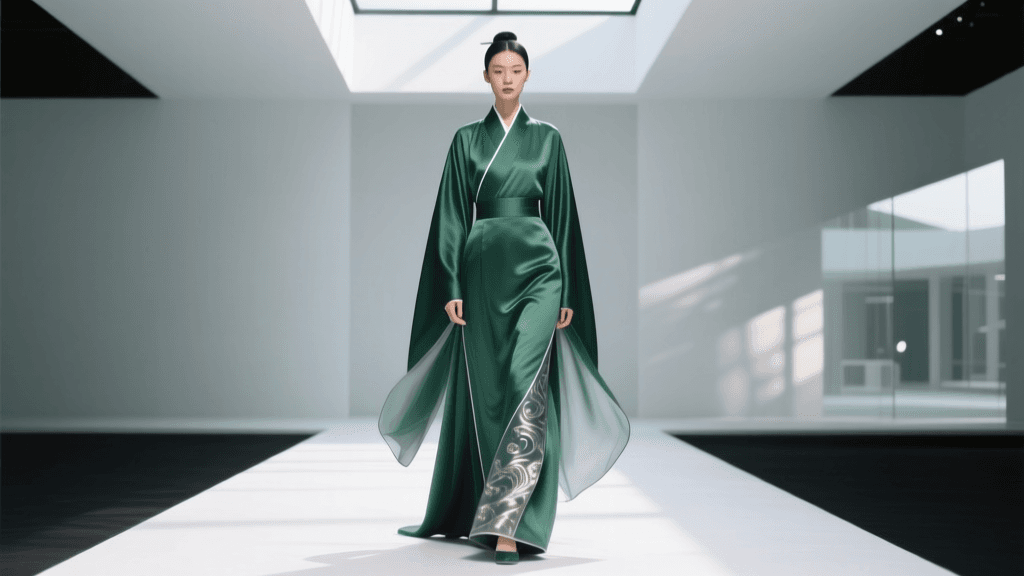
The 2026 Editorial Shift: From Niche to Haute Couture
The intersection of Eastern heritage and Western fashion media has reached a sophisticated zenith in 2026. Over the past few years, global fashion publications have transitioned away from superficial, costume-like representations of Asian dress, moving toward a deeply respectful and technically accurate integration of traditional garments. Today, top-tier media outlets such as Vogue, Harper's Bazaar, and Elle are treating traditional Chinese Hanfu not merely as historical artifacts, but as dynamic, living components of haute couture and contemporary editorial styling. This shift reflects a broader industry mandate for authentic cultural representation and a growing consumer appetite for garments with profound historical narratives.
In 2026, fashion editors and runway stylists are no longer relying on generalized 'oriental' motifs. Instead, they are collaborating directly with Hanfu historians, traditional textile artisans, and specialized ateliers to source authentic pieces. The result is a wave of breathtaking editorial spreads and runway shows that highlight the intricate construction, luxurious fabrics, and structural brilliance of traditional Chinese dress. This article explores the specific garments dominating the 2026 global fashion media landscape, how stylists are adapting them for modern editorials, and the practical considerations for sourcing and caring for these exquisite textiles on set.
Key Hanfu Garments Dominating 2026 Global Media
The 2026 editorial landscape is defined by a focus on specific, historically grounded silhouettes. Stylists are moving away from generic wrap dresses and instead highlighting garments with distinct structural properties that translate beautifully to high-definition photography and kinetic runway movement.
1. The Mamian Qun (Horse-Face Skirt)
Undoubtedly the most featured garment in 2026 global fashion editorials is the Mamian Qun, or horse-face skirt. Originating in the Song and Ming dynasties, this skirt is characterized by its flat front and back panels flanked by heavily pleated sides. According to the Victoria and Albert Museum's Asian collections, the structural genius of the Mamian Qun lies in its ability to provide modesty and ease of movement, historically designed for horseback riding. In 2026 editorials, stylists are utilizing the flat panels as a canvas for bold, modern graphic overlays or allowing the knife pleats to create dramatic, sweeping arcs in high-speed wind photography. The typical authentic Mamian Qun features 12 to 16 knife pleats on each side, creating a mesmerizing optical illusion when the wearer spins.
2. The Ming Dynasty Dahu and Aoqun
The Dahu, a sleeveless or short-sleeved structured jacket from the Ming Dynasty, has become a staple in 2026 autumn and winter editorial layering. Featuring a round or standing collar and side slits, the Dahu provides a rigid, architectural silhouette that contrasts beautifully with fluid underlayers. Fashion media stylists are frequently pairing heavily embroidered Dahu jackets with bias-cut Western slip dresses or wide-leg tailored trousers, creating a striking juxtaposition of Eastern structure and Western drape.
3. Song Dynasty Beizi
For spring and summer editorials, the Song Dynasty Beizi—a long, lightweight, open-front jacket with side slits—is the garment of choice. Its straight, un-tailored cut and delicate silk gauze fabrics offer an ethereal, minimalist aesthetic that aligns perfectly with the 2026 'quiet luxury' and 'ethereal minimalism' trends championed by global fashion critics.
Editorial Styling: Traditional vs. 2026 Runway Adaptations
To understand how global fashion media is recontextualizing these garments, it is essential to compare their traditional usage with their 2026 editorial adaptations. The following table outlines the stylistic evolution of key Hanfu elements in contemporary media.
| Garment Element | Traditional Historical Styling | 2026 Global Editorial Styling |
|---|---|---|
| Mamian Qun (Skirt) | Worn high on the waist, paired with a tucked-in Ao (jacket), secured with fabric ties. | Worn lower on the hips over bodysuits, or paired with oversized, structured Western blazers and combat boots. |
| Dahu (Jacket) | Layered over long-sleeved robes for formal court or scholarly settings. | Worn as a statement outerwear piece over minimalist turtlenecks or sheer evening gowns for red-carpet events. |
| Beizi (Open Jacket) | Worn open over a camisole and skirt for casual, elegant daily wear by women. | Belted at the waist to create a dress silhouette, or layered over tailored denim for high-low street style editorials. |
| Cloud Shoulders (Yunjian) | Detachable embroidered collars worn for ceremonial warmth and status. | Used as dramatic, standalone sculptural accessories over sleek, backless modern evening wear. |
Sourcing Authentic Pieces for 2026 Editorial Shoots
For global stylists and fashion editors, sourcing authentic, high-quality Hanfu in 2026 requires navigating a specialized market that bridges traditional craftsmanship with modern luxury logistics. The era of relying on cheap, mass-produced costume replicas for high-fashion shoots is over; audiences and cultural critics are quick to identify inaccurate constructions and synthetic fabrics.
Top-tier fashion houses and editorial teams are now commissioning pieces directly from heritage brands and bespoke ateliers. Brands like Minghuatang and Zhongling have become the equivalent of European heritage houses in the Hanfu space. A bespoke, hand-woven Song brocade Mamian Qun from a premier atelier can cost upwards of $1,500 to $3,000 USD in 2026, with lead times often exceeding four to six months due to the meticulous hand-loomed nature of the textiles. For mid-tier editorial budgets, high-quality commercial brands like Shisanyu offer historically accurate constructions in the $150 to $400 range, though stylists must carefully verify the fiber content to ensure genuine silk or high-grade blends rather than polyester.
When sourcing for international shoots, stylists must account for traditional Chinese flat-cutting techniques. Unlike Western garments that rely on darts and seams to contour the body, Hanfu is cut from straight pieces of fabric, relying on draping, wrapping, and tying to fit the wearer. This means that standard Western sizing charts are largely irrelevant; stylists must request specific garment measurements, particularly the shoulder span, sleeve length (which often extends past the wrist in traditional styles), and the exact waist-to-floor drop for skirts.
Navigating Cultural Appreciation in Fashion Media
As Hanfu becomes more prominent in global fashion media, the conversation surrounding cultural appreciation versus appropriation has matured significantly. In 2026, leading fashion publications have established strict editorial guidelines to ensure that traditional garments are presented with context and respect. The Business of Fashion's luxury sector reports frequently highlight how heritage brands and global media are collaborating to ensure that the economic benefits of these trends flow back to the artisan communities that preserve these textile techniques.
Authentic appreciation in 2026 editorials involves crediting the specific dynasty, region, and textile technique used in the garment. For example, rather than captioning an image simply as 'Asian-inspired dress,' top-tier media now specifies 'Ming Dynasty-style Aoqun featuring Xiangyunsha gambiered silk.' This level of detail not only educates the global audience but also honors the intangible cultural heritage embedded in the garment's creation.
On-Set Care and Styling for Traditional Silks
Working with authentic Hanfu on a fast-paced editorial or runway set requires specialized knowledge of traditional textile care. The luxurious fabrics used in high-end Hanfu are often delicate and react poorly to standard Western wardrobe department practices.
- Steaming Xiangyunsha (Gambiered Silk): Xiangyunsha is a highly prized silk dyed with plant extracts and river mud, giving it a unique, leather-like crispness. It must never be ironed directly, as high heat can crack the mud coating. On-set wardrobe teams in 2026 use low-pressure, cool steamers held at least six inches away from the fabric to gently release wrinkles without compromising the structural integrity of the finish.
- Managing Metallic Threads: Many Ming and Song dynasty reproduction garments feature intricate embroidery with gold or silver foil threads. These threads are highly susceptible to snagging and tarnishing from the oils in human hands. Stylists must wear clean, lint-free cotton gloves when adjusting these garments on the model. Furthermore, lighting directors must use polarizing filters on their lenses and diffuse their key lights to prevent harsh, blown-out glare on the metallic threads, ensuring the embroidery's depth is captured accurately.
- Securing Wraps and Ties: Because traditional Hanfu relies on fabric ties rather than zippers or buttons, wardrobe malfunctions are a risk during dynamic shoots. Stylists in 2026 use hidden, skin-toned elastic bands and specialized fabric-safe double-sided tape to secure the inner ties of wrap jackets (like the Jiaoling Youren cross-collar style) while allowing the outer ties to flow naturally for the camera.
Conclusion
The integration of Hanfu into global fashion media in 2026 represents a triumph of cultural storytelling and sartorial innovation. By moving beyond superficial aesthetics and embracing the structural, historical, and material realities of traditional Chinese dress, global stylists and publications are redefining the boundaries of haute couture. As the demand for authentic, heritage-rich garments continues to grow, the meticulous styling, respectful sourcing, and specialized care of Hanfu will remain a vital and celebrated pillar of the international fashion landscape.