Hanbok in 2026 Global Fashion Media: Editorial Styling Guide
The Intersection of Heritage and Haute Couture in 2026
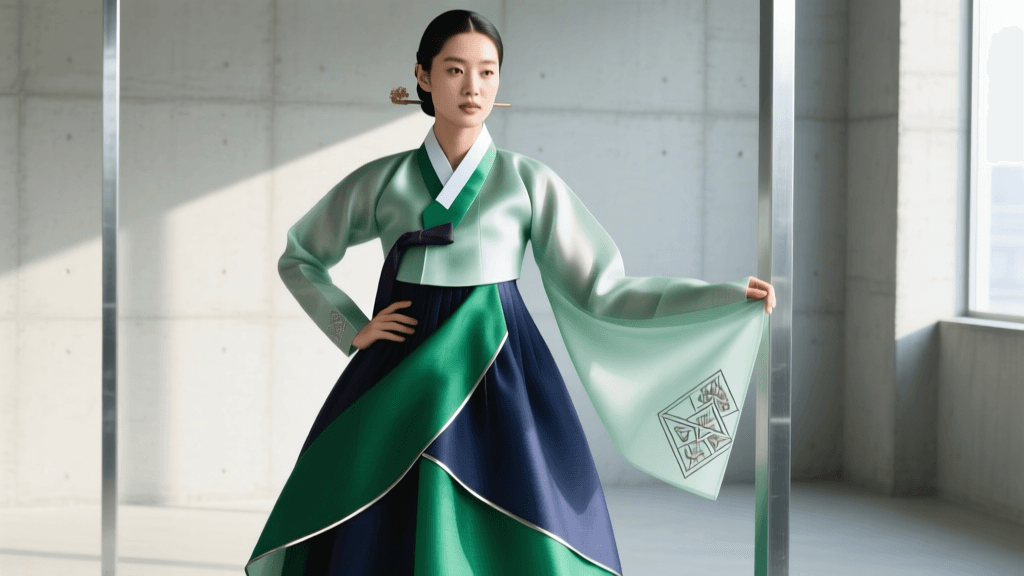
In the landscape of 2026 global fashion media, the traditional Korean hanbok has transcended its ceremonial roots to become a structural muse for haute couture and high-fashion editorials. From the pages of Vogue to the digital covers of Harper's Bazaar, fashion directors and stylists are no longer merely referencing Asian traditions; they are actively deconstructing and re-engineering the hanbok's iconic silhouettes. This shift marks a pivotal moment in cross-cultural fashion, where the volumetric elegance of the chima (skirt) and the architectural precision of the jeogori (jacket) are being reimagined through a contemporary, avant-garde lens.
As global audiences demand deeper cultural authenticity paired with cutting-edge design, the hanbok has emerged as a focal point for discussing garment construction, sustainable textiles, and the geometry of dress. According to the Metropolitan Museum of Art's Heilbrunn Timeline of Art History, the fundamental structure of Korean dress has remained remarkably consistent for centuries, characterized by its fluid lines and natural drape. Today, global fashion media is leveraging this historical consistency, contrasting it with hyper-modern styling techniques to create striking editorial narratives.
Deconstructing the Silhouette: Key Elements in 2026 Media
To understand how the hanbok is being utilized in 2026 fashion spreads, one must look at the specific garment elements that global stylists are exaggerating, cropping, or fusing with Western tailoring. The editorial focus this year is heavily placed on proportion and negative space.
The Volumetric Chima (Skirt)
Traditionally, the chima is a high-waisted, full-skirted garment that creates a bell-like silhouette. In 2026 editorial photography, stylists are pushing this volume to theatrical extremes. By incorporating hidden crinoline cages, stiffened recycled organza, and 3D-printed mesh understructures, the modern editorial chima occupies massive amounts of negative space, allowing photographers to play with shadow and scale. We are also seeing a trend of 'asymmetric chimas,' where the hemline is sharply angled to reveal structured footwear, blending traditional modesty with grunge-inspired rebellion.
The Cropped Jeogori (Jacket)
The jeogori's defining feature is its short torso and sweeping, curved sleeves (baerae). Global fashion houses this season have adopted the jeogori as the ultimate layering piece. In recent Paris and Seoul Fashion Week coverage, we have seen the jeogori rendered in heavy, structured materials like vegan leather and metallic jacquard, cropped even further to sit just below the collarbone. This creates a striking visual contrast when layered over flowing, bias-cut slip dresses or tailored wide-leg trousers.
The Elongated Goreum (Ribbons)
The goreum, traditionally used to tie the jeogori closed, has been transformed into a primary editorial accessory. In 2026, global magazines are featuring models with oversized, floor-dragging goreum made from contrasting neon silks or sheer, iridescent chiffon. These ribbons are often left untied, caught in wind machines, or wrapped around the body like modern corsetry, adding dynamic movement to static editorial shots.
2026 Editorial Styling Matrix: Traditional vs. Avant-Garde
For stylists, costume designers, and fashion students looking to replicate or draw inspiration from these global media trends, understanding the translation from traditional garment to editorial showpiece is crucial. The table below outlines how key hanbok elements are being adapted for the 2026 fashion media landscape.
| Garment Element | Traditional Construction | 2026 Editorial Adaptation | Recommended Styling Scenario |
|---|---|---|---|
| Chima (Skirt) | High-waisted, floor-length, soft silk or ramie, gathered at the chest. | Stiffened technical organza, asymmetric hems, integrated corsetry boning. | High-fashion cover shoots requiring dramatic, architectural silhouettes. |
| Jeogori (Jacket) | Short torso, curved sleeves, V-neckline, tied with ribbons. | Cropped bolero style, sharp shoulder pads, metallic or vegan leather textiles. | Layering over minimalist eveningwear or tailored streetwear for red carpets. |
| Goreum (Ribbons) | Functional tie at the right side of the chest, moderate length. | Oversized, trailing floor-length sashes, contrasting neon or sheer fabrics. | Movement-focused editorial photography and avant-garde music videos. |
| Dongjeong (Collar) | White, detachable paper or fabric collar framing the face and V-neck. | Exaggerated, stiffened white leather or metallic collars extending to the jaw. | Close-up beauty editorials focusing on facial structure and necklines. |
Actionable Guide: Sourcing and Styling Media-Inspired Hanbok Pieces
If you are a stylist, fashion buyer, or enthusiast looking to incorporate these 2026 media trends into your portfolio or wardrobe, sourcing the right pieces requires an understanding of both heritage ateliers and contemporary fusion brands. Here is your practical guide to acquiring and styling editorial-grade hanbok elements this year.
Where to Source in 2026
- Contemporary Fusion Ateliers: Brands like Danha, Tchaikim, and Minju Kim continue to lead the charge in bridging the gap between Seoul's heritage and global fashion weeks. Expect to pay between $800 and $2,500 for editorial-grade, ready-to-wear fusion jeogori and chima sets.
- Bespoke Heritage Tailors: For purists seeking traditional construction with modern fabric choices, booking a bespoke fitting at established Seoul houses like Kim Myeong-ja's atelier is essential. Bespoke editorial chimas utilizing hand-woven ramie and smart-textile threading typically range from $1,500 to $4,000 in 2026.
- Vintage and Archival Markets: The secondary market for late 20th-century ceremonial hanbok is booming among global stylists who deconstruct and upcycle these garments. Sourcing vintage silk chimas provides a sustainable, cost-effective base for editorial modifications, often costing under $150 before tailoring.
Crucial Measurements and Fit Guidelines
When sourcing a modern jeogori for editorial wear, the fit must be meticulously calculated to avoid looking like a costume replica. Look for a sleeve width (baerae) of at least 35cm to capture the traditional curved drape under the arm, while keeping the overall torso length cropped to exactly 18-22cm. This ensures the jacket sits above the natural waist, allowing the high waistband of the chima or modern trousers to take center stage. For the chima, ensure the waistband is structured with interfacing; a flimsy waistband will collapse under the weight of heavy editorial silks, ruining the architectural line required for high-definition camera work.
Hair and Makeup Pairings for the Modern Hanbok
In 2026, global beauty directors are actively moving away from the overly simplistic, monolithic 'glass skin' trope when styling hanbok editorials. Instead, the trend is a sophisticated fusion of traditional Joseon-era court aesthetics with avant-garde, graphic elements. Think sharply winged, graphic eyeliner drawn with crimson or deep plum pigments, contrasting with a matte, porcelain base. Hair is frequently styled in structural, gravity-defying updos that mimic the traditional jokduri (coronet) but are executed using braided extensions and metallic hair cuffs, ensuring the focus remains on the exaggerated dongjeong (white collar) of the garment.
Cultural Respect and Authenticity in Global Media
As the hanbok's presence in Western and global fashion media expands, the conversation around cultural appreciation versus appropriation has matured significantly. In 2026, top-tier fashion publications are adopting strict editorial guidelines that require the crediting of Korean historians, textile artisans, and cultural consultants when traditional garments are featured. The Korean Craft and Design Foundation (KCDF) has been instrumental this year in facilitating partnerships between global fashion houses and local Korean weaving cooperatives, ensuring that the economic and cultural benefits of this global exposure flow back to the origin communities.
Furthermore, institutions like the Victoria and Albert Museum continue to provide vital educational frameworks that global stylists reference to understand the semiotics of color and pattern in Korean dress. For instance, the traditional use of obangsaek (the five cardinal colors) is no longer treated as a mere aesthetic choice by informed stylists, but as a deeply symbolic language that is respected and accurately contextualized in editorial copy and behind-the-scenes media.
Conclusion: The Enduring Structural Genius of the Hanbok
The integration of the hanbok into 2026 global fashion media is not a fleeting trend; it is a recognition of the garment's unparalleled structural genius. By offering a masterclass in proportion, volume, and the interplay of rigid lines with fluid drapery, the hanbok provides endless inspiration for the future of fashion design. Whether you are a stylist pulling looks for a major editorial spread, a designer seeking structural inspiration, or a fashion historian tracking the globalization of regional dress, the hanbok's current moment in the global spotlight offers a profound lesson in how heritage can seamlessly dictate the avant-garde future of style.