Douyin Street Style: How To Style The Mamianqun Skirt
The Rise of the Mamianqun on Douyin
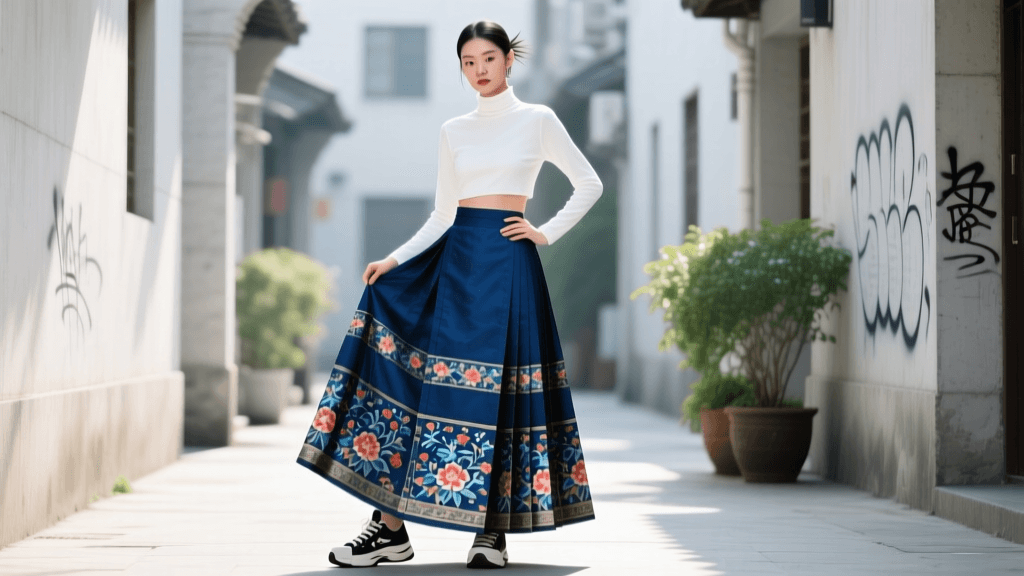
If you have spent any time browsing Chinese social media platforms like Douyin or Xiaohongshu, you have undoubtedly encountered the viral street snaps from Chengdu’s Taikoo Li district. Among the sea of contemporary fashion, one traditional garment has aggressively reclaimed its space in modern wardrobes: the Mamianqun, or ‘horse-face skirt.’ Once relegated to niche Hanfu enthusiasts and historical reenactors, the Mamianqun has exploded into mainstream streetwear, driven by a new wave of Chinese influencers who seamlessly blend ancient silhouettes with contemporary edge. This movement is a cornerstone of the broader ‘Guochao’ (national trend) phenomenon, where young consumers express cultural pride through modernized traditional aesthetics.
Anatomy of the Horse-Face Skirt
To understand how to style the Mamianqun for the streets, one must first understand its unique architecture. According to the Metropolitan Museum of Art’s Heilbrunn Timeline of Art History, traditional Chinese lower garments were often wrap skirts constructed from multiple panels of fabric. The Mamianqun, which gained massive popularity during the Ming and Qing dynasties, is defined by its distinct structure: two flat, unpleated panels (the ‘horse faces’) at the front and back, connected by heavily pleated side panels.
This design was originally practical, allowing for ease of movement while riding horses or walking through city gates. Today, those same pleats create a mesmerizing, fluid drape that catches the wind and camera flashes on the streets of Shanghai and Beijing. The flat front panel serves as a canvas for intricate jacquard weaving, embroidery, or metallic foil stamping, making it a striking centerpiece for any outfit.
The Douyin Streetwear Formula: How Influencers Style It
Chinese street fashion influencers have completely rewritten the rulebook on how to wear the Mamianqun. Moving away from strict historical accuracy (which often requires specific traditional tops and hairpieces), Douyin creators treat the skirt as a versatile foundational piece. Here are the three dominant styling formulas currently trending on the platform:
1. The ‘Dark Academia’ Intellectual
This look pairs a solid-colored or subtly patterned wool-blend Mamianqun with a fitted black turtleneck, a tailored oversized blazer, and Oxford shoes. The key here is playing with textures. The structured, academic feel of the blazer contrasts beautifully with the romantic drape of the skirt pleats. Influencers often accessorize with minimalist gold jewelry and structured leather briefcases.
2. Edgy Cyber-Streetwear
For a high-contrast, rebellious aesthetic, creators pair metallic or dark jacquard Mamianqun with cropped leather motorcycle jackets, graphic tees, and chunky combat boots. The juxtaposition of the delicate, flowing traditional skirt with heavy, aggressive streetwear staples creates a striking visual tension that performs exceptionally well in short-form video transitions.
3. Global Travel Couture
A major trend on Douyin involves wearing the Mamianqun as destination styling in Western fashion capitals like Paris or London. Influencers pair the skirt with crisp white button-down shirts, trench coats, and luxury Western handbags. This styling choice is a deliberate statement of cultural confidence, positioning traditional Chinese garments as equals on the global haute couture stage.
Buying Guide: Fabrics, Fit, and Cost
Replicating these Douyin looks requires choosing the right skirt for your lifestyle and climate. The fabric dictates the drape, the weight, and the overall silhouette. Below is a comparison chart to help you select the ideal Mamianqun for your wardrobe.
| Fabric Type | Drape & Feel | Best Season | Estimated Cost (RMB) | Maintenance Level |
|---|---|---|---|---|
| Polyester Jacquard | Stiff, holds pleats perfectly, vibrant patterns | Spring / Autumn | 150 - 300 | Low (Machine washable) |
| Wool Blend | Heavy, structured, matte finish | Winter | 400 - 800 | Medium (Dry clean only) |
| Silk / Tencel Blend | Fluid, lightweight, luxurious sheen | Summer | 600 - 1200+ | High (Hand wash/Dry clean) |
| Cotton / Linen | Breathable, casual, softer pleats | Summer / Spring | 200 - 450 | Medium (Requires ironing) |
Crucial Measurements and Sizing
Unlike Western skirts that rely on zippers and buttons, the Mamianqun is a wrap skirt secured by long fabric ties. This means sizing is highly dependent on your natural waist.
- Waist Measurement: Measure the narrowest part of your torso. Because the skirt overlaps, you must ensure the flat panels cover your front and back completely without the side pleats pulling awkwardly to the front. Most brands offer sizes based on waist circumference (e.g., 68cm, 72cm, 76cm).
- Skirt Length: The quintessential Douyin street style relies on an ‘ankle-grazing’ or ‘floor-sweeping’ length to maximize the dramatic effect of the pleats. For a person who is 165cm (5’5”) tall, a skirt length of 95cm to 100cm is ideal. If you are under 160cm, look for ‘petite’ cuts around 85cm to 90cm to avoid tripping.
Maintenance: Keeping the Pleats Sharp
The most common complaint among newcomers to the Mamianqun is the loss of pleat structure after washing. Douyin influencers swear by a few practical maintenance hacks to keep the skirts looking crisp:
- Pleat Clips: Before washing or storing, use specialized plastic pleat clips (or even standard binder clips lined with felt) to clamp the side pleats together. This prevents them from unfolding and fraying in the wash.
- Steam Ironing: Never use a standard dry iron directly on the pleats, especially on synthetic jacquards which can melt. Use a handheld steamer while the skirt is hanging, gently pulling the pleats taut with your fingers as the steam sets the fabric.
- Hanging Storage: Always hang the skirt using a clip hanger that grips the waistband evenly. Never fold the skirt, as this will permanently crease the flat ‘horse face’ panels and distort the side pleats.
The Cultural Impact of the Streetwear Revival
The Mamianqun’s transition from museum artifact to everyday streetwear is not just a fleeting fashion trend; it is a reflection of a shifting cultural zeitgeist. As reported by BBC Culture, the Hanfu movement is deeply tied to a younger generation’s search for identity and a desire to reconnect with pre-modern Chinese aesthetics in a rapidly urbanizing society. The streets have become the ultimate runway for this cultural reclamation.
Furthermore, the economic impact of this trend is staggering. A Reuters market analysis highlighted that the Hanfu market has experienced explosive growth, evolving into a multi-billion dollar industry driven by e-commerce, social media marketing, and a highly engaged community of young consumers. Brands are now collaborating with major museums and heritage institutions to release historically informed, yet street-ready, Mamianqun collections.
Conclusion
Styling the Mamianqun for modern street fashion is an exercise in balancing reverence for the past with the bold individualism of the present. Whether you are pairing a heavy wool horse-face skirt with combat boots for a rainy day in Chengdu, or styling a lightweight silk blend with a crisp blazer for a Parisian cafe, the garment offers unparalleled versatility. By understanding the architecture of the skirt, choosing the right fabric for your climate, and embracing the bold styling formulas popularized by Douyin influencers, you can seamlessly integrate this masterpiece of Asian tradition into your daily rotation. The streets are no longer just a place to walk; they are a canvas for cultural storytelling, one pleat at a time.