2026 Global Fashion Media Hanbok Styling: Danha and Tchai Kim
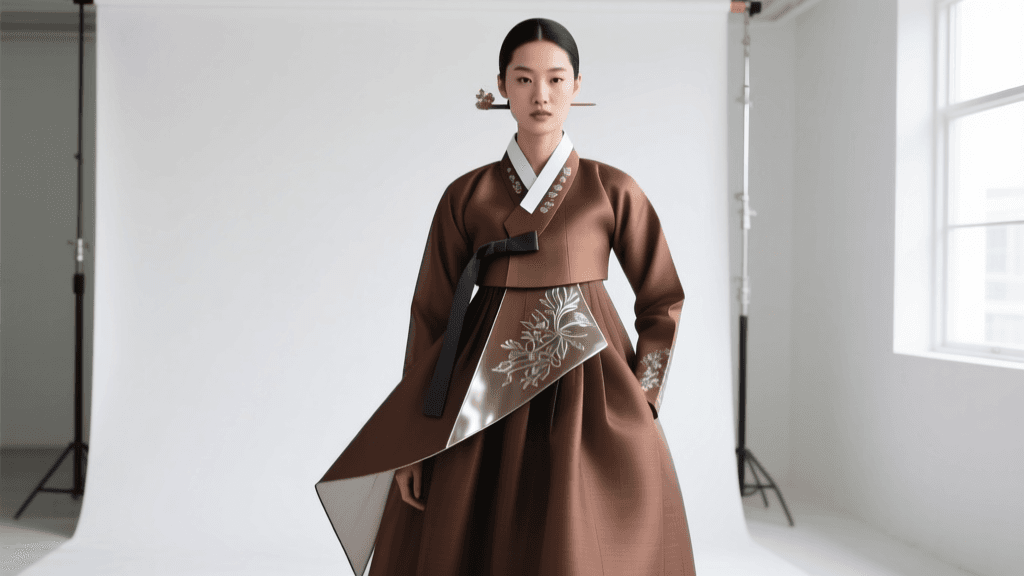
The 2026 Editorial Shift: Hanbok as Global Haute Couture
The year 2026 marks a definitive watershed moment for the Hanbok in global fashion media. No longer relegated to niche cultural features or treated merely as stage costuming for international pop stars, the traditional Korean garment has firmly cemented its place in the upper echelons of high-fashion editorial styling. Top-tier publications like Vogue, Harper’s Bazaar, and Elle are now dedicating multi-page spreads to the structural brilliance and textile heritage of the Hanbok, treating it with the same sartorial reverence as Parisian couture.
This shift in the 2026 media landscape is driven by a new generation of fashion journalists and stylists who are prioritizing garment construction, historical accuracy, and sustainable textiles. According to the Victoria and Albert Museum’s comprehensive analysis of the Hanbok, the garment's defining characteristics—such as the fluid, architectural lines of the jeogori (jacket) and the voluminous, grounding presence of the chima (skirt)—offer a unique silhouette that contrasts sharply with Western tailoring. In 2026, global fashion media is actively exploring this contrast, blending traditional Korean aesthetics with contemporary avant-garde styling to create striking editorial narratives.
Spotlight on the Designers Leading the Media Narrative
The global fashion press in 2026 is heavily focused on two pioneering labels that have successfully translated historical Korean dress for the modern luxury market: Danha and Tchai Kim. Both brands have become the go-to sources for fashion editors looking to feature authentic yet modernized Asian traditions on their covers and in high-concept editorial spreads.
Danha: Eco-Conscious Elegance and Upcycled Heritage
Founded by Danha Kim, the eponymous label Danha has taken the 2026 fashion media circuit by storm. Kim’s approach is deeply rooted in sustainability, utilizing upcycled vintage textiles and traditional weaving techniques to create modernized Hanbok pieces. In the Spring 2026 issues of Vogue, stylists frequently pair Danha’s cropped, structural jeogori with high-waisted, wide-leg tailored trousers, creating a hybrid silhouette that appeals to the modern luxury consumer. Fashion editors praise Danha for her meticulous attention to the goreum (the traditional ribbon tie), often enlarging and stiffening it to serve as a dramatic, sculptural focal point in editorial photography.
Tchai Kim: Architectural Silhouettes and Gender-Fluid Styling
Kim Young Jin’s label, Tchai Kim, represents the avant-garde edge of the Hanbok movement. Tchai Kim is heavily featured in 2026 editorials for publications like Dazed and i-D, which favor the brand’s gender-fluid adaptations of historical garments. The cheolik (a traditional military coat with pleated skirts) and the dangui (a formal outer jacket) are reimagined by Tchai Kim using heavy, unconventional fabrics like neoprene and matte wool. Fashion media in 2026 highlights Tchai Kim’s work as a masterclass in volume and proportion, often styling these oversized, architectural pieces over minimalist slip dresses or structured corsetry to emphasize the dramatic flare of the traditional pleating.
Actionable Styling Techniques for 2026 Editorials and Wardrobes
For fashion stylists, creative directors, and enthusiasts looking to incorporate the Hanbok into their own 2026 portfolios or wardrobes, global fashion media has established several key styling methodologies this year. These techniques bridge the gap between historical reverence and contemporary wearability.
- Contrast Textures and Weights: The 2026 editorial standard dictates avoiding head-to-toe traditional glossy silk, which can read as costumey on camera. Instead, stylists are pairing a traditional myeongju (silk) chima with a matte, heavyweight wool jeogori. This textural contrast grounds the garment and gives it a modern, luxurious edge.
- Silhouette Manipulation via the High Waist: The chima is traditionally worn tied high, just below the bust. In 2026 fashion photography, stylists are exaggerating this high waistline by using hidden internal corsetry to lift the skirt even higher, creating an elongated, statuesque leg line that mimics the proportions of modern haute couture gowns.
- The Magoja Layering Technique: The magoja (an outer jacket originally worn for warmth) has become the ultimate transitional layering piece in 2026 global street-style media. Editors are styling oversized, quilted magoja jackets over crisp, white poplin button-downs and tailored denim, merging traditional Korean outerwear with Western casualwear.
- Deconstructed Goreum (Ribbons): Rather than tying the traditional goreum in a neat bow, 2026 avant-garde editorials are leaving the ribbons untied, allowing them to trail down the back of the garment to create dynamic movement and flowing lines in wind-swept editorial shots.
Sourcing and Care: Practical Guide for 2026
As the demand for authentic, high-quality Hanbok pieces surges in the global market, knowing how to source and care for these garments is essential. The Metropolitan Museum of Art’s Asian Art department emphasizes the importance of proper textile preservation, a principle that applies equally to museum archives and personal luxury wardrobes.
Sourcing Authentic Pieces in 2026
When sourcing garments for editorial shoots or personal collections, avoid mass-produced, synthetic tourist-shop Hanbok. In 2026, the global market for authentic, artisan-made Hanbok is thriving, but it requires specific knowledge to navigate.
- Where to Buy: Look for certified Hanbok Jinheung Center designers or established global boutiques specializing in Asian heritage wear. Custom orders from ateliers in Seoul’s Bukchon Hanok Village remain the gold standard for editorial-quality pieces.
- Pricing Expectations: In 2026, a high-quality, custom-tailored chima and jeogori set made from authentic Korean silk (myeongju) or ramie (mosi) typically ranges from $800 to $2,500 USD, depending on the complexity of the embroidery and the prestige of the designer. Ready-to-wear modernized pieces from brands like Danha retail between $400 and $1,200 USD.
- Measurements: Unlike Western garments that rely on bust and waist measurements, Hanbok tailoring focuses heavily on the git (collar) fit, sleeve length, and the precise circumference of the chima waistband. Always provide your underbust measurement and shoulder slope when ordering custom pieces to ensure the jeogori sits correctly without gaping.
Garment Care and Storage
Traditional Hanbok textiles are highly sensitive to environmental factors. To maintain the structural integrity of the garments for future editorial use or long-term wear, follow these 2026 best practices:
- Cleaning: Never machine wash or aggressively dry-clean authentic silk Hanbok. Spot clean with a specialized, pH-neutral textile detergent. For deep cleaning, consult a conservator or a dry cleaner who specializes in heritage Asian textiles.
- Storage: Do not hang the chima on standard wire hangers, as this will distort the pleats and strain the waistband. Instead, fold the skirt along its natural pleat lines using acid-free tissue paper to prevent permanent creasing, and store it flat in a breathable cotton garment bag.
- Ironing: Use a low-heat steam iron, and always place a pressing cloth between the iron and the silk. Traditional ramie (mosi) requires a slightly higher heat but must be ironed while slightly damp to achieve the crisp, papery finish desired in editorial styling.
2026 Editorial Styling Matrix: Top Fashion Magazines
To understand how different publications are approaching the Hanbok in 2026, we have analyzed the styling trends across three major global fashion magazines. This table highlights the distinct editorial angles each publication takes when featuring traditional Korean garments.
| Publication | Featured Designer Focus | Key Garment Highlighted | 2026 Styling Approach | Target Editorial Demographic |
|---|---|---|---|---|
| Vogue | Danha | Modernized Jeogori (Jacket) | Paired with high-waisted, wide-leg wool trousers and minimalist sculptural jewelry. | Luxury consumers, haute couture enthusiasts |
| Harper’s Bazaar | Tchai Kim | Cheolik (Pleated Military Coat) | Layered over sheer slip dresses; styled with heavy, chunky combat boots for a grunge-couture contrast. | Avant-garde fashion lovers, trendsetters |
| Elle | Leesle / Independent Artisans | Traditional Chima (Skirt) | Styled with crisp, oversized white poplin button-down shirts and sleek, modern leather belts. | Accessible luxury, contemporary street-style |
Cultural Discourse: Appreciation vs. Appropriation in 2026 Media
As the Hanbok’s visibility in global fashion media reaches its peak in 2026, the journalistic standards surrounding cultural representation have also evolved. The fashion industry has moved past the superficial borrowing of cultural aesthetics and is now deeply engaged in the discourse of appreciation versus appropriation.
'In 2026, it is no longer acceptable for a Western fashion house to simply mimic the silhouette of the Hanbok without crediting its origins or involving Korean artisans in the creative process. True appreciation requires collaboration, historical literacy, and equitable compensation for the culture bearers.' — 2026 Global Fashion Ethics Report
Top-tier fashion magazines are now mandating the inclusion of Korean cultural historians, traditional textile experts, and native stylists on set when shooting Hanbok editorials. This ensures that the garments are worn correctly, that the historical context of the textiles is accurately represented in the accompanying copy, and that the narrative centers on Korean creativity rather than Western discovery. This rigorous approach to cultural credit has elevated the Hanbok from a mere trend to a respected pillar of global fashion heritage.
Conclusion: A Permanent Fixture in the Global Lexicon
The 2026 global fashion media landscape has unequivocally proven that the Hanbok is not a fleeting trend, but a permanent and vital component of the international fashion lexicon. Through the innovative designs of labels like Danha and Tchai Kim, and the respectful, highly stylized editorial spreads in the world’s leading magazines, the traditional Korean garment is being celebrated for its architectural beauty, sustainable potential, and rich cultural history. For stylists, designers, and fashion enthusiasts, understanding the nuances of the Hanbok is no longer optional—it is essential for navigating the diverse, globally-minded fashion industry of 2026 and beyond.