Geta & Zori Craftsmanship: Traditional Japanese Footwear 2026
The rhythmic clack of wooden soles against stone pathways is a sound that transcends centuries, echoing through the historic streets of Kyoto and the modern avenues of Tokyo alike. As we navigate the global fashion landscape of 2026, the intersection of heritage and contemporary styling has never been more prominent. Traditional Japanese footwear, specifically geta and zori, has experienced a remarkable renaissance. No longer confined to festivals or formal ceremonies, these meticulously crafted pieces are now celebrated by sartorial enthusiasts worldwide for their ergonomic design, sustainable materials, and unparalleled artisanal quality. In this comprehensive guide, we explore the intricate craftsmanship behind geta and zori, the material innovations defining 2026, and how to seamlessly integrate them into your modern wardrobe.
The Anatomy of Traditional Japanese Footwear
To appreciate the craftsmanship, one must first understand the structural anatomy that distinguishes Japanese footwear from Western counterparts. Unlike shoes that enclose the foot, geta and zori are designed to be held onto the foot via a thong, allowing for natural air circulation and a unique biomechanical gait.
Geta: The Elevated Wooden Clog
Geta are characterized by their wooden base, known as the dai. Beneath the dai are the ha (teeth), which elevate the wearer above the ground. Historically, this elevation kept expensive silk kimono hems clean from mud and rain. Today, the teeth also provide a distinct auditory signature and encourage a posture that aligns the spine. The thong that secures the foot is called the hanao.
Zori: The Flat, Formal Sandal
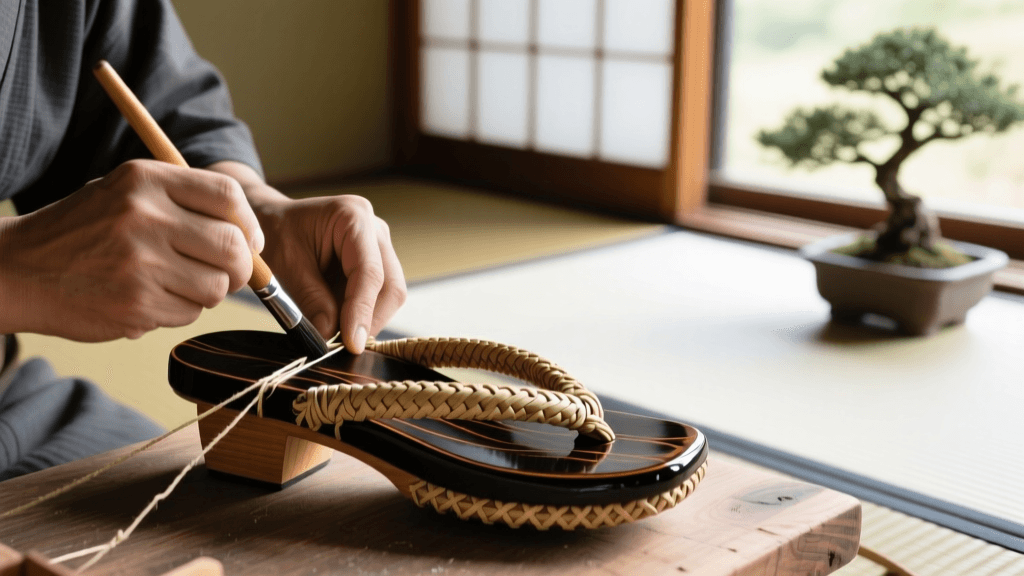
Zori share the hanao thong system but feature a flat sole without teeth. Traditionally woven from rice straw, modern zori in 2026 are frequently crafted from lacquered wood, bamboo, vinyl, or high-grade vegan leather. Zori are generally considered more formal than geta and are the standard footwear pairing for formal kimono ensembles, particularly for women.
Material Sourcing and Sustainability in 2026
The year 2026 has brought a heightened focus on sustainability within traditional crafts. The Association for the Promotion of Traditional Craft Industries has been instrumental in certifying eco-friendly practices among footwear artisans. The premier material for high-quality geta remains Kiri (Paulownia wood). Paulownia is prized for its lightweight nature, natural water resistance, and beautiful, pale grain. In 2026, master carvers are increasingly sourcing Paulownia from sustainably managed, certified forests in the Tohoku region, ensuring that the harvesting process supports local reforestation efforts.
For zori, the shift away from petroleum-based plastics has accelerated. Artisans are now utilizing compressed, bio-based resins and woven rattan harvested from managed tropical plantations. The footbeds, which come into direct contact with the skin, are often covered in natural igusa (rush grass) or ethically sourced cork, providing antimicrobial properties and superior moisture-wicking capabilities during the humid Japanese summers.
The Art of Hanao Weaving and Attachment
The hanao (thong) is arguably the most critical component for comfort. A poorly constructed hanao will cause blisters and fatigue, while a masterfully woven one feels like an extension of the foot. The crafting of the hanao, known as hanao-suki, involves a core of durable cotton or hemp rope, which is then tightly wrapped in fabric, leather, or synthetic velvet.
In 2026, bespoke hanao fitting has become a hallmark of luxury geta and zori purchases. Artisans measure the exact width of the wearer's foot and the height of the instep. The hanao is then attached to the dai using a specialized knotting technique that allows for future tightening. As the fabric stretches naturally over time, the wearer can adjust the tension without needing to replace the entire strap, a testament to the sustainable, repair-first philosophy inherent in Japanese design.
Comparing Traditional Footwear Styles
Choosing the right footwear depends heavily on the occasion, the formality of your garments, and the environment. Below is a comparative overview of the primary styles available in the 2026 market.
| Footwear Type | Base Material | Primary Use Case | Formality Level | Average 2026 Price (USD) |
|---|---|---|---|---|
| Geta (Two-Tooth) | Paulownia Wood | Festivals, casual strolls, yukata | Casual / Semi-Formal | $85 - $250 |
| Geta (Ukon - Flat) | Paulownia / Cedar | Daily wear, modern streetwear | Casual | $60 - $150 |
| Zori (Straw/Igusa) | Woven Rush / Rattan | Tea ceremonies, summer events | Semi-Formal | $120 - $300 |
| Zori (Lacquered/Vinyl) | Lacquered Wood / Bio-Resin | Weddings, formal kimono | Highly Formal | $200 - $600+ |
| Setta | Leather / Bamboo | Traditional workwear, martial arts | Casual / Utility | $90 - $180 |
How to Walk and Wear Geta and Zori
Walking in traditional Japanese footwear requires a departure from the heel-to-toe stride typical of Western sneakers. Because the sole is flat and lacks a heel cup, striking the ground heel-first will cause the footwear to slip off and the hanao to pull painfully against the toes.
The Sliding Gait
The correct technique involves keeping the foot relatively flat and lifting it straight up and down, or employing a slight sliding motion. When wearing geta, you should aim to land on the two teeth simultaneously, or slightly forward on the ball of the foot, allowing the heel to follow naturally. This gait engages the calf muscles and promotes an upright posture. According to cultural heritage guides provided by the Japan National Tourism Organization, mastering this walk is considered an essential element of kimono etiquette, projecting grace and mindfulness with every step.
Sizing Considerations
Unlike Western shoes, geta and zori should be sized slightly smaller than your actual foot. The ideal fit leaves about 1 to 2 centimeters of space between your heel and the back edge of the dai. This prevents the heel from overhanging, which can cause the wood to chip or the sole to wear unevenly, while also ensuring the hanao sits perfectly in the natural webbing of your toes.
Styling Traditional Footwear in 2026
The modern fashion landscape of 2026 has fully embraced the juxtaposition of heritage garments with contemporary streetwear. While geta and zori remain the undisputed champions of kimono and yukata styling, they are increasingly paired with non-traditional attire. Wide-leg linen trousers, cropped denim, and avant-garde asymmetrical skirts are frequently styled with flat Ukon geta or minimalist leather zori.
For men, the Setta—a hybrid sandal featuring a woven bamboo top and a leather heel cap—has become a staple in modern workwear and tech-wear circles, offering a breathable yet structured alternative to heavy boots. The key to styling traditional footwear in a modern context is to echo the natural materials of the shoe in the rest of your outfit, such as pairing a rattan zori with a woven linen shirt or wooden geta with raw, selvedge denim.
Preservation and the Future of the Craft
Despite the surge in global interest, the domestic craft of geta and zori making faces the ongoing challenge of an aging artisan population. The Ministry of Economy, Trade and Industry (METI) has recently expanded its grants and apprenticeship programs to ensure that the specialized knowledge of wood carving, lacquering, and hanao weaving is passed down to the next generation.
Younger artisans entering the field in 2026 are bridging the gap between tradition and technology. While the carving of the dai remains a deeply manual, meditative process using traditional chisels and planes, 3D scanning is now occasionally used to map a client's foot arch perfectly, allowing the artisan to carve a custom indentation into the Paulownia wood for unparalleled ergonomic support. This blend of ancestral hand-skills and modern precision ensures that the craft will not only survive but evolve.
Caring for Your Footwear
To maintain your geta and zori, store them in a cool, dry place away from direct sunlight, which can warp the wood and fade the hanao fabric. If the Paulownia wood becomes soiled, gently sand it with fine-grit sandpaper along the grain to reveal fresh, clean wood underneath. The hanao can be wiped down with a damp cloth, and if the fabric frays, many specialized shops offer re-thonging services, extending the life of the base indefinitely.
Conclusion
Geta and zori are far more than mere accessories; they are foundational elements of Japanese material culture, embodying a philosophy of harmony between the human body and the natural environment. As we move through 2026, the dedication of master artisans and the growing global appreciation for sustainable, handcrafted fashion ensure that the legacy of traditional Japanese footwear remains vibrant. Whether you are attending a summer matsuri in a vibrant yukata or navigating the city streets in contemporary linen, stepping into a pair of handcrafted geta or zori is a profound connection to centuries of enduring elegance.