Geta & Zori Craft: Traditional Japanese Footwear 2026
The Renaissance of Japanese Footwear in 2026
As we navigate the fashion landscape of 2026, the intersection of heritage preservation and modern sustainability has sparked a remarkable renaissance in traditional Japanese footwear. While Western sneakers and mass-produced sandals dominate global markets, a dedicated movement of artisans, cultural preservationists, and fashion enthusiasts are returning to the meticulous craft of geta (wooden clogs) and zori (flat sandals). This revival is not merely about nostalgia; it is a conscious embrace of sustainable materials, ergonomic craftsmanship, and the profound cultural philosophy that every step should connect the wearer to the earth.
According to the Ministry of Economy, Trade and Industry (METI), initiatives launched in the mid-2020s to apprentice young makers with aging master craftsmen have begun to bear fruit. Today, workshops in Tokyo’s Asakusa district and Kyoto’s historic Gion quarter are producing footwear that honors Edo-period techniques while integrating 2026’s eco-conscious material innovations. Whether you are a kimono practitioner, a collector of artisanal garments, or a traveler seeking authentic cultural experiences, understanding the craft of geta and zori is essential to appreciating the full spectrum of Japanese traditional attire.
Understanding the Anatomy: Geta vs. Zori
Though often grouped together by international observers, geta and zori serve distinct functional and aesthetic purposes within the Japanese wardrobe. The fundamental difference lies in their base structure and the materials used to construct them.
| Feature | Geta (Wooden Clogs) | Zori (Flat Sandals) |
|---|---|---|
| Base Material | Paulownia (Kiri), Cypress, or Cedar | Straw, Vinyl, Leather, EVA, or Brocade |
| Structure | Elevated on one or two wooden 'teeth' (ha) | Flat, contoured sole without elevated teeth |
| Acoustic Profile | Distinctive rhythmic 'clack' (karankoron) | Silent or soft slap against the heel |
| Best Weather | Rain, Snow (with toe covers), Festivals | Formal events, Tea ceremonies, Dry days |
| 2026 Price Range | ¥4,000 - ¥35,000+ | ¥3,000 - ¥50,000+ |
The Geta: Elevation and Acoustics
Geta are characterized by their wooden base, known as the dai, and the protruding wooden blocks underneath called ha (teeth). Historically, the elevation kept the hem of expensive silk kimonos above the mud, rain, and snow of unpaved streets. In 2026, the acoustic signature of geta—the rhythmic karankoron sound they make against pavement—remains a beloved auditory symbol of Japanese summers, particularly during Obon festivals and fireworks displays. Modern artisans are now experimenting with acoustic-dampening rubber caps for the teeth, allowing urban dwellers to wear geta in quiet residential neighborhoods without causing a disturbance.
The Zori: Elegance and Formality
Zori lack the elevated teeth of geta and are generally considered more formal. Traditional igusa (rush grass) zori are worn with casual cotton yukata, while opulent brocade, vinyl, or leather zori are mandatory for formal kimono ensembles like the kurotomesode. The 2026 market has seen a surge in high-density EVA foam cores wrapped in traditional textiles, offering the lightweight comfort of modern athletic footwear without compromising the elegant, low-profile silhouette required for tea ceremonies and weddings.
The Artisan Craft: Paulownia Wood and Tatami Omote
The soul of a high-quality geta lies in its wood. Master craftsmen overwhelmingly prefer kiri (paulownia) wood for the dai. Paulownia is remarkably lightweight, resistant to rot, and possesses a natural thermal insulation that prevents the foot from freezing in winter or overheating in summer. In 2026, sustainable forestry initiatives in Japan's Tohoku region have ensured that paulownia is harvested using regenerative practices, aligning traditional craft with modern ecological standards.
For zori, the surface material is equally critical. While genuine igusa offers a soothing, tatami-like fragrance, it can degrade in high humidity. To solve this, contemporary weavers have developed advanced synthetic rush materials that perfectly mimic the texture, scent, and moisture-wicking properties of natural igusa, ensuring the footwear survives the intense humidity of the Japanese rainy season (tsuyu).
The Hanao: Selecting and Tying the Thong
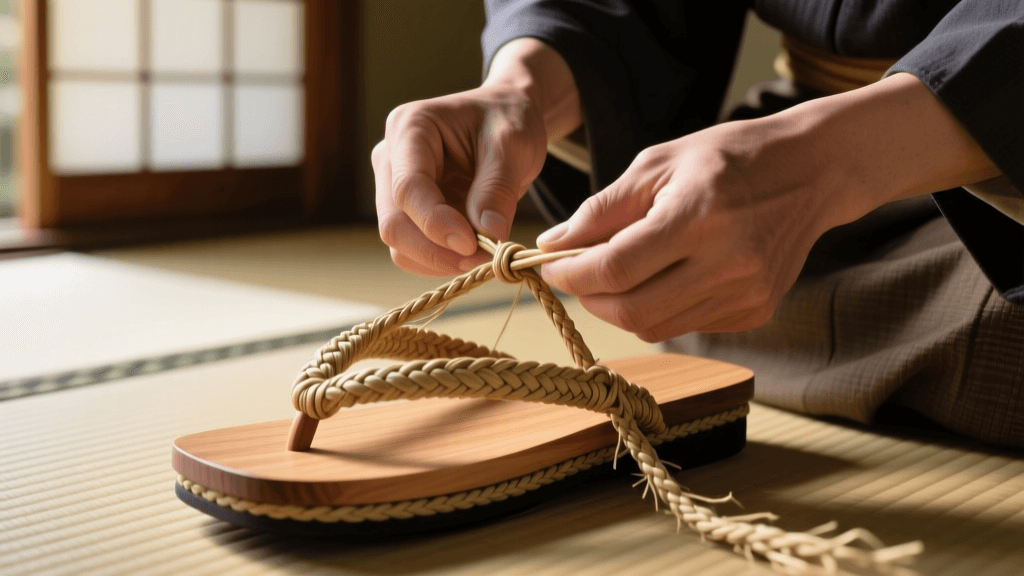
The hanao is the fabric thong that secures the foot to the footwear. Far from being a simple strap, the hanao is a complex assembly of fabric, padding, and internal cords. In 2026, artisans are utilizing upcycled silk from vintage kimonos to create vibrant, sustainable hanao that add a pop of personalized color to the footwear.
How to Adjust and Tie Your Hanao
Over time, the hanao may stretch, causing the foot to slide forward and the heel to drag. Proper adjustment is a vital skill for any wearer:
- Access the Knot: Turn the geta or zori upside down. You will see the fabric covering the bottom. Gently peel back the fabric at the toe and heel to expose the internal braided cords.
- Pull the Cords: Using a specialized hanao hook (or a bent wire hanger in a pinch), pull the internal cords upward to tighten the thong. The ideal fit allows you to slide one index finger snugly between the hanao and the webbing of your toe.
- Secure the Knot: Once the desired tension is achieved, tie a secure square knot. Traditionalists use a small drop of natural wood glue on the knot to prevent slipping, a technique heavily favored by Kyoto artisans.
- Replace the Cover: Smooth the bottom fabric back into place. Many modern zori feature Velcro-sealed bottom covers, making this 2026 maintenance process entirely tool-free.
Sizing and Fit: The 1-Centimeter Rule
One of the most common mistakes made by international buyers is purchasing geta and zori that are too large. Western footwear is designed to enclose the foot entirely, but traditional Japanese footwear operates on a completely different ergonomic philosophy.
The golden rule of Japanese footwear sizing is the 1-Centimeter Overhang. When standing naturally in your geta or zori, your heel should extend approximately 1 centimeter (about 0.4 inches) past the back edge of the wooden base or sole. This overhang is not a flaw; it is a deliberate design feature. It allows the natural pivot of the ankle during walking and prevents the back of the hanao from rubbing against the Achilles tendon. Furthermore, aesthetically, the slight overhang creates a graceful, forward-leaning posture that complements the elegant drape of a kimono. When consulting the Japanese mon sizing chart, always round down to the nearest half-size if you find yourself between measurements.
Where to Experience and Purchase Authentic Footwear
For those looking to invest in authentic, handcrafted footwear in 2026, a pilgrimage to specialized districts is highly recommended. In Tokyo, the Asakusa district remains the undisputed capital of geta craftsmanship. Shops like the historic Tsujiya offer bespoke services where master carvers will trace your foot's exact arch profile to carve a custom dai, ensuring unparalleled ergonomic support.
In Kyoto, the focus shifts toward the exquisite textile work found on formal zori. The biannual artisan markets, heavily promoted by the Japan National Tourism Organization, provide rare opportunities to meet the weavers who create the intricate brocade surfaces. For travelers planning a cultural itinerary, the Official Tokyo Tourism Website frequently updates schedules for open-workshop days where visitors can watch the steam-bending of paulownia wood and the hand-stitching of velvet hanao.
Care and Maintenance for Longevity
Proper care ensures that a well-made pair of geta or zori can last for decades. For wooden geta, the application of tsubaki (camellia) oil once every six months is crucial. This natural oil penetrates the paulownia grain, preventing it from drying out and cracking in arid winter climates, while enhancing the wood's natural luster. Avoid synthetic varnishes, which trap moisture and cause rot. For zori, storing them in a breathable cotton bag away from direct sunlight will prevent the brocade from fading and the internal core from warping.
Conclusion
The craft of geta and zori in 2026 is a testament to the resilience and adaptability of Japanese traditions. By marrying centuries-old woodworking and weaving techniques with modern sustainable practices and ergonomic refinements, today's artisans are ensuring that traditional Japanese footwear remains a vibrant, functional, and deeply meaningful component of global fashion. Whether you are stepping into a pair of elevated pokkuri geta for a summer festival or sliding your feet into the quiet elegance of formal brocade zori, you are participating in a living history that honors the art of the journey, one mindful step at a time.