Japanese Geta & Zori Craft: 2026 Artisan Buying Guide
The Resurgence of Heritage Footwear in 2026
In the global fashion landscape of 2026, the intersection of heritage craftsmanship and sustainable streetwear has never been more prominent. Traditional Japanese footwear, specifically the wooden geta and the woven zori, has transcended its role as mere ceremonial attire to become a coveted element of international artisan fashion. As consumers increasingly pivot away from fast fashion, the demand for hand-carved, meticulously woven footwear has surged. According to the Japan National Tourism Organization, cultural tourism focused on traditional artisan workshops has reached record highs this year, with footwear crafting experiences in Kyoto and Tokyo booking out months in advance. This comprehensive guide explores the intricate craft of geta and zori, the sustainable innovations defining the 2026 market, and how to select, size, and care for your own pair of heritage sandals.
Understanding the Anatomy: Geta vs. Zori
While often grouped together by international observers, geta and zori serve distinct functional and aesthetic purposes within the Japanese wardrobe. Understanding their anatomy is the first step to appreciating the artisan effort required to produce them.
The Architecture of Geta
Geta are elevated wooden clogs characterized by their distinctive silhouette and the rhythmic karankoron sound they produce when walking. The primary components include:
- Dai (Base): The main wooden board, traditionally carved from lightweight Paulownia (kiri) wood, though cedar and cypress are also used for premium 2026 collections.
- Ha (Teeth): The wooden supports underneath the dai. Standard geta feature two teeth, while tengu-geta feature a single, centered tooth requiring immense balance and core strength.
- Hanao (Thong): The fabric strap that secures the foot to the base, passing between the big and second toe.
The Elegance of Zori
Zori are flat, thonged sandals that sit flush against the ground. They are the formal counterpart to the casual geta and are essential for wearing with high-grade kimono. The components include:
- Omote (Cover): The woven top surface, historically made from rice straw or rush grass (igusa), but now also featuring vinyl, leather, and modern brocades.
- Dai (Base): Unlike geta, the zori base is a solid, flat block made of compressed straw, cork, wood, or modern EVA foam for lightweight comfort.
- Hanao (Thong): Similar to geta, but often crafted from finer materials like silk or velvet for formal occasions.
The Artisan Crafting Process: Wood, Weave, and Hanao
The creation of authentic Japanese footwear is a multi-disciplinary craft that requires mastery over woodworking, textile weaving, and knot-tying. In 2026, master artisans in regions like Hida-Takayama and Kumamoto are blending centuries-old techniques with modern ergonomic science.
Carving the Dai
The process begins with the selection of Paulownia wood, prized for its lightness, moisture resistance, and beautiful pale grain. Artisans air-dry the wood for up to two years to ensure stability. Using specialized drawknives and chisels, the carver shapes the dai, hollowing out the underside to reduce weight while maintaining structural integrity. In 2026, many master carvers are utilizing 3D-scanning technology to map a client's exact foot arch, creating a bespoke hollow that provides unprecedented orthopedic support without sacrificing the traditional silhouette.
Weaving the Omote and Hanao
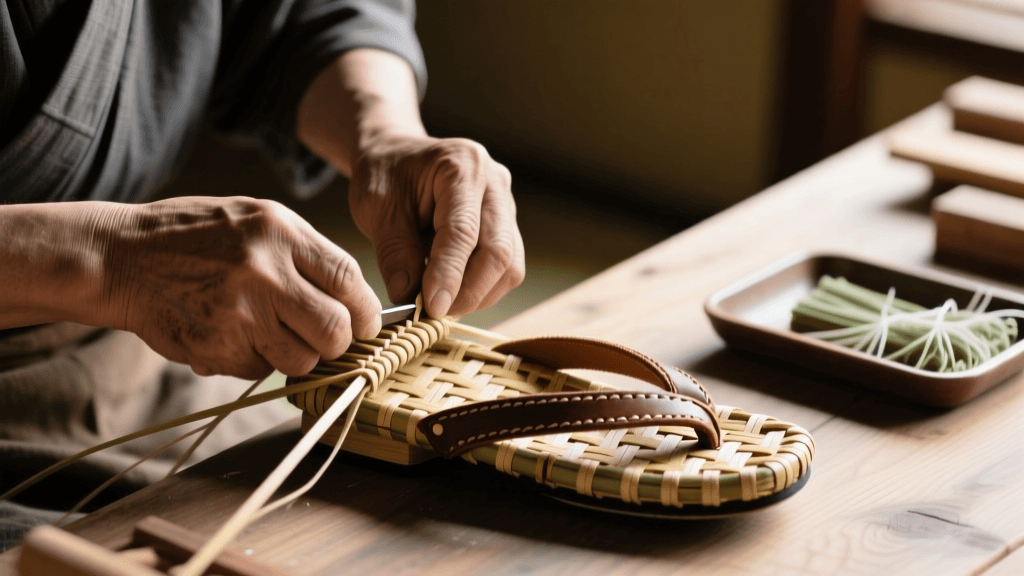
The weaving of the zori's omote and the hanao for both footwear types is a highly specialized skill. Kumamoto prefecture remains the heart of igusa (rush grass) cultivation. Artisans weave the rush grass on traditional looms, creating a tightly packed, breathable surface that naturally regulates foot temperature and absorbs moisture. The hanao are crafted by wrapping a core of braided cotton or hemp in decorative fabric. The internal knotting technique, hidden beneath the dai, ensures the thong remains secure even under the stress of thousands of steps.
2026 Comparison Chart: Choosing Your Traditional Footwear
Selecting between geta and zori depends on your wardrobe, the occasion, and your comfort preferences. Below is a structured comparison to guide your purchase in the current market.
| Feature | Geta (Wooden Clogs) | Zori (Woven Sandals) |
|---|---|---|
| Base Material | Paulownia, Cedar, Cypress | Straw, Vinyl, Leather, Cork, EVA |
| Primary Use | Yukata, Summer Festivals, Casual Streetwear | Kimono, Formal Events, Tea Ceremony |
| 2026 Avg. Price | ¥12,000 - ¥45,000 | ¥15,000 - ¥80,000 |
| Sound Profile | Distinctive 'clack' (karankoron) | Silent / Soft step |
| Weather Suitability | Elevated base keeps feet dry in light rain | Best for dry conditions; formal indoor use |
| Maintenance | Sanding and re-oiling the wood | Replacing the omote cover when frayed |
Sizing and Wearing Etiquette for Modern Enthusiasts
One of the most common mistakes international buyers make in 2026 is purchasing traditional Japanese footwear in their standard Western shoe size. The sizing philosophy for geta and zori is fundamentally different from enclosed footwear.
The 1-Centimeter Rule
Authentic geta and zori should be sized smaller than your actual foot length. Artisans universally recommend that the heel should overhang the back edge of the wooden dai or zori base by approximately 0.5 to 1 centimeter. This intentional overhang serves a critical function: it prevents the hem of your kimono or yukata from catching under your heel as you walk, which can cause tripping and damage expensive silk garments. When measuring your foot for a bespoke order, provide the artisan with your exact heel-to-toe measurement in centimeters, and they will deduct the necessary margin.
Proper Hanao Tying and Posture
Wearing geta requires a slight shift in posture. Because the footwear lacks a heel counter, you cannot rely on a heel-strike walking motion. Instead, traditional walking involves lifting the foot from the center, placing the ball of the foot down first, and keeping the knees slightly bent. This engages the calf muscles and core, which is why many modern wellness practitioners advocate for geta-wearing as a form of low-impact postural therapy.
Sustainable Innovations in Heritage Footwear
The year 2026 has seen a remarkable synthesis of ecological responsibility and heritage craft. The Agency for Cultural Affairs in Japan has actively supported initiatives that protect traditional crafts while adapting them to modern environmental standards. Today's artisan geta makers are pioneering several sustainable practices:
- FSC-Certified Paulownia: To combat deforestation, premium workshops now exclusively source Paulownia from managed, fast-growing plantations that regenerate within a decade.
- Bio-Resin Waterproofing: Traditional raw tung oil is being supplemented with plant-based bio-resins that offer superior water resistance for the geta's teeth, extending the lifespan of the wood in wet urban environments.
- Recycled PET Hanao: Innovative textile weavers are creating vibrant, incredibly durable hanao cores spun from recycled ocean plastics, wrapped in organic cotton or upcycled vintage kimono silk.
Care and Maintenance of Wooden Geta
To ensure your artisan geta last for decades, proper maintenance is essential. The natural oils from your feet will gradually darken the Paulownia wood on the dai, creating a beautiful, personalized patina. However, the teeth (ha) require protection from asphalt and concrete.
In 2026, many artisans offer attachable rubber caps (gomi) for the bottom of the teeth. These not only prevent the wood from wearing down prematurely but also dampen the sound slightly, making them more suitable for quiet urban environments and indoor galleries. If you choose to leave the wood bare, you must periodically sand the bottom of the teeth with fine-grit sandpaper and apply a thin coat of natural camellia oil (tsubaki abura) to prevent cracking during dry winter months. The hanao should be spot-cleaned with a damp cloth and mild soap, avoiding full submersion which can rot the internal knotting.
Where to Source Authentic Artisan Footwear Today
While mass-produced imports flood the souvenir market, true collectors and fashion enthusiasts seek out heritage workshops. In Tokyo's Asakusa district, historic shops like Tsujiya Honten continue to craft bespoke geta, offering hundreds of fabric swatches for custom hanao. In Kyoto, the narrow streets of the Gion district house multi-generational zori makers who specialize in formal, brocade-covered sandals designed specifically for the geiko and maiko communities, as well as discerning international clients.
For those unable to travel to Japan, several verified artisan collectives now offer direct-to-consumer bespoke services online, complete with virtual foot-mapping and video consultations with the master carvers. Investing in a pair of handcrafted geta or zori in 2026 is not merely a fashion purchase; it is an act of cultural preservation, supporting the master artisans who keep the rhythmic karankoron of Japan's streets alive for the next generation.