Geta & Zori Craft 2026: Guide to Traditional Japanese Footwear
In the fast-paced world of 2026 global fashion, where mass-produced sneakers and smart-textile footwear dominate the streets, the meticulous craft of traditional Japanese footwear offers a profound counter-narrative. Far from being relegated to museum displays or seasonal tourist souvenirs, geta (wooden clogs) and zori (flat sandals) are experiencing a vibrant renaissance. Today, a new generation of artisans and consumers are embracing these garments not just for their aesthetic beauty, but for their ergonomic benefits, sustainable material sourcing, and deep cultural resonance. According to the Traditional Japanese Crafts portal, the demand for bespoke, handcrafted footwear has seen a steady year-over-year increase, driven by a global shift toward slow fashion and heritage preservation.
Whether you are a collector of Asian traditional garments, a practitioner of Zen spirituality seeking grounded footwear, or simply a traveler preparing for a summer festival in Kyoto, understanding the nuances of geta and zori is essential. This comprehensive guide explores the anatomy, craftsmanship, and modern evolution of traditional Japanese footwear in 2026.
The Anatomy of Geta: The Wooden Clog
Geta are perhaps the most iconic form of Japanese footwear, instantly recognizable by their elevated wooden bases and the distinct "clack-clack" sound they produce when walking. This acoustic signature, known in Japanese as karankoron, is deeply tied to the sensory experience of traditional Japanese streetscapes.
The Dai and Ha (Base and Teeth)
The main body of the geta is called the dai (base), which is traditionally carved from a single piece of Kiri (Paulownia) wood. Paulownia is highly prized in 2026 for its remarkable properties: it is exceptionally lightweight, resistant to rot and moisture, and possesses a natural softness that allows it to be easily shaped by master carvers. Beneath the dai are the ha (teeth). While standard geta feature two teeth, specialized variations exist, such as the tengu-geta with a single central tooth, requiring immense balance and core strength to walk in. In recent years, sustainable forestry initiatives in Japan have ensured that Paulownia harvesting remains eco-friendly, with artisans planting three saplings for every mature tree harvested.
The Hanao (Thong)
The hanao is the V-shaped thong that secures the foot to the dai. Historically made from hemp or cotton, the hanao in 2026 has evolved to include ergonomic silicone cores wrapped in traditional woven textiles or premium leather. This modern adaptation prevents the blistering and toe-fatigue that historically plagued new wearers, making geta far more accessible for extended urban walking. The hanao is threaded through three holes in the dai and knotted securely from underneath. Crucially, the hanao is considered a consumable component; replacing a worn hanao is a standard maintenance practice that breathes new life into an aged wooden base.
Zori: Elegance and Formality in Every Step
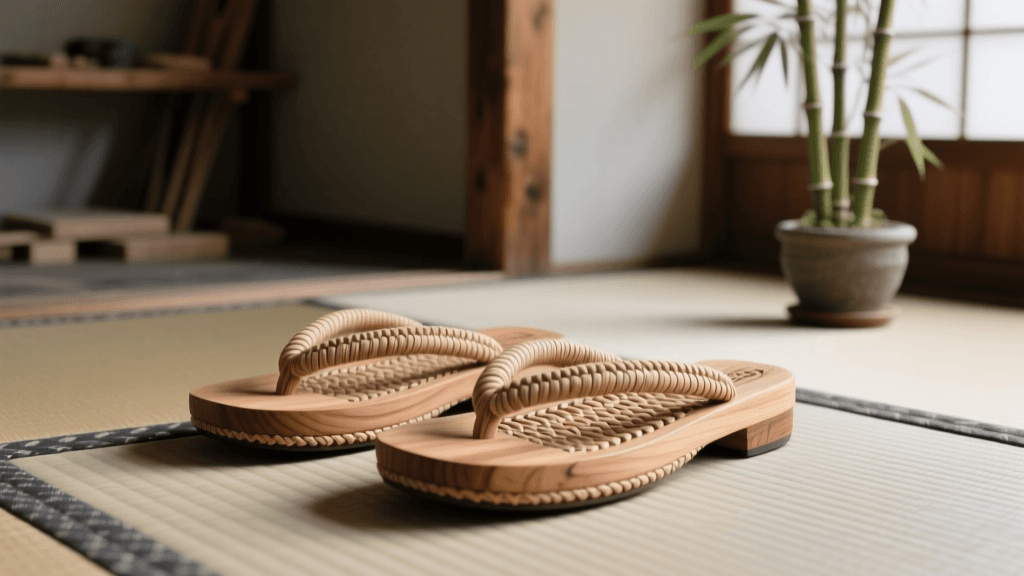
While geta are often associated with casual summer wear (particularly with the lightweight cotton yukata), zori span the entire spectrum of formality. Zori are flat, thonged sandals with no elevated teeth, making them closer in silhouette to modern flip-flops, though the materials and construction are vastly more complex.
Materials and the Formality Spectrum
The base of a casual zori is often made from tatami-omote (woven rush grass), the same material used for traditional Japanese flooring. The craft of weaving tatami-omote for footwear has seen a massive revival, with artisans in Kumamoto prefecture utilizing advanced loom technology alongside hand-finishing techniques to create incredibly durable, breathable sandal bases. For formal occasions, particularly when wearing silk kimono, zori are crafted from premium brocade, woven vinyl, or even lacquered leather. The Japan National Tourism Organization frequently highlights these formal zori as essential components of the tea ceremony and wedding attire, noting that the color and pattern of the zori must perfectly complement the kimono's seasonal motifs.
The 2026 Artisanal Revival: Tradition Meets Technology
The landscape of Japanese footwear craftsmanship in 2026 is defined by a harmonious blend of ancestral techniques and modern innovation. The aging population of master carvers in the early 2000s threatened the survival of bespoke geta making. However, the current decade has seen a surge of young apprentices entering workshops in Tokyo's Asakusa district and Kyoto's Higashiyama ward.
These modern artisans are utilizing 3D foot-scanning technology to map the exact arch and toe-splay of their clients. This digital data is then used to guide the rough-cutting of the Paulownia wood, which is subsequently finished entirely by hand using traditional chisels and planes. This hybrid approach reduces material waste by 30% and ensures a bespoke fit that eliminates the discomfort often associated with flat-soled footwear. Furthermore, many 2026 geta designs feature discreet, high-friction rubber caps applied to the bottom of the wooden ha, allowing wearers to navigate modern concrete, tile, and polished marble floors safely and silently without sacrificing the traditional aesthetic.
Comparison of Traditional Japanese Footwear
| Feature | Geta (Wooden Clog) | Zori (Flat Sandal) | Setta (Leather Sandal) |
|---|---|---|---|
| Primary Material | Paulownia Wood, Cedar | Tatami Rush, Brocade, Vinyl | Woven Rush, Leather, Iron |
| Formality Level | Casual to Semi-Formal | Casual to Highly Formal | Semi-Formal (Traditionally Men's) |
| 2026 Avg. Price (USD) | $85 - $400+ | $45 - $600+ | $150 - $500 |
| Best Season / Use | Summer Festivals, Yukata | Year-round, Kimono, Tea Ceremony | Autumn/Winter, Formal Menswear |
| Maintenance Focus | Wood oiling, Hanao replacement | Surface cleaning, Moisture avoidance | Leather conditioning, Sole repair |
Sizing and Wearing Mechanics: A Crucial Guide
One of the most common mistakes made by international buyers in 2026 is selecting the wrong size for traditional Japanese footwear. Western shoe sizing relies on enclosing the foot, requiring extra room at the toes and heels. Japanese footwear, however, operates on an entirely different philosophy.
The Rule of the Overhang
When wearing geta or zori, your foot should actually overhang the back edge of the base by approximately 1 to 2 centimeters (about half an inch). If your heel is fully supported by the wood or tatami base, you will inevitably strike the back of the footwear with your heel as you walk. This not only causes severe tripping hazards but also rapidly degrades the structural integrity of the sandal. The correct fit requires the center of your arch to align with the center of the footwear, allowing the toes and heel to breathe over the edges.
The Art of Walking
Walking in geta and zori requires a shift in biomechanics. Rather than the heel-strike walking pattern common in Western footwear, traditional Japanese footwear encourages a flatter, more gliding gait. You should lift the footwear using your toes and the hanao, setting it down flatly. This engages the calf muscles, improves posture, and aligns with the grounded, mindful movement principles found in Zen walking meditation.
Care, Preservation, and Longevity
Proper care ensures that a high-quality pair of Paulownia geta or brocade zori can last for decades, often becoming family heirlooms. For wooden geta, it is vital to keep them away from prolonged dampness. If they become wet, they should be air-dried in a shaded, well-ventilated area; direct sunlight or artificial heat will cause the Paulownia wood to warp and crack. Once a year, treating the bare wood with a light application of natural tung oil or specialized Paulownia wax will preserve its beautiful, pale grain and enhance its water resistance.
For tatami-omote zori, a soft, dry brush is the best tool for removing dust and dirt from the woven rush. If the rush becomes frayed, it is a sign that the hanao tension may be too tight, or the footwear has been exposed to excessive moisture. In 2026, many boutique workshops in Japan offer mail-in restoration services, where master craftsmen will completely re-wrap the hanao and resole the zori, preserving the upper brocade while refreshing the structural foundation.
Conclusion: Stepping into the Future with Heritage
The story of geta and zori in 2026 is a testament to the resilience of Asian traditions in a modernizing world. These garments are not static relics; they are living, evolving crafts that adapt to the needs of contemporary life while fiercely protecting their ancestral roots. Whether you are stepping onto the wooden verandas of a historic ryokan or navigating the bustling, neon-lit crossings of modern Tokyo, traditional Japanese footwear offers a unique, grounding connection to centuries of artisanal mastery. By investing in handcrafted geta and zori, you are not merely purchasing footwear; you are actively participating in the preservation of a profound cultural legacy.