Geta & Zori Craft: Traditional Japanese Footwear Guide 2026
The Enduring Legacy of Japanese Footwear in 2026
In the ever-evolving landscape of global fashion, traditional Japanese footwear has carved out a unique and enduring niche. As we navigate through 2026, the appreciation for heritage garments has transcended mere aesthetics, becoming a profound exploration of craftsmanship, sustainability, and cultural preservation. At the heart of this sartorial renaissance are geta and zori, the iconic sandals that have accompanied the Japanese people for centuries. Far from being relegated to museum displays or seasonal festival wear, these traditional shoes are experiencing a vibrant revival, championed by a new generation of artisans and international fashion enthusiasts who value slow fashion and meticulous handcraft.
Understanding the nuances of geta and zori requires more than a cursory glance; it demands an appreciation for the shokunin (artisan) spirit that breathes life into every carved block of wood and woven strand of rush grass. Whether you are a collector of Asian textiles, a practitioner of traditional tea ceremonies, or a modern traveler seeking authentic cultural experiences, this comprehensive guide will walk you through the anatomy, crafting process, and modern purchasing considerations for traditional Japanese footwear in 2026.
The Anatomy of Geta and Zori
While often grouped together by the untrained eye, geta and zori are fundamentally different in their construction, purpose, and cultural connotations. Both share the iconic Y-shaped thong, known as the hanao, but their bases tell two distinct stories of Japanese material culture.
Geta: The Elevated Wooden Sandal
Geta are characterized by their elevated wooden base, which historically served the practical purpose of keeping the wearer’s kimono hems clean from mud, rain, and the unpaved streets of Edo-period Japan. The anatomy of a geta consists of three main parts:
- Dai (Base): The main wooden board upon which the foot rests. Premium geta are carved from a single piece of Paulownia (kiri) wood, prized for its lightweight nature, moisture-wicking properties, and beautiful pale grain.
- Ha (Teeth): The supporting blocks underneath the dai. Standard geta feature two teeth, while specialized variations, such as the tengu-geta, feature a single, centrally placed tooth that requires immense balance and is primarily used by traditional dancers and performers.
- Hanao (Thong): The fabric cord that secures the foot. The hanao is threaded through three holes in the dai and secured with intricate, hidden knots beneath the wood.
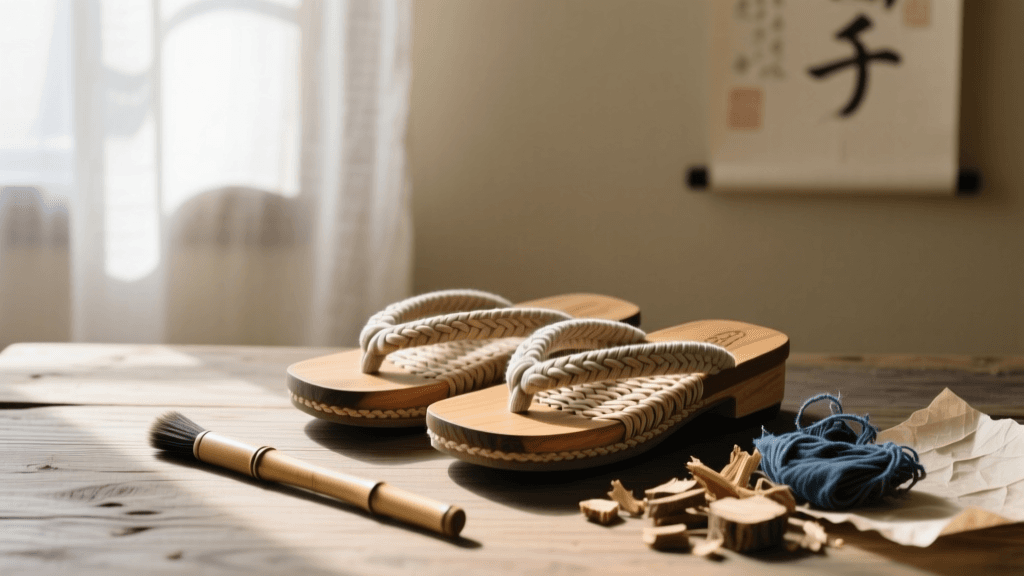
Zori: The Flat, Woven Elegance
Zori are flat, thonged sandals that lack the elevated wooden teeth of the geta. They are considered more formal and are the mandatory footwear for wearing high-grade silk kimono, such as those worn at weddings, tea ceremonies, and coming-of-age celebrations. Historically woven from straw (wara-zori) or rush grass (igusa), modern zori crafted in 2026 frequently utilize high-quality synthetic weaves, lacquered wood, leather, and luxurious silk brocades. The soles are often layered and padded for comfort, and the hanao of a formal zori is traditionally white or gold, meticulously matched to the formality of the kimono ensemble.
The Shokunin: Artisan Crafting in the Modern Era
The creation of authentic geta and zori is a testament to the Japanese philosophy of monozukuri (the art of making things). According to the Ministry of Economy, Trade and Industry (METI), the preservation of these traditional crafts is vital to maintaining regional economies and cultural identity. In 2026, master artisans in Kyoto and Tokyo continue to employ techniques that have been passed down through generations.
The crafting of a premium Paulownia geta begins with the careful selection of the timber. The wood must be aged and dried to prevent warping. Artisans carve the dai using specialized chisels, ensuring the arch of the foot is subtly supported. The surface is then polished to a glass-like finish, sometimes treated with natural oils or coated in urushi (traditional Japanese lacquer) for waterproofing and aesthetic depth. The threading of the hanao is perhaps the most closely guarded skill; the artisan must pull the fabric through the wooden holes with exact tension—too tight, and the wood may crack or the wearer's toes will cramp; too loose, and the foot will slide, causing blisters and instability.
2026 Trends: Sustainability and Upcycled Textiles
A major defining trend for traditional Japanese footwear in 2026 is the integration of sustainable practices. As the global fashion industry grapples with its environmental impact, Japanese artisans are leading by example. Many workshops now offer hanao woven from upcycled vintage kimono silk, giving new life to textiles that might otherwise deteriorate in storage. Furthermore, the harvesting of Paulownia and Cedar wood is increasingly regulated to ensure sustainable forestry practices. Some innovative artisans are even experimenting with reclaimed architectural timber from dismantled traditional machiya (wooden townhouses), infusing the footwear with a profound sense of history and architectural heritage. For those interested in experiencing these sustainable crafts firsthand, the Japan National Tourism Organization (JNTO) offers extensive directories of eco-conscious artisan workshops open to international visitors.
Comparison: Choosing Between Geta and Zori
Selecting the right footwear depends heavily on the occasion, the garment you are pairing it with, and your personal comfort level. Below is a comprehensive comparison chart tailored for buyers in 2026.
| Footwear Type | Primary Material | Best Occasion | 2026 Avg Price (USD) | Weight Profile |
|---|---|---|---|---|
| Standard Geta | Paulownia Wood | Yukata, Summer Festivals, Casual Wear | $60 - $140 | Lightweight, Balanced |
| Tengu Geta | Cedar or Paulownia | Performing Arts, Traditional Dance | $120 - $200 | Heavy, Unbalanced |
| Igusa Zori | Woven Rush Grass | Casual Kimono, Ryokan Stays, Onsen | $45 - $90 | Ultra-Light, Breathable |
| Formal Brocade Zori | Silk, Vinyl, Leather | Weddings, Tea Ceremonies, Seijin Shiki | $160 - $400+ | Moderate, Cushioned |
The Golden Rule of Sizing: Why Smaller is Better
One of the most common mistakes made by international buyers and newcomers to Japanese traditional garments is purchasing geta or zori that are too large. In Western footwear, a slight gap at the heel is standard. In Japanese footwear, the exact opposite is true.
The Golden Rule: Your heel should overhang the back edge of the geta or zori by approximately 1 to 2 centimeters (about half an inch).
There are two critical reasons for this. First, if the sandal is too long, the back edge will catch the hem of your kimono or yukata, potentially causing you to trip or damaging expensive silk garments. Second, a slightly smaller base forces the wearer to shift their weight forward and engage their core and calf muscles to grip the hanao with their toes. This naturally corrects posture, resulting in the graceful, gliding gait that is the hallmark of traditional Japanese dress. When measuring your foot in 2026, always measure from the tip of your longest toe to the very back of your heel, and select a dai size that is 1 cm shorter than your exact foot length.
Maintenance and Hanao Replacement
Traditional Japanese footwear is not designed to be disposable; it is built to be maintained. The wooden base of a geta can last for decades if properly cared for. To maintain the wood, it is recommended to wipe the dai with a dry, soft cloth after each use to remove moisture and dirt. Once a year, treating unfinished Paulownia wood with a light application of camellia oil (tsubaki oil) will prevent it from drying out and cracking.
The hanao, however, is considered a consumable component. Over time, the fabric stretches, frays, or becomes soiled. In major cultural hubs like Kyoto and Tokyo, specialized footwear shops still offer hanao-suge (thong replacement) services. In 2026, a professional hanao replacement typically costs between $30 and $60 USD, depending on the quality of the silk or cotton chosen. This service not only extends the life of the footwear but allows the wearer to customize the color and pattern of the thong to match different seasonal wardrobes.
Top Artisan Districts to Visit in 2026
For those traveling to Japan to study or purchase authentic footwear, certain districts remain the epicenters of this craft:
- Asakusa, Tokyo: The historic heart of Tokyo's artisan class. The streets surrounding Senso-ji Temple are lined with heritage footwear shops that have been operating since the Edo period, offering everything from everyday geta to bespoke, lacquered masterpieces.
- Gion and Higashiyama, Kyoto: The premier destination for formal zori. The shops here cater to the local geisha and maiko communities, meaning the quality of the brocade, the precision of the weaving, and the elegance of the hanao knots are of the absolute highest global standard.
- Hida-Takayama, Gifu Prefecture: Famous for its master carpenters and abundant Cedar forests, this mountainous region is the best place to source robust, aromatic wooden bases and learn about the forestry practices that supply the raw materials for traditional geta.
Conclusion
The craft of geta and zori is a beautiful intersection of utility, art, and cultural philosophy. As we move through 2026, the dedication of Japanese artisans to sustainable materials and time-honored techniques ensures that these traditional sandals remain relevant and revered. By understanding their anatomy, respecting the sizing traditions, and investing in artisan-crafted pairs, you are not merely buying a pair of shoes; you are participating in the living history of Asian traditions and supporting the vital preservation of global heritage crafts.