Furisode vs Homongi: 2026 Guide to Formal Japanese Kimono
Introduction to Japanese Formal Wear in 2026
As we navigate the vibrant cultural landscape of 2026, the enduring elegance of Japanese traditional garments continues to captivate both domestic wearers and international enthusiasts. While everyday fashion in Tokyo and Kyoto has fully embraced modern global trends, the formal kimono remains a vital, living art form. For those attending weddings, tea ceremonies, or the iconic Coming of Age Day (Seijin no Hi) celebrations, understanding the strict sartorial rules of Japanese formalwear is essential. Two of the most prominent and frequently confused garments in the formal hierarchy are the furisode and the homongi. According to the Victoria and Albert Museum, the kimono is not merely a piece of clothing but a complex canvas that communicates the wearer's age, marital status, and the formality of the occasion. This comprehensive 2026 guide will dissect the differences between these two magnificent garments, exploring their construction, styling rules, and current market dynamics.
The Furisode: The Pinnacle of Youthful Formality
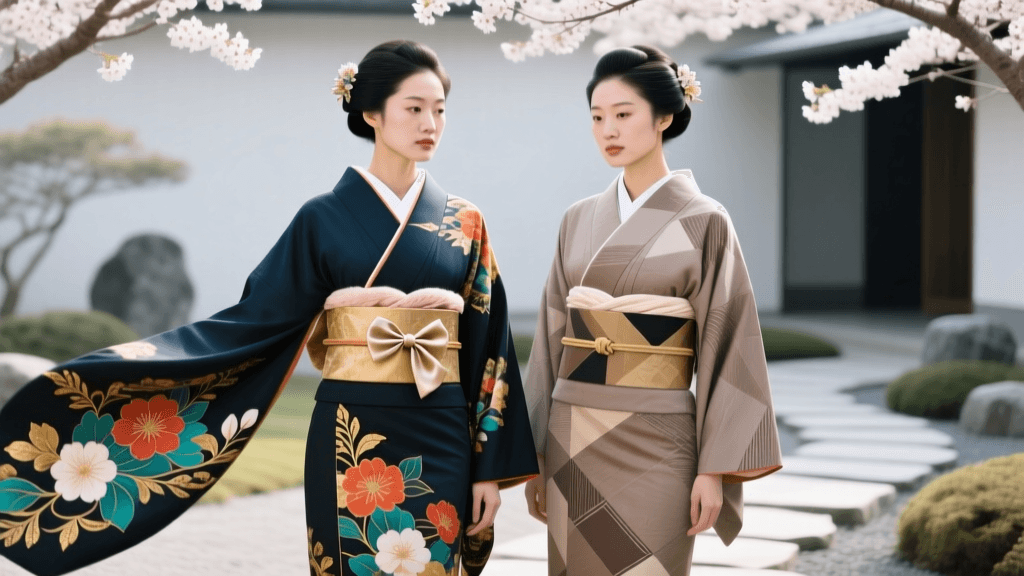
The furisode, which literally translates to 'swinging sleeve,' is the most formal kimono worn by unmarried women. It is instantly recognizable by its exceptionally long, flowing sleeves, which can dramatically alter the wearer's silhouette and convey a sense of youthful elegance. Historically, the long sleeves were believed to ward off evil spirits and express deep emotion, a sentiment that still resonates during modern ceremonial events.
Sleeve Classifications
In 2026, furisode sleeves are generally categorized into three distinct lengths, each dictating a slightly different level of formality:
- Ō-furisode (Large Furisode): Featuring sleeves that measure approximately 114 centimeters (45 inches) in length. This is the most formal variant, often reserved for brides or the most prestigious Coming of Age ceremonies.
- Chū-furisode (Medium Furisode): With sleeves measuring around 100 centimeters (39 inches). This is the most common type seen at modern Seijin no Hi celebrations, offering a balance between dramatic flair and practical mobility.
- Ko-furisode (Small Furisode): Featuring sleeves of about 85 centimeters (33 inches). While still formal, these are slightly less common today but are favored for events where the wearer needs to navigate crowded spaces or perform traditional dances.
The patterns on a furisode are typically vibrant, covering the entire garment with lavish motifs such as cranes, cherry blossoms, and flowing water. The dyeing techniques often incorporate heavy gold leaf (kinpaku) and intricate embroidery, making the furisode a heavy, opulent garment.
The Homongi: Elegance for the Married and Mature
If the furisode is the domain of the unmarried youth, the homongi (literally 'visiting wear') is the premier formal kimono for married women, though unmarried women may also wear it to highly formal events like weddings or prestigious tea ceremonies. The defining characteristic of the homongi is its eba-moyo pattern style.
The Eba-Moyo Technique
Unlike the repeating patterns found on casual kimono, the eba-moyo is a continuous, unified design that flows seamlessly across the seams of the garment. When the homongi is laid flat, the pattern resembles a single, cohesive painting. As detailed by the Metropolitan Museum of Art, this technique requires immense skill; the silk must be temporarily basted together, the design sketched across the seams, and then the garment is taken apart to be dyed and painted by master artisans before being reassembled. This labor-intensive process ensures that the motifs—often depicting serene landscapes, seasonal flora, or abstract geometric clouds—align perfectly when worn.
The color palette of a homongi in 2026 tends to be more subdued and sophisticated compared to the explosive colors of a furisode. Pastels, deep jewel tones, and elegant metallic accents are highly favored, reflecting the mature refinement expected of the wearer.
Furisode vs. Homongi: Key Differences at a Glance
To help you navigate your wardrobe choices for the 2026 social season, here is a structured comparison of these two formal garments:
| Feature | Furisode | Homongi |
|---|---|---|
| Target Demographic | Unmarried women | Married women (and unmarried for formal events) |
| Sleeve Length | 85cm to 114cm (Long, swinging) | Approx. 50cm to 55cm (Standard length) |
| Pattern Style | All-over, vibrant, often asymmetrical | Eba-moyo (continuous picture across seams) |
| Formality Level | Highest for unmarried women | Highest for married women (semi-formal to formal) |
| Primary Occasions | Coming of Age Day, attending weddings | Weddings, tea ceremonies, formal parties |
| 2026 Avg. Rental Cost | ¥60,000 - ¥150,000 | ¥40,000 - ¥90,000 |
2026 Styling Trends: Obi and Accessory Pairings
A kimono is never worn alone; it is the foundation of a complex ensemble. In 2026, styling trends have shifted toward a blend of traditional strictness and subtle modern personalization, particularly in the choice of the obi (sash) and obijime (decorative cord).
Choosing the Right Obi
For a furisode, the standard choice is a fukuro obi, a long, double-width sash woven with luxurious gold or silver threads. In 2026, we are seeing a resurgence of vintage Taisho-era fukuro obi being paired with newly commissioned modern furisode, creating a striking juxtaposition of historical textile art and contemporary dyeing. The obi is typically tied in a fukura-suzume (puffed sparrow) or tateya-musubi (standing arrow) knot, both of which require the assistance of a professional kitsuke (kimono dresser) due to their complexity and the sheer volume of fabric involved.
For the homongi, the fukuro obi is also appropriate, but the patterns should be slightly more subdued to match the elegance of the eba-moyo. A popular 2026 trend for homongi is the use of kyo-yuzen dyed obi featuring subtle, tone-on-tone patterns that provide texture without overpowering the main garment.
The Power of the Obijime and Obidome
The obijime is the braided cord tied over the obi to secure the knot. While traditional rules dictate specific colors for specific seasons, 2026 fashion has embraced a more personalized approach. Young women wearing furisode are increasingly opting for thick, braided obijime in contrasting neon or jewel tones to add a pop of modern color. For the homongi, a thinner, elegantly woven silk cord paired with a vintage obidome (a small decorative clasp) made of cloisonné or carved coral remains the epitome of sophisticated taste.
Essential Undergarments and Footwear
The flawless, cylindrical silhouette of the formal kimono is achieved not through the outer garment alone, but through meticulous layering. The nagajuban is the under-kimono worn directly beneath the furisode or homongi. In 2026, breathable, moisture-wicking synthetic blends are highly popular for the nagajuban, especially during the humid Japanese summers, though pure silk remains the gold standard for winter weddings. The collar of the nagajuban, known as the han-eri, is visible at the neckline and is often heavily embroidered for formal occasions.
Footwear for both garments consists of tabi (split-toe socks) and zori (formal sandals). For a furisode, the zori should feature thick, brocade-covered soles and matching brocade straps. For a homongi, the zori can be slightly lower to the ground, often featuring elegant gold or silver leather. It is a strict rule in 2026, just as it was a century ago, that bare feet must never touch the inside of the zori; pristine white tabi are non-negotiable for formal events.
The 2026 Market: Renting vs. Buying
The economics of acquiring formal Japanese garments have shifted significantly. A high-quality, custom-made silk furisode or homongi can easily cost between ¥500,000 and ¥1,500,000 (approximately $3,300 to $10,000 USD in 2026), factoring in the artisanal labor required for hand-painting and embroidery. Consequently, the rental market dominates the industry.
Modern rental services in 2026 have become highly sophisticated. Many boutiques now offer comprehensive packages that include the kimono, obi, all necessary undergarments, accessories, and the services of a professional dresser and hairstylist. When renting, it is crucial to book at least three to six months in advance, particularly for January (Coming of Age Day) and the autumn wedding season. For those looking to invest in a purchase, the second-hand market has exploded, with authenticated vintage homongi from the Showa era becoming highly sought-after collector's items that offer exceptional value and unique, unreplicable designs.
Modern Care and Preservation
Silk is a delicate protein fiber that requires specialized care. The traditional method of cleaning a kimono is arai-hari, a process where the garment is completely unstitched, washed in specialized solutions, stretched on wooden frames to dry, and then re-sewn. While this method is still practiced by master artisans in Kyoto, it is prohibitively expensive and time-consuming for most modern owners.
In 2026, advanced dry-cleaning technologies specifically calibrated for delicate silk dyes and gold leaf applications have become the standard for routine maintenance. However, proper storage remains the wearer's responsibility. Formal kimono must be folded along their precise, traditional seam lines and stored in tatou-shi (specialized breathable paper wrappers) inside a paulownia wood chest (kiri-tansu). Paulownia wood naturally regulates humidity and repels insects, making it the ultimate preservation tool. Avoid storing silk in plastic bins, as trapped moisture will quickly lead to irreversible mold damage.
Conclusion
Whether you are selecting the dramatic, sweeping sleeves of a furisode to celebrate your coming of age, or the refined, seamless elegance of a homongi for a formal wedding, understanding the nuances of these garments is key to honoring Japanese sartorial traditions. As we move through 2026, the kimono remains a powerful symbol of cultural continuity, proving that true elegance is not bound by time, but is continually renewed by those who wear it with respect and knowledge.