2026 Guide to Chinese Cloud Shoes & Embroidered Boots
The Xin Zhongshi Footwear Renaissance of 2026
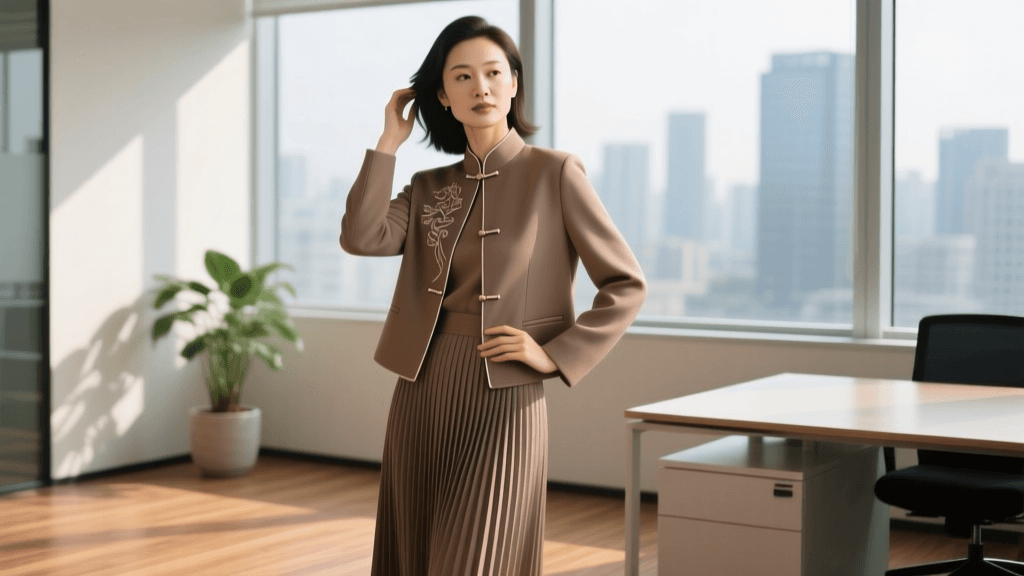
The Xin Zhongshi (New Chinese Style) movement has fundamentally reshaped global fashion over the last few years, and by 2026, the focus has shifted downward to the final frontier of traditional attire: footwear. While the Mamianqun (horse-face skirt) and the Ruqun have dominated mainstream wardrobes, traditional Chinese footwear is now experiencing a massive renaissance. Designers at Shanghai Fashion Week 2026 have heavily featured historical silhouettes, blending ancient aesthetics with modern ergonomic requirements. For enthusiasts of Asian traditions, understanding the nuances of traditional Chinese shoes and boots is no longer just for historians—it is essential for the modern, culturally conscious wardrobe.
This comprehensive guide explores the rich history, modern adaptations, styling techniques, and maintenance routines for traditional Chinese footwear, with a special focus on the iconic Yuntou Xie (cloud-toe shoes) and Xue (embroidered boots).
Yuntou Xie: Anatomy of the Traditional Cloud Shoe
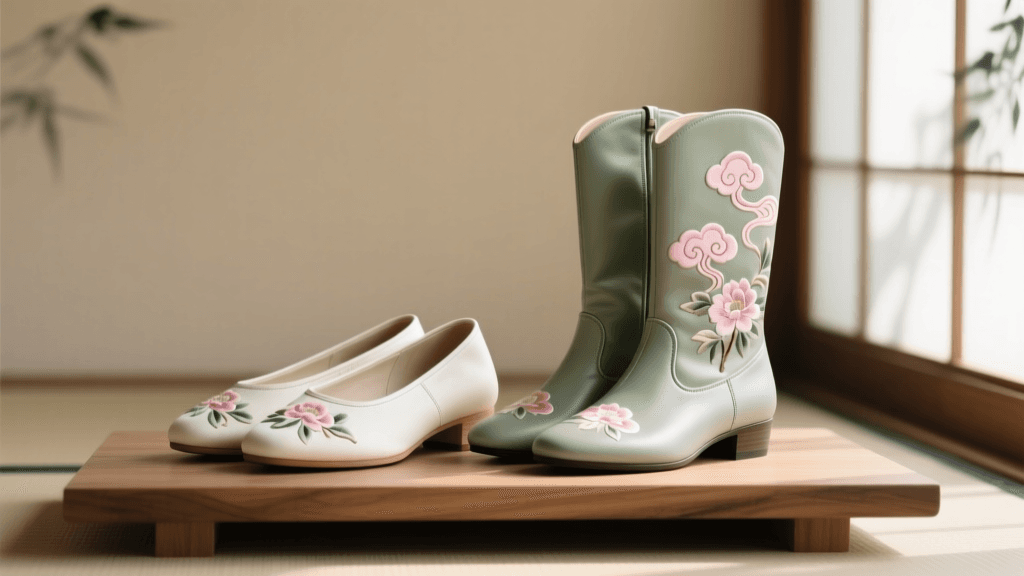
The Yuntou Xie, commonly known as the cloud shoe, is arguably the most recognizable silhouette in traditional Han Chinese footwear. Characterized by its upturned, bifurcated toe that resembles a ruyi scepter or a cumulus cloud, this shoe design dates back centuries and reached its zenith during the Ming and Qing dynasties. Historically, the cloud motif symbolized good fortune, high status, and a connection to the celestial realm.
According to historical overviews of traditional Chinese dress and footwear, shoe designs were often strictly codified by social class and occasion. Cloud shoes were frequently crafted from luxurious silk brocades and featured intricate hand-embroidery depicting peonies, cranes, or bats (symbolizing prosperity and longevity).
2026 Innovations: Today’s cloud shoes have been re-engineered for urban living. Leading heritage brands in 2026 are replacing stiff, historical pasteboard soles with flexible, shock-absorbing cork footbeds and memory foam insoles. Furthermore, the upturned toe is now often structured with lightweight, 3D-printed biodegradable polymers, ensuring the iconic ruyi shape holds up against daily wear and tear without losing its historical charm.
Xue: Embroidered Boots for the Modern Wardrobe
While cloud shoes are synonymous with Han Chinese elegance, the Xue (boot) represents a fascinating intersection of nomadic practicality and imperial refinement. Originally adopted from northern equestrian cultures to protect the legs and feet while riding, boots became a staple of the Qing dynasty wardrobe for both Manchu and Han populations.
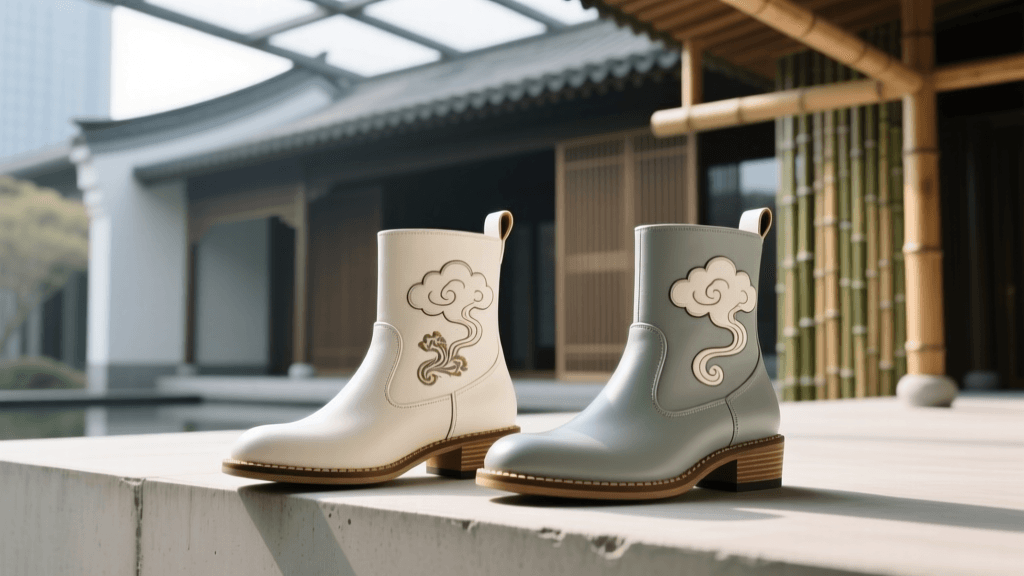
In the 2026 fashion landscape, traditional embroidered ankle boots have emerged as a versatile alternative to modern leather booties. Crafted from sustainable peace silk, vegan brocade, or high-grade cotton-linen blends, these boots feature the same exquisite needlework recognized by UNESCO's Intangible Cultural Heritage lists for Chinese sericulture and silk craftsmanship. Modern Xue often feature discreet side zippers hidden beneath traditional fabric toggle buttons, marrying historical aesthetics with contemporary convenience.
2026 Buyer’s Comparison Chart
When shopping for traditional Chinese footwear this year, it is crucial to understand the different silhouettes available and how they fit into a modern wardrobe. Below is a comparison of the most popular styles dominating the 2026 market.
| Footwear Type | Historical Era | 2026 Material Innovations | Best Styling Pairing | Average Price (USD) |
|---|---|---|---|---|
| Yuntou Xie (Cloud Shoe) | Ming / Qing | Peace Silk, Cork Footbeds, 3D-Printed Toe Caps | Mamianqun, Wide-leg linen trousers | $120 - $280 |
| Xue (Embroidered Ankle Boot) | Qing / Republic | Vegan Brocade, Thermal Linings, Hidden Zippers | Wool midi skirts, Tailored winter coats | $180 - $350 |
| Hua Pen Xie (Flowerpot Shoe) | Qing (Manchu) | Lightweight EVA Platforms, Faux Suede Uppers | Theatrical cosplay, Avant-garde streetwear | $90 - $200 |
| Gong Xie (Arch/Bridge Shoe) | Ming | Arch-Support Insoles, Stain-Resistant Satin | Straight-leg denim, Modern Qipao | $110 - $240 |
Styling Traditional Footwear in 2026
Integrating historical footwear into a contemporary wardrobe requires a balance of proportion and texture. Here are expert styling rules for 2026:
- The Hemline Rule: Cloud shoes feature a prominent, upturned toe that draws the eye. To showcase this detail, pair them with skirts or trousers that end at least two inches above the ankle bone. A cropped, pleated Mamianqun or wide-leg cropped linen pants are ideal.
- Texture Mixing: Because traditional shoes are often made of glossy silk or rich brocade, balance the outfit with matte fabrics. Pair embroidered boots with heavy matte wool coats or raw denim to prevent the outfit from looking like a theatrical costume.
- Color Echoing: Pull a secondary color from the shoe’s embroidery and match it to your top or accessories. If your cloud shoes feature navy silk with gold peony embroidery, a subtle gold silk scarf will tie the entire look together seamlessly.
Sizing, Fit, and Global Shipping
One of the most common hurdles for international buyers in 2026 is navigating traditional Chinese sizing. Most artisan brands now provide comprehensive conversion charts, but there are a few structural differences to keep in mind. Traditional shoes were historically designed to be worn with thick, hand-stitched cotton socks. Consequently, modern reproductions often feature a slightly wider toe box and a more generous instep compared to Western footwear.
If you are purchasing Yuntou Xie, it is generally recommended to order your true Western size, as the elongated toe provides ample room. However, for embroidered ankle boots (Xue), buyers with wider calves should look for brands offering adjustable side gussets or lace-up variations, as traditional silhouettes can sometimes be narrow around the ankle. Always measure your foot length in centimeters and compare it directly to the manufacturer's specific 2026 size chart rather than relying on generic US or EU conversions.
Expert Care, Cleaning, and Storage
Traditional Chinese footwear, particularly those crafted from silk and delicate embroidery, requires meticulous care to ensure longevity. The materials used in 2026 are more resilient than their historical counterparts, but they still demand respect.
Daily Maintenance
Never wear silk cloud shoes in wet or muddy conditions. If your shoes accumulate dust, use a soft-bristled makeup brush or a specialized suede brush to gently sweep the debris away from the embroidered threads. Always brush in the direction of the stitching to avoid snagging the silk floss.
Spot Cleaning
If a stain occurs, do not submerge the shoe in water, as this can cause the inner pasteboard or modern cork footbeds to warp and the silk dyes to bleed. Instead, use a microfiber cloth lightly dampened with distilled water and a drop of pH-neutral detergent. Gently dab (never rub) the stained area, and allow the shoe to air dry away from direct sunlight or heat sources, which can cause the silk to yellow and become brittle.
Long-Term Storage
Proper storage is critical for preserving the structural integrity of the upturned cloud toe and the embroidered shafts of boots.
- Use Shoe Trees: Insert unvarnished cedar shoe trees or stuff the toes with acid-free tissue paper. This prevents the iconic ruyi toe from collapsing and creasing over time.
- Breathable Dust Bags: Store your footwear in the cotton dust bags provided by the manufacturer. Avoid plastic bins, which trap moisture and encourage mold growth on natural silk fibers.
- Climate Control: Keep your shoes in a cool, dark closet. For embroidered boots, store them upright; if the shafts are prone to flopping, insert rolled-up acid-free paper to help them retain their cylindrical shape.
Conclusion
The year 2026 marks a thrilling era for traditional Chinese footwear. The Xin Zhongshi movement has successfully transitioned items like the Yuntou Xie and embroidered Xue from museum displays into viable, comfortable, and stunning everyday accessories. By understanding the historical context, choosing the right modern adaptations, and committing to proper garment care, you can seamlessly weave centuries of Asian tradition into your contemporary personal style.