Xin Zhongshi Fashion 2026: Styling Modern Mamianqun & Song Jackets
The 2026 Renaissance of Xin Zhongshi
In 2026, the Xin Zhongshi (新中式) movement has fully transcended its origins as a niche Hanfu revival to become a dominant force in global everyday fashion. No longer confined to festival wear or historical reenactment, the "New Chinese Style" represents a sophisticated synthesis of ancient silhouettes and contemporary tailoring. As international design weeks showcase the seamless integration of traditional Asian garments into modern urban wardrobes, consumers and designers alike are demanding pieces that honor historical accuracy while accommodating the practicalities of modern life. The 2026 aesthetic is defined by quiet luxury, sustainable textile innovation, and a deep respect for the structural geometry of traditional Chinese pattern-making.
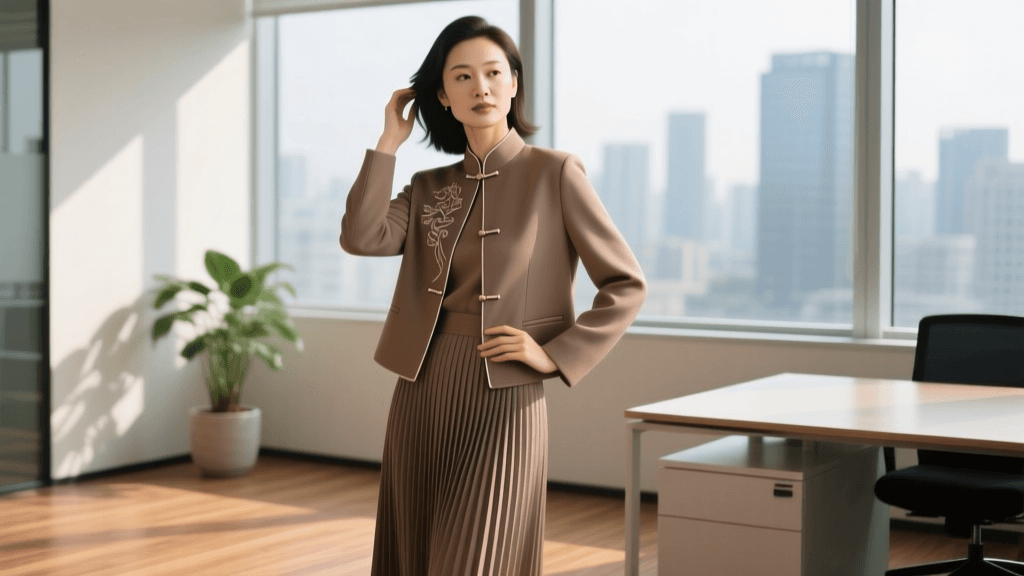
At the heart of this movement are two foundational garments: the Mamianqun (horse-face skirt) and the Songzhi (Song-style jacket). When styled correctly, these pieces offer a versatile, elegant, and culturally rich alternative to Western-centric office and casual wear. This deep dive explores how to source, style, and maintain these garments for the modern wardrobe in 2026.
Deconstructing the Modern Mamianqun
The Mamianqun, historically popularized during the Ming Dynasty, is characterized by its unique overlapping panel construction and deep, structured pleats. According to the Metropolitan Museum of Art's Heilbrunn Timeline, the Ming era was a period of immense sartorial refinement, where the horse-face skirt became a staple for women across various social strata. The skirt's name derives from its flat, unpleated front and back panels (resembling the face of a horse in traditional architectural terminology), flanked by heavily pleated side sections.
In 2026, the modern Mamianqun has been re-engineered for daily commute and office environments. Designers have introduced hidden elastic waistbands, lightweight jacquard weaves, and deeper side-seam pockets without compromising the skirt's iconic drape and kinetic movement. The structural integrity of the pleats is now often maintained through advanced heat-setting techniques applied to Tencel-silk blends, ensuring the skirt remains crisp even after a long day of wear.
Traditional vs. 2026 Modern Mamianqun
| Feature | Traditional Ming Dynasty Mamianqun | 2026 Modern Xin Zhongshi Mamianqun |
|---|---|---|
| Length | Floor-grazing (approx. 105cm) | Midi to Maxi (85cm - 105cm adjustable) |
| Waistband | White cotton/linen tie waist | Hidden elastic, side-zip, or D-ring hardware |
| Fabric | Heavy brocade, woven silk, zhuanghua | Lightweight jacquard, Tencel-silk, matte crepe |
| Pockets | None (relied on sleeves or pouches) | Hidden deep side-seam pockets |
| Pleat Retention | Manual ironing and folding required | Permanent heat-set pleats with memory yarns |
The Song-Style Jacket (Songzhi) Revival
To balance the voluminous, structured drape of the Mamianqun, the 2026 wardrobe relies heavily on the Songzhi, or Song-style jacket. Originating from the Song Dynasty, this garment is celebrated for its slender, straight-collar silhouette, narrow sleeves, and minimalist button or tie closures. Unlike the sweeping, wide-sleeved robes of the Tang or Ming periods, the Song jacket is inherently practical, making it the perfect layering piece for modern climates and air-conditioned offices.
This year's iterations feature subtle nods to traditional craftsmanship, such as the use of Pankou (knotted frog buttons) carved from sustainably sourced jade or sandalwood. The fabrics of choice for 2026 Song jackets include raw linen blends for the summer months and Xiangyunsha (gambiered Canton gauze) for transitional weather. Xiangyunsha, a highly prized silk dyeing technique recognized on the UNESCO Intangible Cultural Heritage list, offers a unique, slightly crisp texture and a deep, earthy luster that perfectly embodies the quiet luxury ethos of modern Xin Zhongshi.
Color Theory: Traditional Hues for 2026
A defining characteristic of the Xin Zhongshi movement is its departure from the stereotypical bright reds and golds often associated with Western interpretations of Chinese fashion. Instead, 2026 embraces the sophisticated, muted palette of traditional Chinese color theory. When building your wardrobe, look for these historically significant, yet highly modern, shades:
- Tianqing (Sky Blue After Rain): A soft, ethereal celadon blue that pairs beautifully with charcoal or cream basics. It is highly favored for lightweight summer Song jackets.
- Yuezibai (Moon White): Not a pure white, but a very pale, cool-toned blue-white. It serves as an excellent, skin-brightening alternative to standard white button-downs.
- Qianqiu (Autumn Willow): A muted, dusty olive-green that acts as a versatile neutral for Mamianqun skirts, grounding brighter tops.
- Zitan (Red Sandalwood): A deep, brownish-purple used sparingly as an accent color in piping, embroidery, or Pankou buttons.
Sizing, Drape, and Proportions
One of the most common pitfalls for newcomers to Xin Zhongshi is misunderstanding the proportional geometry of the garments. Traditional Chinese clothing relies on flat-pattern cutting, where the fabric is cut in straight lines and the drape is created by the way it wraps and folds around the body, rather than through darts and tailored curves.
For the Mamianqun, the waist measurement is critical. Because the skirt wraps and overlaps, you must measure your natural waist (or where you intend the skirt to sit) and add at least 15-20 cm for the overlap and tie allowance. If the overlap is too short, the front "horse face" panel will pull apart when walking; if it is too long, the skirt will bunch awkwardly at the hips. In 2026, many premium brands offer micro-adjustable side tabs to solve this issue, allowing for a customized drape that accommodates fluctuations in body size.
When pairing a Song jacket with a Mamianqun, adhere to the "three-seven" or "five-five" proportion rule. For a taller, more elongated silhouette, tuck a cropped Song jacket into a high-waisted Mamianqun (three-parts top, seven-parts bottom). For a more relaxed, scholarly aesthetic, wear a longer, thigh-grazing Song jacket open over a simple silk camisole and midi-length skirt.
Footwear: The Modern Cloud-Head Shoe
No Xin Zhongshi ensemble is complete without appropriate footwear. In 2026, the traditional Yuntouxie (cloud-head shoe) has been brilliantly reimagined. Historically characterized by an upturned toe resembling a ruyi cloud motif, the modern iteration integrates this elegant silhouette with the ergonomic support of contemporary sneaker soles and low block heels. Designers are utilizing vegan leather and recycled rubber to craft cloud-head loafers and slip-ons that provide all-day comfort for urban commuting while maintaining a distinct cultural aesthetic. Pairing a floor-grazing Mamianqun with a modern cloud-head sneaker allows just the intricate, upturned toe to peek out with every step, adding a layer of subtle sophistication to the outfit.
Garment Care and Longevity
Investing in high-quality Xin Zhongshi garments requires a commitment to proper maintenance, particularly when dealing with specialized textiles like Xiangyunsha or delicate silk jacquards. The Victoria and Albert Museum's textile archives emphasize that the longevity of historic and modern silk garments relies heavily on environmental control and gentle cleaning methods.
2026 Care Protocol for Xin Zhongshi Silks
- Washing: Avoid machine washing entirely. Hand wash in cold water (maximum 30°C) using a pH-neutral, silk-specific detergent. Never wring or twist the fabric; instead, gently press the water out and roll the garment in a clean, dry towel to absorb excess moisture.
- Drying: Always air dry in the shade. Direct sunlight will rapidly degrade the protein structure of silk and cause the rich, natural dyes to fade. Hang Mamianqun skirts from the waistband using padded clips to allow gravity to naturally pull the pleats back into alignment.
- Storage: Do not store silk garments in plastic bags, which trap moisture and encourage mildew. Use breathable, unbleached cotton garment bags. Place natural camphor wood blocks or dried lavender sachets in the wardrobe to deter moths, avoiding direct contact with the fabric to prevent oil stains.
- Pleat Maintenance: If the heat-set pleats of a modern Mamianqun begin to relax over time, use a handheld steamer on a low setting. Gently coax the pleats back into place with your fingers while the fabric is warm and damp, then allow them to cool completely before moving the garment.
Conclusion
The Xin Zhongshi movement of 2026 is a testament to the enduring relevance of Asian traditional garments. By thoughtfully integrating the structural elegance of the Mamianqun and the minimalist utility of the Song jacket into daily life, modern wearers are not merely adopting a fashion trend; they are participating in a living, breathing cultural continuum. With the right knowledge of proportions, traditional color palettes, and meticulous garment care, the New Chinese Style offers a profoundly elegant, sustainable, and deeply personal approach to modern dressing.