Chinese Cloud Shoes & Boots: 2026 Xin Zhongshi Style Guide
The Resurgence of Heritage Footwear in 2026
The Xin Zhongshi (New Chinese Style) movement has completely transformed the global fashion landscape in 2026. No longer confined to historical reenactments or festive costumes, traditional Chinese garments are now a staple of modern, everyday wardrobes. While much attention is often paid to the flowing silhouettes of the Mamianqun (horse-face skirt) or the structured elegance of the Song-style jacket, the foundation of any authentic heritage outfit lies in its footwear. Traditional Chinese footwear, particularly the iconic Cloud Shoes (Yuntou Xie) and structured traditional boots (Xue), have experienced a massive renaissance this year, driven by artisanal revivals and cutting-edge ergonomic adaptations.
In 2026, wearing traditional footwear is about bridging the gap between ancient symbolism and contemporary streetwear. Designers are reimagining centuries-old silhouettes using sustainable textiles, 3D-printed ergonomic lasts, and advanced weather-resistant treatments, making these historical pieces viable for daily commutes, office environments, and international travel. This comprehensive guide explores the anatomy, modern evolution, and styling of traditional Chinese footwear for the contemporary wardrobe.
Understanding the Classics: Cloud Shoes and Traditional Boots
Yuntou Xie (Cloud Shoes)
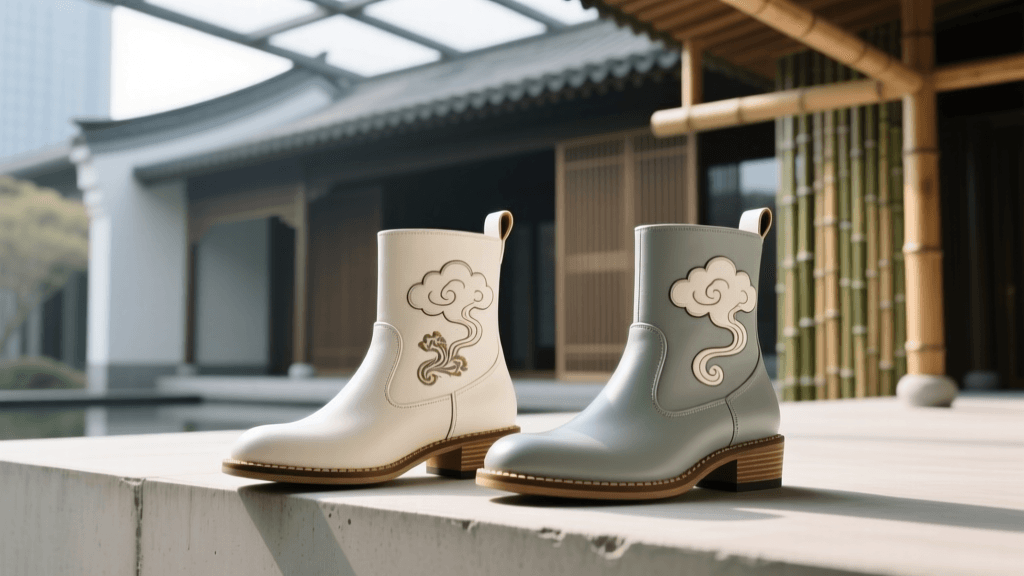
Cloud shoes are instantly recognizable by their distinctive upturned toes and intricate embroidery. Historically, the upturned toe served a dual purpose: it prevented the wearer from tripping over the long, flowing hemlines of traditional robes, and it symbolized the upward ascent toward the heavens. The ruyi cloud motif, frequently embroidered across the vamp, represents good fortune, longevity, and divine protection. According to historical textile archives preserved by The Metropolitan Museum of Art, the craftsmanship of Qing dynasty footwear often involved painstaking silk embroidery techniques, such as the famed Su embroidery, which required thousands of microscopic stitches to create the shaded, three-dimensional cloud patterns seen on premium pairs.
Xue (Traditional Boots)
Traditional Chinese boots, or Xue, offer a stark contrast to the delicate nature of cloud shoes. Originally popularized by nomadic horseback riders and later adopted by Ming and Qing dynasty officials and martial artists, these boots are characterized by their thick, rigid soles and sturdy uppers made from velvet, satin, or heavy brocade. The defining feature of the traditional boot is the Qiancengdi (thousand-layer sole). Historically, artisans would stitch together dozens of layers of cotton cloth, compressing them with heavy stones and binding them with dense hemp thread to create a shock-absorbing, durable base. In 2026, heritage boot makers are honoring this technique while integrating modern comfort technologies.
The 2026 Evolution: Ergonomics Meet Ancient Aesthetics
The most significant barrier to adopting traditional footwear in the past was a lack of arch support and poor traction on modern surfaces like polished concrete or wet asphalt. The 2026 market has solved these issues through brilliant material innovation. Leading ateliers in Shanghai and Chengdu are now utilizing compressed recycled cork and memory foam encased within the traditional Qiancengdi aesthetic. The exterior still features the iconic white cotton stitching, but the interior provides the orthopedic support required for all-day wear.
Furthermore, the silk used in 2026 collections is vastly superior in durability. Thanks to advancements recognized by the UNESCO Intangible Cultural Heritage lists detailing traditional sericulture, modern weavers are blending mulberry silk with high-tensile lotus fibers and recycled PET threads. This creates a brocade that retains the lustrous sheen of historical silk but is entirely water-resistant and machine-washable on delicate cycles—a game-changer for everyday footwear.
2026 Buyer’s Comparison Chart
When shopping for heritage footwear this year, it is essential to understand the different categories available. Below is a comparison of the most popular styles dominating the 2026 Xin Zhongshi market.
| Footwear Type | Traditional Material | 2026 Modern Adaptation | Best Styling Pairing | Avg. Price (USD) |
|---|---|---|---|---|
| Yuntou Xie (Cloud Shoes) | Silk Brocade, Cotton Sole | Lotus-Silk Blend, Cork Insole | Mamianqun, Pleated Midi Skirts | $140 - $280 |
| Qiancengdi Boots | Velvet, Hemp-stitched Cloth | Vegan Suede, Rubberized Cloth Sole | Wide-leg Linen Trousers, Tunics | $180 - $350 |
| Hybrid Loafers (Tang-style) | Satin, Leather | Embossed Leather, EVA Foam Sole | Tailored Suits, Modern Qipao | $120 - $220 |
Styling Guide: Integrating Heritage Shoes into Modern Wardrobes
Look 1: The Office-Ready Mamianqun & Cloud Shoe Combo
The Mamianqun remains the undisputed queen of the Xin Zhongshi wardrobe in 2026. To style cloud shoes for a professional or academic environment, opt for a muted, matte-finish cloud shoe in deep plum, navy, or charcoal. Avoid highly reflective gold or red threads, which read as strictly ceremonial. Pair a woven, jacquard Mamianqun that hits just at the ankle bone with a structured, mandarin-collared blazer. The upturned toe of the cloud shoe will peek out elegantly from beneath the skirt's hem, providing a subtle nod to heritage without overwhelming the silhouette.
Look 2: Weekend Streetwear with Traditional Boots
Traditional boots are inherently bold and bring a grounded, architectural element to an outfit. For a contemporary weekend look, pair black or dark emerald velvet boots with wide-leg, heavy-weight linen trousers. Allow the trousers to drape slightly over the boot's vamp, but ensure the thick, white-stitched sole remains visible. Top the look with an oversized, cross-body Song-style jacket in a neutral tone. As noted by curators at the Smithsonian National Museum of Asian Art, the juxtaposition of rigid, structured footwear with fluid, draping textiles is a hallmark of classical East Asian aesthetics, and this 2026 streetwear interpretation captures that historical tension perfectly.
Sizing, Fit, and the Modern Last
One of the most common mistakes first-time buyers make is ordering their standard Western shoe size for traditional Chinese footwear. Historically, Chinese shoes were crafted on straight, narrow lasts designed for binding or specific indoor postures. In 2026, reputable brands utilize anatomically correct, asymmetrical lasts that accommodate the natural splay of the toes. However, because traditional upturned toes require extra length to maintain their structural curve, you should generally size up by a half-size from your standard sneaker measurement. Always look for brands that offer a wide-width option, as the rigid brocade and velvet materials used in heritage footwear do not stretch significantly over time.
Preservation: Caring for Silk, Velvet, and Brocade
Even with 2026's water-resistant textile treatments, traditional footwear requires specific care to maintain its structural integrity and vibrant embroidery.
- Cleaning: Never submerge cloud shoes or boots in water. Use a soft-bristled brush to remove dry debris from the embroidery. For localized stains, use a microfiber cloth dampened with a pH-neutral silk detergent, dabbing gently rather than rubbing.
- Drying: If your shoes become wet, stuff them with acid-free tissue paper to maintain the shape of the upturned toe or the rigid shaft of the boot. Allow them to air dry at room temperature, far away from direct sunlight or radiators, which can cause the silk threads to become brittle and fade.
- Storage: Store your footwear in breathable cotton dust bags. Avoid plastic boxes, which trap moisture and encourage mold growth on natural fibers. Place a small sachet of silica gel and dried cedar chips inside the shoes to absorb ambient humidity and deter pests.
- Sole Maintenance: If you purchase a pair with an authentic, exposed cotton Qiancengdi sole, avoid wearing them in heavy rain. The cotton layers will absorb water and take days to dry, potentially compromising the hemp stitching. Reserve pure cotton soles for indoor events, dry-weather outings, or curated fashion shoots.
Conclusion
The 2026 Xin Zhongshi movement has proven that traditional Chinese footwear is not a relic of the past, but a dynamic, evolving art form. Whether you are stepping into the office in a pair of ergonomically engineered cloud shoes or navigating the city streets in velvet heritage boots, you are participating in a living tradition. By understanding the history, embracing modern material innovations, and styling these pieces with contemporary intention, you can seamlessly weave the rich tapestry of Asian sartorial heritage into your everyday life.