Bunka Fashion College 2026: Wafuku & Shibori Online Workshops
The Global Renaissance of Wafuku Education in 2026
As we move deeper into 2026, the global fashion industry's pivot toward zero-waste design and sustainable textiles has placed traditional Japanese garment-making techniques—collectively known as Wafuku—under an intense, well-deserved spotlight. Unlike Western pattern drafting, which relies on curved seams to contour the body, traditional Japanese pattern drafting utilizes straight lines and geometric shapes that maximize fabric yield and minimize textile waste. For international designers, artisans, and fashion students, accessing this ancestral knowledge was once limited to relocating to Japan. Today, however, premier institutions have fully embraced hybrid and virtual education models.
Leading this educational revolution is the prestigious Bunka Fashion College in Tokyo. In 2026, Bunka has expanded its digital footprint, offering comprehensive online workshops and hybrid masterclasses that allow global students to learn authentic Wafuku construction and traditional Shibori dyeing from their home studios. This guide breaks down the current landscape of Japanese fashion education, focusing on the best online workshops, required toolkits, and the technical nuances of mastering traditional garment construction in a virtual environment.
Bunka Fashion College’s 2026 Virtual Wafuku Curriculum
Bunka Fashion College, historically renowned for launching the careers of avant-garde legends like Yohji Yamamoto and Junya Watanabe, has restructured its traditional arts division for the 2026 academic year. Recognizing the international demand for sustainable design methodologies, Bunka now offers a dedicated 'Wafuku & Zero-Waste Pattern Drafting' online certificate program. This 12-week intensive virtual workshop is conducted via high-definition, multi-angle streaming, ensuring that the intricate hand-stitching techniques and precise folding methods are visible to remote students.
Core Modules: Straight-Line Drafting and the Tanmono
The cornerstone of the 2026 curriculum is the study of the tanmono—the traditional Japanese bolt of fabric. Unlike Western fabric bolts that are typically 115cm to 150cm wide, a standard kimono tanmono is woven to a narrow width of roughly 36cm to 40cm, with a length of about 12 meters. Students learn how this specific dimension dictates the entire architecture of the kimono, haori, and yukata.
- Module 1: The Geometry of Wafuku. Understanding the straight-line cutting method, where fabric is rarely cut away but rather folded and tucked, allowing the garment to be entirely unpicked and returned to its original bolt state for washing or re-dyeing.
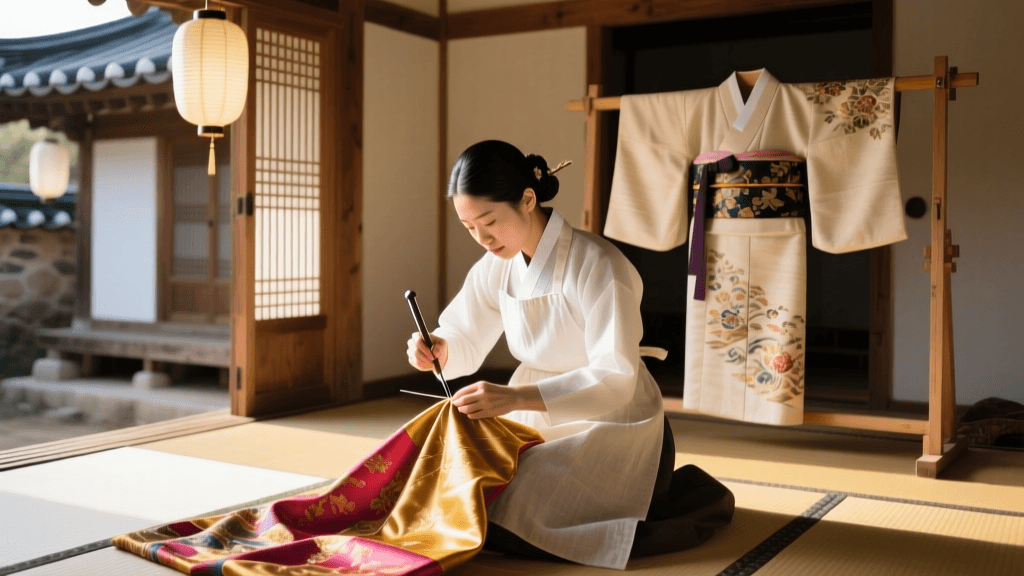
- Module 2: Hand-Stitching Techniques (Nui). Mastering the hon-geshi (blind stitch) and chikara-nui (reinforcement stitching) essential for securing silk linings and stress points without visible exterior threads.
- Module 3: Modern Adaptations. Translating traditional Wafuku proportions into contemporary, everyday wear, such as modern wrap tops and wide-leg hakama-inspired trousers, utilizing upcycled Western-width fabrics while maintaining the zero-waste philosophy.
Immersive Shibori and Natural Dyeing Workshops
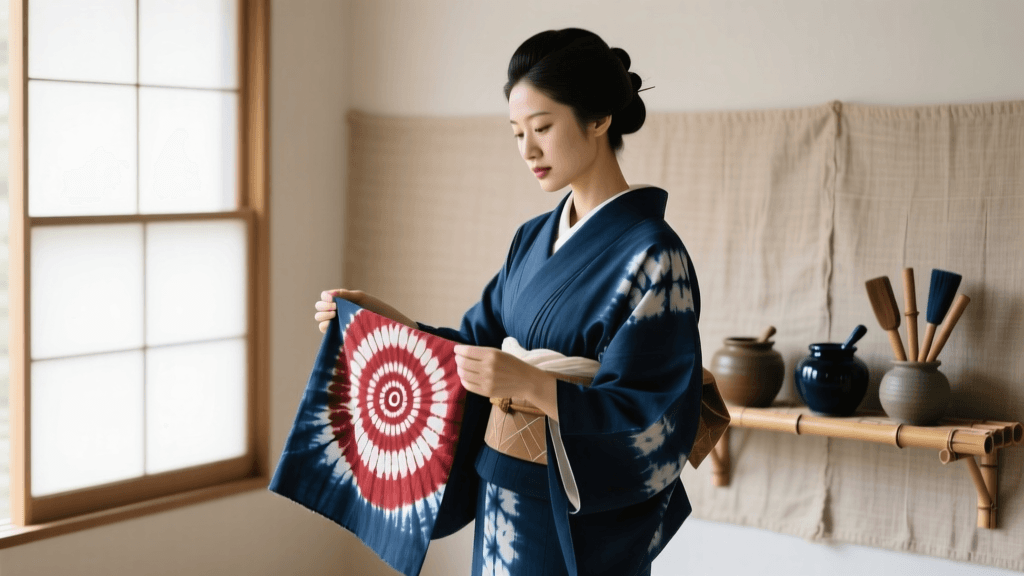
While Bunka excels in construction, the art of Japanese textile dyeing is best explored through specialized virtual workshops offered by regional artisans and cultural preservation societies. The Kyoto Shibori Museum, in collaboration with independent master dyers, has launched a series of 2026 virtual masterclasses focusing on Roketsu-zome (wax-resist dyeing) and Kanoko Shibori (bound-resist dyeing).
These online workshops are uniquely structured around 'synchronized dye kits.' Upon enrollment, students receive a physical kit containing pre-washed silk habotai, natural indigo (Ai) vats, binding threads, and specialized wooden clamps. The live sessions guide students through the precise tension required for binding the fabric, ensuring the resist patterns emerge with crisp, high-contrast edges once the fabric is submerged in the vat. Furthermore, the 2026 curriculum places a heavy emphasis on eco-friendly vat management, teaching students how to maintain a living indigo vat in a home studio using synthetic-free, organic reduction methods.
2026 Comparison: Top Japanese Fashion Education Programs
Choosing the right program depends on your specific goals, whether you are looking for academic accreditation, artisan skill-building, or sustainable design theory. Below is a comparison of the top virtual and hybrid programs available this year.
| Institution / Platform | Program Focus | Format & Duration | 2026 Tuition (Approx.) | Best For |
|---|---|---|---|---|
| Bunka Fashion College | Wafuku Pattern Drafting & Construction | 12 Weeks, Live Virtual + VOD | ¥185,000 | Aspiring fashion designers & patternmakers |
| Kyoto Shibori Museum | Advanced Kanoko & Arashi Shibori | 4 Weeks, Live + Kit Sync | ¥65,000 (Kit included) | Textile artists & surface designers |
| Kyoto University of Art (Online) | History & Theory of Japanese Textiles | 8 Weeks, Asynchronous VOD | ¥45,000 | Fashion historians & journalists |
| Independent Artisan Guilds | Edo-period Sashiko & Boro Mending | Weekend Virtual Workshops | ¥12,000 per session | Hobbyists & sustainable fashion advocates |
Essential Toolkit for the Virtual Wafuku Student
Transitioning to traditional Japanese garment making requires a shift in your physical toolkit. Western sewing shears and curved rulers are largely ineffective when drafting and constructing Wafuku. To succeed in the 2026 online cohorts, students must acquire specific Japanese tailoring tools. The Ministry of Economy, Trade and Industry (METI) emphasizes the importance of utilizing authentic, regionally crafted tools to preserve the integrity of traditional craft techniques.
| Tool Name | Function & Application | Estimated 2026 Cost |
|---|---|---|
| Karimata (Japanese Shears) | Heavy-duty, angled shears designed for cutting thick layers of silk and wool without fraying the edges of the tanmono. | $120 - $180 USD |
| Shaku (Bamboo Ruler) | A traditional measuring stick (approx. 37.8cm) used for marking precise geometric lines and folding allowances. | $25 - $40 USD |
| Kote (Traditional Iron) | Unlike Western steam irons, the kote applies dry, targeted heat to press seams flat without stretching the bias of the silk. | $85 - $150 USD |
| Harite (Tension Pins) | Long, specialized pins with glass heads used to secure fabric layers to a tatami or specialized cutting mat during drafting. | $15 - $25 USD |
| Kukeshi (Basting Thread) | Thick, loosely spun cotton thread used for temporary basting that breaks easily when removed, protecting delicate silks. | $10 - $15 USD |
Bridging Tradition and Modern Sustainable Fashion
The integration of Wafuku and Shibori techniques into modern fashion education is not merely an exercise in historical preservation; it is a vital step toward a sustainable future. The zero-waste pattern drafting inherent in kimono construction offers a direct antidote to the 15% fabric waste typical in Western apparel manufacturing. By participating in these 2026 online workshops, global designers are learning to view fabric not as a disposable canvas, but as a precious, continuous resource.
Furthermore, the virtual format has democratized access to these guarded techniques. Artisans in rural Japan, who previously relied solely on local foot traffic and domestic apprenticeships, are now finding global audiences and sustainable income streams through virtual masterclasses. Whether you are a seasoned patternmaker looking to eliminate textile waste from your production line, or a textile artist seeking the meditative discipline of Arashi Shibori, the 2026 digital landscape of Japanese fashion education offers unparalleled depth, authenticity, and accessibility.