Tailoring a Florentine Renaissance Gamurra: 2026 Reenactor Guide
Introduction to the 15th-Century Florentine Silhouette
As we navigate the historical tailoring landscape in 2026, the demand for museum-quality Renaissance reenactment garments has never been higher. The European folk dress community has largely moved away from costume-shop approximations, favoring instead meticulously researched, historically accurate bespoke tailoring. At the heart of the 15th-century Italian wardrobe lies the gamurra (a fitted, front-lacing outer dress) and the cotta (the linen underdress). Whether you are preparing for the 2026 summer historical festival season or expanding your bespoke tailoring portfolio, mastering the Florentine silhouette requires an understanding of period geometry, natural fiber behavior, and structural sewing techniques.
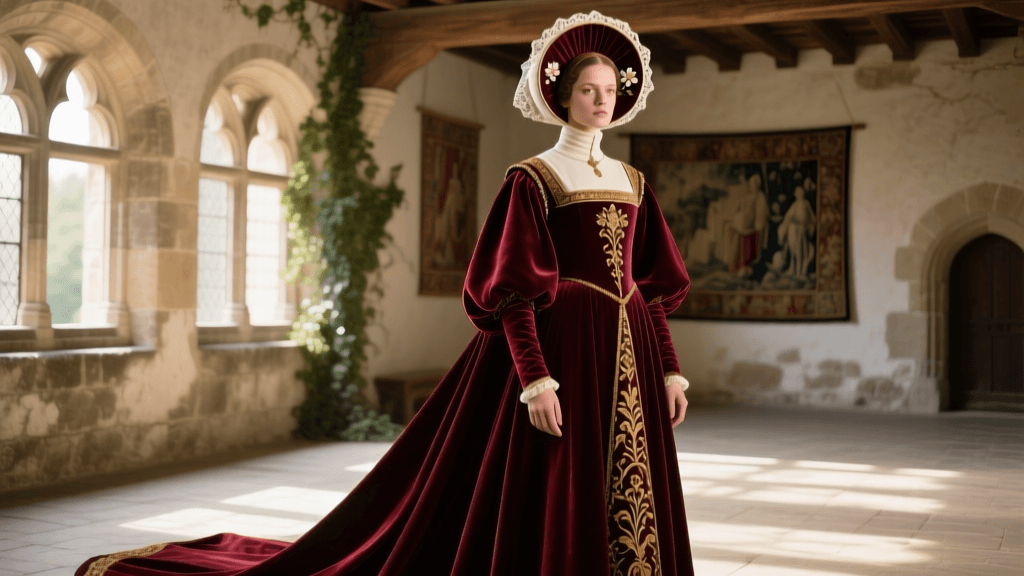
According to the Metropolitan Museum of Art's Heilbrunn Timeline of Art History, the transition from the voluminous Gothic houppelande to the more structured, tailored garments of the Italian Renaissance marked a pivotal moment in European fashion. The Florentine gamurra, characterized by its high waist, square neckline, and detachable sleeves, represents a masterclass in functional elegance. This guide will walk you through the exact measurements, textile sourcing, and construction methods required to build a historically accurate ensemble today.
The Foundation: Drafting the Cotta (Underdress)
The cotta serves as the foundational layer of the Renaissance wardrobe. It protects the expensive outer wools and silks from body oils and sweat while providing a breathable, comfortable base layer. In 2026, the standard for high-end reenactment dictates the use of 100% long-staple flax linen, woven in a plain tabby weave.
Measurement and Pattern Drafting
Unlike Victorian corsetry or later Tudor kirtles, the 15th-century cotta does not rely on boning or rigid structure. The support is achieved entirely through the bias cut and the precise tailoring of the side seams. To draft your pattern, you will need your bust, underbust, natural waist, and over-the-shoulder measurements. The cotta is traditionally constructed from four main panels (two front, two back) with triangular gores inserted at the side seams to provide skirt volume without adding bulk to the waist. Underarm gussets are mandatory; they allow for a full range of motion and prevent the armholes from tearing when the wearer raises their arms.
For the modern tailor, cutting the cotta on the grain ensures durability, but inserting the gores slightly off-grain allows the linen to drape beautifully over the hips. Seam allowances should be generous—at least 5/8 of an inch—to allow for flat-felling, which encloses the raw edges and prevents the linen from fraying during heavy festival use.
The Outer Layer: Constructing the Gamurra
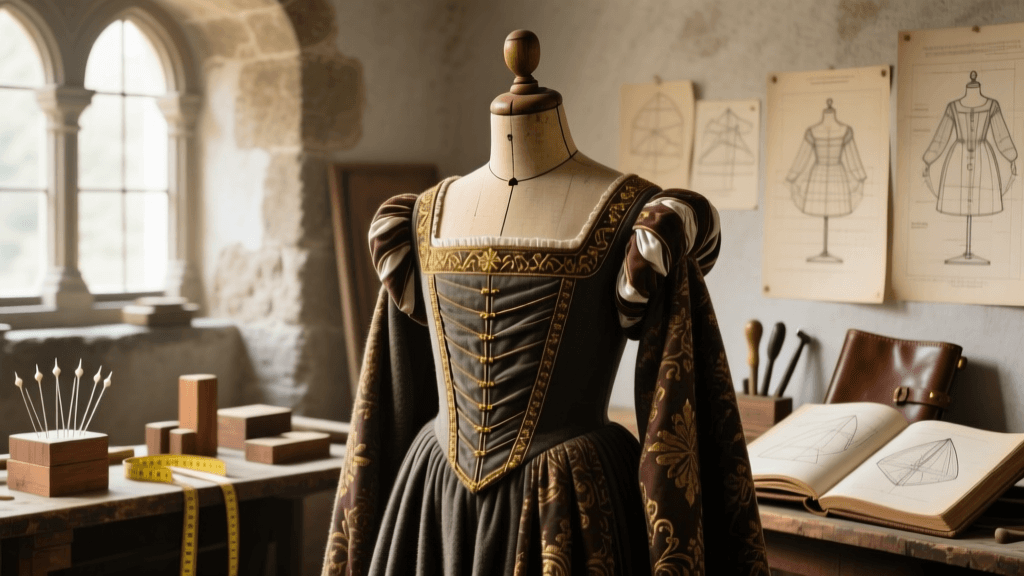
The gamurra is the quintessential working-class and everyday noble dress of 15th-century Florence. While noblewomen might layer a luxurious cioppa or giornea over it for public appearances, the gamurra was the workhorse of the wardrobe. The defining feature of the gamurra is its fitted bodice, which provides bust support through tight tailoring and heavy lining, and its cartridge-pleated skirt.
Bodice Structure and Lining
To achieve the smooth, conical-yet-soft silhouette of the 1400s without modern synthetic boning, the bodice must be interlined. In 2026, historical tailors favor a technique called pad-stitching, where the outer wool and the heavy linen canvas interlining are stitched together in tight, diagonal rows. This creates a semi-rigid fabric that molds to the wearer's torso over time. The front of the gamurra typically features a deep V-neck or square neckline, finished with a wide linen facing or silk bias tape.
Cartridge Pleating and Skirt Attachment
The skirt of a gamurra is where the garment truly shines. To attach the massive volume of fabric (often 4 to 6 yards) to the relatively small waistline of the bodice, tailors use cartridge pleating. This involves running two or three parallel rows of heavy gathering stitches at the top of the skirt panel, pulling them tight, and then whipping the folded pleats directly to the finished bottom edge of the bodice. This technique creates the distinctive, rounded 'bump' at the waistline seen in the paintings of Domenico Ghirlandaio and Sandro Botticelli.
Detachable Sleeves and Lacing Rings
One of the most iconic elements of Florentine dress is the detachable sleeve. Sleeves were incredibly expensive, often made of silk brocade or cloth of gold, and were considered separate accessories that could be swapped out or bequeathed in wills. The sleeves are attached to the gamurra bodice using small brass or silk-thread lacing rings sewn at two-inch intervals along the armhole. A silk cord or narrow ribbon is laced through these rings, securing the sleeve while allowing the white linen cotta to puff out elegantly through the intentional gaps (slashes) at the elbow and shoulder.
2026 Textile Sourcing & Cost Analysis
Sourcing historically accurate textiles remains one of the biggest hurdles for modern tailors. As of early 2026, the shift toward botanically dyed, heritage-milled fabrics has driven up costs slightly, but the quality available to independent tailors is unprecedented. Below is a comparison of premier suppliers for your Renaissance project.
| Supplier | Fabric Type | 2026 Price/Yard | Best For |
|---|---|---|---|
| Burnley & Trowbridge | Medium-Weight Wool Broadcloth | $58.00 | Gamurra Bodice & Skirt |
| Wm. Booth Draper | 5.3 oz Bleached Linen | $24.50 | Cotta Underdress |
| Historic Threads UK | Botanically Dyed Silk Taffeta | $85.00 | Detachable Sleeves |
| Beckford Silks | Hand-Woven Silk Damask | $120.00 | Noble Trim & Facings |
When budgeting for a complete gamurra and cotta ensemble in 2026, expect to spend between $350 and $600 on raw materials alone, depending on whether you opt for standard wools or luxury silks. Always pre-wash your linens on a hot cycle and steam-press your wools before cutting to prevent catastrophic shrinkage after the garment is assembled.
Essential Tailoring Tools for the 2026 Workshop
While modern sewing machines can be used for the long structural seams of the skirt, the bodice and visible edges must be hand-finished to meet the strict authenticity standards of today's premier reenactment guilds. Your 2026 workshop should be equipped with the following:
- 100/3 and 60/2 Linen Thread: Sourced from specialized historical suppliers, this thread is waxed with pure beeswax to prevent tangling and increase tensile strength.
- Carbon Steel Tailoring Shears: Essential for cleanly cutting heavy wool broadcloth without fraying the edges.
- Bodkin and Silk Cords: For creating the lacing cords used on the front closure and detachable sleeves.
- Wooden Tailor's Clapper: Crucial for pressing open thick wool seams. The clapper traps the steam from your iron, forcing the fibers flat and creating crisp, professional edges.
Hand-Finishing Techniques for Museum-Quality Reenactment
The true mark of a master historical tailor lies in the interior finishing. According to research and conservation notes from the Textile Research Centre (TRC) Leiden, surviving 15th-century garments reveal an obsessive attention to edge finishing. Raw edges were rarely left exposed, even on the inside of the garment.
For your gamurra, utilize the flat-felled seam for the cotta, and a whip-stitched overcast edge for the wool gamurra skirt. The hem of the gamurra should be finished with a wide facing of scrap linen, applied with a nearly invisible slip stitch. This not only protects the wool hem from the wear and tear of walking on dirt and stone but also adds a beautiful weight to the skirt, improving the drape and the swing of the cartridge pleats.
The front lacing of the gamurra should be done using a spiral lacing technique, which requires offsetting the lacing rings slightly on the left and right sides. This creates a tight, gap-free closure that lies perfectly flat against the body, a detail often missed by beginners but immediately recognized by expert judges at 2026 historical competitions.
Conclusion
Tailoring a Florentine gamurra and cotta is a deeply rewarding journey into the heart of Renaissance material culture. By combining historically accurate drafting techniques with the premium, heritage-milled textiles available in 2026, you can create a garment that is not only visually stunning but structurally sound enough to withstand years of historical interpretation and festival wear. Take your time with the pad-stitching, respect the geometry of the cartridge pleats, and let the natural fibers do the work. The result will be a bespoke piece of European folk dress that honors the master tailors of 15th-century Florence.