2026 Burgundian Houppelande and Hennin Construction Guide
The Allure of the Burgundian Court in 2026
As the historical reenactment and living history community moves deeper into the 2026 season, the fascination with 15th-century Burgundian court fashion continues to dominate high-end medieval events. Characterized by its dramatic silhouettes, luxurious textiles, and towering headwear, the Burgundian style represents the zenith of late Gothic fashion. For modern costumers and historical interpreters, recreating these garments requires more than just a basic sewing pattern; it demands an understanding of historical tailoring, period-accurate material sourcing, and structural engineering. This comprehensive guide will walk you through the construction of the iconic houppelande and the steeple hennin, utilizing modern 2026 resources while maintaining strict historical authenticity.
Anatomy of the Houppelande
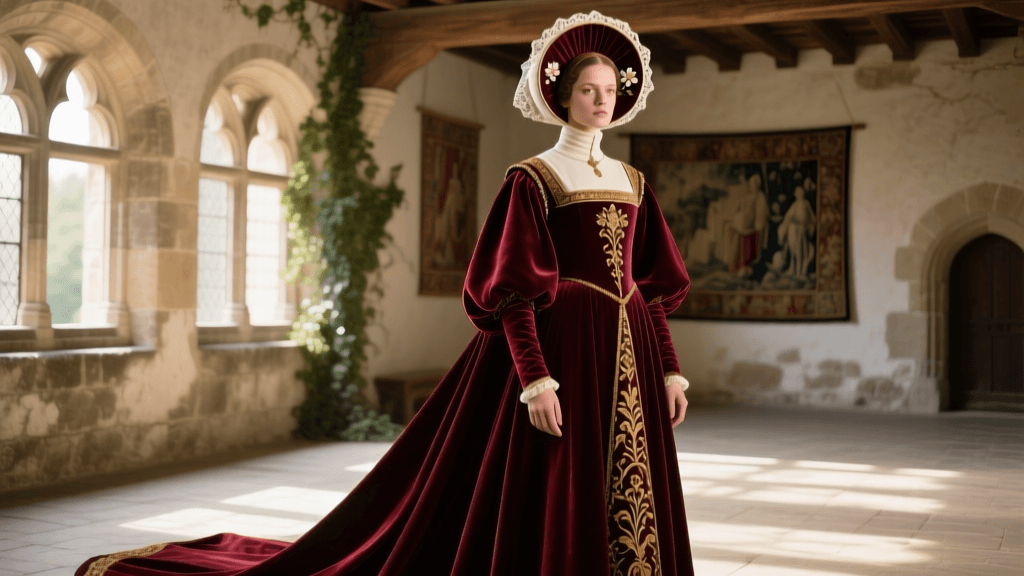
The houppelande is perhaps the most recognizable garment of the late medieval period. Originating in the late 14th century, it evolved into a highly structured, voluminous gown by the mid-15th century. According to the Victoria and Albert Museum's Medieval and Renaissance collections, the transition from fitted Gothic silhouettes to the voluminous houppelande marked a significant shift in European tailoring, emphasizing draped fabric and conspicuous consumption.
Key Design Elements
- The High Collar: Often reaching the jawline, the collar is stiffened and sometimes lined with contrasting fabric or fur.
- The Belted Waist: For women, the houppelande is typically belted just below the bust (an empire waist), while men wear it at the natural waist or hips, creating deep, tubular folds.
- Bombard Sleeves: The defining feature of the garment. These sleeves are cut as massive circles or ovals, hanging down to the floor and often lined with a contrasting color or fur to showcase the drape.
- The Train: Formal court houppelandes frequently feature a floor-sweeping train, requiring careful hemming and facing.
Drafting the Pattern: Measurements and Yardage
Unlike modern garments that rely on darts and complex seaming to fit the body, the medieval houppelande relies on geometric cutting and the manipulation of fabric through gathering and belting. To draft a period-accurate pattern for a standard female court houppelande, you will need to construct a series of large gussets and rectangular panels.
Essential Measurements
Before purchasing your 2026 textile allotment, take the following measurements over your foundational linen undergarments:
- High Bust (Belt Line): Measure directly under the bust where the belt will sit.
- Shoulder to Floor: Measure from the base of the neck, over the shoulder, down to the floor. Add 12 inches for the train.
- Sleeve Drop: Measure from the shoulder point down to the floor to ensure the bombard sleeves brush the ground appropriately.
Pleating Techniques for Historical Volume
When it comes to attaching the skirt to the bodice, cartridge pleating is the most historically defensible method for managing the massive volume of fabric. Unlike modern knife pleats, cartridge pleats stand away from the body, creating the distinctive tubular folds seen in the portraiture of Rogier van der Weyden. To execute this, run three parallel rows of heavy gathering stitches along the top edge of your skirt panels, pull them tightly, and whipstitch each individual pleat directly to the finished lower edge of the bodice.
2026 Textile Sourcing and Cost Breakdown
Sourcing historically accurate textiles remains one of the greatest challenges for modern reenactors. In 2026, global supply chain shifts have impacted the pricing of natural fibers, particularly heavy silks and fine wools. When selecting fabrics, avoid synthetic blends; modern polyester brocades melt under stage lighting and lack the fluid drape of historical textiles. Below is a comparative breakdown of recommended fabrics and their estimated 2026 market costs.
| Fabric Type | Historical Equivalent | 2026 Est. Cost (Per Yard) | Recommended Use |
|---|---|---|---|
| Silk Brocade (Heavyweight) | Italian figured silk | $95 - $140 | Outer gown, sleeves, hennin cover |
| Wool Melton (Medium-Heavy) | Flemish broadcloth | $45 - $65 | Outer gown (winter), cloaks |
| Linen (Medium Weight) | Unbleached linen canvas | $18 - $28 | Smock, kirtle, interlining |
| Silk Organza | Fine silk veiling | $22 - $35 | Hennin veils, sheer cuffs |
| Faux Fur (High Pile) | Marten or squirrel belly | $30 - $50 | Collar lining, sleeve cuffs, hem |
When purchasing silk brocade in 2026, look for specialized historical textile weavers who utilize jacquard looms to replicate 15th-century pomegranate and artichoke motifs. Ensure the fabric has a minimum weight of 20 momme to support the heavy pleating required at the waistline.
Constructing the Steeple Hennin
No Burgundian court ensemble is complete without the steeple hennin, the towering conical headdress that defines the era's silhouette. Constructing a hennin that remains stable on the head during a full day of 2026 reenactment festivities requires modern millinery techniques hidden beneath historical aesthetics.
Materials Required
- Heavyweight millinery buckram (for the cone structure)
- Millinery wire (19-gauge galvanized steel)
- Silk organza or lightweight silk taffeta (for the outer cover)
- Transparent silk organza (minimum 3 yards for the veil)
Step-by-Step Construction
- Drafting the Cone: Cut a half-circle from the buckram. The radius should be at least 24 inches for a dramatic court steeple. Roll it into a cone and secure the seam using heavy-duty linen thread and a whipstitch.
- Wiring the Base: Millinery wire must be stitched around the base opening of the cone. This prevents the buckram from warping against the wearer's head and provides a rigid anchor point for hairpins.
- Covering the Frame: Cut your outer silk fabric with a 1-inch seam allowance. Carefully stitch the silk to the buckram frame, ensuring the grainline runs vertically up the cone to prevent twisting.
- Attaching the Veil: The translucent veil is pinned to the very tip of the steeple. In 2026, many costumers use a tiny, hidden magnetic clasp at the apex of the cone to secure the veil, allowing it to be easily removed for transport while maintaining a seamless historical look.
Footwear and Accessories
To ground your houppelande, proper footwear is essential. The poulaine—a shoe with an elongated, pointed toe—was ubiquitous in the Burgundian court. Modern cordwainers in 2026 offer custom-lasted poulaines crafted from vegetable-tanned leather, which can be dyed to match your gown's accent colors. Expect to pay between $280 and $450 for a pair of custom, hand-welted poulaines with stuffed toes.
The belt is not merely a functional item; it is a crucial structural and decorative element. A 15th-century court belt should be relatively narrow (around 3/4 to 1 inch wide) and exceptionally long, wrapping around the high waist and hanging down to the hem. Look for belts crafted from supple calfskin or silk tablet-weave bands, adorned with cast brass or pewter chapes and decorative mounts. In 2026, several specialized historical leatherworkers offer 3D-scanned and cast replicas of surviving archaeological belt fittings, providing an unprecedented level of detail for the discerning costumer.
For jewelry, avoid modern cast metals. Seek out artisans who specialize in lost-wax casting using pewter or bronze alloys. A heavily jeweled collar or a series of ornate belt plaques will elevate the garment from a simple costume to a true historical interpretation. For further study on period accessories and metalwork, the Costume Society provides extensive peer-reviewed journals and symposium archives that are invaluable for advanced reenactors.
Conclusion
Recreating the Burgundian houppelande and hennin is a rewarding endeavor that bridges the gap between medieval artistry and modern craftsmanship. By understanding the geometric principles of 15th-century tailoring, investing in high-quality natural textiles, and employing structured millinery techniques, you can achieve a breathtaking level of historical accuracy. As you prepare for the 2026 event season, let the opulence of the Burgundian court inspire your needle and thread.