Sourcing Authentic Dirndls and Bunads in 2026: A Regional Guide
The 2026 Renaissance of European Folk Dress
As we navigate the cultural fashion landscape of 2026, a profound shift has taken place in how traditional European garments are perceived, sourced, and worn. Moving far beyond the realm of mass-produced festival costumes, there is a surging demand for historically accurate, regionally specific folk dress. Today, consumers and cultural enthusiasts are investing in living heritage, seeking out master tailors and heritage textile mills that preserve centuries-old techniques. Whether preparing for a traditional Alpine wedding, a Syttende Mai celebration, or simply honoring one's genealogy, understanding the nuances of regional folk dress is essential.
This guide focuses on two of the most iconic and highly regulated traditional garments in Europe: the Bavarian Dirndl (representing the broader Alpine Tracht tradition) and the Norwegian Bunad. We will explore the anatomical differences, regional variations, 2026 market pricing, and the precise tailoring measurements required to source these garments authentically.
The Bavarian Dirndl: Beyond the Festival Tent
While the global market is flooded with cheap, synthetic interpretations of the Dirndl during late September, the authentic Tracht is a sophisticated, multi-layered garment rooted in the rural history of the Alps. According to the Bavarian Tracht Culture Center, true regional Tracht is not a uniform, but a reflection of specific valleys, religious affiliations, and marital statuses.
Regional Variations and 2026 Textile Trends
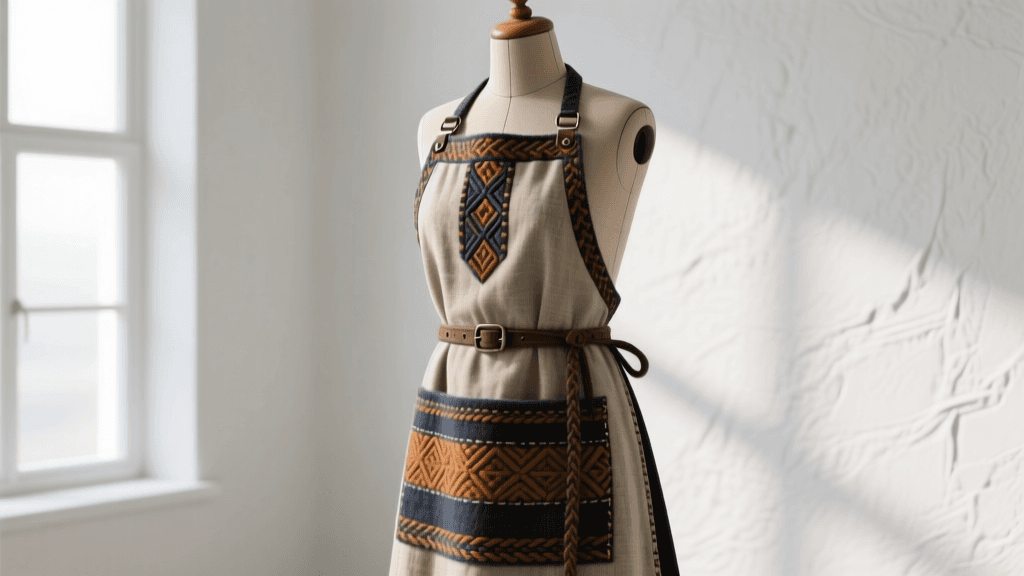
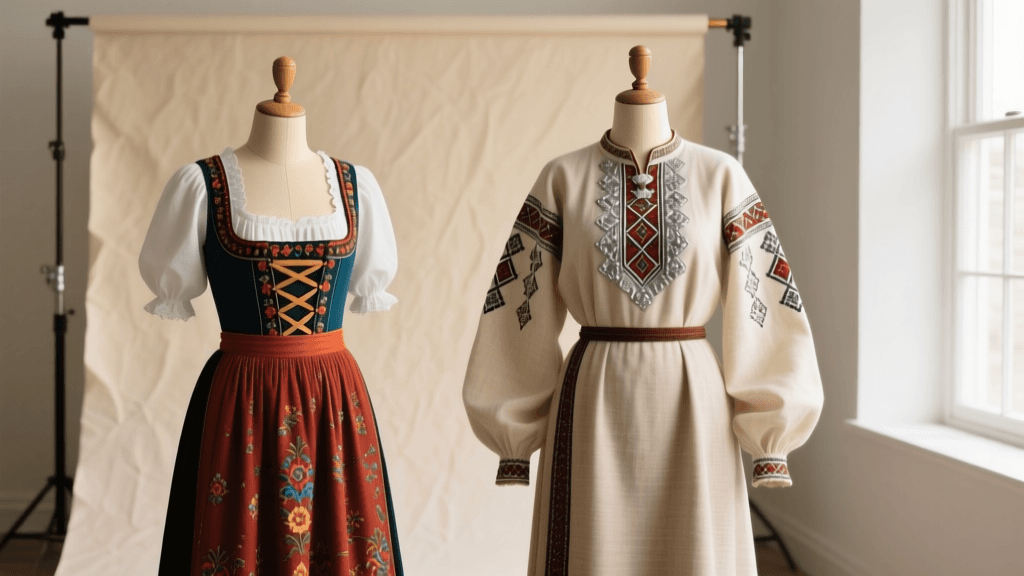
The most recognized authentic iteration is the Miesbacher Tracht, originating from the Miesbach district in Upper Bavaria. A genuine Miesbacher Dirndl consists of four distinct components: the Mieder (a heavily structured, often silk-brocade bodice), the Bluse (a delicate cotton or linen blouse), the Rock (a pleated wool or heavy cotton skirt), and the Schürze (the apron, which traditionally signals the wearer's marital status via the bow's placement).
In 2026, the most significant trend in authentic Dirndl sourcing is the return to heritage-grade, sustainable textiles. Master tailors in Munich and Salzburg are prioritizing hand-woven Alpine linen and naturally dyed merino wools over synthetic blends. The Schürze is increasingly crafted from raw silk or hand-blocked linen, reflecting a broader European movement toward slow fashion. For a custom, hand-finished Miesbacher Dirndl from a recognized Tracht atelier in 2026, buyers should expect to invest between €850 and €1,800, excluding the cost of the blouse and accessories.
The Norwegian Bunad: A Woven Family Tree
If the Dirndl allows for seasonal fashion variations, the Norwegian Bunad is an exercise in strict historical preservation. The Bunad is not merely a costume; it is a localized, highly regulated folk dress tied directly to a specific Norwegian valley or municipality. The authority on these garments is the Norwegian Institute for Bunad and Folk Costume, which meticulously researches and approves patterns to ensure historical fidelity. As noted by the Norwegian Institute for Bunad and Folk Costume, there are over 450 distinct Bunad variations, each with rigid rules regarding embroidery stitches, fabric weights, and silver jewelry.
Strict Regulations and Silver Investments
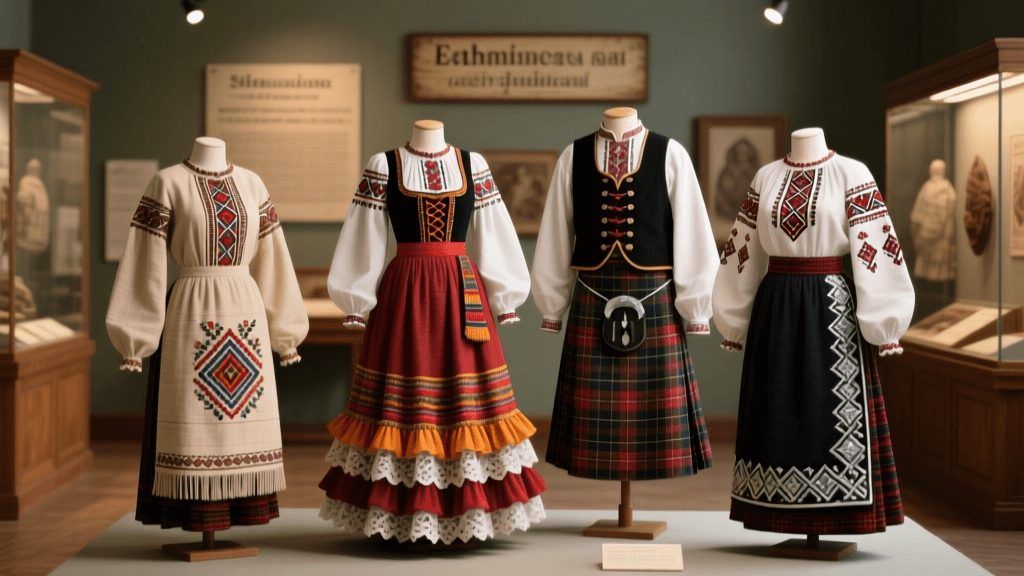
Two of the most prominent variations are the Hardangerbunad and the Nordlandsbunad. The Hardangerbunad, often considered the 'first' Bunad, features striking red, black, and blue worsted wool with intricate cross-stitch embroidery and elaborate beadwork. The Nordlandsbunad, hailing from Nordland county, is famous for its deep blue wool and exquisite floral silver-brocade panels.
Sourcing a Bunad in 2026 requires patience and a significant financial commitment. Because the embroidery is largely done by hand—often by the wearer themselves through local Husfliden (craft association) courses, or by certified artisans—lead times can stretch from six months to over a year. Furthermore, a Bunad is incomplete without its accompanying sølje (traditional silver jewelry). A full set of oxidized sterling silver brooches, cufflinks, and shoe buckles can add 15,000 to 30,000 NOK (approximately $1,400 to $2,800 USD) to the total cost. The base garment itself typically ranges from 35,000 NOK to 60,000 NOK depending on the complexity of the beadwork and the region.
Comparative Analysis: Dirndl vs. Bunad
To help you decide which heritage garment aligns with your cultural goals and budget, we have compiled a structured comparison of the two traditions as they stand in the 2026 market.
| Feature | Bavarian Dirndl (Tracht) | Norwegian Bunad |
|---|---|---|
| Origin & Region | Alpine regions (Bavaria, Austria) | Specific Norwegian valleys/municipalities |
| Regulation | Flexible; seasonal and fashion-adaptable | Strict; governed by heritage councils |
| Base Cost (2026) | €850 - €1,800 | 35,000 - 60,000 NOK ($3,300 - $5,600 USD) |
| Primary Materials | Silk brocade, linen, cotton, merino wool | Worsted wool, linen, velvet |
| Key Accessories | Silk apron, lace blouse, Trachten hat | Hand-embroidered capes, heavy silver sølje |
| Lead Time (Custom) | 4 to 12 weeks | 6 to 18 months |
Practical Sourcing and Tailoring Guide for 2026
Whether you are commissioning a Dirndl from a Bavarian atelier or ordering a Bunad through a local Husflid chapter, precise measurements are non-negotiable. Folk dresses are tailored to historical silhouettes, which differ vastly from modern fast-fashion cuts.
Essential Measurements for Folk Dress
When consulting with a Tracht or Bunad tailor in 2026, you must provide the following specific measurements, taken in centimeters over the undergarments you intend to wear with the garment:
- Underbust (Unterbrust): Crucial for the structured bodice of the Dirndl, ensuring the Mieder provides the correct historical lift and support without relying on modern bras.
- Natural Waist (Taille): Measured at the narrowest point of the torso, typically higher than modern low-rise waistlines. Both the Dirndl skirt and Bunad skirt sit precisely at this natural anchor point.
- High Hip (Oberweite): Measured approximately 10 cm below the natural waist to accommodate the heavy pleating of wool skirts.
- Hollow-to-Hem (Skirt Length): For an authentic Dirndl, the skirt should fall to the ankle bone or mid-calf (the midi-length trend dominating 2026 festivals measures roughly 75-80 cm from the waist). Bunad skirts are strictly measured to the lower calf, historically allowing a glimpse of the embroidered stockings and silver-buckled shoes.
- Shoulder-to-Waist (Rückenlänge): Essential for ensuring the bodice does not gap at the back, a common issue when modern sizing is applied to historical patterns.
Footwear and Accessories in 2026
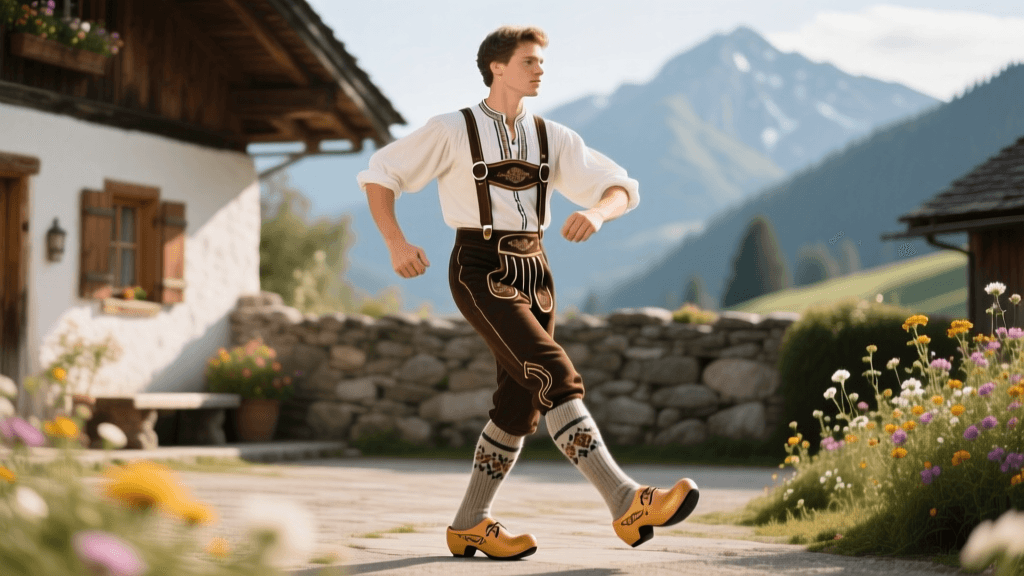
No traditional European folk dress is complete without regionally appropriate footwear. For the Dirndl, the 2026 standard remains the classic Trachtenpumps—a low-heeled, round-toe leather shoe, often adorned with a subtle metal clasp or silk ribbon. Avoid modern stilettos or open-toed sandals, as they break the historical silhouette. For men wearing Lederhosen, the Haferl shoe (a sturdy, side-laced leather shoe with a distinctively shaped toe) paired with thick, ribbed wool socks is mandatory.
For the Bunad, footwear is equally specific. Women wear black leather shoes with a low, broad heel, fastened with a sterling silver buckle that must match the oxidized finish of the bodice brooches. In 2026, heritage tanneries in Norway are producing these shoes using traditional vegetable-tanning methods, ensuring they last for decades and can be passed down as family heirlooms.
Care, Maintenance, and Storage
Investing in authentic European folk dress requires a commitment to proper garment care. The heavy wools and silk brocades used in Tracht and Bunads are highly susceptible to moth damage and humidity. In 2026, eco-friendly, non-toxic moth deterrents like cedarwood blocks and lavender sachets are preferred over chemical mothballs, which can degrade natural fibers and tarnish silver threads.
Silver jewelry, particularly the intricate sølje worn with the Bunad, requires specialized care. The oxidized (blackened) crevices are intentional and should never be polished away with harsh chemical dips. Instead, use a soft, untreated microfiber cloth to gently buff only the raised, shiny surfaces of the silver. When storing the garments for the off-season, wrap the silver pieces in anti-tarnish flannel bags and store the wool skirts in breathable cotton garment bags—never plastic, which traps moisture and promotes mildew.
Conclusion
The year 2026 marks a high point for the appreciation and preservation of European folk dress. By choosing to source an authentic Bavarian Dirndl or a meticulously crafted Norwegian Bunad, you are participating in a living history that honors regional artisans, sustainable textile practices, and centuries of cultural identity. Whether you are navigating the strict heritage councils of Norway or the bespoke ateliers of Munich, understanding the anatomy, costs, and tailoring requirements of these garments ensures your investment will endure for generations to come.