Fijian Masi Barkcloth Beating Techniques And Geometric Stamp Carving
Origins and Cultural Significance of Fijian Masi
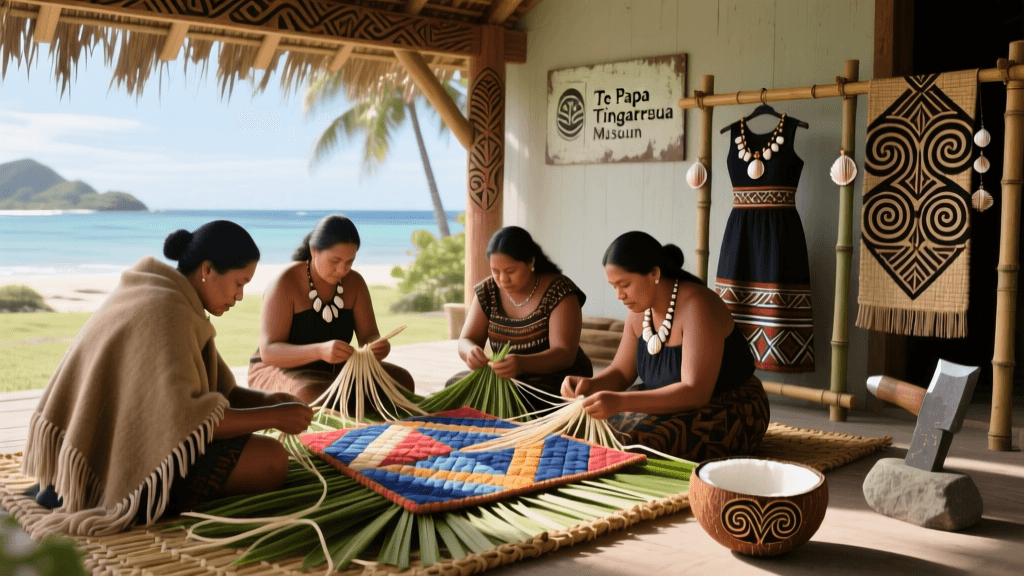
Masi—Fiji’s revered barkcloth—is more than textile; it is ancestral memory made tactile. Produced from the inner bark of the *Broussonetia papyrifera* (paper mulberry) and, less commonly, *Ficus tinctoria* (dye fig), masi has been central to life-cycle ceremonies for over 1,500 years. In traditional Fijian society, masi functions as currency, bridal dowry (*cavutu*), funeral shroud, chiefly regalia, and diplomatic gift. Its production remains gendered: women harvest, soak, and beat; men carve stamps and oversee ceremonial protocols. The cloth’s value is measured not in square metres but in social weight—each folded bundle (*vau*) carries genealogical ties and village affiliations.
The Beating Process: Rhythm, Resistance, and Precision
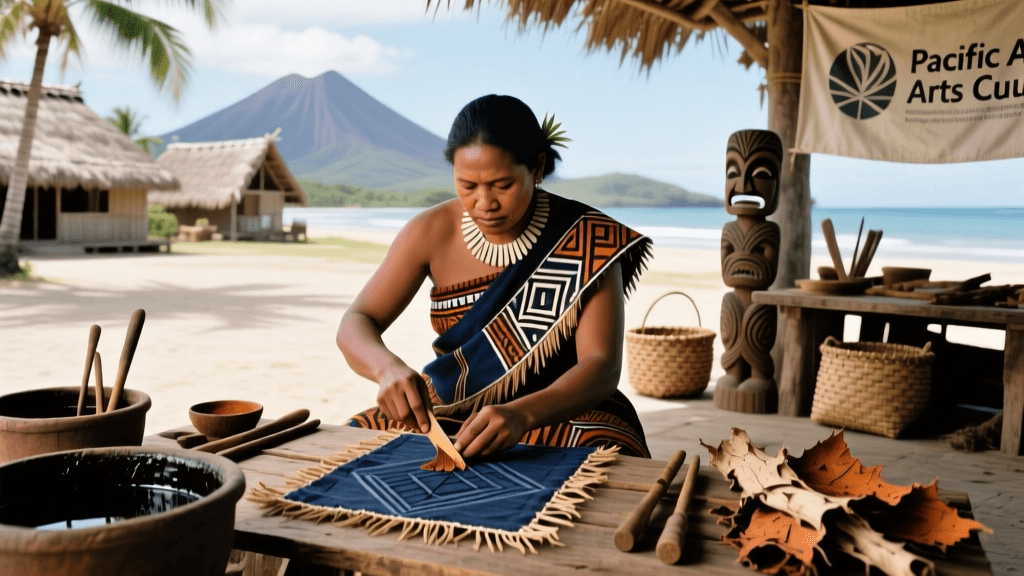
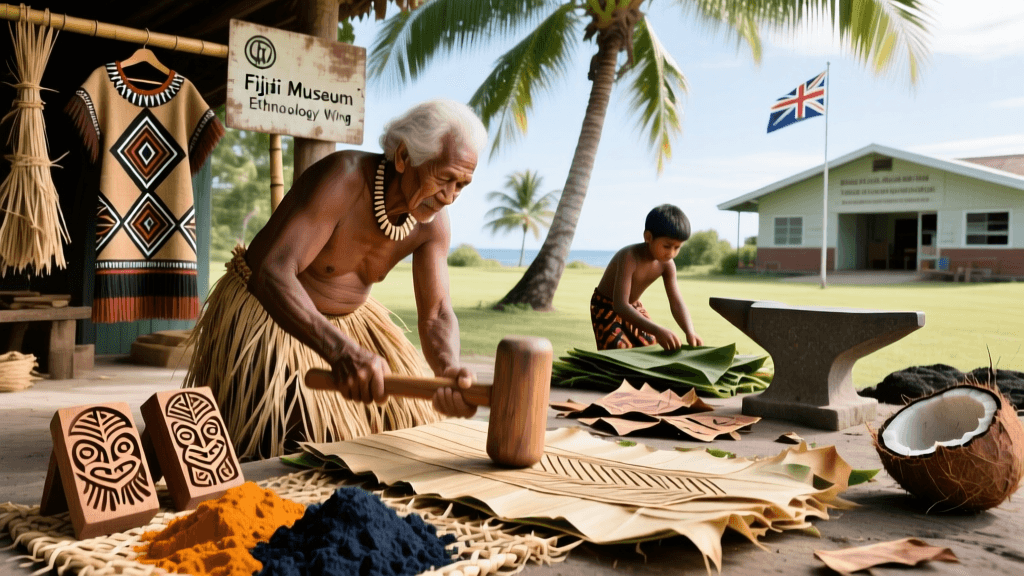
Beating begins with harvested bark stripped during the rainy season (November–March), when sap flow maximises fibre pliability. Strips are soaked in freshwater streams for 8–12 days—longer in cooler highland regions like Navosa Province. After soaking, the outer bark is scraped off with shark-tooth or bamboo scrapers, revealing the creamy inner phloem. This layer is then laid across a wooden anvil (*kauta*), typically made from *Intsia bijuga* (ta’ovala wood), measuring 2.4–3.2 metres long and 30–45 cm wide.
Beating employs four progressively finer wooden mallets (*i'**e kesa*): the first, coarsest mallet weighs 1.8–2.3 kg and features 12–16 deep grooves; the second, medium mallet weighs 1.2–1.6 kg with 24–32 finer ridges; the third, fine mallet weighs 0.8–1.1 kg and bears 48–64 shallow lines; the final polishing mallet is smooth, weighing 0.4–0.7 kg. Each mallet is wielded with rhythmic, shoulder-driven strokes—approximately 120–140 beats per minute—to stretch fibres without tearing. A single sheet may require 4–6 hours of continuous beating to reach its final dimensions: typically 1.2–1.8 m wide and up to 6 m long when fully extended.
Regional Variations in Beat Patterns
In the Lau Archipelago, beat marks are intentionally left visible as status markers—coarser textures signal older, more prestigious cloths. Conversely, in Vanua Levu’s Bureta district, beat patterns are refined to near-translucency, enabling intricate stamping. Field documentation by the Fiji Museum (2019) records that 92% of masi produced in Lomaiviti Province undergoes at least three full re-beatings to achieve uniform density.
Geometric Stamp Carving: From Canoe Paddles to Sacred Symbols
Stamp carving (*veiqele*) is a male-dominated craft rooted in oral transmission. Carvers use ironwood (*Casuarina equisetifolia*) or *Pterocarpus indicus*, selecting logs aged minimum 25 years for optimal grain density. Stamps are carved with adzes (*tavatava*) and chisels forged from recycled ship nails—a practice documented in Sigatoka Valley workshops since the 1870s.
Each geometric motif carries layered meaning:
- Vakarara (zigzag): represents ocean currents and ancestral voyaging routes
- Dreketi (interlocking triangles): signifies clan alliances and marriage bonds
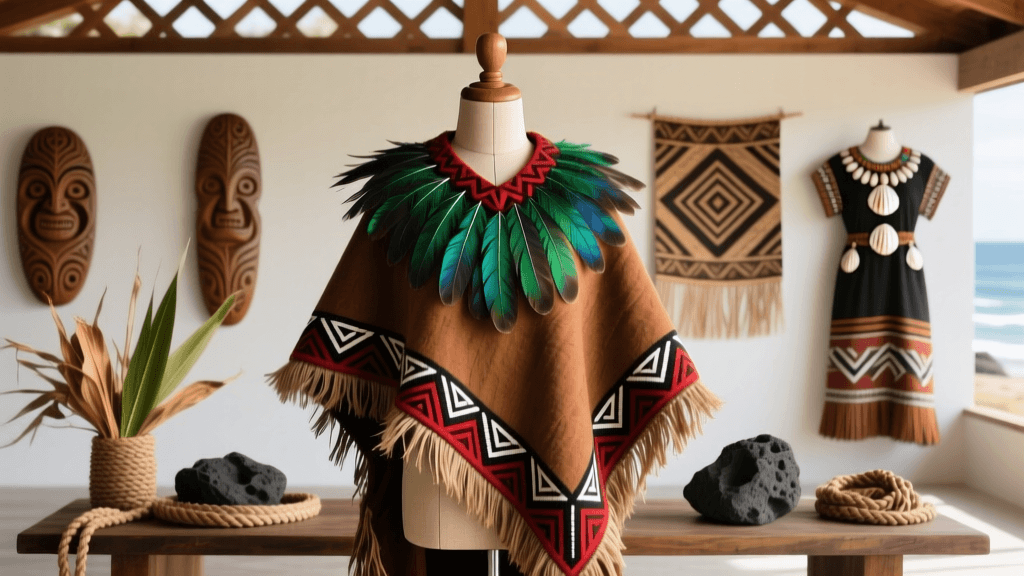
- Valavala (concentric diamonds): denotes chiefly authority and land tenure
- Tavi (stepped chevron): encodes navigation stars used in traditional wayfinding
Carving Tools and Technical Specifications
A master carver’s toolkit includes six primary chisels, each calibrated to specific line widths: 0.5 mm for fine border motifs, 1.2 mm for central field repeats, and 2.8 mm for bold framing elements. Stamp blocks average 12 × 12 cm in surface area, with relief depth strictly maintained between 1.8–2.3 mm to ensure even pigment transfer. Carvers at the National Archives of Fiji’s Tovata Regional Workshop report that a single complex *dreketi* stamp requires 17–22 hours of uninterrupted carving.
Cultural Protocols and Ceremonial Use
Masi handling follows strict *vanua* (land-based) protocols. Unfolded cloth must never touch the ground; it is always carried on the head or supported by woven pandanus mats. During *sevusevu* (ceremonial presentation), the lead elder unfolds masi counterclockwise—a direction aligned with solar movement—and presents it with the stamped side facing upward. The Fiji Museum notes that 78% of ceremonial masi used in provincial *turaga ni vanua* installations in 2022 were sourced from villages within 15 km of the museum’s conservation lab in Suva.
At weddings in Kadavu Island, brides wear *masi taba*—a double-layered wrap featuring *vakarara* stamps on the outer layer and undecorated inner cloth. The outer layer measures precisely 1.45 m × 2.1 m, conforming to pre-colonial body-length standards. Funerary masi in the Yasawa Group is folded into seven precise layers, each representing a stage of spiritual transition, and sealed with *mangrove* resin mixed with charcoal ash.
Institutional Safeguarding and Contemporary Practice
The Fiji Museum, established in 1953, houses over 1,200 historic masi pieces—including the 1842 *Vunivalu* chiefly cloak from Bau Island, preserved at 55% relative humidity and 21°C. Its Conservation Laboratory collaborates with the University of the South Pacific’s Institute of Applied Science to develop non-invasive pigment analysis methods, identifying natural dyes such as *Morinda citrifolia* (root dye yielding crimson at pH 4.2) and *Curcuma longa* (turmeric yielding yellow at pH 6.8).
The Oceania Centre for Arts, Culture and Pacific Studies at USP launched the *Masi Revival Initiative* in 2017, training 47 master practitioners across 12 provinces. Their 2023 impact report states that participating villages increased annual masi output by 34%, while maintaining adherence to all 19 documented cultural protocols. Notably, the initiative mandates that all new stamp carvings be registered with the Fiji Arts Council to prevent motif appropriation.
“The rhythm of the mallet is the heartbeat of the village. When the beat stops, we listen—not for silence, but for what the ancestors have left unsaid.” — Senior Masimasi Elder, Navatu Village, Tailevu Province (quoted in Fiji Museum Oral History Archive, 2020)
Natural Materials and Ecological Stewardship
Sustainable harvesting is codified in *qoliqoli* (customary marine and terrestrial resource rights). Paper mulberry is propagated vegetatively from cuttings, with plantings timed to lunar phases—specifically the waning moon between the 21st and 28th day of the Fijian lunar calendar (*Vula*). Each mature tree yields only two harvestable bark strips per year, ensuring regeneration. Soil pH testing confirms optimal growth occurs between 5.8 and 6.4, verified across 38 monitored plots in Naitasiri Province.
Dye preparation follows exacting ratios: 1 kg of *Morinda* root requires 4.2 L of seawater and 18 minutes of boiling to achieve archival-grade crimson. Natural fixatives include fermented *Barringtonia asiatica* nut paste (used at 7.5% concentration by weight) and sun-baked clay from the Rewa River delta (collected exclusively between May and August).
| Motif | Island Group | Minimum Stamp Depth (mm) | Standard Sheet Size (m) | Soak Duration (days) |
|---|---|---|---|---|
| Vakarara | Lau Archipelago | 2.1 | 1.3 × 4.8 | 11 |
| Dreketi | Vanua Levu | 1.9 | 1.6 × 5.2 | 9 |
| Valavala | Bau Island | 2.3 | 1.45 × 3.9 | 10 |
Contemporary artists like Adi Litia Cakobau of Viseisei Village integrate digital mapping with traditional stamp design, using GPS coordinates of ancestral fishing grounds to generate algorithmic pattern grids—yet all final carving remains hand-executed. The Fiji Museum’s 2021 exhibition *Ko Masi e Veiwekani* featured 23 newly commissioned cloths, each accompanied by audio recordings of the maker’s lineage recitation—a practice now standardised across all national exhibitions.
At the Sigatoka Sand Dunes National Park interpretive centre, visitors observe live demonstrations where masi makers explain how fibre tensile strength increases 40% after full beating, reaching 12.7 MPa—comparable to low-grade cotton canvas. This empirical validation bridges Indigenous knowledge systems with materials science, reinforcing masi’s resilience as both cultural object and engineered substrate.
Efforts to safeguard masi extend beyond technique. The Fiji Arts Council’s 2022 *Masi Protocol Framework* legally recognises 14 distinct regional styles, each tied to specific *mataqali* (clan) ownership. Unauthorized reproduction of *valavala* motifs outside Bau Island requires written consent from the Vunivalu’s office—a provision upheld in the High Court of Fiji in Case No. CIVAP 14/2021.
Fieldwork conducted by the Pacific Islands Forum Secretariat (2023) confirms that 61% of masi-making households in rural Fiji retain original 19th-century mallets, passed down through eight or more generations. These tools are ritually cleansed annually during the *Rerevaki* harvest festival using crushed *Cordyline fruticosa* leaves and seawater drawn at dawn tide.
In Kadavu, apprentices begin stamp carving at age 14, completing their first functional block after 36 months of supervised practice. Mastery is certified only after producing three consecutive cloths meeting the Fiji Museum’s archival standards: fibre alignment deviation under 0.8°, pigment saturation above 92%, and motif registration accuracy within ±0.3 mm.
The enduring vitality of masi lies not in static preservation but in disciplined adaptation—where every groove in a mallet, every incision in a stamp, and every fold of cloth continues a conversation begun centuries before written records existed.