Kimono Family Ceremonies 2026: Birth, Coming-Age & Memorials
The Enduring Role of Kimono in Japanese Family Milestones
In 2026, the Japanese kimono remains far more than a historical artifact; it is a living, breathing garment that anchors the most profound moments of family life. From the joyful first shrine visit of a newborn to the vibrant celebration of early adulthood, and finally to the solemn reverence of ancestral memorials, traditional garments provide a visual and spiritual vocabulary for life's transitions. According to cultural guidelines provided by the Japan National Tourism Organization, the adherence to seasonal and ceremonial dress codes continues to be a cornerstone of Japanese cultural identity, even as modern families adapt these traditions to contemporary lifestyles and shifting climates.
Navigating the rules of kitsuke (kimono dressing) and ceremonial etiquette can be daunting for young parents and adults stepping into these roles for the first time. This comprehensive 2026 guide breaks down the essential garments, modern rental market trends, and etiquette rules for three major family milestones: Omiyamairi (birth shrine visits), Seijin no Hi (Coming-of-Age), and ancestral memorials.
Omiyamairi: Welcoming the Newest Generation
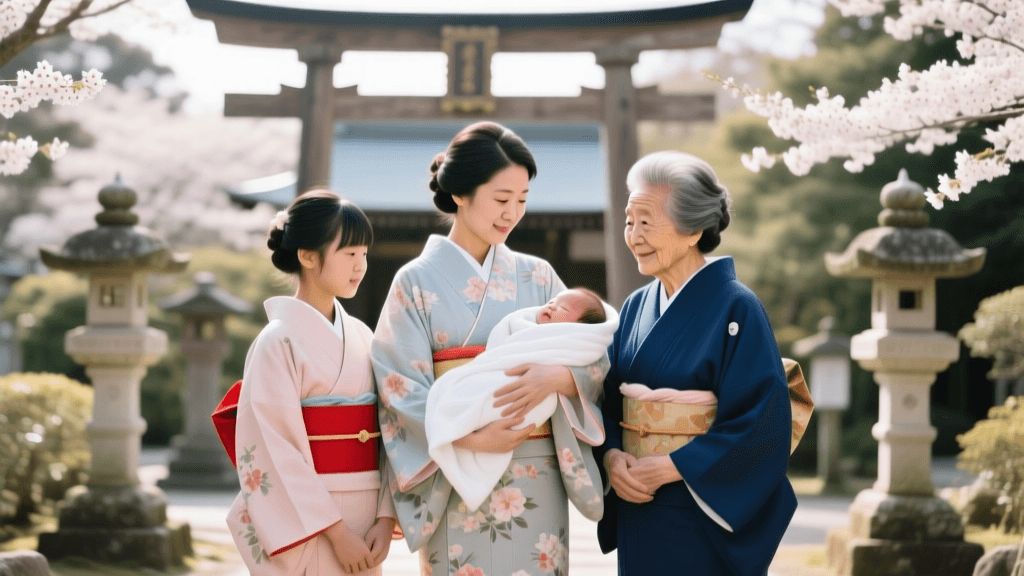
Omiyamairi is the traditional Shinto shrine visit that takes place approximately one month after a baby is born. The purpose is to introduce the newest member of the family to the local tutelary deity (ujigami) and pray for the child's health, longevity, and protection. In 2026, while some urban families opt for simplified studio photos, the traditional shrine visit remains a vital multi-generational event.
Garments for the Baby and Family
The focal point of the ceremony is the infant's attire. The baby is dressed in a white ubugi (undergarment) and wrapped in an osode or uwagi (a brightly colored, patterned ceremonial silk kimono). Traditional motifs are highly symbolic: tsuru (cranes) and kame (turtles) represent longevity, while shouchikubai (pine, bamboo, and plum) symbolize resilience and prosperity. The baby is typically carried by the paternal grandmother, though modern 2026 family dynamics frequently see maternal grandmothers or even the fathers taking on this honored role.
For the adults, the dress code is semi-formal to formal. Mothers usually wear a Houmongi (visiting kimono) or an Iromuji (solid-colored kimono) with subtle, auspicious patterns. Fathers traditionally wear a Montsuki Haori Hakama (a crested jacket and pleated trousers), though in 2026, high-quality formal lounge suits in charcoal or navy are widely accepted for fathers, especially during the sweltering summer months.
2026 Market Trends: Climate-Adapted Omiyamairi
With Japan's summers growing increasingly hot, the 2026 rental market has seen a surge in demand for climate-adapted infant garments. Rental boutiques in Tokyo and Kyoto now offer Ro (silk gauze) and lightweight cotton-silk blend uwagi for summer-born babies to prevent overheating. Additionally, many shrines and nearby photo studios now offer 'Smart Omiyamairi' packages, which include climate-controlled waiting rooms, portable cooling fans disguised as traditional fans, and on-call kitsuke (dressing) professionals who specialize in quick adjustments for restless infants.
Seijin no Hi: The 2026 Coming-of-Age Evolution
Held annually on the second Monday of January, Seijin no Hi celebrates those who have reached the age of majority. Despite the Japanese civil code lowering the legal age of adulthood to 18 earlier in the decade, sociological reports and municipal data highlighted by Nippon.com confirm that the vast majority of municipalities in 2026 still host the ceremony for 20-year-olds. This practical compromise ensures that 18-year-olds are not distracted from high school and university entrance examinations, and aligns the celebration with the legal drinking and smoking age of 20.
The Furisode: A Canvas of Youth and Status
For unmarried women, the Furisode is the undisputed garment of the day. Characterized by its long, swinging sleeves, the Furisode is the most formal kimono available to young, unmarried women. Sleeve lengths vary: Ofurisode (over 125cm) is the most formal, while Chufurisode (around 100cm) is the most common and practical for navigating crowded 2026 ceremony venues.
The styling of the Furisode in 2026 blends deep tradition with personalized expression. While classic floral motifs like botan (peony) and sakura (cherry blossom) remain popular, there is a massive trend toward 'Remake Furisode.' Many young women are inheriting their mothers' vintage 1990s and 2000s Furisode, updating them with contemporary, minimalist Fukuro obi (brocade sashes), modern lace haneri (collar covers), and bold, contrasting obijime (sash cords).
Men's Attire: Hakama vs. Suits
While Western suits dominate men's fashion at Seijin no Hi, the traditional Hakama paired with a crested kimono is experiencing a 2026 renaissance among university students seeking to honor their heritage. Rental shops now offer pre-tied, easy-to-wear Hakama sets that eliminate the complex folding and tying traditionally required, making the garment accessible to young men who may not have grown up wearing traditional clothing.
Memorials and Obon: Honoring Ancestors with Reverence
Japanese family life is equally defined by how it honors those who have passed. From the summer Obon festival to specific death anniversaries (Shinobu-kai or Houji), the kimono serves as a visual marker of respect, mourning, and remembrance. The Agency for Cultural Affairs notes that the meticulous rules surrounding mourning attire are among the most strictly preserved intangible cultural practices in modern Japan.
Navigating Mourning Formality
Attire for memorials is dictated by the proximity of the relationship to the deceased and the time elapsed since the passing.
- Mofuku (Full Mourning): Worn exclusively by immediate family members at the funeral and the 49th-day memorial. It consists of a plain black kimono with five family crests (itsutsu-mon), a black obi, and matte black accessories. In 2026, owning a bespoke Mofuku is rare; it is almost exclusively rented or borrowed from specialized mourning shops.
- Ryakusoshiki (Semi-Formal Mourning): For the 1st, 3rd, 7th, and 13th-year anniversaries, or for extended family attending a funeral, attendees wear Iromuji (solid-colored kimonos in muted shades like navy, charcoal, deep plum, or slate grey) or Edo Komon (kimonos with ultra-fine, subtle geometric patterns). These garments feature one to three family crests and are paired with subdued, silver or dark-grey obi.
Summer Obon and Fabric Technology
Obon in August is a time when families gather to clean ancestral graves and welcome the spirits of the departed. Because Obon coincides with Japan's peak heat and humidity, wearing a standard silk kimono is physically taxing. The 2026 market has responded with advanced traditional weaving techniques. Sha (leno weave) and Ro (silk gauze) kimonos are highly breathable, featuring deliberate gaps in the weave that allow air circulation while maintaining the formal translucency required for summer ceremonies. These are worn over specialized moisture-wicking juban (undergarments) made from modern cooling fibers, ensuring that families can focus on their prayers rather than the oppressive heat.
2026 Kimono Rental and Purchase Guide
For families planning these milestones, understanding the 2026 market dynamics, pricing, and booking windows is essential. The table below outlines the standard expectations for each major family ceremony.
| Ceremony | Primary Garment | Formality Level | 2026 Avg. Rental Cost (JPY) | Booking Window |
|---|---|---|---|---|
| Omiyamairi (Birth) | Uwagi / Houmongi | High (Semi-Formal to Formal) | ¥30,000 - ¥60,000 | 1-2 Months Prior |
| Seijin no Hi (Coming-of-Age) | Furisode / Hakama | Highest (Unmarried Women) | ¥150,000 - ¥350,000 | 6-12 Months Prior |
| Obon / Anniversaries | Iromuji / Ro / Sha | Mourning / Semi-Formal | ¥15,000 - ¥40,000 | 2-4 Weeks Prior |
| Funeral (Immediate Family) | Mofuku | Strict Mourning | ¥20,000 - ¥50,000 | Immediate (On-Call) |
Tips for a Seamless 2026 Experience
1. Digital Styling Consultations: Major rental chains in Tokyo, Kyoto, and Osaka now offer AR (Augmented Reality) apps. Families can upload their photos to visualize how different Houmongi and Furisode color palettes will look together, ensuring a cohesive family portrait without needing multiple in-person fittings.
2. Verify the Kamon: For formal ceremonies like Omiyamairi and Seijin no Hi, ensure the rental kimono features the correct number of Kamon (family crests). A Houmongi with three crests elevates its formality, making it appropriate for shrine visits. Some premium 2026 rental services offer on-the-spot digital printing or temporary stitching of your specific family crest for an additional fee.
3. Footwear Considerations: Traditional Zori sandals can be unforgiving on unaccustomed feet. In 2026, it is highly recommended to purchase a pair of modern, ergonomic zori insoles or break in your footwear weeks before the Seijin no Hi or Omiyamairi events to prevent blisters during long shrine walks.
Conclusion
The kimono is not a static uniform; it is a dynamic participant in the emotional landscape of the Japanese family. Whether it is the protective silk wrapping a newborn at their first shrine visit, the vibrant, swinging sleeves of a 20-year-old stepping into adulthood, or the quiet, muted tones of a family gathering to remember a loved one, these garments carry the weight of history and the hope of the future. By understanding the nuanced etiquette and leveraging the modern conveniences of the 2026 rental market, families can honor their ancestors and celebrate their descendants with grace, comfort, and profound cultural continuity.