2026 Kimono Guide For Family Ceremonies: Birth To Memorials
The Living Archive: Kimono in the Japanese Life Cycle
The kimono is far more than a beautiful garment; it is a wearable archive of Japanese family history, marking the most significant milestones of human life. In 2026, as global interest in sustainable and culturally rich fashion reaches new heights, the traditional kimono remains the undisputed centerpiece of Japanese family ceremonies. From the first shrine visit of a newborn to the solemn observances of memorials, the choice of silk, the placement of family crests (kamon), and the tying of the obi sash all communicate profound social and spiritual meanings. According to the Metropolitan Museum of Art's Heilbrunn Timeline of Art History, the kimono evolved from a simple undergarment to a complex canvas of social identity, a legacy that modern families continue to honor today. This comprehensive 2026 guide explores the specific garments required for Japan’s most vital family ceremonies, offering practical advice on sourcing, styling, and understanding the etiquette of each life stage.
Omiyamairi: The First Shrine Visit
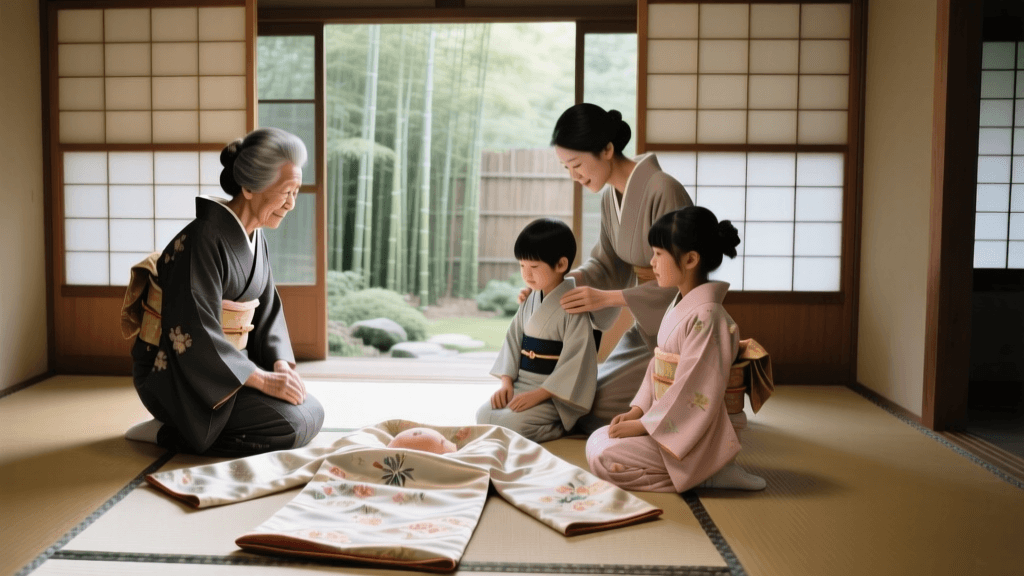
When a Japanese baby is born, one of the first major family ceremonies is Omiyamairi, the shrine visit that typically takes place when the infant is one month old. This ritual introduces the newborn to the tutelary deity (ujigami) of the local community, asking for protection and health. The focal point of this ceremony is the ubugi, or baby kimono. Traditionally, the infant is dressed in a white silk under-kimono and wrapped in a beautifully embroidered outer kimono, which is then carried in the arms of the paternal grandmother.
In 2026, families are increasingly opting for lightweight, breathable silk blends for summer shrine visits, prioritizing the infant's comfort in Japan's warming climate. The motifs on the ubugi are highly symbolic: boys often wear designs featuring hawks, tigers, or samurai helmets (kabuto), symbolizing strength and bravery, while girls are adorned with peonies, butterflies, and hand drums, representing grace and joy. Purchasing a high-end, hand-dyed ubugi in 2026 averages between $400 and $800, though many families choose to rent or inherit these garments to promote circular fashion practices.
Shichi-Go-San: The Three-Five-Seven Festival
Celebrated annually in November, Shichi-Go-San honors the growth and well-being of children at the ages of three, five, and seven. These ages were historically considered critical milestones where children were particularly vulnerable, and visiting the shrine in formal attire was a way to secure divine protection. The garments worn during this festival are among the most vibrant and meticulously accessorized in the Japanese life cycle.
For three-year-old girls, the outfit centers around the hifu, a padded silk vest worn over a bright kimono, allowing the child to move freely without the restriction of a tightly tied obi. Five-year-old boys don their first hakama (pleated trousers) and haori (jacket), often bearing the family crest. Seven-year-old girls transition to wearing a full-length kimono with a real, tied obi, mirroring the dress of adult women. The Japanese Ministry of Foreign Affairs highlights the enduring role of these traditional dress codes in fostering community bonds and generational continuity.
| Age & Gender | Primary Garment | Key Accessories | 2026 Average Rental Cost (USD) |
|---|---|---|---|
| 3-Year-Old Girls | Hifu (padded vest) over Kimono | Hako-seko (ornamental purse), Zori sandals | $80 - $120 |
| 5-Year-Old Boys | Haori and Hakama | Sensu (folding fan), Haori-himo (cord) | $90 - $140 |
| 7-Year-Old Girls | Full-length Kimono with Obi | Obi-age, Obi-jime, Shigoki (waistband) | $120 - $180 |
Seijin no Hi: Coming-of-Age Day
Held on the second Monday of January, Seijin no Hi celebrates young adults who have reached the age of majority (which, as of recent legal updates in Japan, is 18, though the traditional celebration often still centers on those turning 20 to align with university and social milestones). This is arguably the most visually spectacular kimono event of the year. Young women wear the furisode, a formal kimono characterized by its long, swinging sleeves, which historically signaled an unmarried status and a readiness for courtship.
The 2026 trends for furisode showcase a massive revival of vintage Taisho Roman aesthetics, featuring bold, geometric patterns, deep jewel tones, and striking contrasts between the kimono base and the obi sash. Many young adults are utilizing AI-assisted virtual fitting platforms offered by major rental chains in Tokyo and Kyoto to preview hundreds of combinations before booking. For young men, the standard attire is a formal dark kimono paired with a striped hakama and a haori bearing the family crest. Rental packages for a complete furisode ensemble, including professional dressing and hair styling, typically range from $350 to $700 in 2026, reflecting the high demand and intricate labor involved.
Weddings: Shiromuku and Tomesode
Japanese weddings are a masterclass in sartorial symbolism. The bride traditionally wears a shiromuku, an entirely pure white silk kimono ensemble that symbolizes her willingness to be dyed the colors of her new family. During the reception, she often changes into an iro-uchikake, a heavily brocaded, brightly colored outer robe featuring auspicious motifs like cranes and pine trees. For the mothers of the bride and groom, the gold standard of formality is the kuro-tomesode. This black silk kimono features five family crests and intricate, hand-painted patterns exclusively along the lower hem. In 2026, securing a master artisan to tailor a custom kuro-tomesode requires a lead time of up to eight months, prompting many families to rely on high-end vintage restorations.
Memorials and Funerals: The Solemnity of Mofuku
At the other end of the life cycle, the kimono serves as a profound expression of grief and respect. The mofuku, or mourning kimono, is worn by close family members during funerals (soshiki) and subsequent memorial services (hoji). The mofuku is a matte black silk kimono, traditionally dyed using deep, natural indigo and iron-based mordants to achieve an absolute, light-absorbing black. It bears five family crests (itsutsu-mon) placed on the back of the neck, both sleeves, and both sides of the front chest.
Etiquette surrounding mourning wear is strict. Accessories must be subdued: the obi is black with a muted silver or gray obi-jime cord, and the zori sandals are covered in plain black cloth. Jewelry is entirely avoided, with the exception of a single strand of pearls, which symbolize tears. As the family moves through the years of memorial services (the 1st, 3rd, 7th, and 13th anniversaries), the strictness of the mourning attire gradually relaxes, transitioning from full mofuku to iromofuku (subdued gray or navy kimonos), reflecting the gradual healing of grief.
2026 Sourcing, Sustainability, and Travel
The kimono industry in 2026 is heavily focused on sustainability. With the environmental impact of fast fashion under global scrutiny, the traditional Japanese practice of passing down, unpicking, and re-dyeing silk garments is being celebrated as a pioneer of circular fashion. Secondhand kimono markets, such as the famous Tansu-ya chains and the sprawling antique markets at Kyoto's To-ji Temple, are thriving. For international visitors and travelers planning to observe or participate in these cultural events, the Japan National Tourism Organization offers seasonal guides and directories of certified, foreigner-friendly kimono rental studios.
The kimono is not merely clothing; it is a boundary between the mundane and the sacred, wrapping the wearer in the blessings of their ancestors and the hopes of their community.
Conclusion
Navigating the world of ceremonial kimono requires an understanding of both aesthetic beauty and deep-rooted cultural protocol. Whether celebrating the fragile beauty of a newborn's first shrine visit, the vibrant energy of Coming-of-Age Day, or the quiet reverence of a memorial service, the kimono remains an indispensable thread in the fabric of Japanese family life. By embracing both the meticulous traditions of the past and the sustainable innovations of 2026, families ensure that this magnificent garment will continue to tell their stories for generations to come.