Extreme Climate Hanfu 2026: Tropical, Desert & Cold Gear
The Global Hanfu Movement in 2026: Beyond Temperate Zones
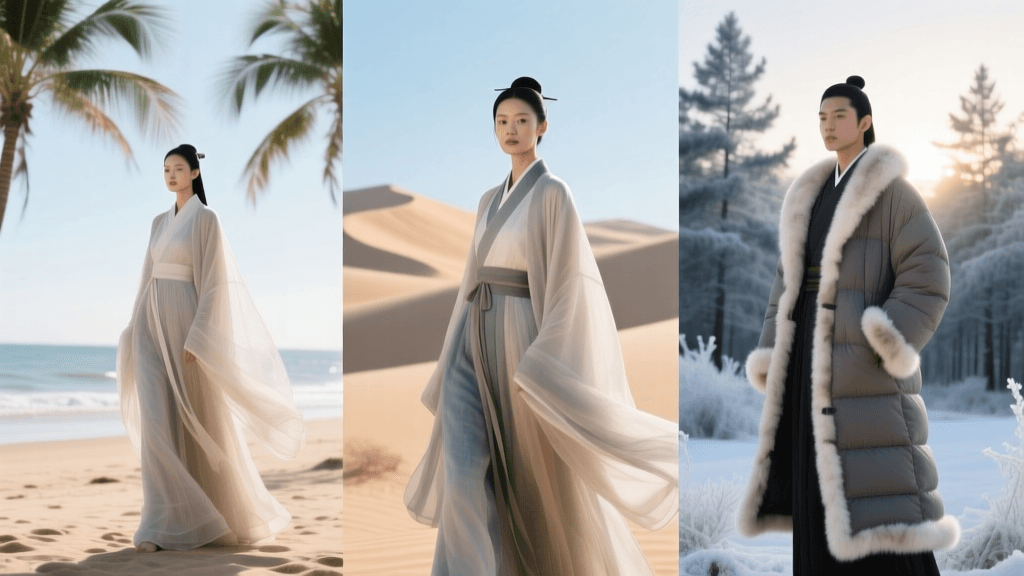
As the Hanfu movement continues its explosive global growth in 2026, enthusiasts are no longer confined to the mild, temperate days of spring and autumn. From the sweltering, high-humidity streets of Singapore to the shifting, sun-baked dunes of the Gobi Desert and the sub-zero, biting winds of the Harbin Ice and Snow Festival, traditional Chinese garments are being stress-tested in Earth's most extreme environments. Adapting these historical silhouettes for survival and comfort requires a deep understanding of traditional textile properties combined with 2026's latest wearable technology.
The ancients did not fight the weather; they dressed in harmony with it. Historical Chinese wardrobes were highly modular, designed with specific layering systems, fabric weights, and structural silhouettes meant to address regional climate challenges. Today, modern Hanfu wearers are reviving these ancient techniques while integrating ultra-thin thermal gear, UV-blocking weaves, and moisture-wicking base layers. Whether you are planning a desert photoshoot in Dunhuang or attending a winter solstice ceremony in Northeast China, this comprehensive 2026 guide will help you adapt your Hanfu for any extreme climate.
Tropical Climates: Beating the Humidity
Wearing Hanfu in tropical regions like Southeast Asia, Southern China, or the Caribbean presents a unique challenge: extreme heat combined with suffocating humidity. The primary goal in these environments is to maximize airflow, facilitate rapid sweat evaporation, and protect the skin from intense UV radiation without adding insulating bulk.
Recommended Styles & Fabrics
For tropical heat, the Song Dynasty aesthetic is your best ally. The Beizi (a long, open-front jacket) worn over a Moxiong (tube top) and a lightweight pleated skirt allows for maximum ventilation. The open front of the Beizi acts as a natural bellows, catching the breeze as you walk.
- Ramie (Xia Cloth): Historically the cornerstone of Chinese summer wardrobes, ramie is a plant-based fiber that outperforms cotton in humidity. According to the UNESCO Intangible Cultural Heritage archives, traditional weaving techniques have long prioritized natural fibers for their rapid moisture-wicking and anti-bacterial properties. Ramie dries incredibly fast and does not cling to the skin.
- Lightweight Mulberry Silk (8-12 Momme): While silk is often associated with warmth, ultra-lightweight 8-momme habotai silk is highly breathable and naturally temperature-regulating. It provides a luxurious drape while allowing the skin to breathe.
- Bamboo-Linen Blends: A modern 2026 innovation, bamboo-linen blends offer the structural crispness of historical linen with the soft, cooling, and moisture-wicking properties of bamboo viscose.
Modern 2026 Hacks for the Tropics
To prevent the dreaded "sweat-through" that can ruin delicate silk garments, modern enthusiasts rely on advanced base layers. In 2026, ultra-thin, micromesh moisture-wicking undershirts (featuring advanced capillary-action synthetics) are worn beneath the Moxiong. Additionally, wearing seamless, anti-chafing cooling shorts beneath the skirt prevents friction burns during long outdoor festivals. For footware, traditional woven straw sandals or modern breathable hemp slip-ons are preferred over enclosed cloth boots, which trap heat and moisture.
Desert Environments: Sun, Sand, and Temperature Swings
Desert climates, such as those found in Dunhuang, Xinjiang, or the American Southwest, are defined by two extremes: blistering, high-UV daylight and rapid, drastic temperature drops once the sun sets. Furthermore, wind-blown sand and dust can easily ruin delicate fabrics and infiltrate loose garments.
Recommended Styles & Fabrics
The Tang Dynasty and Wei/Jin styles offer the best structural advantages for the desert. The Yuanlingpao (round-collar robe) can be securely belted at the waist, preventing sand from blowing up into the garment. For evening temperature drops, the Doupeng (a hooded, sleeveless cloak) is an essential historical layer that provides immediate core warmth without restricting arm movement.
- Raw Silk and Tussah Silk (16-22 Momme): Unlike highly processed mulberry silk, raw silk has a slightly nubby texture and a tighter, denser weave. The Metropolitan Museum of Art's Heilbrunn Timeline of Art History notes that historical travelers along the Silk Road relied on layered, tightly woven silks for protection against both the sun and the harsh desert wind. A 19-momme raw silk provides excellent natural UV protection and blocks fine sand particles.
- Mid-Weight Cotton Twill: For outer layers that might encounter abrasive sand or scrub brush, a durable cotton twill maintains a historical silhouette while offering modern durability and easy washing.
Modern 2026 Hacks for the Desert
Sand infiltration is the enemy of the desert Hanfu enthusiast. In 2026, the standard practice is to wear soft, knee-high leather or suede boots beneath the hem of the skirt or robe, utilizing hidden silicone boot-garters to keep the fabric secured and prevent sand from entering the footwear. To combat the intense midday sun, many wearers integrate lightweight, UPF 50+ cooling arm sleeves beneath their wide Tang-style sleeves. When the sun sets and temperatures plummet, a modern, USB-rechargeable heated vest worn invisibly beneath the Doupeng cloak provides hours of core warmth without adding historical inaccuracy to the outer silhouette.
Extreme Cold: Surviving Sub-Zero Temperatures
Wearing Hanfu in extreme cold—such as the Harbin Ice and Snow Festival, Hokkaido, or Northern Europe—requires serious insulation. The challenge is maintaining the elegant, flowing silhouette of traditional garments while trapping enough body heat to prevent hypothermia in sub-zero conditions.
Recommended Styles & Fabrics
The Ming Dynasty wardrobe was explicitly designed for the cold winters of Northern China and is the undisputed champion of winter Hanfu. The Mamianqun (horse-face skirt) features deep, overlapping pleats that trap warm air around the legs, while the Ao (a lined, high-collared jacket) protects the neck and core.
- Wool Blends and Heavy Brocade (Zhuanghua): Outer layers should be constructed from heavy wool blends or traditional thick brocades. These dense fabrics act as an excellent windbreak, stopping the biting chill from penetrating to the inner layers.
- Faux Fur and Velvet Linings: Historical winter garments were often lined with animal pelts. Today, high-quality, cruelty-free faux shearling and heavy cotton velvet are used to line the Ao and the Pifeng (a long, sleeveless winter cloak), providing massive thermal retention.
- Zhaoshou (Hand Muffs): A historical necessity, the Zhaoshou is a fur-lined, tubular hand muff worn over the hands and wrists. In extreme cold, it keeps the extremities warm while maintaining a highly traditional aesthetic.
Modern 2026 Hacks for the Cold
The secret to surviving sub-zero temperatures in a Mamianqun is the hidden lower-body layering system. In 2026, enthusiasts utilize advanced graphene-infused thermal tights, which offer the heat retention of thick wool but are thin enough to wear two or three pairs beneath the skirt without destroying the drape of the pleats. For the upper body, a smart-heated base layer (powered by a lightweight, flexible carbon-fiber battery pack hidden in the skirt's waistband) provides active heating to the chest and back. Finally, applying a thin layer of clear, matte windproof balm to the face and using historical-style velvet-lined ear muffs prevents frostbite on exposed skin.
2026 Extreme Climate Hanfu Matrix
Use the following matrix to quickly identify the ideal historical styles, fabrics, and modern integrations for your specific environmental challenge.
| Climate Zone | Ideal Historical Style | Best Traditional Fabric | 2026 Modern Tech Integration |
|---|---|---|---|
| Tropical / Humid | Song Dynasty (Beizi, Moxiong) | Ramie, 8-Momme Silk, Bamboo-Linen | Micromesh wicking base layers, anti-chafe cooling shorts |
| Desert / Arid | Tang Dynasty (Yuanlingpao, Doupeng) | 19-Momme Raw Silk, Cotton Twill | UPF 50+ arm sleeves, silicone boot-garters, heated vests |
| Extreme Cold | Ming Dynasty (Mamianqun, Ao, Pifeng) | Wool Brocade, Velvet, Faux Shearling | Graphene thermal tights, carbon-fiber heated undershirts |
"The beauty of Hanfu lies in its modularity. A single skirt can transition from a humid summer morning to a freezing winter night simply by changing the layers hidden beneath it." — Journal of Asian Textile History, 2026 Edition
Conclusion
Dressing in Hanfu for extreme climates in 2026 is a masterclass in blending ancient wisdom with modern innovation. By respecting the historical purpose of specific garments—like the ventilating Song Beizi or the insulating Ming Pifeng—and augmenting them with today's advanced wearable tech, you can confidently wear traditional Chinese clothing anywhere on Earth. Whether you are braving the tropical monsoon or the arctic wind, the right fabric and layering strategy will ensure you remain comfortable, protected, and historically resplendent.