Everyday vs Ceremonial Hanbok and Kimono: 2026 Guide
The 2026 Renaissance of Asian Traditional Garments
For decades, the prevailing narrative surrounding traditional Asian garments was one of preservation rather than participation. Masterpieces of textile art like the Japanese kimono and the Korean hanbok were largely relegated to the backs of closets, emerging only for weddings, coming-of-age ceremonies, or highly formalized cultural holidays. However, as we navigate through 2026, the landscape of cultural fashion has dramatically shifted. A new generation of designers, wearers, and cultural custodians are actively dismantling the binary between "museum piece" and "daily uniform."
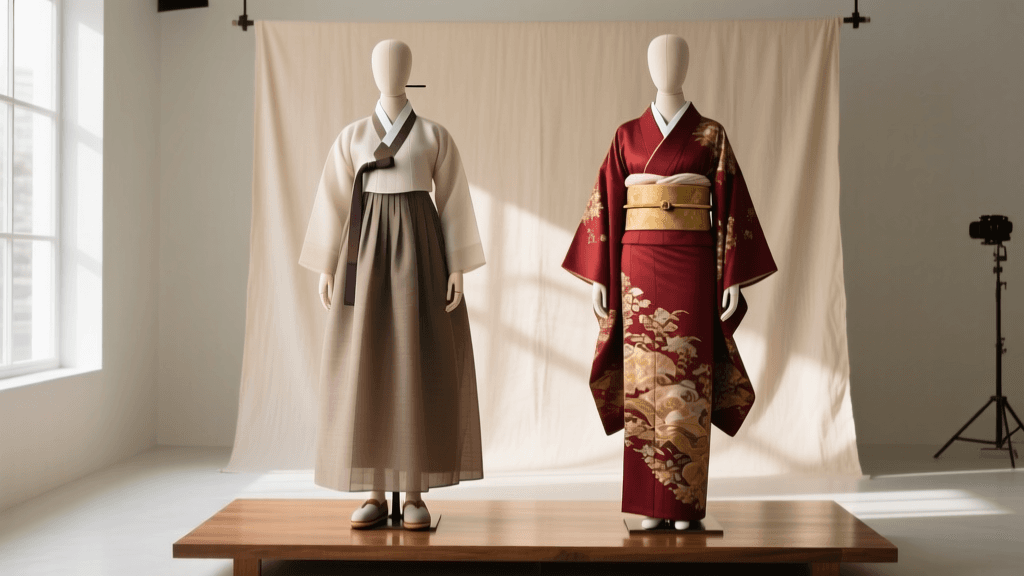
Today, the conversation is dominated by the contrast and coexistence of strict ceremonial wear and highly adaptable everyday traditional garments. Understanding the structural, textile, and stylistic differences between a ceremonial Kurotomesode or Hwarot and an everyday Saenghwal Hanbok or modern kimono separate is essential for anyone looking to integrate Asian heritage wear into a contemporary 2026 wardrobe. This guide breaks down the anatomy, cost, and care of these garments, helping you navigate the vibrant intersection of history and modernity.
The Ceremonial Heavyweights: Uchikake, Kurotomesode, and Hwarot
Ceremonial garments are defined by their adherence to historical strictures, their use of luxurious and often heavy materials, and the complex layering systems required to wear them correctly. These garments are not merely clothing; they are wearable architecture that communicates social status, marital status, and the specific nature of the ceremony being attended.
Japanese Ceremonial Kimono: Kurotomesode and Uchikake
In the realm of Japanese formalwear, the Kurotomesode remains the pinnacle of married women's formal attire in 2026. Characterized by its deep black silk crepe (chirimen) base, it features five family crests (kamon) and exquisite eba patterns—designs that flow seamlessly across the seams of the skirt. According to the Victoria and Albert Museum, the kimono's T-shape construction belies the immense complexity of its underlying layers, which include the hadajuban (undergarment), nagajuban (inner robe), and various padding used to create a flawless, cylindrical silhouette.
For bridal ceremonies, the Uchikake takes center stage. This heavily padded, unbelted outer robe is often woven with metallic threads and features auspicious motifs like cranes and pine trees. Weighing up to 15 pounds, the Uchikake restricts the wearer's gait to a slow, deliberate glide, enforcing a physical embodiment of grace and solemnity.
Korean Ceremonial Hanbok: Hwarot and Wonsam
Korean ceremonial wear is equally commanding. The Hwarot, traditionally a bridal robe with roots in royal court dress, is a masterpiece of color theory and embroidery. Featuring a striking contrast of red and blue silk, the Hwarot is heavily embroidered with peonies (symbolizing wealth and honor) and butterflies (symbolizing marital bliss). As noted by Encyclopedia Britannica, the hanbok's defining characteristic is its voluminous silhouette, created by the wide, pleated chima (skirt) and the structured jeogori (jacket).
The Wonsam, another highly formal court garment, utilizes the oseokdong (five-stripe colored sleeves) to denote rank and occasion. Dressing in a full ceremonial Hwarot or Wonsam in 2026 still requires the assistance of a professional dresser to properly arrange the multiple layers of under-skirts (sokchima) and tie the intricate, structural ribbons.
The Everyday Innovators: Saenghwal Hanbok and Modern Separates
While ceremonial wear demands stillness and adherence to tradition, everyday traditional wear in 2026 demands mobility, durability, and ease of care. The modernization of these garments has not diluted their cultural essence; rather, it has distilled their most recognizable silhouettes into highly functional apparel.
The Rise of Saenghwal (Living) Hanbok
The Saenghwal Hanbok (literally "daily life hanbok") movement has matured significantly by 2026. Designers have re-engineered the traditional silhouette to accommodate modern transit, office environments, and active lifestyles. The most notable changes include a drastically shortened chima (often falling at the calf or ankle rather than the floor) and a slightly elongated jeogori for modesty and comfort.
Textile innovation is at the heart of the Saenghwal Hanbok. Where ceremonial hanbok relies on delicate, dry-clean-only silks, everyday versions utilize organic cotton-linen blends, washed ramie, and advanced wrinkle-resistant polyesters. Furthermore, the traditional goreum (the long, flowing front tie) has been adapted in many 2026 collections to include hidden snap-buttons or magnetic clasps, allowing the wearer to secure the jacket in seconds without mastering the complex traditional knotting techniques.
Modern Kimono Separates and Two-Piece Designs
In Japan, the rigid rules of kitsuke (the art of dressing in kimono) have been elegantly bypassed through the mainstream adoption of two-piece kimono separates (ni-bu shiki kimono). These garments feature the overlapping lapels and sweeping sleeves of a traditional kimono but are constructed with an elasticized skirt base and a pre-tied, clip-on obi (sash).
Additionally, the integration of casual fabrics like selvedge denim, chambray, and machine-washable crepe has transformed the kimono jacket (haori) into a staple of global streetwear. In 2026, it is entirely common to see a vintage silk haori paired with tailored trousers and sneakers, or a washable cotton yukata adapted into a wrap dress for summer office wear.
Comparative Analysis: Ceremonial vs. Everyday (2026 Data)
To understand the practical implications of building a traditional wardrobe, it is vital to compare the investment, maintenance, and utility of these distinct categories. The table below outlines the core differences based on current 2026 market data and textile standards.
| Feature | Ceremonial Kimono (Kurotomesode) | Ceremonial Hanbok (Hwarot) | Everyday Saenghwal Hanbok | Modern Kimono Separates |
|---|---|---|---|---|
| Primary Fabric | Heavy Silk Crepe (Chirimen) | Silk Brocade, Stiff Ramie | Cotton-Linen Blends, Washable Poly | Washable Silk, Denim, Cotton |
| 2026 Avg. Cost | $3,500 - $7,000+ | $1,800 - $4,000 | $120 - $350 | $150 - $450 |
| Dressing Time | 45 - 90 mins (Pro help needed) | 30 - 60 mins (Assistance needed) | 5 - 10 mins (Self-dressing) | 10 - 15 mins (Self-dressing) |
| Maintenance | Specialist dry clean, paulownia storage | Dry clean, careful moth-proofing | Machine wash cold, line dry | Machine wash or spot clean |
| Mobility | Restricted, requires specific gait | Moderate, heavy voluminous layers | High, designed for transit and work | High, adaptable to modern footwear |
Practical Guide: Building a Dual-Purpose Traditional Wardrobe
If you are looking to incorporate Asian traditional garments into your life in 2026, you do not need to choose strictly between the ceremonial and the everyday. A well-curated wardrobe bridges the gap through strategic layering and accessory choices.
1. Invest in a High-Quality Everyday Base
Start by acquiring a well-fitted Saenghwal Hanbok set or a two-piece washable kimono in a neutral, versatile color palette (such as indigo, charcoal, or muted sage). Brands leading the 2026 market, such as Leesle in Korea and various boutique Kyoto studios, offer customizable sizing that ensures the shoulder seams and waistlines sit correctly on modern body types without requiring traditional padding.
2. Elevate with Ceremonial Accessories
You can transition an everyday garment into semi-formal wear by swapping out casual accessories for ceremonial ones. For a kimono, replace a casual cotton obi with a silk fukuro obi and add a braided obijime cord. For a hanbok, upgrade a standard cotton goreum tie to a heavily embroidered, stiff silk ribbon, and add a delicate norigae (ornamental pendant) to the tie or waistband.
3. Deconstruct the Ceremonial
Conversely, ceremonial pieces can be adapted for everyday wear through deconstruction. A heavy, embroidered bridal haori or a vintage ceremonial jeogori can be worn open over a simple white t-shirt and tailored denim. This approach honors the textile artistry of the garment while stripping away the rigid formality of its original context.
Care and Maintenance for 2026 Textiles
The longevity of traditional garments relies heavily on proper care. While everyday cotton and linen blends can generally be machine-washed on a gentle cycle using pH-neutral detergents, silk requires meticulous attention.
- Storage: Ceremonial silks should be stored in tatoushi (traditional paper wrappers) or breathable cotton covers. Avoid plastic bags, which trap moisture and cause yellowing. In 2026, climate-controlled closet systems with built-in dehumidifiers are highly recommended for serious collectors.
- Pest Prevention: Move away from harsh chemical mothballs that degrade silk proteins and leave an overpowering odor. Instead, utilize natural camphor blocks or hinoki wood chips, which repel insects while imparting a subtle, culturally authentic fragrance.
- Wrinkle Management: Never use a standard iron directly on silk chirimen, as the crepe texture will flatten permanently. Use a handheld steamer at a safe distance, or rely on the traditional method of hanging the garment in a steamy bathroom to allow the natural weight of the silk to pull the wrinkles out.
Conclusion
The dichotomy between ceremonial and everyday traditional garments is no longer a rigid boundary, but rather a spectrum of sartorial expression. In 2026, the Saenghwal Hanbok and the modern kimono separate prove that heritage wear can be dynamic, comfortable, and deeply integrated into daily life, while the Kurotomesode and Hwarot continue to serve as vital, breathtaking anchors to our most profound cultural milestones. By understanding the construction, cost, and care of both ends of this spectrum, modern wearers can curate a wardrobe that respects the past while confidently stepping into the future.