Everyday Komon vs Ceremonial Furisode: 2026 Kimono Guide
The Sartorial Language of TPO in 2026
The Japanese kimono is not merely a single garment, but a complex sartorial language governed by the strict principles of TPO—Time, Place, and Occasion. As we navigate the fashion landscape of 2026, the dichotomy between everyday wear and ceremonial attire has never been more pronounced. On one end of the spectrum, we have the highly adaptable, increasingly sustainable Komon. On the other, the opulent, structurally rigid Furisode. Understanding the differences between these two extremes is essential for anyone looking to integrate traditional Japanese garments into a modern 2026 wardrobe, whether for a casual streetwear ensemble in Harajuku or a formal Coming of Age Day ceremony. According to the Victoria and Albert Museum's Asian Collections, the structural evolution of the kimono has always been tied to social function, a fact that remains deeply relevant today.
Komon: The Foundation of Everyday Wear
The term 'Komon' translates literally to 'small pattern.' This category of kimono is defined by its repeating motifs that cover the entire garment without a directional flow. Because the pattern is continuous and relatively understated, Komon is classified as casual or everyday wear. In 2026, the Komon has experienced a massive renaissance among younger demographics who view it as a canvas for personal expression rather than a rigid uniform.
Fabric technology has revolutionized the everyday Komon. While vintage silk Komon remain highly prized, the 2026 market is dominated by advanced washable silks and high-grade recycled polyesters woven in Kyoto. These modern textiles mimic the drape and luster of traditional chirimen (crepe) silk but can withstand machine washing on gentle cycles. This innovation has drastically lowered the barrier to entry, allowing wearers to incorporate Komon into their weekly rotation without the anxiety of expensive dry-cleaning bills.
When styling a Komon in 2026, the rules are remarkably flexible. It is increasingly common to see Komon paired with a hanhaba obi (a narrow, informal sash) tied in simple, contemporary knots like the bunko or even the corset-style wraps popularized by Tokyo street fashion. Layering a fine-gauge merino wool turtleneck underneath the kimono during the winter months is a standard practice, blending thermal practicality with sleek, modern aesthetics.
Furisode: The Pinnacle of Ceremonial Grandeur
At the absolute opposite end of the TPO spectrum lies the Furisode. Translating to 'swinging sleeves,' the Furisode is the most formal kimono worn by unmarried women. Its defining characteristic is its exceptionally long sleeves, which can measure anywhere from 90 to over 114 centimeters in length. Historically, the swinging motion of these sleeves was believed to ward off evil spirits and express deep emotion. Today, as noted by cultural archives documented by the Agency for Cultural Affairs, Government of Japan, the Furisode remains an indispensable symbol of youth, celebration, and transition into adulthood.
The construction of a ceremonial Furisode is a masterclass in traditional artisanship. Unlike the mass-produced patterns of everyday wear, high-end Furisode are often hand-painted using the Yuzen dyeing technique, supplemented with intricate gold leaf application (surihaku) and elaborate embroidery. The silk used is typically a heavy, luxurious rinzu (satin damask) or a tightly woven brocade that holds its shape under the weight of the massive sleeves and the formal maru or fukuro obi required to complete the ensemble.
Due to the immense cost and highly specific use-case, the 2026 Furisode market is heavily skewed toward rentals. A premium, handcrafted silk Furisode can easily cost between $4,000 and $12,000 USD to purchase new. Conversely, the 2026 rental market offers comprehensive packages—including dressing services, professional hair and makeup, and photography—for an average of $300 to $600 USD. This rental economy ensures that the highest levels of ceremonial craftsmanship remain accessible for milestone events like Seijin no Hi (Coming of Age Day) and university graduation ceremonies.
2026 Comparison Chart: Komon vs. Furisode
To fully grasp the practical differences between these two garment types, it is helpful to examine their core specifications side-by-side. The following table outlines the defining characteristics, market realities, and styling parameters for both the everyday Komon and the ceremonial Furisode in the current 2026 landscape.
| Feature | Komon (Everyday) | Furisode (Ceremonial) |
|---|---|---|
| Primary Occasion | Casual outings, theater, dining, streetwear | Coming of Age Day, weddings, formal tea ceremonies |
| Sleeve Length | Standard (approx. 49 cm) | Long / Swinging (90 cm to 114+ cm) |
| Pattern Style | Small, continuous, repeating motifs | Large, directional, asymmetrical, hand-painted |
| Standard Fabric | Washable silk, recycled polyester, cotton | Heavy silk rinzu, brocade, hand-dyed Yuzen silk |
| Obi Pairing | Hanhaba (narrow), Nagoya (informal) | Fukuro, Maru (wide, heavily brocaded, formal) |
| 2026 Avg. Cost | $50 - $300 (Vintage/New Poly) | $4,000+ (Purchase) / $300 - $600 (Rental) |
| Maintenance | Home washable (modern fabrics), low cost | Specialist dry cleaning only, high cost |
Modern Styling: Bridging Tradition and Streetwear
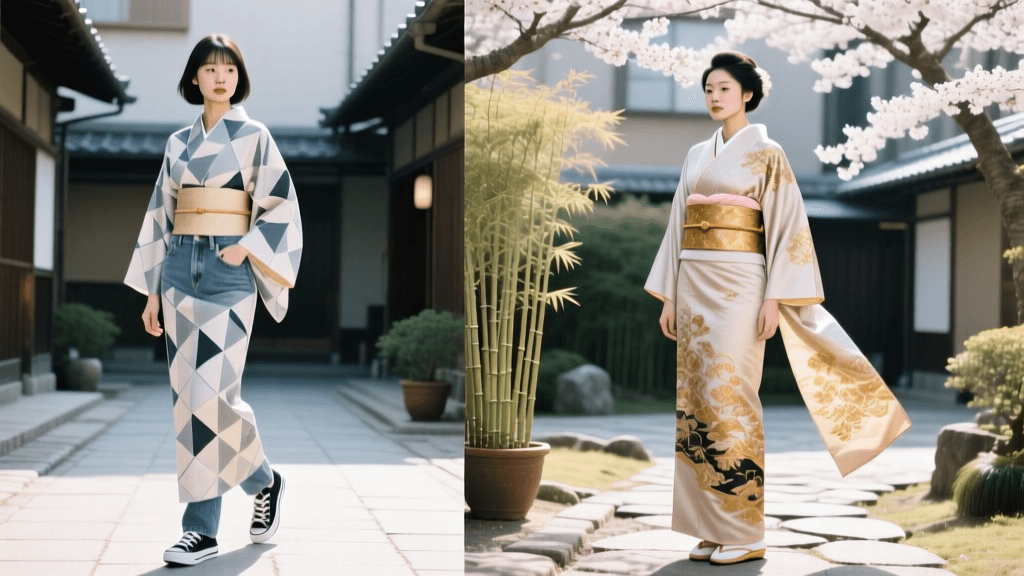
The most exciting development in 2026 Asian traditional fashion is the aggressive integration of the Komon into global streetwear. While the Japan National Tourism Organization (JNTO) frequently highlights the pristine, traditional wearing of kimono for tourists in Kyoto, local fashion hubs in Tokyo and Osaka tell a different story. The modern wearer treats the Komon as a versatile outer layer, akin to a maxi coat or a wrap dress.
Footwear choices have entirely shifted. While traditional zori sandals with tabi socks are still worn, 2026 street style heavily favors pairing Komon with chunky leather loafers, combat boots, or even high-top sneakers. This grounds the flowing silhouette of the garment and makes it practical for navigating urban environments. Furthermore, the use of obijime (decorative cords) and obidome (sash clasps) has become a space for micro-expression, with wearers sourcing vintage glass beads, modern resin art pieces, or even upcycled jewelry to secure their sashes.
Conversely, the Furisode resists this casualization. Its sheer volume, weight, and the complex, rigid dressing process (kitsuke) demand a level of physical mindfulness that precludes casual streetwear adaptation. Wearing a Furisode is an immersive, ceremonial experience that requires the wearer to move gracefully, keeping the long sleeves from dragging on the ground. It is an exercise in physical discipline and historical reverence, standing in stark contrast to the effortless mobility of the Komon.
Sourcing, Pricing, and Garment Care
For international collectors and enthusiasts looking to build a 2026 kimono wardrobe, understanding where and how to source these garments is critical. For everyday Komon, online vintage marketplaces and specialized export services based in Japan offer an overwhelming abundance of options. Because the domestic market is saturated with inherited silk Komon that younger generations do not wear, high-quality vintage silk pieces can be acquired for as little as $30 to $80 USD. For those preferring modern, washable fabrics, direct-to-consumer brands operating out of Kyoto offer contemporary, minimalist Komon designs tailored for global sizing.
Care and storage have also been modernized. The introduction of smart-textile washable silks in early 2026 means that many everyday garments can be cleaned at home using specialized pH-neutral detergents. However, vintage silk Komon still require careful spot cleaning and professional washing. Storage in 2026 relies heavily on breathable, non-acidic garment bags, often accompanied by natural hinoki wood blocks to deter insects and absorb ambient moisture, replacing the harsh chemical mothballs of the past.
For Furisode, sourcing is almost exclusively done through specialized domestic boutiques or rental houses. International buyers looking to purchase a ceremonial Furisode must be prepared for bespoke lead times that can stretch from six to twelve months, as the hand-painting and embroidery are executed by master artisans whose waiting lists are famously long.
Conclusion: Navigating the 2026 Wardrobe
The contrast between the everyday Komon and the ceremonial Furisode perfectly encapsulates the dual nature of Asian traditional garments in the modern era. The Komon represents adaptability, sustainability, and the seamless blending of heritage with contemporary life. It is a garment meant to be lived in, walked in, and personalized. The Furisode, meanwhile, stands as a monument to preservation, artisanship, and the sacred marking of life's most significant milestones. By understanding the distinct roles, fabrics, and styling rules of both, modern enthusiasts can respectfully and creatively engage with Japanese sartorial history throughout 2026 and beyond.