Kimono Guide 2026: Everyday Komon vs Ceremonial Furisode
The 2026 Kimono Renaissance: Bridging Tradition and Daily Life
As we navigate through 2026, the global appreciation for Japanese traditional garments has evolved from mere historical preservation into a vibrant, living fashion movement. The kimono, once strictly bound by rigid historical rules, is now experiencing a renaissance that honors its ceremonial roots while embracing everyday practicality. For enthusiasts and newcomers alike, understanding the distinction between daily wear and high-formal attire is crucial. The two most contrasting ends of this spectrum are the Komon (everyday wear) and the Furisode (the highest level of ceremonial wear for unmarried women). Whether you are curating a modern wardrobe, attending a traditional tea ceremony, or preparing for a coming-of-age celebration, knowing how to navigate these styles, their modern 2026 pricing, and their specific styling rules will elevate your appreciation for Asian textile traditions.
According to the Victoria and Albert Museum, the kimono's T-shaped structure has remained fundamentally unchanged for centuries, yet the textiles, dyes, and social applications have shifted dramatically. In 2026, sustainable fashion trends and advanced textile engineering have introduced washable silks and digital dyeing techniques, making the Komon more accessible than ever, while the Furisode remains a masterpiece of artisanal hand-craftsmanship.
Understanding the Komon: The Quintessential Everyday Kimono
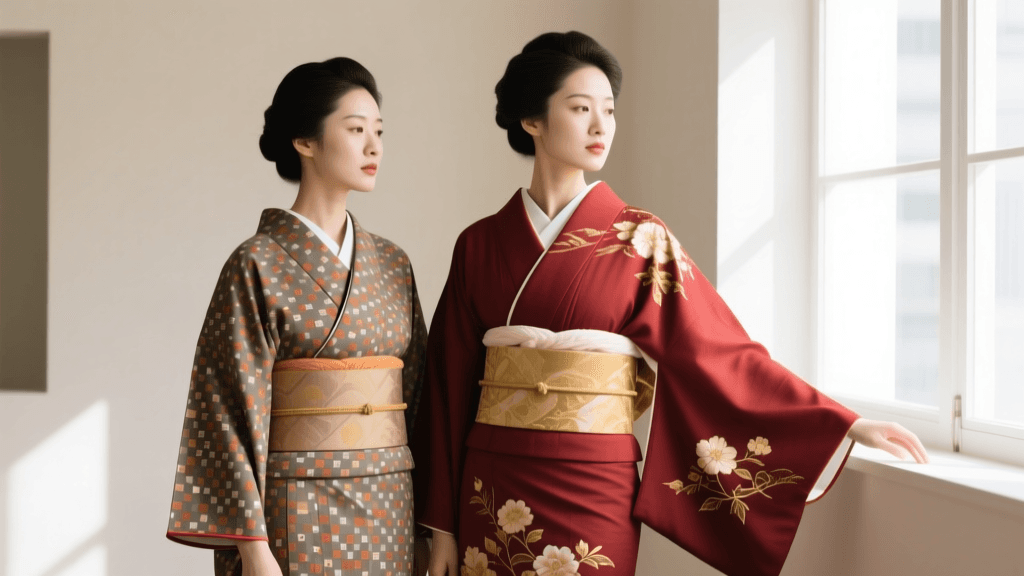
The Komon (小紋), literally translating to 'fine pattern,' is the quintessential casual kimono. It is characterized by a repeating, non-directional pattern that covers the entire garment. Unlike formal kimonos where crests (kamon) and hemlines dictate the level of formality, the Komon is designed for daily life, casual outings, theater visits, and informal dining.
Fabric and 2026 Innovations
Traditionally woven from silk or cotton, the Komon has seen a massive shift in 2026. While vintage silk Komon remain highly sought after in Tokyo's Shimokitazawa and Kyoto's vintage markets, modern 2026 iterations frequently utilize advanced polyester-silk blends. These innovative fabrics offer the lustrous drape of traditional silk but are entirely machine-washable and wrinkle-resistant. This technological leap has drastically lowered the barrier to entry, allowing younger generations to wear kimono without the anxiety of expensive dry-cleaning bills.
Styling the Komon
Because it is casual, the Komon offers immense creative freedom. It is typically paired with a Nagoya obi (a semi-formal, pre-folded sash) or a Hanhaba obi (a half-width, casual sash). In 2026, street-style kimono fashion frequently features Komon paired with modern accessories, such as leather lace-up boots instead of traditional zori sandals, and Western-style blouses worn beneath the kimono collar for a layered, avant-garde look.
The Furisode: Pinnacle of Ceremonial Elegance
At the opposite end of the formality spectrum is the Furisode (振袖), which translates to 'swinging sleeves.' This is the most formal kimono worn by unmarried women, instantly recognizable by its dramatically long sleeves that can reach down to the ankles. The Furisode is a garment of profound cultural weight, primarily worn during Seijin no Hi (Coming of Age Day), university graduation ceremonies, and highly formal weddings.
Anatomy of the Sleeve
The Furisode is categorized by sleeve length, each carrying subtle nuances in formality:
- Ofurisode (Large Furisode): Sleeves measuring over 114 cm. This is the most formal, often seen on brides or attendees of the highest-tier banquets.
- Chufurisode (Medium Furisode): Sleeves measuring between 90 and 105 cm. This is the standard, most popular choice for Coming of Age Day celebrations in 2026.
- Kofurisode (Small Furisode): Sleeves measuring around 75 to 85 cm. Slightly more practical, often worn for graduation ceremonies.
Artistry and Construction
Unlike the mass-produced or digitally printed Komon, a true Furisode is a canvas of luxury. The Metropolitan Museum of Art highlights how traditional Japanese garments utilize complex resist-dyeing techniques like yuzen. In 2026, authentic hand-painted yuzen Furisode feature heavy silk crepe (chirimen), elaborate gold-leaf application (kinkoma), and intricate silk embroidery. The motifs are often auspicious, featuring cranes, pine trees, or flowing water, symbolizing longevity and purity.
Direct Comparison: Komon vs. Furisode
To easily distinguish between these two iconic garments, refer to the comparison chart below detailing their structural, functional, and economic differences in the current market.
| Feature | Komon (Everyday) | Furisode (Ceremonial) |
|---|---|---|
| Sleeve Length | Short (approx. 49 cm) | Long (75 cm to 114+ cm) |
| Formality Level | Casual / Daily Wear | Highest Formal (Unmarried Women) |
| Pattern Style | Repeating, non-directional | Directional, sweeping, auspicious motifs |
| Family Crests (Kamon) | Never included | Often includes 3 or 5 crests (though optional for Furisode) |
| Obi Pairing | Nagoya Obi or Hanhaba Obi | Fukuro Obi (heavily brocaded, full-width) |
| Average 2026 Cost (New) | $150 - $400 USD | $2,500 - $8,000+ USD |
| 2026 Rental Market | Rarely rented (usually purchased) | $200 - $400 USD (Full styling package) |
Sourcing, Pricing, and Rentals in 2026
The economics of acquiring traditional garments have shifted significantly in 2026. For the Komon, the vintage market remains the most sustainable and economical route. High-quality, unworn vintage silk Komon from the late Showa period can be sourced online or in Kyoto's flea markets for as little as $30 to $80 USD. For those preferring new, washable polyester Komon, Japanese online retailers and international shipping services offer modern, vibrant prints for around $150 to $300 USD.
The Furisode, however, represents a major financial investment. Purchasing a brand-new, hand-dyed silk Furisode in 2026 starts at approximately $2,500 USD and can easily exceed $10,000 USD for pieces featuring master-level embroidery. Because it is worn so infrequently, the 2026 rental market for Furisode is booming. A standard rental package in Tokyo or Kyoto—which includes the kimono, a matching Fukuro obi, traditional undergarments (juban), zori sandals, and professional dressing services by a licensed kitsuke (kimono dressing) stylist—typically costs between $200 and $400 USD.
Accessorizing: The Obi and Footwear Divide
The formality of a kimono is heavily dictated by its accessories. For a Komon, the goal is comfort and ease. A Hanhaba obi is ideal; it requires no stiff padding (obi-ita) and can be tied in simple, stylish knots like the Bunko (bow knot). Footwear consists of casual zori or geta (wooden clogs) with cotton or velvet hanao (thongs), often paired with tabi socks in playful colors or patterns.
Conversely, the Furisode demands rigorous adherence to formal accessory rules. It must be paired with a Fukuro obi, a heavy, fully patterned brocade sash that is tied in elaborate, sculptural knots such as the Fukura-suzume (puffed sparrow) or Tateya (standing arrow). These knots require specialized padding, cords (obijime), and decorative accessories (obidome). Footwear is strictly formal: brocade-covered zori with thick, plush white hanao, worn exclusively with pristine white tabi socks.
Modern Care and Maintenance
Caring for these garments in 2026 requires different approaches. The modern poly-blend Komon can be folded and stored in a standard dresser, and spot-cleaned or machine-washed on a gentle cycle using specialized silk-safe detergents. However, vintage silk Komon and all Furisode require meticulous care. They must be aired out in the shade after every wear to remove moisture and odors. In 2026, many collectors utilize climate-controlled storage boxes with acid-free tissue paper to prevent the gold leaf and silk dyes from oxidizing or transferring. Professional arai-hari (a traditional service where the kimono is completely unsewn, washed, stretched, and resewn) remains the gold standard for deep-cleaning a stained Furisode, though it is a costly and time-consuming investment.
Conclusion
Whether you are draping a vibrant, washable Komon for a weekend stroll through a botanical garden, or investing in the breathtaking artistry of a Furisode for a milestone life event, understanding the distinct roles these garments play is essential. The 2026 landscape of Asian traditional fashion beautifully accommodates both the pragmatic needs of modern daily life and the profound, ceremonial reverence of historical tradition. By respecting the boundaries of formality while embracing contemporary styling innovations, wearers can ensure the kimono continues to thrive as a dynamic, living garment for generations to come.