Everyday vs Ceremonial Hanbok: 2026 Styling & Buyer Guide
The 2026 Renaissance of the Hanbok: A Tale of Two Garments
The landscape of Asian traditional garments has undergone a massive transformation as we navigate through 2026. While the global appreciation for cultural heritage continues to grow, a distinct dichotomy has emerged in how these garments are worn, purchased, and preserved. Nowhere is this more evident than in the Korean hanbok. Today, consumers and designers alike are navigating the split between the breathtaking, highly structured ceremonial hanbok and the practical, modernized gaeryang (everyday) hanbok. Understanding the structural, material, and stylistic differences between these two categories is essential for anyone looking to invest in traditional Korean dress this year.
Whether you are preparing for a traditional pyebaek (wedding ceremony) or simply want to incorporate elegant cultural silhouettes into your daily 2026 wardrobe, this comprehensive guide breaks down everything you need to know about sourcing, sizing, and styling both ceremonial and everyday hanbok.
Ceremonial Hanbok: Structure, Silk, and Symbolism
When we discuss ceremonial hanbok, we are referring to garments like the hwalot (bridal robe) and the wonsam (a formal top historically worn by royalty and nobility). These pieces are not merely clothing; they are wearable archives of Korean history. According to the Encyclopedia Britannica, the traditional hanbok is defined by its vibrant colors and simple lines without pockets, but ceremonial iterations elevate this with profound structural complexity and heavy, luxurious textiles.
In 2026, authentic ceremonial hanbok are still crafted using heavyweight silk brocades and satin. The skirts (chima) are exceptionally voluminous, often requiring up to eight yards of fabric to achieve the signature bell-like silhouette that pools elegantly on the floor. The sleeves of the jeogori (top jacket) are extended and wide, featuring intricate saekdong (colorful striped) cuffs. A defining feature of high-end ceremonial wear is the application of geumbak—real gold leaf pressed into the silk to form auspicious symbols like peonies, cranes, or dragons. Because of the weight of the silk and the gold leaf, a full ceremonial bridal set can weigh upwards of three to four kilograms.
Expert Insight: Ceremonial hanbok are designed for slow, deliberate movements. The weight and volume of the garment naturally enforce a graceful, gliding posture, which is highly prized in traditional Korean wedding photography and videography.
Everyday Hanbok (Gaeryang): Cotton, Comfort, and Modern Fit
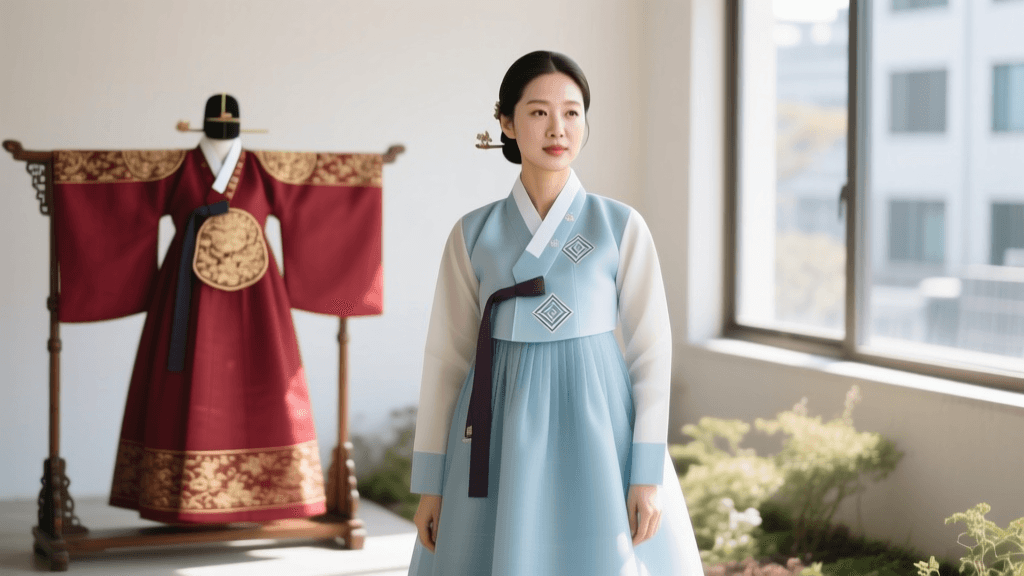
In stark contrast to the heavy, restrictive nature of ceremonial wear, the gaeryang hanbok (modernized or improved hanbok) has completely dominated the 2026 everyday fashion scene. Driven by a desire for cultural connection without the sacrifice of modern mobility, everyday hanbok strips away the historical rigidity while preserving the iconic silhouette. The Victoria and Albert Museum notes that traditional Asian textiles are increasingly being adapted for contemporary lifestyles, and the Korean everyday hanbok is a prime example of this successful evolution.
The 2026 everyday hanbok utilizes lightweight, breathable fabrics such as cotton-linen blends, washable poly-silk, and innovative Tencel-silk weaves. The chima is drastically shortened, typically falling to the mid-calf or ankle, and the waistband is replaced with a comfortable, hidden elastic band or a side-zipper, eliminating the need to constantly adjust tight fabric ties. The jeogori features narrower sleeves that won't catch on doors or dip into food, and modern iterations almost always include hidden side-seam pockets—a necessity for carrying smartphones and transit cards.
Feature Comparison: Ceremonial vs. Everyday Hanbok
To help you decide which style suits your needs, here is a direct comparison of the structural and material differences between the two categories as they stand in the 2026 market.
| Feature | Ceremonial Hanbok (Hwalot/Wonsam) | Everyday Hanbok (Gaeryang) |
|---|---|---|
| Primary Fabric | Heavy silk brocade, raw silk, satin | Cotton, linen, Tencel, poly-silk blends |
| Skirt (Chima) Length | Floor-pooling (requires 6-8 yards) | Midi to ankle-length (requires 2-3 yards) |
| Waistband | Tied with long fabric sashes | Elasticized, hook-and-eye, or side-zip |
| Sleeve Width | Extremely wide, floor-draping | Narrow, tailored to the wrist |
| Pockets | None (historically accurate) | Hidden side-seam pockets |
| 2026 Price Range | $800 - $3,500+ (Bespoke) | $85 - $280 (Ready-to-wear) |
| Maintenance | Specialist dry clean only | Machine washable (delicate cycle) |
Sourcing, Sizing, and 2026 Pricing
Buying a hanbok in 2026 is easier than ever, but getting the fit right requires specific measurements. Unlike Western clothing, which relies heavily on bust and hip measurements, the hanbok is anchored at the high waist (just under the bust) and the shoulders.
How to Measure for Your Hanbok
- Jeogori (Top) Sleeve Length: Measure from the prominent C7 vertebra at the base of your neck, across the shoulder, and down to the wrist bone. Ceremonial tops will require an additional 2-3 inches for the extended cuff.
- Chima (Skirt) Length: Measure from your underbust (where the waistband will sit) down to your desired hemline. For everyday wear, subtract 2 inches to ensure the hem clears your ankles when wearing flat shoes.
- Bust/Chest: While the skirt is voluminous, the jeogori must lay flat across the chest without pulling the goreum (the front tie) taut. Always provide your exact bust measurement to bespoke tailors to ensure the front panels overlap correctly.
For ceremonial hanbok, the Metropolitan Museum of Art's extensive Asian textile archives remind us that proper draping is an art form. Therefore, bespoke tailoring is highly recommended for weddings. Expect to pay between $1,200 and $3,500 in 2026 for a custom-made bridal set with real gold leaf detailing. You must order bespoke ceremonial wear at least 14 to 16 weeks before your event to allow for fabric sourcing and hand-stitching.
For everyday hanbok, the market is flooded with excellent ready-to-wear options. Leading Seoul-based brands have optimized their sizing charts for global shipping. A high-quality, machine-washable cotton everyday set will cost between $120 and $250. When shopping online, look for sets that include a matching norigae (ornamental tassel) and a modernized, easy-to-tie goreum.
Mastering the Goreum: The Art of the Tie
The goreum is the long tie that secures the jeogori. In 2026, everyday hanbok often feature a 'one-touch' or pre-tied magnetic goreum for convenience. However, knowing how to tie a traditional goreum is essential for ceremonial wear and purist everyday styles.
- Cross the left panel over the right panel (always left over right for the living; the reverse is strictly reserved for dressing the deceased).
- Bring the left tie over the right tie and pull it through the loop to create a base knot.
- Form a loop with the hanging right tie, and wrap the longer left tie over and through the loop.
- Pull tight and adjust so the horizontal knot sits perfectly parallel to the floor, with the longer end draping elegantly down the right side.
Care, Maintenance, and Storage
The longevity of your garment depends entirely on how you treat the textiles. Ceremonial silks are highly sensitive to moisture, friction, and modern cleaning chemicals. Never attempt to spot-clean a geumbak (gold leaf) ceremonial hanbok, as the gold will flake off immediately. These garments must be taken to a dry cleaner who specializes in traditional Asian garments and explicitly informed about the gold leaf and silk brocade. After wearing, air the garment out in a shaded, well-ventilated room for 24 hours before storing.
Everyday cotton and Tencel hanbok are remarkably resilient. Turn the garment inside out, place it in a mesh laundry bag, and wash it on a delicate cycle with cold water and a pH-neutral detergent. Never use bleach or fabric softeners, as these break down the natural fibers and dull the vibrant traditional dyes. Hang dry away from direct sunlight to prevent color fading.
For storage, never fold the chima on standard wire hangers, as this will create permanent creases in the voluminous fabric. Invest in wide, padded hanbok hangers that support the entire waistband, or fold the skirt using the traditional rolling method, wrapping it in acid-free tissue paper and storing it in a breathable cotton garment bag. By respecting the distinct engineering of both the ceremonial and everyday hanbok, you ensure these beautiful garments remain a vibrant part of your wardrobe for decades to come.