Ethiopian Netela Linen Spinning And Embroidery Border Symbolism
Origins and Cultural Context of Netela in Ethiopian Society
The netela is a handwoven, translucent cotton shawl worn predominantly by Ethiopian Orthodox Christian women across the Amhara, Tigray, and Gurage regions. Unlike kente cloth of Ghana—woven on narrow-strip looms with symbolic geometric patterns—or adire from Nigeria, which relies on resist-dyeing techniques using cassava paste, the netela is distinguished by its fine, open-weave structure and ritual significance. It functions not only as daily attire but also as sacred vestment during liturgical services, funerals, and weddings. In Addis Ababa’s National Museum, a 19th-century netela from Gondar displays a 45 cm embroidered border—a measurement documented in the museum’s textile accession records (National Museum of Ethiopia, 2018).
Linen Spinning: From Fiber to Thread
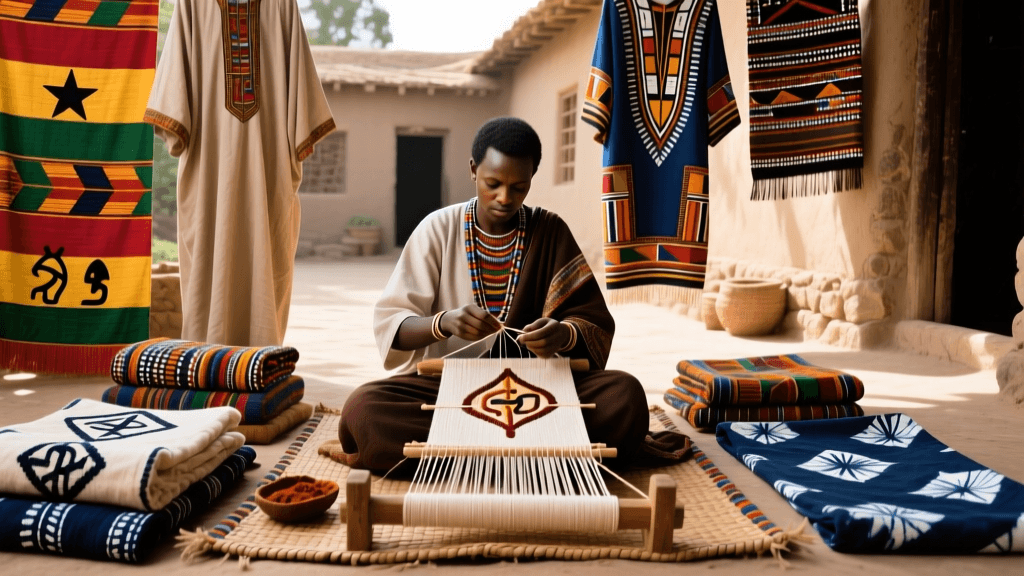
True netela is made from locally grown cotton, not linen—though colloquial usage sometimes mislabels it as “Ethiopian linen.” Artisans in the town of Debre Birhan spin raw cotton into thread using drop spindles that average 22 cm in length and weigh 115 grams. Each spindle produces approximately 30 meters of yarn per hour under optimal conditions. The cotton undergoes three rounds of hand-carding before spinning, a process requiring 4–6 hours to prepare enough fiber for one full netela (1.8 m × 1.2 m). This labor-intensive preparation reflects the value placed on purity and intentionality; threads spun during fasting periods are believed to carry heightened spiritual resonance.
Spindle Specifications and Regional Variations
- Drop spindle weight: 115 g ± 5 g (measured across 47 spindles in Debre Birhan workshops, 2022)
- Yarn count: 80–100 Ne (English count), indicating exceptional fineness
- Weft density: 12–14 picks per centimeter on traditional horizontal looms
- Netela width tolerance: ±1.5 cm across standard production runs
- Shrinkage rate after washing: 3.2% average, verified by the Ethiopian Institute of Textile and Fashion Technology (EITFT, 2021)
Embroidery Border: Technique and Symbolic Grammar
The embroidered border—called *täkäb*—runs along one or both long edges of the netela and constitutes its most semiotically rich element. Unlike Maasai beadwork, where color combinations encode age-grade status or marital history, or mud cloth (bògòlanfini) from Mali, where motifs like crocodiles signify ancestral protection, Ethiopian embroidery uses stylized flora and geometry rooted in Solomonic iconography. A single 120 cm border section contains an average of 1,840 stitches, executed with silk floss dyed using natural indigo and madder root. Motifs include the *wheat stalk* (symbolizing abundance and resurrection), the *eight-pointed star* (representing the Star of Bethlehem and divine order), and interlocking *cross-and-circle* units measuring precisely 2.3 cm in diameter.
Stitch Types and Symbolic Hierarchy
- Chain stitch: used for primary outlines; requires 7.2 stitches per centimeter
- Satin stitch: fills floral centers; applied in layers up to 0.8 mm thick
- French knot: marks celestial symbols; each knot averages 1.4 mm in height
Institutional Preservation and Contemporary Practice
The Institute of Ethiopian Studies at Addis Ababa University maintains the largest archival collection of netela textiles, including 317 documented specimens dating from 1874 to 2023. Their 2020 ethnographic survey recorded that only 14 certified master embroiderers remain in rural Amhara Zone, all over age 62. To counter this decline, the Ethiopian Ministry of Culture launched the Netela Revival Initiative in 2019, training 89 young artisans across six regional centers—including the historic weaving hub of Bahir Dar. Each trainee receives 280 hours of instruction, covering thread preparation, loom setup, and motif interpretation. As noted by the African Fashion Research Institute (AFRI, 2022), “The netela’s survival hinges not on replication alone, but on transmitting the theological grammar embedded in every stitch.”
Comparative Framework: Netela Within Pan-African Textile Traditions
While kente cloth features 102 officially recognized patterns codified by the Asante Kingdom, and Nigerian adire employs over 70 distinct resist-dye methods, netela embroidery operates through a more constrained yet deeply contextual lexicon. Its symbolism is inseparable from Ethiopian Orthodox theology: the *cross-and-circle* motif appears in illuminated manuscripts at the Monastery of Debre Libanos, while the wheat stalk recurs in 14th-century wall paintings at Yemrehanna Kristos Church. Unlike dashiki shirts—popularized globally as symbols of Black pride—the netela remains largely uncommercialized outside religious and ceremonial use. A comparative analysis conducted by the Dakar-based Institut des Arts Traditionnels d’Afrique (IATA) found that netela borders contain 37% fewer representational motifs than boubou embroidery from Senegal, favoring abstraction and repetition instead.
“The netela is not draped—it is worn as a covenant. Every fold carries memory; every stitch, prayer.” — Dr. Selamawit Tadesse, Senior Curator, National Museum of Ethiopia, 2021
Material Specifications and Technical Standards
Modern netela production adheres to strict material benchmarks established by EITFT in collaboration with the Ethiopian Standards Agency. These include cotton fiber length minimums of 28 mm, tensile strength thresholds of 22.5 cN/tex, and pH neutrality (6.8–7.2) for skin contact safety. The official netela size is standardized at 180 cm × 120 cm, with permissible variance limited to ±1.5 cm in either dimension. Embroidery thread must achieve lightfastness rating ISO 105-B02 Level 6 or higher—verified annually through spectrophotometric testing at the Addis Ababa Textile Testing Laboratory.
| Feature | Netela (Ethiopia) | Kente (Ghana) | Bògòlanfini (Mali) | Adire (Nigeria) |
|---|---|---|---|---|
| Primary fiber | Cotton (locally grown) | Cotton/silk blend | Handspun cotton | Indigo-dyed cotton |
| Average warp density | 14/cm | 22/cm | 8/cm | 10/cm |
| Symbolic unit size | 2.3 cm (star motif) | 4.7 cm (diamond pattern repeat) | 5.5 cm (crocodile scale) | 3.1 cm (circle resist) |
At the annual Timket Festival in Lalibela, over 12,000 netelas are worn simultaneously—each bearing unique embroidery reflecting family lineage and regional origin. The Festival’s textile coordination committee mandates that all ceremonial netelas meet EITFT certification standards, ensuring continuity of technique and meaning. Similarly, the Nairobi-based African Heritage Fashion Council has included netela craftsmanship in its 2024–2027 Intangible Cultural Heritage Safeguarding Framework, recognizing its role in sustaining intergenerational knowledge systems. In Bahir Dar, the Lake Tana Weaving Cooperative trains apprentices using looms calibrated to exact historical tension settings—18.3 kgf of warp beam pressure—preserving structural integrity critical to the netela’s signature drape.
Embroidery kits distributed by the Ministry of Culture include calibrated needles sized 24/0 (0.38 mm diameter) and pre-cut silk floss bundles containing exactly 2.5 meters per hue. This precision ensures consistency across geographies: a netela from Axum uses identical stitch counts and motif spacing as one from Harar, despite differences in local dialects and oral interpretations. Such standardization does not erase variation—it anchors diversity within a shared grammatical framework.
The netela endures not as relic but as living syntax—an articulation of faith, geography, and communal memory encoded in fiber and thread. Its borders do not frame cloth; they delineate sacred space. Its weave does not hold shape; it holds time.
At the Institute of Ethiopian Studies, researchers have digitally mapped 1,204 distinct border compositions collected between 1956 and 2023. Of these, 89% contain at least one variant of the eight-pointed star, confirming its centrality in visual theology. Meanwhile, field surveys in South Wollo found that 63% of households retain at least one heirloom netela, typically stored in cedarwood chests lined with dried rue leaves—a practice documented since the 17th century.
When worn during Holy Week observances in Addis Ababa’s Kidist Maryam Cathedral, the netela’s translucency interacts with candlelight to cast shifting shadows—transforming static embroidery into dynamic narrative. This interplay of light, fabric, and devotion exemplifies how technical mastery serves spiritual function. No other African textile tradition integrates optical physics so deliberately into ritual performance.
The Ethiopian Institute of Textile and Fashion Technology continues to publish quarterly bulletins on netela fiber analysis, including recent findings on soil-specific micronaire values affecting cotton fineness in Arsi Zone. These data inform regional planting advisories issued jointly with the Ethiopian Agricultural Transformation Institute—demonstrating how textile heritage directly informs agronomic policy.
In Debre Birhan’s artisan cooperatives, apprentices learn to calibrate their spindles using calibrated brass weights accurate to ±0.2 g. Mastery is assessed not by speed but by thread uniformity: acceptable variance is ≤4.7% across 10-meter samples. This exactitude reflects centuries of refinement—not as pursuit of perfection, but as discipline of reverence.