The Essential Guide to Kimono Accessories: Obi, Zori, Tabi
The Anatomy of Kimono Accessories: Beyond the Garment
The traditional Japanese kimono is globally recognized as a masterpiece of textile art, but the garment itself is only the foundation of a much larger aesthetic system. In the art of kitsuke (the practice of wearing a kimono), the accessories are not mere afterthoughts; they are the structural and decorative elements that dictate the formality, seasonality, and personal expression of the wearer. A beautifully woven silk kimono can be rendered entirely inappropriate for an occasion if paired with the wrong obi belt or footwear.
According to the Victoria and Albert Museum's Asian Collections, the evolution of Japanese dress has always been deeply intertwined with its accessories, particularly during the Edo period when sumptuary laws restricted the outward display of wealth on the main garment, leading to an explosion of creativity in hidden linings, obi sashes, and hair ornaments. Today, navigating the world of kimono accessories requires an understanding of specific terminology, precise measurements, and strict rules of etiquette. This comprehensive guide will walk you through the essential components of the kimono ensemble, focusing on the obi, zori, geta, and tabi.
The Obi and Its Essential Companions
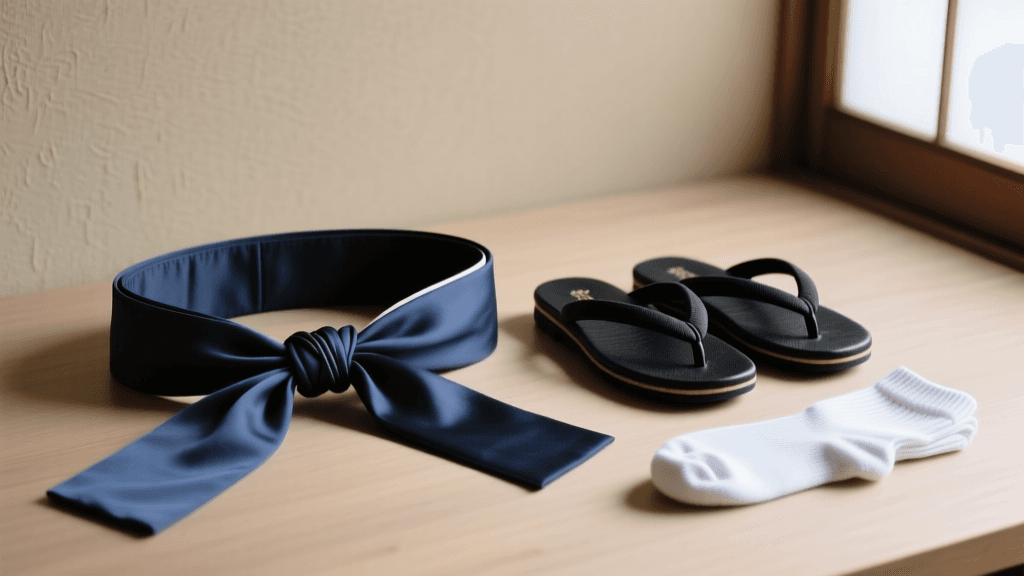
The obi is the wide sash that secures the kimono. While it serves a functional purpose, it is often the most expensive and visually striking element of the outfit. However, the obi cannot function alone. It requires a specific ecosystem of supporting accessories to maintain its shape and add decorative flair.
Types of Obi
- Fukuro Obi: The most formal obi, typically measuring about 30 cm in width and 4.2 meters in length. It is fully patterned or heavily brocaded and is worn with formal kimono like the kurotomesode or furisode.
- Nagoya Obi: A semi-formal to casual obi that is pre-folded and stitched to make tying easier. It measures about 30 cm wide but is narrower at the ends. It is the most versatile obi for daily wear and tea ceremonies.
- Hanhaba Obi: A casual, half-width obi (about 15 cm wide) worn primarily with yukata (summer cotton kimono) or casual wool kimono.
Obi Accessories: Structure and Decoration
To tie a formal obi, particularly in the popular otaiko (drum) knot, several hidden and visible accessories are required:
- Obi-ita (Belt Plate): A stiff, canvas or plastic board covered in fabric that is inserted between the layers of the obi to prevent wrinkling and ensure a smooth, flat front. Cost: $10–$25.
- Obimakura (Obi Pillow): A small, padded cushion tied around the waist to give the otaiko knot its signature elevated, rounded shape at the back. Cost: $8–$15.
- Obiage: A silk scarf-like cloth that wraps around the obimakura, hiding the pillow while adding a pop of color above the obi. For formal wear, it is usually tied and tucked so only a thin line is visible.
- Obijime: A braided cord (often made using the traditional kumihimo technique) that wraps around the center of the obi to secure the knot. Formal obijime are thicker (approx. 1.5 cm) and often feature metallic threads, while casual ones are thinner (approx. 1.0 cm) and made of matte silk or cotton.
- Obidome: A decorative brooch threaded onto the obijime. It is generally reserved for casual or semi-formal wear (like a Nagoya obi) and is rarely used with highly formal Fukuro obi, where the brocade itself is meant to be the focal point. Vintage and artisan obidome can range from $20 to over $300.
Footwear: Navigating Zori, Geta, and Hanao
Footwear in traditional Japanese dress is strictly divided by formality, material, and season. Understanding the difference between zori and geta is crucial for proper kitsuke.
Zori: The Formal Flat Sandal
Zori are flat, thonged sandals traditionally made from woven straw, but modern formal versions are covered in vinyl, brocade, or leather. They are the only appropriate footwear for formal kimono.
- Heel Height: Women's formal zori often feature a raised heel. A standard formal heel is about 4 cm to 5 cm high. Geisha and maiko wear specialized, highly elevated zori called okobo or pokkuri, which can be 10 cm to 15 cm high.
- Hanao (Thongs): The Y-shaped straps are called hanao. On formal zori, the hanao are usually made of the same brocade as the shoe body and are relatively thin.
- Cost & Sourcing: High-quality new brocade zori can cost between $80 and $200. Vintage pairs in good condition can be found for $30 to $60, though the vinyl may degrade over time.
Geta: The Informal Wooden Clog
Geta are elevated wooden sandals with one to three 'teeth' on the bottom. They are strictly informal and are paired with yukata or casual everyday kimono. They are highly popular in the summer as the elevation keeps the hem of the garment away from the damp ground and allows air to circulate.
- Hanao Replacement: The hanao on geta are usually made of velvet or cotton and are meant to be replaced when worn. Replacing hanao at a specialist cobbler in Japan costs about $40 to $80, a vital maintenance step for vintage collectors.
The Tabi Sock: Sizing, Kohaze, and Etiquette
Tabi are the traditional split-toe socks worn with both zori and geta. They are not merely socks; they are structured garments made of heavy, non-stretch cotton or silk, fastened at the ankle with metal clasps called kohaze.
Sizing and Fit
Unlike Western socks, tabi do not stretch. They must fit snugly to prevent wrinkling around the ankles, which is considered highly inelegant in formal settings. Tabi are sized in centimeters. Actionable Advice: Always purchase tabi that are 0.5 cm smaller than your actual foot measurement. For example, if your foot measures 24.0 cm, buy a 23.5 cm tabi. The heavy cotton will give slightly with wear, molding perfectly to your foot.
Kohaze (Metal Clasps)
The fasteners at the back of the tabi are a subtle indicator of formality:
- 4-Kohaze Tabi: Feature four metal hooks. These are standard for casual wear, yukata, and daily use. They are easier to put on and take off.
- 5-Kohaze Tabi: Feature five metal hooks, extending slightly higher up the ankle. These are strictly required for formal occasions, tea ceremonies, and stage performances, as they provide a smoother, more secure line under the kimono hem.
While white is the universal standard for formal and semi-formal wear, colored or patterned tabi can be worn with casual kimono to add a playful, modern touch to the ensemble.
Accessory Matching Guide: Formal vs. Informal
Matching accessories requires balancing the formality of the kimono with the appropriate textiles and materials. The following table serves as a quick-reference guide for assembling a cohesive outfit.
| Occasion | Kimono Type | Obi Type | Footwear | Tabi Style |
|---|---|---|---|---|
| Wedding / Highly Formal | Kurotomesode / Furisode | Fukuro Obi (Gold/Silver) | Brocade Zori (Raised heel) | White, 5-Kohaze |
| Tea Ceremony / Semi-Formal | Tsukesage / Houmongi | Nagoya Obi (Silk) | Vinyl/Leather Zori (Flat/Low) | White, 5-Kohaze |
| Shopping / Casual Outing | Komon / Tsumugi | Nagoya Obi (Tsumugi/Cotton) | Low Zori or Flat Geta | White or Patterned, 4-Kohaze |
| Summer Festival | Yukata (Cotton) | Hanhaba Obi | Wooden Geta | Barefoot or Patterned Tabi |
Care, Storage, and Maintenance
Proper care of kimono accessories ensures their longevity, especially for vintage and antique collectors. Historical garments and textiles preserved by institutions like the Metropolitan Museum of Art's Department of Asian Art demonstrate how well-maintained silk and woven materials can survive for centuries.
Storing the Obi
Never fold a formal Fukuro obi sharply, as this will permanently damage the metallic threads and brocade. Instead, roll the obi loosely around a cylindrical cardboard tube (specifically designed for obi storage) and wrap it in acid-free tissue paper or a breathable cotton cloth called a tatoushi.
Footwear Maintenance
Zori and geta should be stored in a cool, dry place away from direct sunlight, which can yellow vinyl and warp wood. If you purchase vintage zori, inspect the hanao for fraying. You can stuff the toe area with acid-free paper to help the sandal retain its shape. For wooden geta, occasionally rub the bare wood with a dry cloth to remove dirt, and avoid wearing them in heavy rain, as moisture can cause the wood to crack or the teeth to split.
Tabi Care
Because tabi are made of heavy cotton and are worn directly against the skin, they must be washed regularly. Hand wash them in cool water with a mild detergent. Do not wring them out; instead, press the water out gently between two towels. Reshape them while damp and hang them to dry in the shade. Never use bleach on white tabi, as it can weaken the heavy cotton fibers and cause the metal kohaze to rust.
Conclusion
Mastering the accessories of the kimono is a rewarding journey into Japanese aesthetics and cultural history. From the structural necessity of the obi-ita to the subtle formality indicated by the fifth kohaze on a tabi sock, every element serves a distinct purpose. By understanding the measurements, materials, and matching rules outlined in this guide, you can confidently assemble a kimono ensemble that respects tradition while showcasing your personal appreciation for one of the world's most intricate sartorial systems.