Best Hanfu Styles For Tai Chi And Qigong Practice In 2026
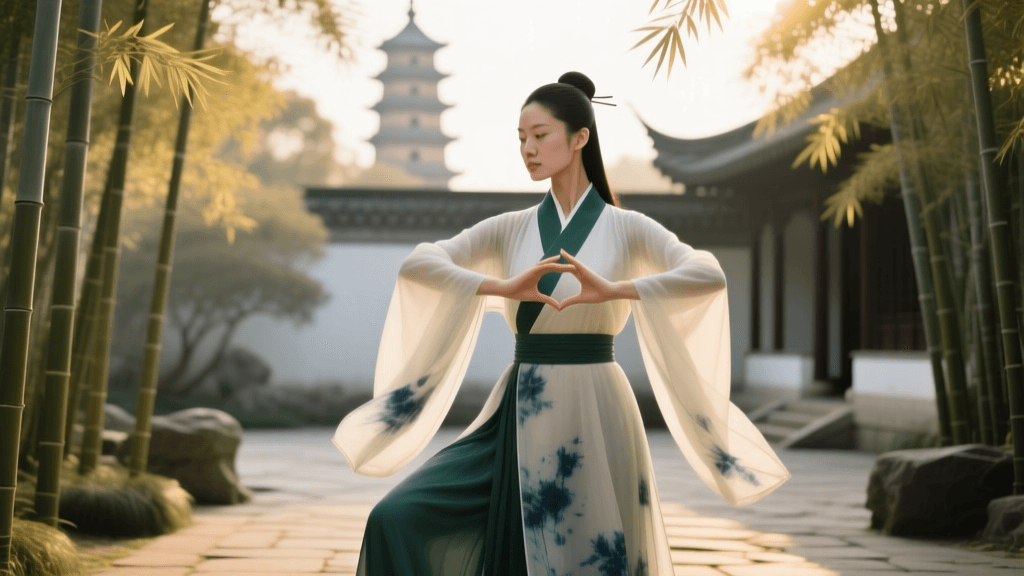
The intersection of traditional Chinese fashion and holistic wellness has reached a new zenith in 2026. As the Xin Zhongshi (new Chinese style) movement matures, practitioners of Tai Chi and Qigong are increasingly turning away from generic, mass-produced martial arts uniforms. Instead, they are seeking authentic Hanfu garments that honor historical silhouettes while accommodating the rigorous biomechanical demands of internal martial arts. Whether you are practicing the flowing forms of Yang-style Tai Chi or the static postures of Zhan Zhuang Qigong, the clothing you wear acts as a second skin, influencing your breath, circulation, and grounding.
The Biomechanics of Qigong: Why Silhouette Matters
According to Harvard Health Publishing, Tai Chi is often described as "meditation in motion," requiring deep stances, slow weight transfers, and expansive shoulder rotations. Traditional ceremonial Hanfu, characterized by floor-sweeping skirts and massive Da Xiu (large sleeves), is visually stunning but entirely impractical for the training hall. The excess fabric can obscure hand forms, catch the wind during outdoor park practice, and restrict the deep knee bends required for Ma Bu (horse stance).
In 2026, the most sought-after wellness Hanfu prioritizes the Shu Xiu (narrow sleeve) or modified bound cuffs. These cuts allow the practitioner to maintain a clear line of sight to their hand positions—crucial for directing Qi (vital energy) and maintaining proper wrist alignment. Furthermore, the bodice must feature underarm gussets or deep side slits to prevent the fabric from pulling across the chest during expansive breathing exercises.
Top Fabric Innovations for 2026 Wellness Wear
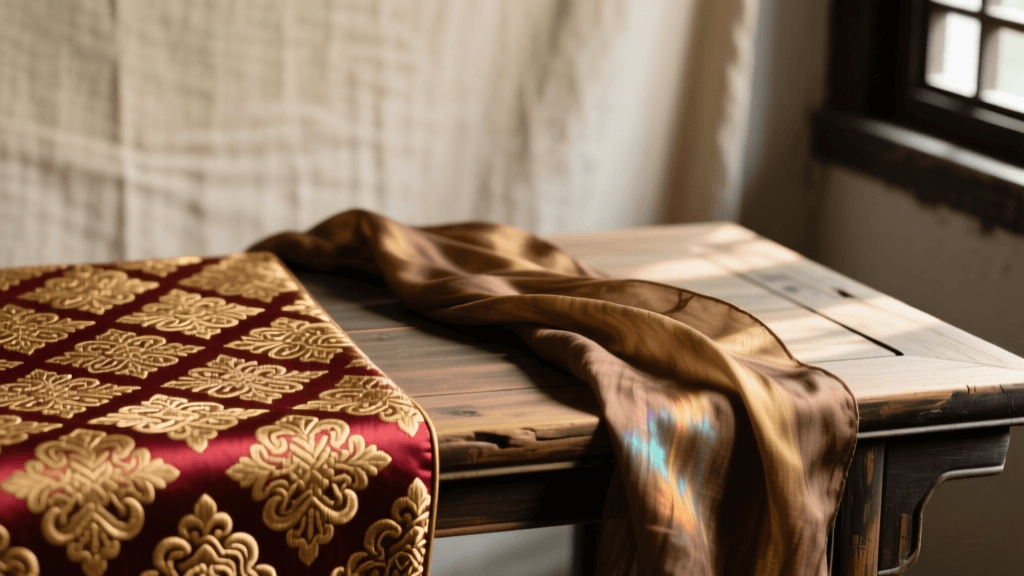
The climate and environment of your practice dictate your fabric choice. While silk is historically prestigious, it traps heat and moisture, making it unsuitable for vigorous Qigong routines. The 2026 market has seen a surge in advanced natural blends that honor ancient Chinese textile traditions while utilizing modern weaving technology.
| Fabric Type | Breathability | Moisture Management | Drape & Movement | Best Practice Environment |
|---|---|---|---|---|
| Pure Ramie | Excellent | High | Structured, crisp | Hot, humid outdoor summers |
| Bamboo-Linen Blend | Very High | Excellent | Fluid, soft | Indoor studios, year-round |
| Organic Hemp-Cotton | Moderate | Moderate | Heavy, grounding | Cool mornings, autumn outdoor |
| Tencel-Silk Weave | High | Good | Extremely fluid | Performance, indoor demonstrations |
As noted by the National Center for Complementary and Integrative Health (NCCIH), the mind-body connection in Qigong is heavily reliant on physical comfort and thermal regulation. A bamboo-linen blend, for instance, offers the antibacterial properties of bamboo and the structural durability of linen, ensuring the garment remains fresh and odor-free even after intense sweating sessions.
Recommended Hanfu Garments for Tai Chi and Qigong
1. The Modified Duan Da (Short Garment) Set
Historically worn by laborers and martial artists for unrestricted mobility, the Duan Da has been elegantly refined in 2026. Modern iterations feature a cross-collar (Jiaoling Youren) top that hits at the hip, paired with loose-fitting trousers that taper gently at the ankle. This set is the gold standard for rigorous Tai Chi sword or fan routines, ensuring no fabric interferes with the lower body's wide stances.
2. Song Dynasty Beizi with Side Slits
For slower, meditative Qigong practices like Ba Duan Jin (Eight Brocades), the Song Dynasty Beizi is an exceptional choice. This long, open-front coat features deep side slits that extend up to the waist. When performing movements like "Two Hands Hold up the Heavens," the side slits allow the fabric to drape beautifully without pulling the hemline upward or restricting the torso. Worn over a simple linen tunic and trousers, the Beizi provides a flowing silhouette that moves with the body's subtle shifts in weight.
3. Zhu Zi Deep Robe with Gathered Cuffs
The Zhu Zi is a traditional scholar's robe. In 2026, wellness-focused tailors have adapted this garment by adding hidden elastic or traditional fabric ties inside the wrist, creating a gathered cuff. This allows the practitioner to enjoy the regal, grounding weight of a full-length robe during static standing meditation (Zhan Zhuang), while keeping the forearms clear for intricate hand mudras.
Footwear: Grounding Your Practice
True Tai Chi practice requires a deep connection to the earth, often referred to as "rooting." Modern rubber-soled sneakers create a barrier between the foot and the ground, dampening sensory feedback. In 2026, practitioners are returning to traditional Bu Xie (cloth shoes) featuring the "thousand-layer sole." Hand-stitched from compressed cotton and hemp, these soles provide a firm, flat base that allows the toes to grip the floor, facilitating the micro-adjustments necessary for perfect balance.
For those practicing on hard studio floors or concrete park paths, modern minimalist Tai Chi shoes with ultra-thin, flexible crepe soles offer a compromise. They protect the skin while maintaining the zero-drop, wide-toe-box geometry essential for proper weight distribution during the "Empty Stance" (Xu Bu).
Sourcing and Caring for Your Practice Hanfu
When sourcing your wellness Hanfu, pay close attention to the interior construction. The Mayo Clinic highlights that stress reduction through Tai Chi requires a distraction-free environment; chafing seams can easily break your meditative focus. Seek out garments finished with flat-felled seams, which lie completely flat against the skin and withstand the repetitive friction of arm movements. Furthermore, the 2026 Xin Zhongshi market in hubs like Hangzhou now utilizes 3D body scanning combined with traditional flat-pattern cutting to ensure underarm gussets are perfectly placed for modern practitioners.
Care for these natural fibers requires a gentle touch. Ramie and linen should be hand-washed in cool water with a pH-neutral detergent and air-dried in the shade to prevent the fibers from becoming brittle. Over time, the natural oils from your skin and the repetitive movements of your practice will soften the fabric, molding the Hanfu uniquely to your body's kinetic patterns.
Conclusion
The integration of Hanfu into Tai Chi and Qigong is more than a sartorial choice; it is a holistic embodiment of traditional Chinese culture. By selecting ergonomic cuts, breathable natural fibers, and proper grounding footwear, practitioners in 2026 can elevate their wellness routines. The right garment does not merely cover the body—it facilitates the flow of Qi, honors the ancestors, and deepens the profound mind-body connection at the heart of Asian traditions.