Edo-Period Sarasa Kimono Textiles: 2026 Trade Route Guide
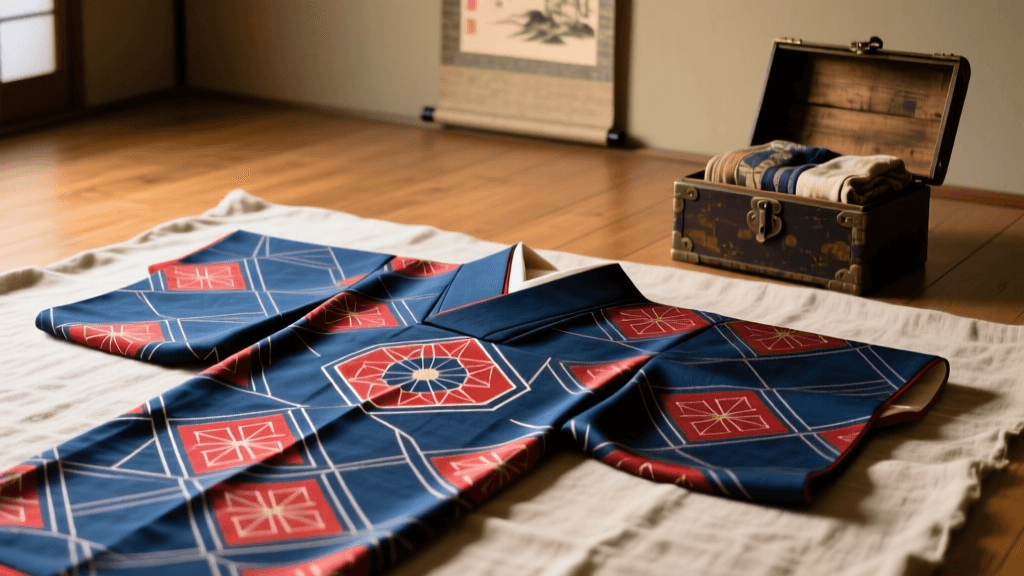
The Global Threads of the Kimono
When we envision the traditional Japanese kimono, it is easy to imagine an isolated cultural artifact, born entirely from domestic silk and indigenous aesthetics. However, as textile historians and collectors in 2026 increasingly recognize, the kimono is a dynamic canvas of global exchange. Long before modern globalization, the Japanese archipelago was deeply connected to the vast networks of the overland Silk Road and maritime trade routes. These routes brought not only spices and precious metals but also revolutionary textiles, dyes, and motifs that permanently altered the trajectory of Japanese fashion.
For contemporary collectors, museum curators, and fashion historians, tracing the provenance of these imported textiles is both a fascinating academic pursuit and a highly lucrative market endeavor. In 2026, the secondary market for authenticated Edo-period trade-route textiles has seen a surge in demand, driven by a renewed appreciation for the cross-cultural narratives woven into the fabric. This comprehensive guide explores the historical imports that shaped kimono design, with a specific focus on sarasa (Indian chintz) and Persian motifs, while providing actionable advice for authentication and archival preservation.
The Maritime Silk Road: Dejima and the Arrival of Sarasa
During the Edo period (1603–1867), the Tokugawa shogunate enacted the sakoku (closed country) policy, severely restricting foreign trade. However, this isolation was never absolute. The artificial island of Dejima in Nagasaki harbor served as the sole point of contact with the Dutch East India Company (VOC), while limited trade continued with Chinese and Ryukyuan merchants. Through this narrow maritime bottleneck flowed one of the most prized textiles in Japanese history: sarasa.
Sarasa refers to the painted and block-printed cotton chintz originating from the Coromandel Coast of India. Characterized by its vibrant madder reds, deep indigo blues, and intricate floral and geometric patterns, Indian chintz was a revelation to Japanese artisans accustomed to the more subdued palettes of domestic hemp and silk. Because imported cotton was extraordinarily rare and heavily taxed, sarasa became the ultimate status symbol among the samurai elite and wealthy merchant classes.
Rather than being cut into full garments, which would have been considered wasteful and socially transgressive, these precious imported fabrics were strategically utilized. They were most commonly fashioned into obi (sashes), han-eri (detachable collars), and the linings of yogi (sleeping kimono) or uchikake (wedding overcoats). According to the Victoria and Albert Museum Asian Collections, the technical mastery of Indian mordant dyeing, which allowed colors to remain vivid despite repeated washing, deeply influenced Japanese dyers to replicate these techniques, eventually giving rise to domestic zomen sarasa (cotton chintz) in regions like Sakai and Kyoto.
Overland Echoes: Persian Motifs and the Shosoin Legacy
While the maritime routes brought physical textiles like sarasa, the overland Silk Road transmitted ideas, patterns, and weaving techniques that became foundational to Japanese textile arts. The legacy of these overland exchanges is most visibly preserved in the Shosoin repository in Nara, which houses 8th-century treasures from the Tang Dynasty, Persia, and the Byzantine Empire.
Persian Sassanian motifs, particularly the shippo (seven treasures/overlapping circles) and stylized roundels containing mythical beasts, traveled across Eurasia and were eventually absorbed into the repertoire of Nishijin weavers in Kyoto. By the Edo period, these ancient trade-route motifs had been thoroughly Japanized. The karakusa (arabesque) pattern, ubiquitous in kimono linings and furoshiki (wrapping cloths), traces its lineage directly back to Hellenistic and Persian vine scrolls transmitted via the Silk Road. As documented by the UNESCO Silk Roads Programme, the movement of these motifs demonstrates how the kimono serves as an archival record of Eurasian cultural synthesis.
In 2026, advanced non-invasive fiber spectroscopy allows researchers and high-end auction houses to trace the mineral composition of metallic threads in Nishijin-ori brocades, confirming the use of imported silver and gold alloys that match historical trade manifests from the Silk Road era.
2026 Market Valuations and Sourcing Trade-Route Textiles
The market for historically significant kimono textiles has evolved considerably. As of early 2026, collectors are moving away from generic Meiji-period garments and focusing heavily on verifiable Edo-period pieces with clear trade-route provenance. Auction houses in Tokyo and Kyoto now frequently employ blockchain-backed digital provenance certificates to verify the age and origin of high-value sarasa obi.
For independent collectors, sourcing these textiles requires a strategic approach. The famous Toji Temple flea market (Kobo-san) in Kyoto remains a premier hunting ground, but finding authentic Edo-period imports amidst thousands of Meiji and Showa reproductions requires a trained eye. In 2026, authenticated Edo-period sarasa obi segments typically command between $800 and $2,500 USD, depending on the rarity of the Coromandel print and the condition of the madder dyes. Complete yogi (sleeping kimono) featuring extensive imported sarasa linings can easily exceed $10,000 USD at specialized textile auctions.
Authentication Matrix: Edo Imports vs. Later Reproductions
Distinguishing between genuine Edo-period imported sarasa and the domestic chemical-dye reproductions that flooded the market during the Meiji (1868–1912) and Taisho (1912–1926) eras is the most critical skill for a modern collector. The following table outlines the primary diagnostic indicators used by experts at the Kyoto National Museum and private appraisal firms.
| Diagnostic Feature | Edo-Period Imported Sarasa (Authentic) | Meiji/Taisho Domestic Reproduction |
|---|---|---|
| Dye Penetration | Deep, uneven bleeding on the reverse side; madder and indigo penetrate fully. | Uniform, surface-level application; reverse side often remains stark white. |
| Color Palette | Muted, organic tones; distinct 'Coromandel red' and deep fermented indigo. | Bright, synthetic aniline reds and harsh chemical blues introduced post-1860s. |
| Motif Alignment | Slight misalignments at block-print seams; organic imperfections in floral vines. | Perfectly repeating stenciled patterns (katazome) with sharp, uniform edges. |
| Textile Hand (Feel) | Crisp, slightly waxy finish due to traditional burnishing and mordant pastes. | Softer, more pliable cotton due to industrial milling and chemical washing. |
| Wear and Aging | Graceful fading; structural integrity remains high despite centuries of use. | Brittle fibers in high-wear areas; synthetic dyes often turn brown or grey with age. |
Archival Preservation Standards for 2026
Acquiring a historical trade-route textile is only the first step; preserving it for future generations requires strict adherence to modern archival standards. The organic dyes used in historical sarasa, particularly madder and chay root, are highly sensitive to environmental fluctuations and light exposure.
In 2026, the gold standard for private and institutional preservation involves climate-controlled micro-environments. Textiles should be stored in a dark, well-ventilated space maintained at a strict 20°C (68°F) with a Relative Humidity (RH) of 50-55%. Fluctuations beyond this range can cause the cotton fibers to expand and contract, leading to the micro-fracturing of the brittle mordant dyes.
When folding and storing these garments, collectors must abandon traditional cedar chests, which emit acidic vapors and volatile oils that can yellow and degrade antique cotton. Instead, garments should be interleaved with unbuffered, acid-free tatou paper (typically measuring 38cm x 75cm) and housed in archival-grade polypropylene boxes. For display purposes, LED lighting with a strictly enforced limit of 50 lux and zero UV emission is mandatory to prevent the irreversible photodegradation of the historic indigo and madder pigments.
Conclusion
The kimono is far more than a symbol of isolated Japanese tradition; it is a woven map of the ancient world. By understanding the maritime and overland trade routes that brought sarasa and Persian motifs to Japan's shores, collectors and historians can appreciate these garments on a profoundly deeper level. As the 2026 market continues to value historical authenticity and cross-cultural provenance, mastering the authentication and preservation of these global textiles ensures that the legacy of the Silk Road remains vibrant for centuries to come.