Edo Period Kosode: Historical Evolution and Modern Styling Guide
The Structural Evolution: From Undergarment to Outerwear
The Japanese kimono is globally recognized as a symbol of elegant, traditional Asian fashion. However, the garment we recognize today is the direct descendant of a specific historical precursor: the kosode. Translating literally to 'small sleeves', the kosode originated not as a standalone outer garment, but as a humble silk undergarment worn beneath the sweeping, multi-layered ensembles of the Heian period (794–1185). While the aristocracy flaunted the o-sode (large-sleeved) robes like the junihitoe, the kosode was the practical base layer for both men and women of all classes.
As the samurai class rose to power during the Kamakura and Muromachi periods, the highly impractical Heian court fashions were abandoned in favor of mobility and martial readiness. The kosode emerged from beneath the outer robes to become the primary outer garment. By the time the Tokugawa shogunate established the Edo period (1603–1867), the kosode had evolved into a canvas for unprecedented artistic expression, laying the exact structural foundation for the modern kimono.
Edo Period Fashion Hierarchy and Textile Laws
The Edo period was characterized by strict social stratification and prolonged peace, which allowed urban merchant classes (the chonin) to accumulate wealth. However, the shogunate frequently enacted sumptuary laws to prevent commoners from dressing above their station. These laws dictated everything from the types of silk that could be worn to the permissible colors and patterns.
In response, the merchant class developed an aesthetic philosophy known as iki—a refined, subtle, and understated elegance. Rather than wearing overtly flashy garments that would attract the attention of the authorities, wealthy commoners hid exquisite, hand-painted linings inside austere, dark outer kosode. They also began tying their obi (sashes) in more intricate, decorative knots at the back, transforming a functional belt into a centerpiece of fashion.
According to historical analyses by the Metropolitan Museum of Art, the Edo period fostered a vibrant urban culture where fashion became a primary mode of self-expression, leading to the publication of pattern books (hinagata-bon) that allowed women across the country to order the latest kosode designs from local tailors.
The Genroku Era and the Birth of Yuzen Dyeing
The late 17th century, specifically the Genroku era (1688–1704), marked the golden age of kosode design. It was during this time that Miyazaki Yuzensai, a fan painter from Kyoto, revolutionized textile decoration by inventing the Yuzen resist-dyeing technique. Yuzen allowed artisans to draw intricate, pictorial designs directly onto the silk using a rice-paste resist, preventing the dyes from bleeding into one another. This technique transformed the kosode into a wearable painting, featuring sweeping landscapes, seasonal flora, and literary motifs that wrapped seamlessly around the body.
'The kosode of the Genroku era represents a pivotal moment in Japanese textile history, where the garment ceased to be merely clothing and became a mobile, highly personal work of art.' — Curatorial notes on Japanese textile history, Victoria and Albert Museum.
Comparison Table: Heian O-sode vs. Edo Kosode
Understanding the structural differences between earlier dynastic fashion and the Edo kosode is crucial for collectors and historical reenactors. The table below highlights the primary evolutionary shifts.
| Feature | Heian Period O-sode (Outer Robes) | Edo Period Kosode |
|---|---|---|
| Sleeve Opening | Extremely large, open, and flowing | Small, narrow, and cinched at the wrist |
| Primary Fastening | Layered overlapping, thin functional ties | Single garment secured by a prominent obi |
| Obi Width | N/A (Hidden or purely functional thin cords) | Widened significantly, from 10cm to over 30cm |
| Surface Design | Woven patterns, solid color layering | Pictorial Yuzen dyeing, embroidery, tie-dye |
| Gender Distinction | Highly distinct male/female court silhouettes | Shared basic T-shape; gender expressed via pattern/motif |
Practical Guide: Sourcing and Wearing Edo-Style Kosode Today
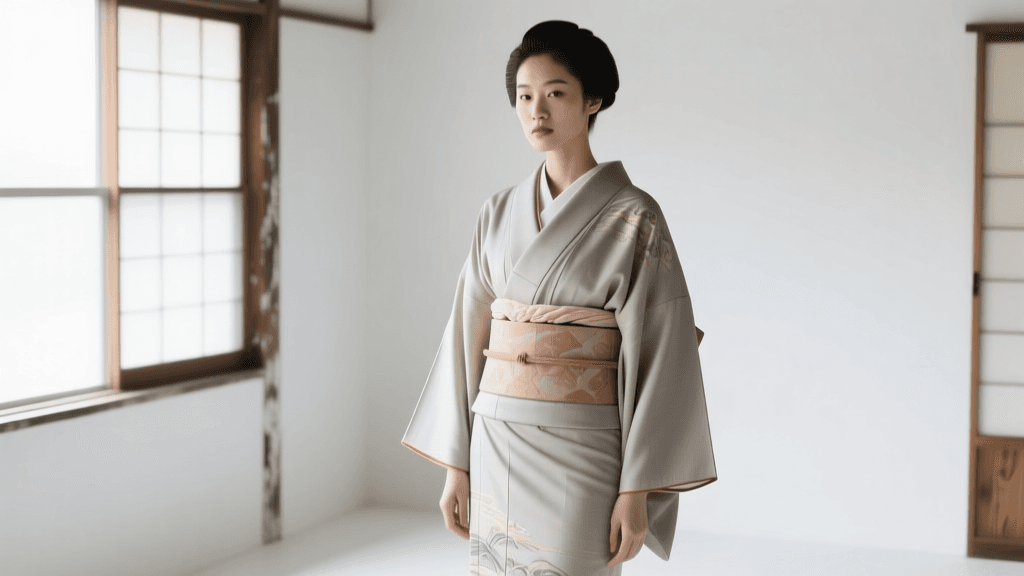
For modern enthusiasts, historical reenactors, and collectors, assembling an authentic Edo-period kosode wardrobe requires navigating the differences between historical tailoring and modern kitsuke (the art of kimono dressing). Modern kimonos are tailored with extra length to accommodate the ohashori (the folded tuck at the waist). However, historical kosode were tailored to the exact height of the wearer (tsuitake) and worn without this fold, secured tightly with a thinner obi.
Crucial Measurements for Historical Accuracy
- Mitake (Back Length): For an authentic Edo silhouette, order a bespoke kosode with a mitake equal to your exact floor-to-shoulder measurement (typically 130–145 cm). Do not add the modern 30 cm allowance for the ohashori fold.
- Yuki (Sleeve Length): Edo-period kosode often featured slightly shorter yuki measurements than modern kimono, ending just past the wrist bone rather than mid-hand. Measure from the center back of the neck, over the shoulder, to the wrist.
- Okumi (Front Overlap): Ensure the front overlap panels are wide enough (approx. 15-20 cm) to allow for a secure wrap without gaping, a common issue when modern wearers attempt historical styling.
Sourcing Options, Costs, and Timing
Acquiring a historically accurate kosode requires careful planning and budgeting. Here is a breakdown of actionable sourcing methods:
- Bespoke Yuzen Reproductions: Commissioning a master dyer in Kyoto to create a Genroku-style Yuzen kosode is the most authentic route. Cost: $1,500 to $4,000+. Timing: 4 to 8 months. Ensure you specify 'historical tsuitake tailoring' to avoid modern proportions.
- Antique and Vintage Markets: True Edo-period kosode are fragile museum pieces, but late-Meiji and Taisho-era transition pieces (which retain Edo proportions and hand-painted Yuzen) are accessible. Cost: $300 to $1,200 depending on condition and silk quality. Timing: Immediate purchase via specialized Japanese antique dealers or auction houses.
- Theatrical and Rental Studios: For high-quality photography or short-term events, Kabuki theater rental shops in Tokyo and Kyoto offer historically accurate replicas. Cost: $80 to $150 per day. Timing: Book 2 to 3 weeks in advance.
Assembling the Historical Wardrobe: Essential Accessories
A kosode cannot be worn correctly with modern accessories. To achieve the Edo-period silhouette, you must source the following specific items:
- Hanhaba Obi (Half-Width Sash): Before the late Edo period, women wore narrower, softer sashes. A silk hanhaba obi (approx. 15 cm wide) tied in a simple bunko (box) or karuta knot is historically accurate for the early-to-mid Edo era.
- Koshihimo (Tying Cords): You will need at least three soft silk or cotton koshihimo to secure the kosode at the waist and hips before applying the obi. Avoid modern elastic belts, which create an unnatural, rigid silhouette.
- Datejime (Under-Sash): A thin, stiff silk or crepe sash worn over the koshihimo to smooth the fabric and provide a stable base for the obi.
- Footwear: Pair the ensemble with zori featuring braided straw or bamboo soles, rather than modern vinyl or lacquered wood, to maintain historical integrity.
Conclusion
The Edo period kosode is far more than a historical artifact; it is the blueprint of Japanese textile artistry. By understanding the sumptuary laws that drove covert luxury, the Genroku innovations in Yuzen dyeing, and the precise tailoring differences that separate historical garments from modern kimono, collectors and wearers can authentically revive this golden era of Asian fashion. Whether commissioning a bespoke reproduction or carefully styling an antique transition piece, honoring the kosode's original proportions ensures that the elegant, understated spirit of iki continues to thrive in the modern wardrobe.