Edo Period Kosode: History, Sumptuary Laws, and Collector Guide
Introduction to the Edo Period Kosode
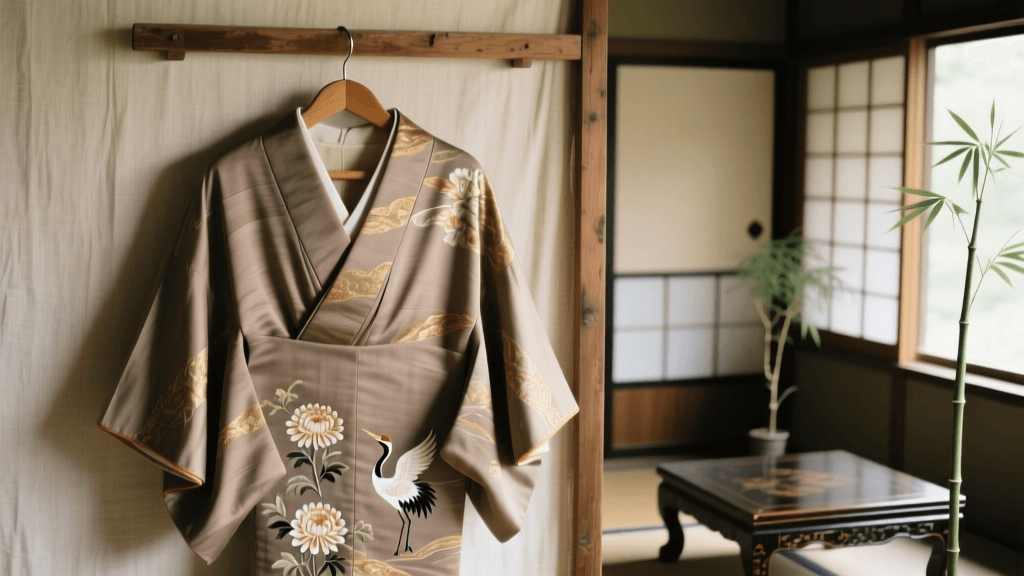
The Edo period (1603–1867) represents a watershed era in Japanese textile history, marking the definitive transition of the kosode from a humble undergarment to the primary canvas of Japanese fashion and the direct ancestor of the modern kimono. During this era of prolonged peace and economic growth under the Tokugawa shogunate, the rigid social hierarchy inadvertently fueled an explosion of textile artistry. For contemporary collectors, historians, and enthusiasts of Asian traditions, understanding the Edo period kosode is essential. It offers a fascinating glimpse into how political restrictions birthed some of the most sophisticated dyeing and weaving techniques in human history. This guide explores the historical context of Edo fashion and provides actionable advice for collecting, measuring, and preserving these exquisite antique garments today.
From Undergarment to Canvas: The Evolution of the Kosode
Before the Edo period, the aristocracy of the Heian era (794–1185) favored the osode (large-sleeved) robes, most notably the extravagant twelve-layered jūnihitoe. The kosode, literally translating to 'small sleeve,' was originally worn as an undergarment or by common laborers. However, as the samurai class rose to power and societal structures shifted, the kosode emerged as the standard outerwear for all classes. By the time the Edo period began, the kosode's T-shaped silhouette was firmly established. According to the Metropolitan Museum of Art, the Edo period transformed this basic structure into a highly codified system of dress, where the fabric, motif, and color communicated the wearer's age, marital status, and social standing with absolute precision.
The Impact of Sumptuary Laws and the 'Iki' Aesthetic
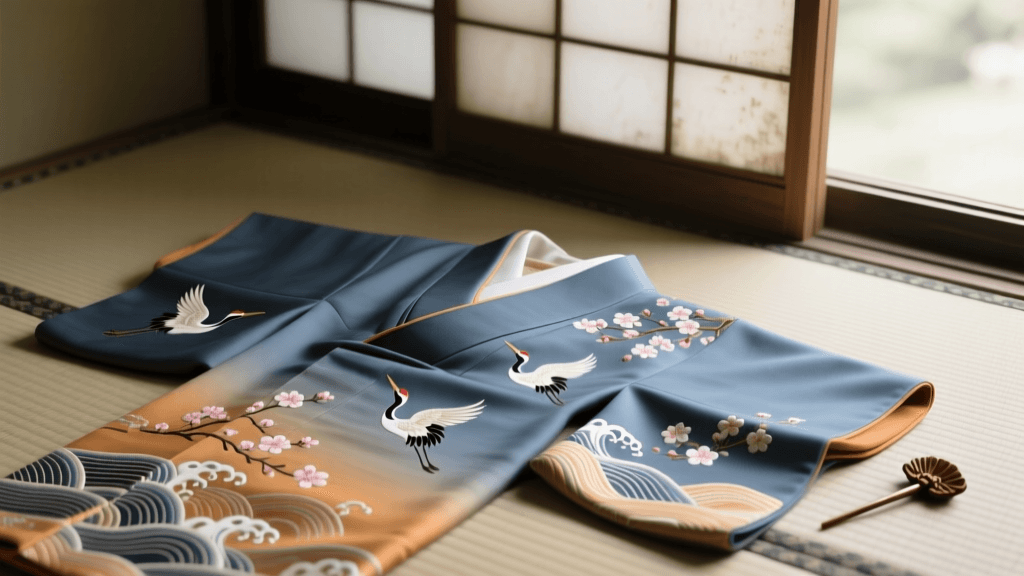
The Tokugawa shogunate enforced strict sumptuary laws designed to curb the conspicuous consumption of the newly wealthy merchant class (chōnin). Edicts frequently banned lavish Nishijin brocades, intricate tie-dyeing (shibori), and the use of gold leaf. Rather than stifling creativity, these laws catalyzed a sophisticated aesthetic known as Iki—a concept of understated, subtle elegance and rebellious chic. Merchants circumvented the laws by wearing subdued, dark-colored outer garments lined with outrageously expensive, vividly dyed silk. This practice, known as ura-masari (hidden luxury), meant that a seemingly plain indigo kosode might reveal a breathtaking, hand-painted landscape on the inner lining. This dynamic directly influenced the placement of motifs on the kosode, shifting focus to the hem, the lower back, and the interior of the garment.
Technical Innovations: Yuzen Dyeing and Nishijin Weaving
The late 17th century saw the invention of Yūzen-zome, a resist-dyeing technique attributed to the fan painter Miyazaki Yūzensai. This revolutionary method allowed artisans to draw intricate, pictorial designs directly onto silk using a rice-paste resist, mimicking the fluid strokes of a brush. Yūzen dyeing bypassed sumptuary laws banning woven brocades, as it was technically a painting technique applied to plain weave silk. Meanwhile, in Kyoto, the Nishijin weaving district continued to produce breathtaking metallic brocades for the samurai elite and the theater, solidifying Japan's reputation for textile supremacy. The Victoria and Albert Museum notes that these Edo-period innovations laid the technical groundwork for the global appreciation of Japanese textiles in the centuries that followed.
Comparison Chart: Edo Kosode vs. Modern Kimono
While the modern kimono is a direct descendant of the Edo kosode, structural and stylistic differences are significant. Understanding these differences is crucial for accurate historical identification and proper wearing techniques.
| Feature | Edo Period Kosode (c. 1700s) | Modern Kimono (c. 2000s) |
|---|---|---|
| Sleeve Width (Sodeguchi) | Narrow (approx. 20-25 cm) | Wider (approx. 30-35 cm) |
| Back Length (Mitake) | Short (100-115 cm), worn trailing or folded | Long (130-145 cm), folded at the waist (Ohashori) |
| Obi (Sash) Width | Narrow (Hoso-obi, approx. 15 cm) | Wide (Fukuro-obi, approx. 30 cm) |
| Collar (Eri) | Narrow, worn pulled back slightly | Wider, standardized placement |
| Primary Fastening | Simple ties, decorative front knots | Complex, structured rear knots (Musubi) |
The Collector's Guide: Sourcing, Pricing, and Valuation
Collecting antique Edo-period kosode requires a discerning eye, an understanding of textile degradation, and knowledge of the current market. Authentic Edo pieces are rare, fragile, and highly prized by institutions and private collectors alike.
Pricing and Market Valuation
- Museum-Quality Edo Kosode (1603-1867): $3,000 to $20,000+. Pieces featuring intact Yūzen dyeing, gold couching, or verified provenance (such as garments belonging to samurai families) command premium prices.
- Meiji Era Transitional Pieces (1868-1912): $400 to $1,500. These pieces often feature the wider sleeves and synthetic aniline dyes introduced from the West, bridging the gap between Edo and modern styles.
- Modern Edo-Style Reproductions: $800 to $2,500. High-end contemporary weavers in Kyoto produce historically accurate Nishijin and Yūzen reproductions for tea ceremony practitioners and collectors.
Timing and Sourcing
The optimal time to source antique textiles in Japan is during the Kyoto Toji Temple flea market (held on the 21st of every month) or during the Golden Week holidays in late April, when estate liquidations are common. For international buyers, specialized auction houses and the Minneapolis Institute of Art archives provide excellent reference points for verifying patterns and weave structures before making a purchase.
Practical Advice: Measuring, Wearing, and Preserving Antiques
Acquiring an antique kosode is only the first step; properly measuring, wearing, and preserving the garment ensures its survival for future generations.
Standard Measurements and Sizing
Unlike Western clothing, kimono are measured flat. When evaluating an Edo kosode, focus on three critical dimensions:
- Mitake (Back Length): Measure from the base of the collar down the center back to the hem. Expect Edo pieces to measure between 100 cm and 115 cm.
- Yuki (Sleeve Span): Measure from the center back seam, across the shoulder, and down to the edge of the sleeve. Historical Yuki is typically shorter, around 120 cm to 130 cm, reflecting the smaller average stature of the Edo populace.
- Sodeguchi (Sleeve Opening): Measure the vertical opening of the sleeve. A narrow opening (under 25 cm) is a strong indicator of pre-Meiji construction.
Actionable Wearing Advice
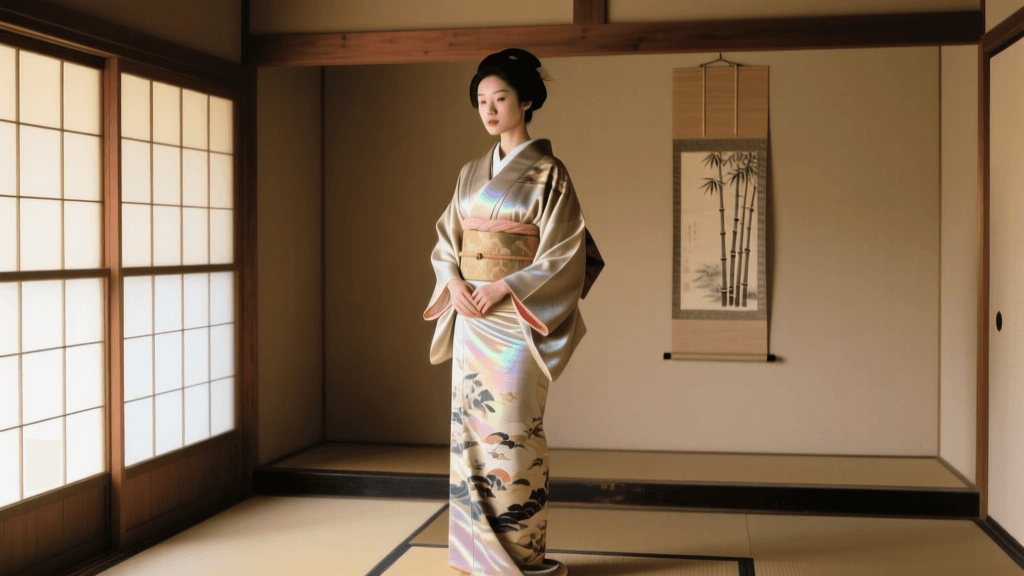
Because Edo kosode are significantly shorter than modern kimono, they cannot be worn with the standard deep waist fold (ohashori). To wear an antique kosode authentically, allow the hem to fall naturally to the ankle or let it trail slightly over the foot, a style historically favored by high-ranking courtesans and samurai women indoors. Pair the garment with a narrow, vintage hoso-obi (approx. 15 cm wide) tied in a simple bunko (box) knot at the front or side, avoiding the heavy, modern taiko drum knots that will strain the fragile antique silk shoulders.
Preservation and Storage Protocols
Silk from the Edo period is highly susceptible to 'silk shattering' (dry rot) and light damage. Follow these strict preservation protocols:
- The Hon-Tatami Fold: Always store the kosode folded along its original seam lines. Improper folding creates permanent creases that will eventually cause the antique silk to split.
- Acid-Free Wrapping: Wrap the folded garment in unbleached cotton cloth or acid-free tatoushi paper. Never use plastic bags, which trap moisture and promote mold growth.
- Climate Control: Store the textile in a dark, climate-controlled environment. Maintain a relative humidity (RH) of exactly 45% to 55%. Fluctuations in humidity cause the silk fibers to expand and contract, accelerating structural failure.
- Airing Out: Bi-annually, during dry autumn days, unfold the kosode and let it rest in a shaded, well-ventilated room for 24 hours to release trapped moisture and prevent mustiness.
Conclusion
The Edo period kosode is far more than a historical artifact; it is a masterclass in resilience, artistry, and the subtle rebellion of the human spirit against oppressive regulation. From the hidden luxury of the merchant class to the breathtaking precision of Yūzen dyeing, these garments encapsulate the soul of pre-modern Japan. For the dedicated collector, mastering the nuances of Edo measurements, sumptuary history, and meticulous preservation is a deeply rewarding endeavor. By safeguarding these textiles, we ensure that the silent, woven narratives of the Edo period continue to speak to generations to come.