Edo Period Kimono Fashion: History, Laws, and Modern Sourcing
The Dawn of Edo Period Fashion (1603–1868)
The Edo period in Japan was an era of unprecedented peace, economic growth, and cultural flourishing under the rule of the Tokugawa shogunate. As the Metropolitan Museum of Art's Heilbrunn Timeline of Art History notes, the strict social hierarchy of the time paradoxically fueled incredible innovation in the textile arts. While the samurai class held political power, the merchant class (chonin) accumulated vast wealth. Because they were forbidden from displaying their wealth through ostentatious political or military means, they channeled their fortunes into personal adornment, giving birth to a vibrant, highly sophisticated fashion culture that centered around the kimono.
The Kosode: From Undergarment to Outerwear
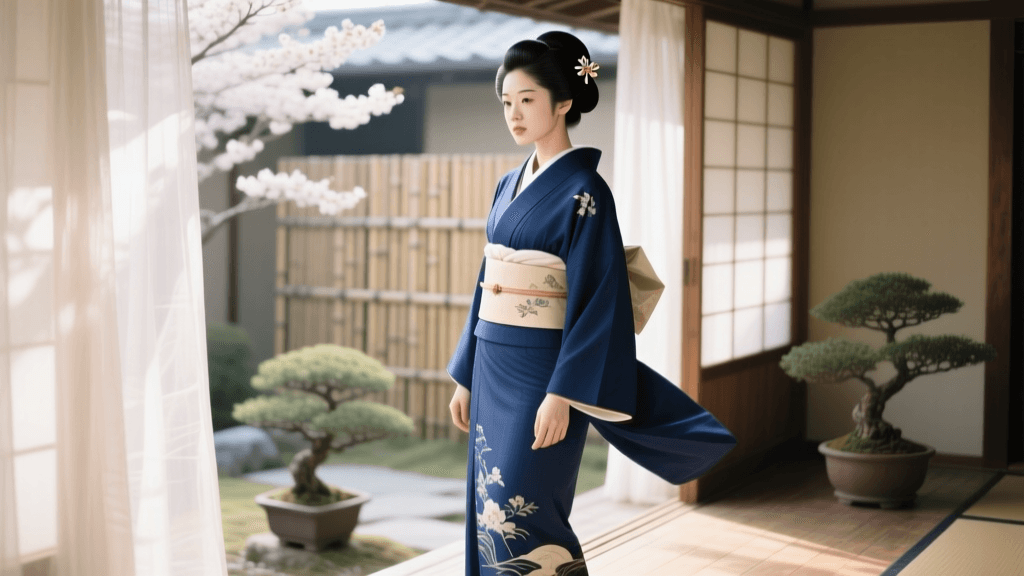
To understand Edo period fashion, one must understand the evolution of the kosode. In the preceding Heian period (794–1185), the kosode (literally 'small sleeve') was merely a plain undergarment worn beneath layers of elaborate, wide-sleeved robes known as the junihitoe. However, by the Muromachi and Momoyama periods, the kosode had emerged as the primary outer garment for both men and women. By the time the Edo period began, the kosode was the undisputed canvas for Japanese textile artistry. Unlike the modern kimono, which is a direct descendant of the kosode, the Edo-era version featured distinct structural differences, particularly in its sleeve proportions, obi width, and the way it was draped to create a specific, period-accurate silhouette.
Sumptuary Laws and the Subversive 'Iki' Aesthetic
The Tokugawa shogunate frequently enacted sumptuary laws (ken'yakurei) to enforce class distinctions and curb the perceived moral decay of the merchant class. These laws dictated who could wear what, severely restricting the use of luxurious silk, vibrant tie-dyes (shibori), and elaborate gold embroidery for commoners. However, the merchants were a creative and rebellious lot. Circumventing these restrictions gave rise to the aesthetic concept of 'Iki'—a refined, subtle, and understated elegance that concealed immense wealth and taste from the untrained eye.
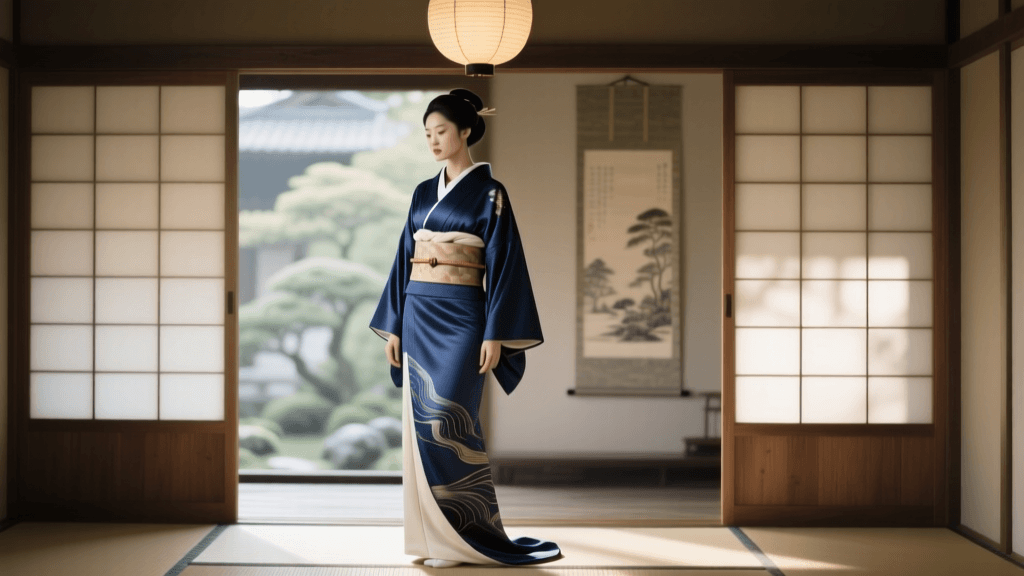
This subversion birthed some of Japan's most celebrated dyeing techniques. The most famous is Edo Komon, an incredibly intricate stencil-dyeing technique where tiny, seemingly solid-colored dots form complex micro-patterns (such as shark skin or rain) that are only visible upon close inspection. Another innovation was Yuzen-zome, a resist-dyeing method that allowed for pictorial, painterly designs that could bypass restrictions on woven brocades. The Victoria and Albert Museum's 'Kimono: Kyoto to Catwalk' exhibition highlights how these legal constraints inadvertently pushed Japanese dyers to achieve unparalleled technical mastery, turning the kosode into a walking masterpiece of subversive art.
Practical Guide: Sourcing Edo-Style Garments Today
For collectors, historical reenactors, and kimono enthusiasts, acquiring garments that reflect the Edo aesthetic requires specific knowledge of terminology, market timing, and pricing. True Edo-period (1603–1868) antiques are incredibly fragile, often suffering from shattered silk due to the metallic salts used in historical black dyes. Therefore, most collectors target late Meiji (1868–1912) or Taisho (1912–1926) era garments, which retain Edo construction techniques and aesthetics but are more structurally sound.
Product Names and Search Terms
When searching Japanese auction sites like Yahoo! Auctions Japan or specialized dealers (such as Ichiroya or Yamatoku), use the following specific terms to find historically accurate pieces:
- Edo Komon (江戸小紋): Essential for the subtle samurai or wealthy merchant look. Expect to pay $300 to $800 for a verified, high-quality vintage piece.
- Maru Obi (丸帯): The heavily brocaded, fully patterned obi worn during the Edo and Meiji periods. Unlike modern Fukuro obi, Maru obi are incredibly heavy and stiff. Vintage prices range from $150 to $500.
- Kosode (小袖): Search for 'antique kosode' rather than 'vintage kimono' to find pieces with the narrower sleeve widths characteristic of the era.
- Shibori (絞り) and Kanoko (鹿の子): Fawn-spot tie-dyeing that was highly prized (and frequently banned) during the Edo period. Authentic antique Kanoko Shibori can cost upwards of $1,500 due to the immense labor required.
Timing and Logistics
The best time to source high-end antique textiles is during the Japanese spring (March-April) and autumn (October-November) when estate sales and seasonal kimono auctions peak. When purchasing from Japan, always select EMS (Express Mail Service) for shipping. Standard airmail can take over a month and lacks robust tracking, which is risky for fragile silks. EMS typically delivers within 5 to 10 business days and costs between $25 and $45 USD depending on the garment's weight (a heavy Maru Obi can push shipping costs higher).
Measurement and Sizing: Modern vs. Edo Period Kosode
One of the most common mistakes modern buyers make is applying contemporary kimono sizing rules to historical garments. The Edo kosode was cut differently to accommodate a different method of wearing and tying the obi. Below is a comparison chart to guide your measurements:
| Feature | Modern Kimono | Edo Period Kosode |
|---|---|---|
| Sleeve Width (Sode-haba) | 32 - 36 cm | 24 - 28 cm (Noticeably narrower) |
| Obi Width | 30 - 32 cm (Fukuro/Nagoya) | 15 - 20 cm (Early Edo) up to 30 cm (Late Edo Maru) |
| Back Length (Mitake) | Custom cut to wearer's height | Often cut longer, with excess folded and tied at the waist |
| Collar (Eri) | Wide, stiff, worn open at the back | Narrower, softer, worn pulled snug against the nape |
| Fastening Method | Modern plastic clips (date-jime) | Woven silk sashes (koshi-himo) tied tightly |
Actionable Measuring Advice: When measuring your Yuki (the distance from the center of the back of the neck, over the shoulder, to the wrist), subtract roughly 2 to 3 cm if you intend to wear the garment with an authentic Edo silhouette. The narrower sleeves and tighter collar placement require a slightly shorter Yuki to prevent the fabric from bunching awkwardly at the wrists when the arms are folded in front.
Styling and Wearing: Achieving the Edo Silhouette
Wearing an Edo-style kosode requires abandoning the modern, cylindrical kimono silhouette. Modern kimono dressing relies heavily on padded corsets and towels to erase the body's natural curves, creating a tube-like shape that accommodates wide, modern obi. The Edo silhouette, however, was more relaxed and followed the natural slope of the shoulders.
- Skip the Modern Corset: Do not use a modern kimono bra or heavy torso padding. Instead, use a single, thin cotton towel wrapped around the hips to provide a slight anchor for the obi.
- The Ohashori Fold: In the Edo period, the ohashori (the fold of fabric tied at the waist) was not meant to be a perfectly straight, rigid line. Allow the fold to drape slightly more organically. The excess fabric was often used to adjust the length dynamically.
- Tying the Maru Obi: The Maru Obi is notoriously difficult to tie due to its weight and lack of a soft inner lining. For historical accuracy, tie a simple Bunko (box) knot or a Taiko-style precursor. Because the Maru Obi is fully patterned on both sides, ensure the heavy silk is folded precisely to display the metallic threads without snapping the delicate fibers.
- Footwear: Pair the garment with Zori that have a slightly lower profile and traditional woven tatami-omote (rush grass) covers, avoiding the thick, modern vinyl-soled zori that alter the historical drape of the hem.
Conclusion
The fashion of the Edo period represents a masterclass in resilience, artistry, and the human desire for self-expression under restrictive conditions. From the microscopic brilliance of Edo Komon to the sweeping, painterly landscapes of Yuzen-zome, the garments of this era are much more than mere clothing; they are historical documents woven in silk. By understanding the structural nuances of the kosode, respecting the 'Iki' aesthetic, and applying precise, historically informed sourcing and styling techniques, modern enthusiasts can keep the vibrant spirit of Edo fashion alive and authentically draped for generations to come.