Edo Period Hakama: Evolution of the Samurai Kamishimo
The Transition from Battlefield to Bureaucracy
The Edo period (1603–1867) marked a profound shift in Japanese history, transitioning the nation from the chaotic, warfare-riddled Sengoku era into over two and a half centuries of relative peace under the Tokugawa shogunate. This political stabilization fundamentally altered the role of the samurai class. No longer solely battlefield warriors, samurai became educated bureaucrats, administrators, and court officials. Consequently, their traditional garments evolved to reflect this new societal role. The Metropolitan Museum of Art notes that Edo period fashion was heavily dictated by strict social hierarchies and sumptuary laws, turning clothing into a visual language of rank, duty, and philosophical adherence to Bushido.
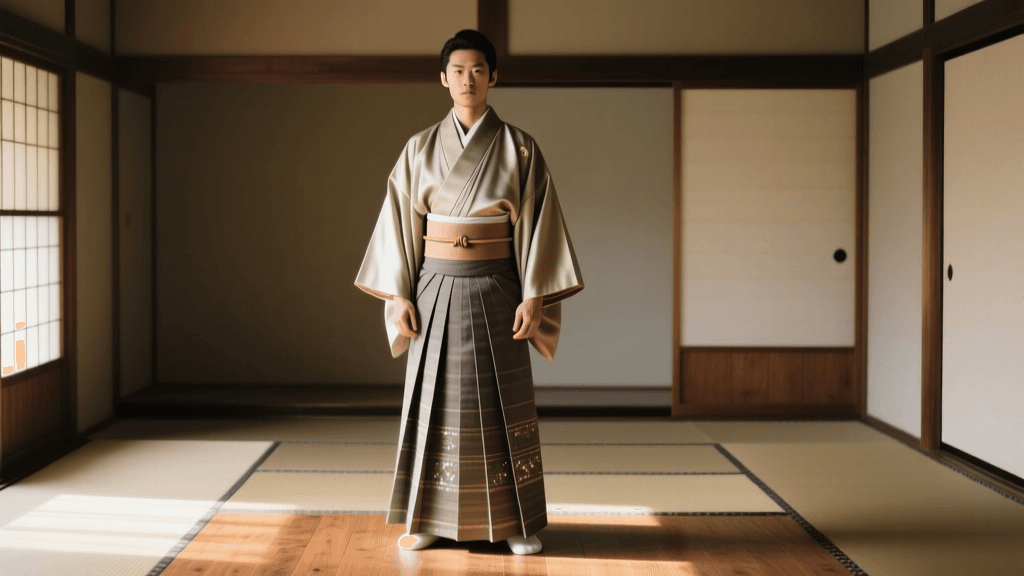
At the heart of this sartorial evolution was the kamishimo, a formal two-piece garment ensemble that became the definitive uniform of the Edo period samurai. Understanding the kamishimo—and specifically the hakama (pleated trousers) and kataginu (stiffened sleeveless jacket)—offers a fascinating glimpse into how historical periods dictate fashion silhouettes, functionality, and cultural symbolism.
Anatomy of the Edo Period Kamishimo
The kamishimo was not a single garment, but rather a coordinated set worn over a base layer kimono (kosode). It consisted of two primary components:
The Kataginu (Stiffened Jacket)
The kataginu is perhaps the most visually striking element of the kamishimo. Unlike the flowing, natural drape of earlier Heian or Muromachi period garments, the Edo period kataginu featured exaggerated, wing-like shoulders. These shoulders were stiffened using whalebone, bamboo, or heavy starch. This design served multiple purposes: it made the samurai appear physically broader and more imposing, it restricted sudden, erratic movements (enforcing a dignified, measured gait), and it made it difficult for an assassin to hide a weapon in the sleeves or strike from behind.
The Hakama (Pleated Trousers)
While hakama had been worn for centuries, the Edo period formalized their structure. The formal samurai hakama featured a rigid koshi-ita (back board) that rested at the small of the back, enforcing upright posture. The trousers were characterized by deep, razor-sharp pleats and exceptionally long himo (tying strings) that wrapped multiple times around the waist to secure the garment and support the lower back during long hours of seiza (kneeling) in court.
Data Table: Sengoku vs. Edo Period Kamishimo
| Feature | Sengoku Period (Pre-1603) | Edo Period (1603-1867) |
|---|---|---|
| Primary Function | Battlefield utility, mobility, armor undergarment | Ceremonial duties, court rank, bureaucratic administration |
| Kataginu Shoulders | Soft, natural drape, unstructured | Stiffened with whalebone or bamboo, exaggerated 'wings' |
| Hakama Length | Ankle-length to prevent tripping in combat | Floor-length, often trailing slightly for formal elegance |
| Fabric & Patterns | Hemp, rough cotton, practical silk; clan mon (crests) | Fine silk, ramie; strict sumptuary laws dictated subtle weaves |
| Koshi-ita (Back Board) | Soft or non-existent | Rigid, heavily lacquered or padded wood/cardboard |
Sumptuary Laws and the Aesthetic of 'Iki'
To maintain the rigid class structure, the Tokugawa shogunate enacted strict sumptuary laws. Merchants, despite accumulating vast wealth, were forbidden from wearing luxurious silks or overt displays of wealth. This led to the development of 'iki'—an aesthetic concept of subtle, hidden elegance. While samurai were permitted to wear fine silks for their kamishimo, they too were expected to exercise restraint in public. The Victoria and Albert Museum highlights that Edo period textiles often featured subdued, matte finishes with hidden linings or microscopic woven patterns (komon) that were only visible upon close inspection. A samurai's kamishimo was typically dyed in austere colors like charcoal, navy, or deep brown, adorned only with the five family crests (kamon) placed at the back of the neck, both shoulders, and both chests.
Practical Guide: Acquiring and Wearing Historical Kamishimo Today
For modern practitioners of traditional martial arts (such as Iaido, Kendo, and Jodo), historical reenactors, and cultural enthusiasts, acquiring an accurate kamishimo requires an understanding of both historical tailoring and modern manufacturing. Modern martial arts organizations, such as the All Japan Kendo Federation, maintain strict guidelines on how these garments should be worn during formal ceremonies and gradings.
Measurements and Sizing for Edo-Accurate Hakama
Unlike Western trousers, hakama are not sized by waist and inseam. They are sized by overall length, measured from the waist (heso) to the desired drop point. For an Edo-accurate formal look, the hakama should brush the top of the foot when kneeling, and pool slightly when standing.
- Waist Measurement: The front panel should cover the hips entirely, while the back panel sits slightly higher. The himo (strings) must be at least 3.5 to 4 meters long to allow for the traditional double-wrap and flat bow knot.
- Pleat Configuration: A standard formal Edo hakama features exactly 5 pleats in the front and 2 in the back. The pleats must be heat-set or heavily starched to maintain their structural integrity.
- Machi (Gusset) Depth: The crotch gusset should sit approximately 25 to 30 cm below the waistband to allow for deep kneeling (seiza) without tearing the seams or restricting blood flow.
- Koshi-ita Placement: The rigid back board must sit exactly in the lumbar curve. If it sits too high, it will dig into the ribs; too low, and it will fail to support the posture.
Costs, Fabrics, and Tailoring Timelines
When commissioning or purchasing a kamishimo today, your budget and intended use will dictate the materials and lead times. Here is a practical breakdown for modern buyers:
- Entry-Level / Martial Arts Standard (Tetron): Tetron is a polyester-rayon blend that mimics the drape of silk but is machine washable and holds pleats permanently. Cost: $60 - $120 USD for the hakama; $80 - $150 for the kataginu. Timeline: Usually in stock, 1-2 weeks shipping.
- Mid-Tier / Reenactment Grade (Cotton/Ramie Blend): Offers a more historical matte texture and breathability for summer wear. Cost: $200 - $400 USD. Timeline: 3 to 5 weeks for semi-custom tailoring.
- Master Tailored / Museum Quality (Omeshi Silk / Ro Gauze): Hand-woven crepe silk (Omeshi) or summer gauze (Ro) dyed using traditional Edo komon stencil techniques. Includes real whalebone or bamboo shoulder stiffeners and hand-lacquered koshi-ita. Cost: $1,200 - $3,500+ USD. Timeline: 12 to 20 weeks, as these are commissioned directly from specialized artisans in Kyoto or Tokyo.
The Art of Folding (Tatou)
Owning a historical kamishimo requires meticulous care. The kataginu's stiffened shoulders cannot be folded flat without breaking the internal structure. The traditional folding method, known as tatou, involves folding the sleeves inward, rolling the garment from the hem to the shoulders, and storing it in a specialized rectangular paper envelope (tatou-gami). The hakama must be folded along its existing pleat lines, with the koshi-ita protected by a piece of cardboard or thick paper to prevent the rigid board from crushing the delicate silk pleats during storage.
Conclusion
The evolution of the kamishimo from a practical battlefield garment to a rigid, highly symbolic court uniform perfectly encapsulates the transition of the samurai from warriors to bureaucrats during the Edo period. Today, whether worn by a martial artist performing a flawless Iaido kata or by a historian preserving the textile arts of the Tokugawa era, the hakama and kataginu remain powerful symbols of discipline, heritage, and the enduring legacy of Japanese dynasty fashion. By understanding the precise measurements, historical context, and material requirements of these garments, modern enthusiasts can authentically connect with a pivotal era in Asian cultural history.