Editorial Hanbok: 2026 Global Fashion Media Trends
The Evolution of the Hanbok in Global Fashion Media
As we navigate the Spring/Summer 2026 runway season and the subsequent editorial spreads in top-tier fashion publications, a distinct shift has occurred in how Asian traditional garments are portrayed. The hanbok, Korea’s iconic traditional dress, has transcended its historical boundaries to become a formidable force in global high fashion. No longer relegated to cultural heritage months or tokenistic styling, the hanbok is now being deconstructed, analyzed, and celebrated for its architectural brilliance by leading fashion directors in New York, Paris, and Milan.
In 2026, global fashion media is treating the hanbok with the same rigorous sartorial respect historically reserved for Western couture. Editors are focusing on the structural geometry of the garments—the sweeping curves of the sleeves, the precise volumetric ratios of the skirts, and the intricate color theories derived from the traditional obangsaek spectrum. This editorial renaissance is deeply informed by historical archives. For instance, fashion historians and stylists frequently reference the foundational silhouettes of the Choson period, extensively documented by institutions like The Metropolitan Museum of Art's Heilbrunn Timeline, to understand the evolution of the garment's proportions before applying modern avant-garde techniques.
Deconstructing the 2026 Editorial Silhouette
To truly understand how the hanbok is dominating 2026 fashion media, one must look at the specific alterations designers and stylists are making to traditional components. The modern editorial hanbok is a masterclass in proportion manipulation.
The Cropped Jeogori (Jacket)
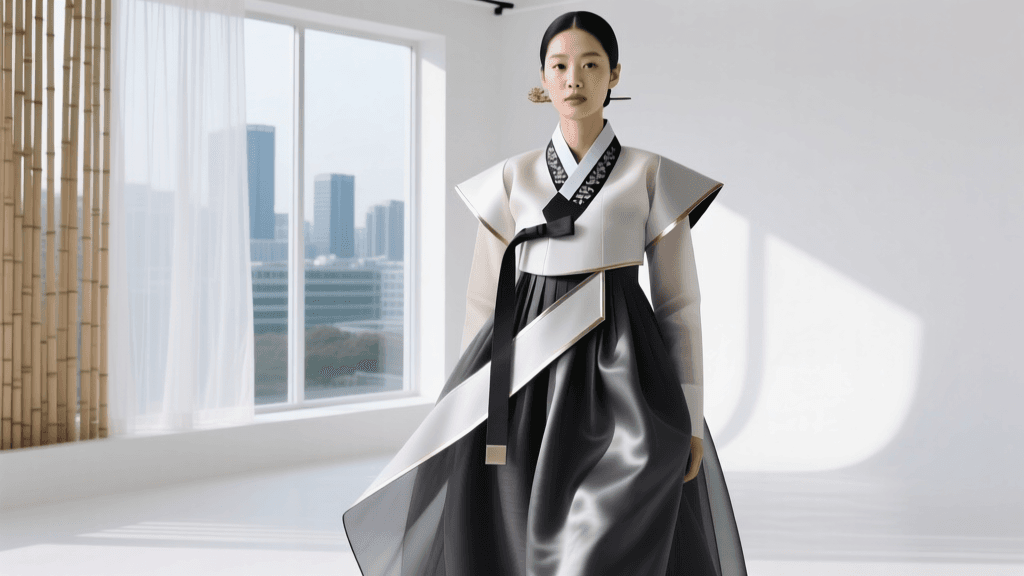
Traditionally, the jeogori has fluctuated in length over the centuries, at times reaching the waist and at others sitting high on the chest. In 2026 editorial spreads, the ultra-cropped jeogori is the undisputed star. Designers are cutting the hemline to sit precisely 14 to 16 inches from the shoulder seam, creating a structured, bolero-like effect. This specific measurement allows the garment to pair seamlessly with high-waisted Western tailoring, such as wide-leg wool trousers or pencil skirts, creating a striking juxtaposition of heritage and modernity.
The Volumetric Chima (Skirt)
The chima is being engineered with modern crinolines, horsehair braids, and silk organza to achieve a bell-shaped silhouette that rivals the most dramatic Western couture. Editorial stylists are favoring a 4.5-yard to 5-yard circumference for maximum visual impact in motion photography. The waistband is often lowered or replaced with corsetry-inspired boning, allowing the skirt to sit securely on the natural waist without the need for traditional tying methods, thus streamlining the silhouette for high-definition editorial shoots.
The Goreum (Front Tie) as Statement Hardware
Perhaps the most innovative styling trick seen in 2026 fashion media is the reimagining of the goreum. Once a simple silk ribbon used to fasten the jeogori, the goreum has been extended to floor-length proportions and crafted from stiffened ramie or accented with metallic threads. In recent spreads, stylists are utilizing the oversized goreum as a dynamic trailing element, a dramatic neck scarf, or even a structural belt, proving the versatility of this single component.
Traditional vs. 2026 Editorial Hanbok Specifications
Understanding the technical differences between ceremonial wear and high-fashion adaptations is crucial for stylists and collectors. Below is a comparison of the core specifications defining the 2026 editorial hanbok.
| Feature | Traditional Ceremonial Hanbok | 2026 Editorial Hanbok |
|---|---|---|
| Jeogori Length | Varies, often covering the bust line | Ultra-cropped (14-16 inches from shoulder) |
| Chima Volume | Natural drape, 3-yard circumference | Structured bell-shape, 4.5 to 5-yard circumference |
| Fabrication | Silk, ramie, cotton, hemp | Silk organza, neoprene, metallic jacquard, taffeta |
| Fastening | Internal ties and traditional goreum | Hidden zippers, corsetry boning, oversized goreum |
| Styling Context | Holidays, weddings, ancestral rites | Red carpets, editorial shoots, avant-garde streetwear |
Sourcing High-Fashion Hanbok Pieces in 2026
For readers and stylists looking to acquire authentic yet modernized hanbok pieces that align with current editorial trends, several contemporary designers are leading the charge. These brands are frequently featured in global fashion media and offer accessible entry points into high-fashion Korean garments.
- Danha Seoul: Known for upcycling and modernizing traditional silhouettes with a focus on sustainable textiles. Their cropped jeogori blazers are a staple in 2026 editorial styling. Price point: $350 - $850.
- Tchaikim: Blends French couture techniques with Korean heritage, utilizing luxurious silks and intricate embroidery. Ideal for red-carpet and high-end editorial commissions. Price point: $1,200 - $3,500.
- Leesle: Offers accessible luxury and everyday modernized hanbok. Their separates are perfect for integrating subtle traditional elements into a contemporary wardrobe. Price point: $150 - $400.
Actionable Styling Guide for the Modern Wardrobe
Integrating editorial hanbok pieces into a modern wardrobe requires a careful balance to ensure the garments are celebrated for their design rather than treated as costumes. Here are three actionable styling formulas favored by fashion editors in 2026:
- The Jeogori over a Slip Dress: Pair a structured, 14-inch cropped silk jeogori with a bias-cut midi slip dress. The rigidity of the jacket's collar and sleeves contrasts beautifully with the fluid drape of the slip dress, creating a sophisticated evening look.
- The Chima with a Structured Blazer: Swap the traditional jeogori for an oversized, broad-shouldered wool blazer. Tuck the blazer slightly into the high-waisted chima to define the waist while allowing the skirt's dramatic volume to take center stage.
- The Goreum as a Neck Scarf: Take an extended, stiffened ramie goreum and tie it in a loose, asymmetrical bow around the neck over a simple white t-shirt and tailored denim. This introduces a striking element of Korean heritage into casual streetwear.
Garment Care and Preservation
High-fashion hanbok pieces often utilize delicate fabrics that require meticulous care to maintain their structural integrity. Silk organza and metallic jacquards should exclusively be dry-cleaned by specialists familiar with Asian heritage garments. Ramie, while durable, can become brittle if folded improperly; always store ramie jeogori on padded hangers to preserve the curved baerae sleeve line. For volumetric chimas, avoid compressing the fabric in tight garment bags. Instead, store them in breathable cotton covers with acid-free tissue paper stuffed into the pleats to maintain the 2026 editorial bell-shape without permanent creasing.
The Future of Asian Heritage in Western Media
The integration of the hanbok into global fashion media is not a fleeting trend but a permanent expansion of the sartorial lexicon. As noted in recent Business of Fashion's global markets analysis, the luxury sector is increasingly investing in heritage craftsmanship, recognizing the commercial and cultural value of Asian textiles. Furthermore, institutions like the Victoria and Albert Museum's Asian collections continue to provide the vital historical context that grounds these modern adaptations in authentic tradition. In 2026, the editorial hanbok stands as a testament to the power of cross-cultural design, proving that traditional garments can continuously evolve while commanding the highest levels of global fashion respect.