2026 Editorial Hanbok and Cheongsam Media Styling Guide
The 2026 Paradigm Shift in Global Fashion Media
In the landscape of 2026 high-fashion editorials, the representation of Asian traditional garments has undergone a profound and necessary evolution. Top-tier publications like Vogue, Harper's Bazaar, and Elle have decisively moved away from the superficial, pastiche-driven styling of previous decades. Today, the industry standard demands rigorous cultural authenticity, structural integrity, and direct collaboration with heritage artisans. The "Neo-Traditional" aesthetic now dominating 2026 Spring/Summer campaigns celebrates the intricate construction of the Korean Hanbok and the Chinese Cheongsam (Qipao) without compromising their historical significance.
For fashion stylists, photographers, and cultural enthusiasts, understanding how global media currently frames these garments is essential. The focus has shifted from mere visual exoticism to a deep appreciation of textile engineering and regional craftsmanship. As highlighted by the Victoria and Albert Museum's extensive research on Chinese dress, the historical evolution of these garments is deeply tied to social shifts, a narrative that 2026 fashion editors are now eager to explore through a modern, sustainable lens.
Deconstructing the 2026 Cheongsam Editorial
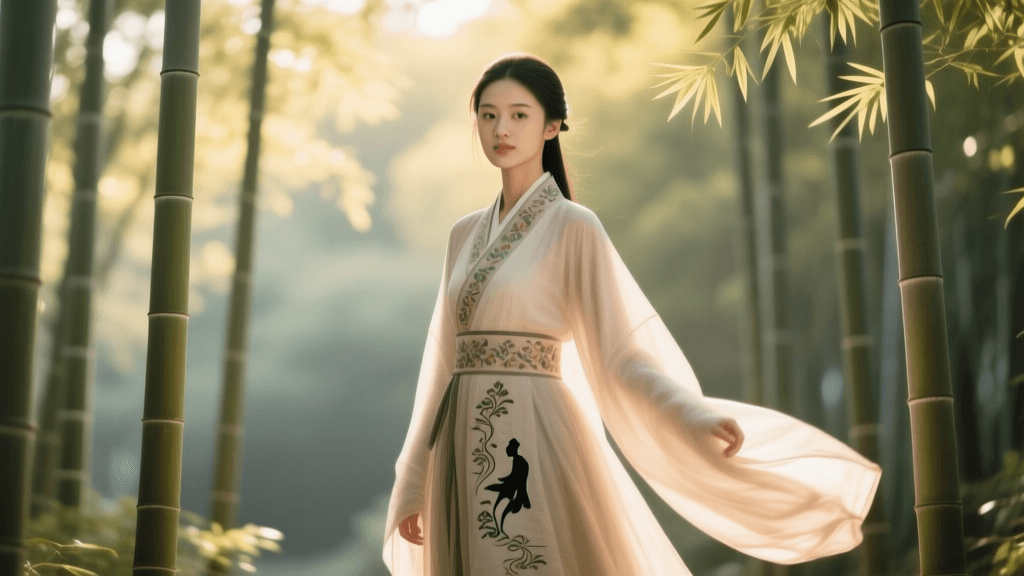
The Cheongsam, historically celebrated for its figure-hugging silhouette and intricate frog button closures, is being reimagined in 2026 fashion media. Rather than the restrictive, hyper-tailored cuts popularized by mid-century cinema, contemporary editorials are favoring the "Neo-Shanghai" silhouette. This style draws inspiration from the relaxed, drop-waist variations of the early 20th century, updated with sustainable, high-performance heritage textiles.
A major trend in 2026 is the use of Xiangyunsha (mud silk), a centuries-old sustainable dyeing technique utilizing river mud and yam juice. Fashion spreads are highlighting the fabric's unique metallic, lacquer-like sheen and its distinct rustling sound, known as "the singing silk." When styling a Cheongsam for an editorial shoot this year, the garment must be allowed to drape naturally, emphasizing the artisan's hand rather than forcing the body into an unnatural shape.
2026 Editorial Cheongsam Styling Matrix
| Design Element | Traditional Norm | 2026 Media Trend | Actionable Styling Tip |
|---|---|---|---|
| Silhouette & Fit | Tight, restrictive, high collar | Relaxed drape, moderate collar, A-line skirts | Size up slightly to allow the silk to cascade; avoid pulling at the hips. |
| Textiles | Heavy brocades, synthetic satins | Xiangyunsha mud silk, raw peace silk | Use directional lighting to capture the dual-toned sheen of mud silk. |
| Hardware & Closures | Mass-produced metal frogs | Hand-knotted silk frogs, jade toggles | Ensure macro photography of the hand-knotted *pankou* (frog) closures. |
| Slits & Hemlines | High thigh slits for mobility | Lower, modest slits with layered silk slips | Style with a contrasting silk slip to add depth when the model is in motion. |
Hanbok on the High-Fashion Runway and Page
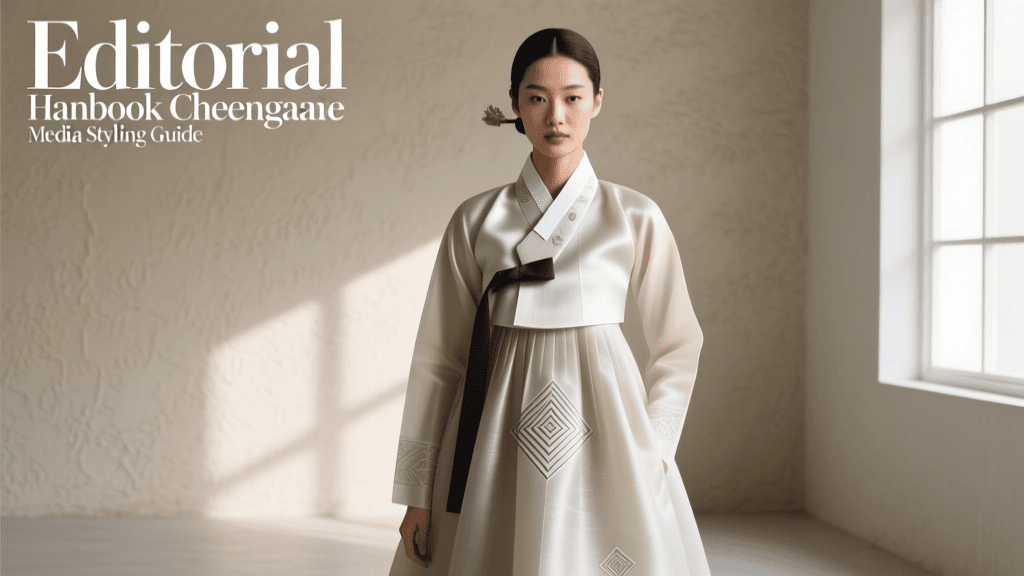
Parallel to the Cheongsam's evolution, the Korean Hanbok has secured a prominent place in 2026 global fashion media. Publications are captivated by the Hanbok's architectural volume and its elegant, flowing lines. The fundamental structure—the jeogori (short jacket) and the chima (full, wrapping skirt) for women, or the baji (trousers) for men—offers a masterclass in geometric tailoring and flat-pattern construction.
According to the Metropolitan Museum of Art's historical analysis of Korean dress, the Hanbok's beauty lies in its fluid movement and the harmonious balance of its upper and lower proportions. In 2026 editorials, stylists are emphasizing this movement by utilizing sheer, structural organza and traditional hanji (Korean paper) infused textiles. The trend of layering a translucent, oversized chima over an opaque, structured slip creates a mesmerizing visual depth that translates beautifully on camera.
Furthermore, the traditional saekdong (color-striped sleeves) are being reinterpreted. Instead of the bright, primary colors of historical children's Hanbok, 2026 fashion spreads feature muted, earthy palettes—think terracotta, sage, and deep indigo—aligning with the global fashion industry's current obsession with grounded, natural tones.
Sourcing and Commissioning Editorial-Grade Garments
To replicate the high-fashion editorial looks seen in 2026, one must source authentic, high-quality garments. The era of using cheap, mass-produced costume replicas for professional shoots is over; media watchdogs and culturally aware audiences will immediately spot inauthentic construction.
Bespoke Cheongsam Sourcing
For editorial-grade Cheongsams, stylists are turning to master tailors in Shanghai, Hong Kong, and specialized ateliers in global fashion capitals. Commissioning a bespoke piece from a recognized master tailor in 2026 typically costs between $1,800 and $4,500 USD, depending on the complexity of the pankou knots and the rarity of the silk.
- Crucial Measurements: Beyond standard bust, waist, and hip measurements, you must provide the "across back" (from shoulder bone to shoulder bone) and the "hollow to hem" (from the collarbone hollow to the desired hemline). The fit across the upper back is the true hallmark of a master-tailored Cheongsam.
- Lead Time: Authentic hand-rolled hems and hand-knotted frogs require a minimum of 8 to 12 weeks. Plan your 2026 editorial calendar accordingly.
Modern Hanbok Sourcing
Seoul remains the epicenter for high-end, editorial-ready Hanbok. Designers who specialize in modernizing the silhouette while respecting traditional flat-pattern cutting are highly sought after. Ready-to-wear editorial pieces from premium Seoul-based heritage brands range from $900 to $2,800 USD in 2026.
- The Baerae: When evaluating a Hanbok for a shoot, inspect the baerae (the curved underarm seam of the jeogori). A proper traditional curve allows the arms to move freely without pulling the jacket out of alignment. If the jacket rides up when the model raises her arms, the garment is poorly constructed.
- The Goreum: The chest tie (goreum) must be tied in a specific, asymmetrical bow. Ensure your styling team is trained in the traditional knotting technique, as an incorrect knot will immediately invalidate the editorial's authenticity.
Photography and Lighting Techniques for Traditional Textiles
Capturing the essence of these garments requires specialized lighting setups that respect the unique properties of Asian heritage textiles.
When shooting Xiangyunsha mud silk Cheongsams, avoid flat, frontal flash photography. The fabric's beauty is in its dual-toned nature—often dark brown on one side and a rich, metallic black on the other. Use large, diffused directional lights placed at a 45-degree angle to the model. This raking light will catch the subtle, lacquer-like texture of the mud silk, giving the garment a three-dimensional, sculptural quality on the page.
For sheer organza Hanbok chima, backlighting is your most powerful tool. Position a softbox or a natural light source directly behind the model, slightly off-axis. This will illuminate the translucency of the fabric, highlighting the intricate layering and the voluminous, bell-shaped structure of the skirt. Use a reflector on the front to fill in the shadows on the model's face without killing the backlight effect on the textile.
Hair, Makeup, and Ethical Attribution
The 2026 approach to hair and makeup in Asian traditional editorials favors minimalism and modern elegance over theatrical, historical reenactment. For Hanbok styling, the "glass skin" makeup trend remains highly relevant, emphasizing a luminous, hydrated complexion with softly blurred lip tints. Hair is typically styled in sleek, low chignons or architectural braids, avoiding the heavy, cumbersome wigs that can distract from the garment's neckline.
For the Cheongsam, vintage-inspired finger waves are being replaced by sharp, modern bobs or slicked-back, wet-look styling that complements the high collar and sharp tailoring of the Neo-Shanghai silhouette.
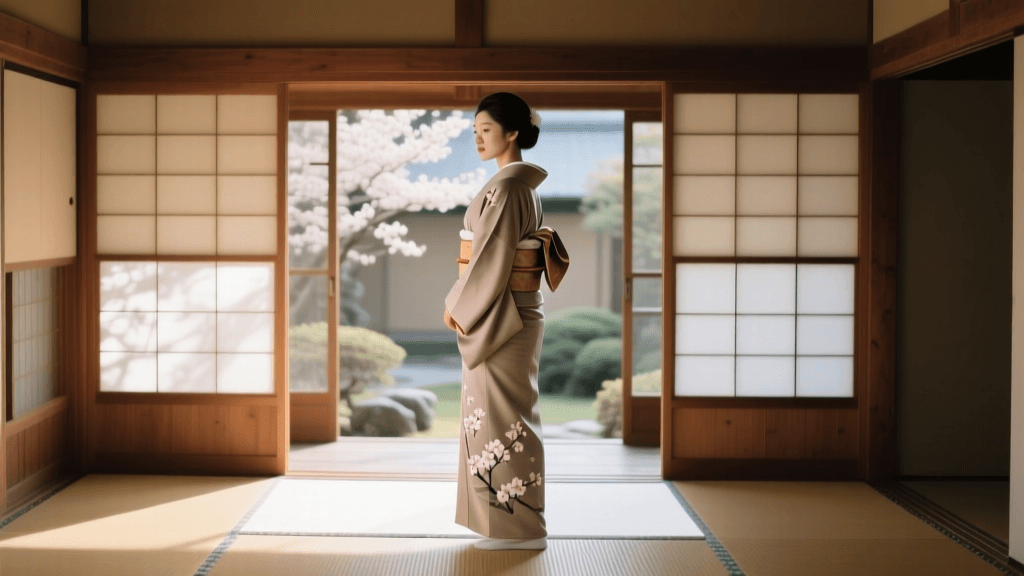
Finally, ethical attribution is non-negotiable in 2026 fashion media. Always credit the specific regional artisan, textile weaver, or heritage brand in your editorial captions. Never mix cultural signifiers—pairing a Korean gache (wig) with a Chinese Cheongsam, or using Japanese Obi belts to style a Hanbok, is a critical error that demonstrates a lack of research and respect. By honoring the distinct origins and construction techniques of each garment, stylists and photographers can create breathtaking, culturally resonant editorials that define the pinnacle of 2026 global fashion.