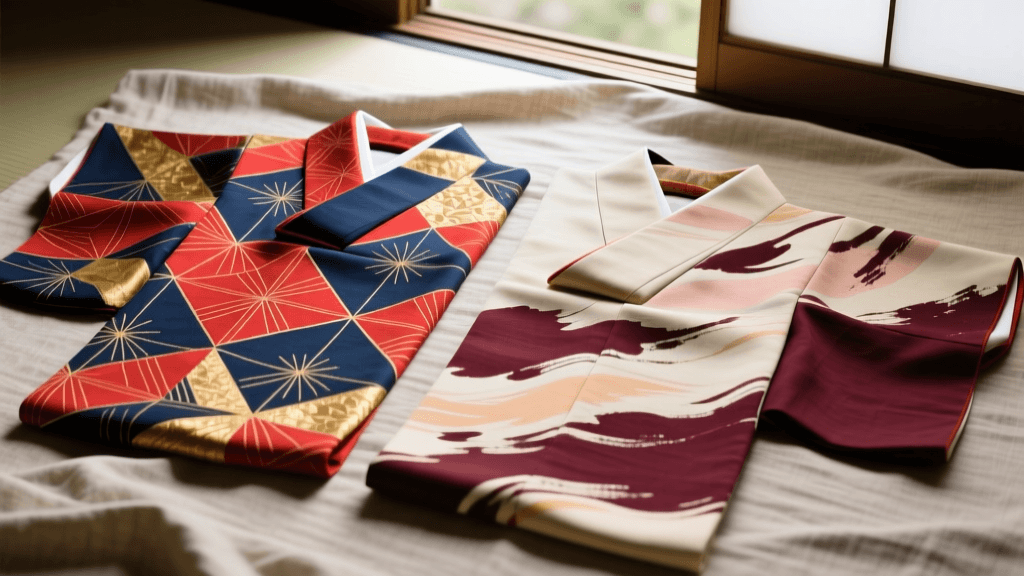
Mastering Kimono Chokusen-Dachi: Zero-Waste Construction in 2026
The Philosophy of Chokusen-Dachi in Garment Construction
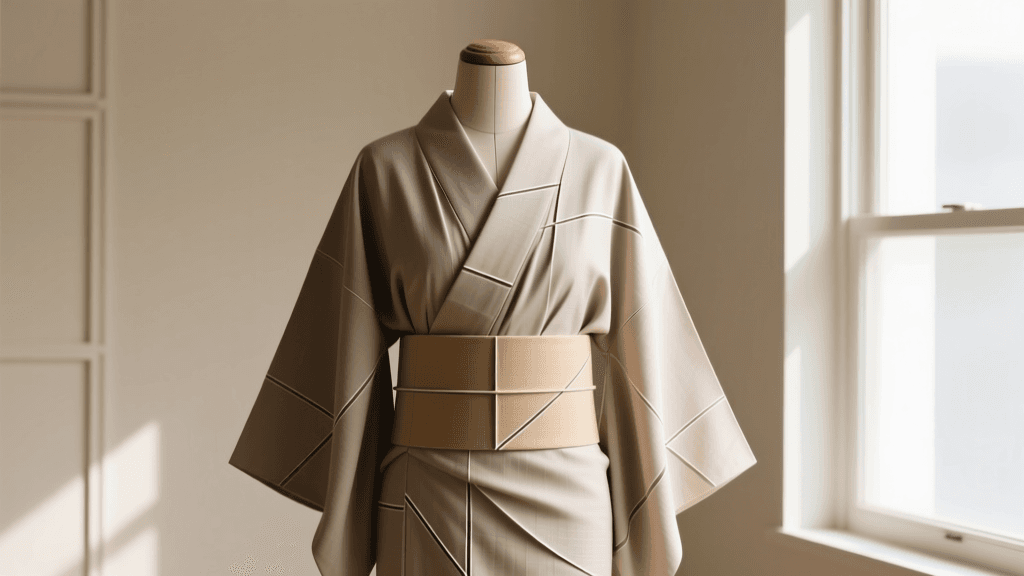
In the landscape of global fashion history, Western tailoring has long been defined by curved seams, darts, and the aggressive carving away of fabric to contour the human body. In stark contrast, the traditional Japanese kimono relies on chokusen-dachi (straight-line cutting), a profound garment construction technique that honors the integrity of the textile. As we navigate the stringent sustainability mandates and circular fashion goals of 2026, the kimono’s zero-waste architecture offers a masterclass in resource efficiency. Rather than forcing the fabric to conform to the body through subtraction, chokusen-dachi uses geometric draping to allow the garment to flow over the wearer. This approach not only eliminates textile waste at the cutting table but also ensures the garment can be endlessly resized, deconstructed, and repurposed across generations.
Understanding the Tanmono: The Foundation of Zero-Waste
The secret to the kimono’s zero-waste construction begins long before the sewing phase; it starts at the loom. Traditional kimono fabric is woven in a narrow, continuous bolt known as a tanmono. A standard tanmono measures approximately 36 to 40 centimeters in width and 11.5 to 12 meters in length. According to the Japanese Ministry of Economy, Trade and Industry (METI), these specific dimensions have been standardized for centuries to perfectly match the anthropometric requirements of the average wearer while ensuring that not a single scrap of silk, hemp, or cotton is discarded during the cutting process.
When a tailor prepares to construct a kimono, they do not use a curved paper pattern. Instead, they measure and separate the tanmono into specific rectangular panels. Because the width of the fabric dictates the width of the panels, the selvedge edges (the tightly woven outer edges of the fabric) are preserved and often incorporated directly into the seams, preventing fraying and removing the need for synthetic serging or edge-finishing.
The Anatomy of a Kimono: Rectangular Geometry
A standard kimono is constructed from exactly eight rectangular panels, which are cut or torn along the weft threads to guarantee perfectly straight edges. These panels include:
- Migoro (Body Panels): Two large rectangular panels that form the front and back of the torso.
- Sode (Sleeves): Two rectangular panels that are folded in half and attached to the migoro, creating the iconic deep, pouch-like sleeves that serve both aesthetic and functional purposes.
- Okumi (Overlaps): Two narrower panels attached to the front edges of the migoro to create the overlapping front closure.
- Eri (Collar): One long, narrow strip that is folded and attached to the neckline.
- Tomoeri (Under-Collar): A secondary collar piece that protects the main eri from skin oils and makeup.
Because every panel is a rectangle derived directly from the 36-centimeter width of the tanmono, the mathematical yield of the garment is 100%. There are no off-cuts, no armhole curves to discard, and no bias-cut scraps left behind. This level of material efficiency is something modern zero-waste pattern makers in 2026 are still striving to replicate using advanced algorithmic nesting software.
The Art of Kise and Hidden Stitching
The construction technique extends beyond mere cutting into the sewing methodology. Kimono seams are not pressed flat as they are in Western tailoring. Instead, tailors use a technique called kise. The seam allowance is folded slightly over the seam line, creating a soft, rounded edge that is gentle against the skin and allows the silk to drape fluidly. Furthermore, the stitches are predominantly hidden. Using a specialized running stitch and fine silk thread (mokinu), the tailor sews from the inside, ensuring that the exterior of the garment remains a pristine, unbroken canvas for the textile artist’s dyeing or weaving patterns. This reliance on straight, hidden seams also makes the eventual deconstruction of the garment remarkably simple.
Comparative Analysis: Western Tailoring vs. Chokusen-Dachi
| Feature | Western Tailoring (Standard 2026) | Kimono Chokusen-Dachi |
|---|---|---|
| Pattern Geometry | Curved, multi-piece, body-contouring | Straight lines, rectangular panels |
| Fabric Waste | 15% to 25% average off-cut waste | 0% (100% utilization of the tanmono) |
| Seam Finishing | Serged, overlocked, or bound edges | Selvedge edges preserved, no finishing needed |
| Resizability | Highly limited by curved seams and darts | Highly adaptable via inner tucks (age) |
| End-of-Life | Difficult to recycle due to mixed threads/trims | Fully deconstructable into flat textiles |
The Arai-Hari Process: Deconstruction as a Feature
One of the most remarkable aspects of kimono construction is that it is designed to be taken apart. Historically, silk could not be submerged in water without losing its shape or luster. To clean a kimono, it undergoes arai-hari, a process where the garment is completely unstitched back into its original tanmono panels. These flat rectangles are then washed, stretched on wooden frames, and dried. Once dry, the panels are sewn back together, effectively yielding a brand-new garment. As highlighted by the Metropolitan Museum of Art’s Heilbrunn Timeline of Art History, this cyclical nature of construction and deconstruction meant that a single high-quality silk bolt could serve a family for over a century, simply being reconfigured as it was passed down from mother to daughter, with waist tucks (ohashori) and shoulder tucks (age) adjusted to fit the new wearer's height.
Chokusen-Dachi in 2026: Sustainable Fashion and Digital Prototyping
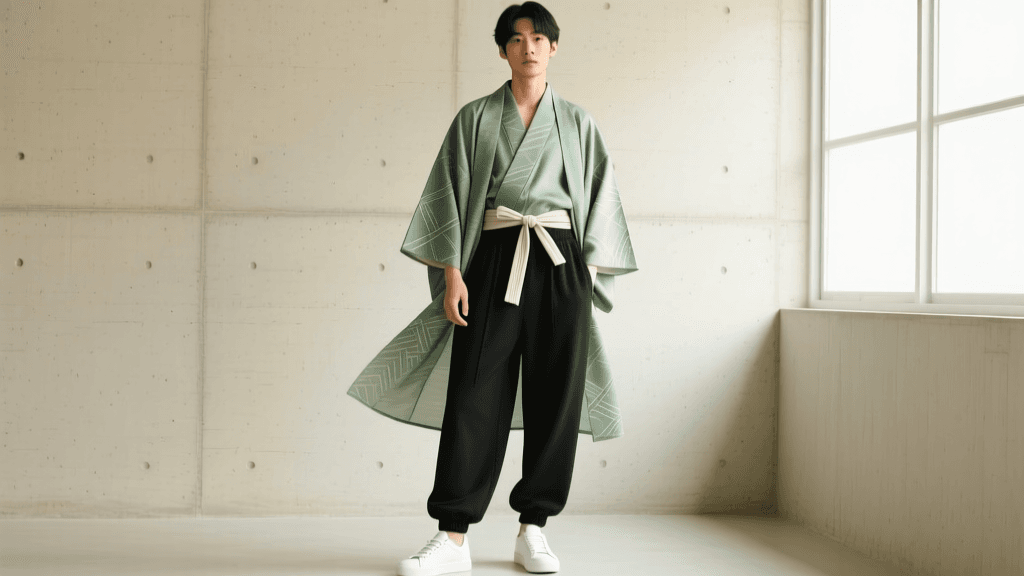
In 2026, the global fashion industry is under immense pressure to adopt circular design principles. The Ellen MacArthur Foundation continues to champion design strategies that eliminate waste and pollution, and contemporary designers are increasingly looking to chokusen-dachi for inspiration. Modern sustainable brands are now releasing 'neo-kimono' outerwear and modular workwear that utilize straight-line cutting to guarantee zero textile waste on the factory floor.
Furthermore, the rise of advanced 3D garment simulation software has revolutionized how these traditional techniques are taught and adapted. In early 2026, major digital fashion platforms introduced specific zero-waste kimono modules, allowing designers to simulate the drape, weight, and kise seam allowances of rectangular panels on digital avatars before cutting a single piece of physical fabric. This fusion of ancient Japanese geometry and cutting-edge 2026 digital prototyping is bridging the gap between cultural preservation and ecological necessity.
For the modern seamstress, tailor, or sustainable fashion student, mastering the chokusen-dachi method requires a paradigm shift. It demands that we stop viewing fabric as a raw material to be carved, and start viewing it as a precious, finite resource to be folded, respected, and preserved. By embracing the straight line, we not only honor the rich heritage of Asian dress traditions but also forge a viable path toward a truly zero-waste future in global apparel.