Global Fashion Media 2026: Hanbok & Cheongsam Trends
The Intersection of Heritage and Haute Couture in 2026
In the landscape of 2026 global fashion media, the dialogue surrounding traditional Asian garments has shifted dramatically from mere costumery to high-fashion structural innovation. Leading editorial publications, from Vogue to Harper's Bazaar, are no longer treating the hanbok and the cheongsam (qipao) as static historical artifacts. Instead, creative directors and stylists are reimagining these garments through the lens of avant-garde tailoring, sustainable textile development, and modern silhouette manipulation. This year's major editorial spreads highlight a profound respect for sartorial provenance while aggressively pushing the boundaries of how traditional Asian dress functions on the contemporary runway and in high-concept photography.
For fashion professionals, stylists, and cultural enthusiasts, understanding the 2026 media trends for these garments requires a deep dive into fabric technology, structural modifications, and the nuanced art of editorial sourcing. This comprehensive guide explores how the Korean hanbok and the Chinese cheongsam are being adapted for global fashion media this year, providing actionable advice on sourcing, styling, and photographing these magnificent textiles.
The 2026 Editorial Hanbok: Volume, Organza, and Avant-Garde Silhouettes
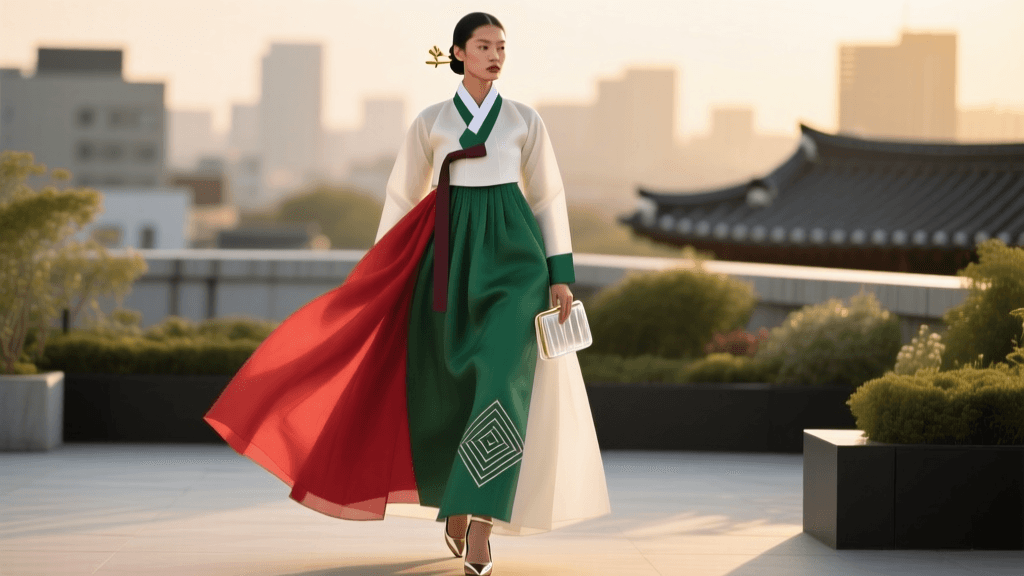
The traditional Korean hanbok is celebrated for its vibrant colors and simple, flowing lines without pockets or buttons. In 2026, global fashion media has become obsessed with the architectural volume of the chima (the wrap-around skirt) and the cropped, structural nature of the jeogori (the upper garment). Editorial stylists are moving away from the heavy, opaque traditional silks of the past decade, favoring instead layered, semi-transparent silk organza and sustainable cupro blends that catch the wind and studio lighting in dynamic ways.
A major trend in 2026 editorials is the exaggerated elongation of the goreum (the front bow tie). While traditional goreum are relatively short and functional, modern media adaptations feature floor-sweeping, asymmetrical goreum made from contrasting vegan silk, creating a dramatic, trailing effect that mimics the train of a haute couture gown. Furthermore, the dongjeong (the white detachable collar) is being reimagined in stiffened, exaggerated proportions that frame the face like an Elizabethan ruff, providing a striking geometric contrast to the soft volume of the skirt.
Actionable Sourcing: The Modern Jeogori and Chima
For stylists and buyers looking to source media-ready hanbok pieces for 2026 editorial shoots or high-profile red carpet events, the market has evolved to offer specialized contemporary houses. Here is what you need to know about sourcing:
- Contemporary Design Houses: Brands like Danha and Kim Chiho are leading the 2026 editorial market. They specialize in 'fusion hanbok' that retain traditional construction techniques but utilize modern, camera-friendly textiles.
- Price Points: Expect to pay between $600 and $1,800 for a complete, editorial-grade contemporary hanbok set. Bespoke pieces featuring hand-woven Hansan mosi (fine ramie) can exceed $3,500.
- Lead Times: Due to the intricate hand-stitching required for the curved sleeves (baerae), custom editorial orders require a minimum lead time of 8 to 12 weeks. Plan your seasonal shoots accordingly.
- Fitting Adjustments: Traditional hanbok are tied and wrapped, making them highly adjustable. However, modern editorial versions often feature hidden internal corsetry to support the heavy volume of layered organza skirts without relying solely on the traditional chest tie, which can restrict breathing during long shoot days.
The Cheongsam Renaissance: Structural Tailoring and Metallic Brocades
The cheongsam, or qipao, has long been a symbol of elegance and feminine silhouette in global media. In 2026, the fashion press is highlighting a renaissance of structural tailoring that moves beyond the skin-tight, 1930s Shanghai glamour. Today's editorial cheongsam is defined by architectural rigidity, asymmetrical closures, and the integration of futuristic textiles alongside heritage brocades.
One of the most prominent features in 2026 media spreads is the evolution of the pankou (the traditional knotted frog buttons). Designers are replacing traditional silk knots with 3D-printed resin, carved jade, or even magnetic closures hidden beneath decorative metallic plating. The mandarin collar is also undergoing a transformation; editors are favoring elongated, asymmetrical collars that sweep across the clavicle, creating a sharp, avant-garde neckline that photographs beautifully in high-contrast studio lighting.
Commissioning a Media-Ready Cheongsam in 2026
Sourcing a cheongsam for a 2026 global media campaign requires an understanding of bespoke tailoring mechanics. The garment relies entirely on the bias cut and precise darting to achieve its signature fit.
- Textile Selection: For high-definition editorial photography, avoid highly reflective synthetic satins which can cause color-banding on digital sensors. Opt for matte silk crepe, heavy silk gazar, or metallic-woven Song brocade which absorbs and diffuses light evenly.
- The Slit (Kaiqiang): In 2026 media, the side slit is often reinforced with internal silk organza stays to ensure it drapes perfectly over the knee when the model is in motion, preventing awkward fabric bunching during high-speed continuous shooting.
- Tailoring Costs: A bespoke, editorial-quality cheongsam from a master tailor in Shanghai or a specialized atelier in Paris will cost between $1,200 and $4,000 in 2026, depending on the complexity of the embroidery and the rarity of the textile.
- Timeline: Commissioning a bespoke piece requires at least three separate fittings over a 6-week period. The first fitting is always done in a cotton toile to map the bias-cut tension before the final silk is cut.
Comparative Data: Traditional vs. 2026 Editorial Specifications
To help stylists and fashion historians understand the precise shifts in garment construction, the table below outlines the key differences between strict traditional specifications and the adaptations favored by global fashion media in 2026.
| Garment Feature | Strict Traditional Specification | 2026 Global Media Adaptation |
|---|---|---|
| Hanbok Skirt (Chima) | Heavy silk or ramie, high-waisted, flat front with gathered back. | Layered silk organza, internal hoop structures, asymmetrical hemlines. |
| Hanbok Collar (Dongjeong) | Soft, detachable white cotton or paper strip. | Stiffened, exaggerated geometric shapes, sometimes integrated into the jacket. |
| Cheongsam Closure | Hand-knotted silk pankou (frog buttons) along the right diagonal. | 3D-printed fastenings, hidden magnetic clasps, asymmetrical metallic zippers. |
| Cheongsam Silhouette | Fluid bias-cut, moderate side slits, soft darting. | Structural silk gazar, corseted internal boning, dramatic thigh-high reinforced slits. |
| Color Palette | Symbolic colors (e.g., red for luck, yellow for royalty) based on Obangsaek. | Monochromatic earth tones, hyper-saturated neons, and metallic brocades. |
Photography and Lighting Techniques for Traditional Textiles
Capturing the intricate details of Asian traditional garments for 2026 fashion media requires specialized photographic techniques. The rich textures of Song brocade, the delicate weave of Hansan mosi, and the subtle sheen of silk organza can easily be washed out by standard studio strobes.
Cross-Polarization Lighting: When photographing highly embroidered cheongsam or metallic hanbok accents, photographers in 2026 are heavily utilizing cross-polarization. By placing polarizing gels over the studio strobes and a polarizing filter on the camera lens, photographers can completely eliminate the harsh glare and specular highlights that bounce off metallic threads and silk surfaces. This reveals the true depth, color, and three-dimensional texture of the embroidery without overexposing the image.
Continuous LED Lighting for Movement: Because the modern editorial hanbok relies on the dramatic movement of the voluminous chima, photographers are shifting from high-speed strobes to high-output, continuous LED lighting arrays. This allows the camera to shoot at high frame rates (15+ fps) while capturing the natural, fluid drape of the fabric as the model moves, ensuring the structural integrity of the garment is accurately represented in motion.
Navigating Cultural Appreciation in Global Media
As the hanbok and cheongsam become more prominent in global fashion media, the conversation surrounding cultural appreciation versus appropriation remains paramount in 2026. Top-tier fashion houses and editorial teams are now employing cultural consultants to ensure that the garments are styled with historical accuracy and deep respect for their origins. Misstyling—such as pairing a traditional Korean jeogori with unrelated East Asian accessories, or altering the fundamental right-over-left closure of a cheongsam without conceptual justification—is heavily scrutinized by the global fashion press and consumers alike.
The foundation of respectful representation lies in understanding the deep historical and technical roots of these garments. For instance, the meticulous craftsmanship behind traditional Korean textiles is globally recognized. The intricate techniques used to create the fine ramie fabrics often seen in premium summer hanbok are preserved and celebrated by institutions like the UNESCO Intangible Cultural Heritage registry, which highlights the generational knowledge required to produce these breathable, elegant textiles.
Similarly, the global fascination with the cheongsam's evolution is deeply tied to its historical context as a garment of modernization and female empowerment in the early 20th century. Landmark exhibitions and archives, such as those documented by The Metropolitan Museum of Art, have spent years mapping the cross-cultural exchanges that shaped the modern silhouette of Chinese dress. By grounding 2026 editorial concepts in this rigorous historical research, fashion media can celebrate the breathtaking artistry of Asian traditional garments while honoring the cultures that birthed them.
Conclusion: The Future of Heritage Dress
The year 2026 marks a definitive era where the hanbok and the cheongsam are not merely referenced as exotic inspirations, but are engaged with as complex, living sartorial systems. By embracing modern textile technologies, structural tailoring, and respectful cultural consultation, global fashion media is ensuring that these magnificent garments continue to evolve, captivate, and command the highest levels of the international fashion stage.