Authentic Eastern European Folk Costumes 2026: Regional Guide
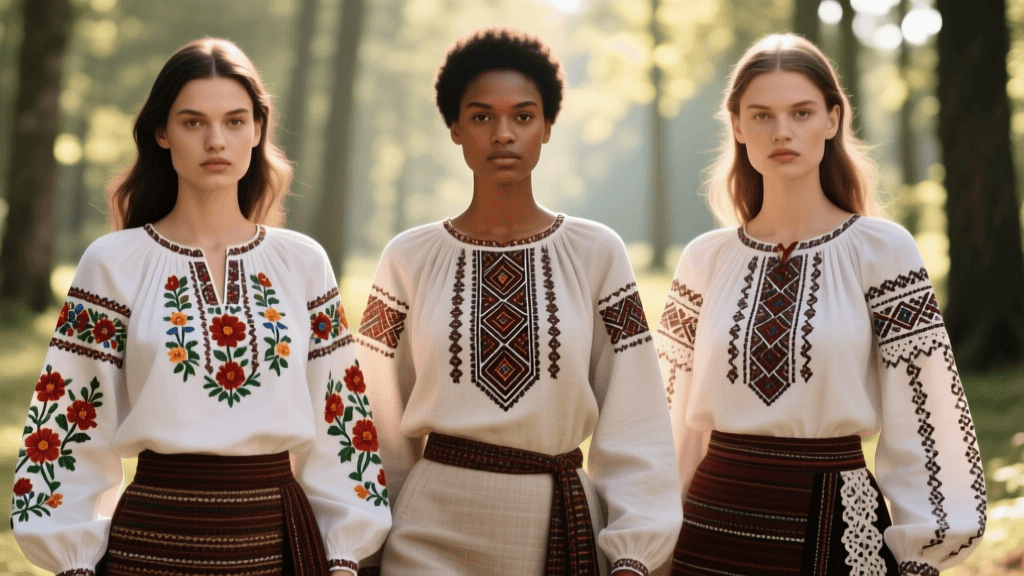
The landscape of European folk dress is undergoing a profound renaissance in 2026. Far from being relegated to museum archives or tourist shops, traditional Eastern European garments are being reclaimed by a new generation of artisans, historians, and slow-fashion advocates. At The Garment Atlas, we recognize that understanding these garments requires looking past pan-Slavic stereotypes and diving into the hyper-regional nuances of textile construction, natural dyeing, and symbolic embroidery. This guide explores the authentic folk costumes of Poland, Ukraine, and the Baltic states, offering a comprehensive look at regional variations, 2026 market pricing, and ethical sourcing.
The Ukrainian Vyshyvanka: Regional Embroidery and Textile Heritage
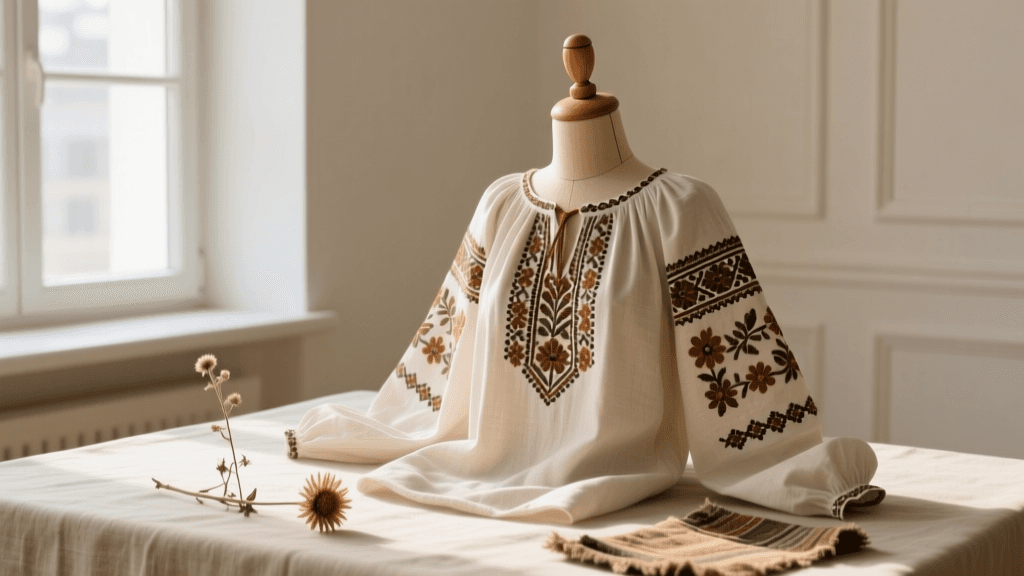
The vyshyvanka (embroidered shirt) is perhaps the most globally recognized piece of Eastern European folk dress, yet its regional variations are vastly underappreciated. In 2026, the push for historically accurate reproductions has led to a surge in demand for hand-loomed hemp and linen blends, moving away from the mass-produced cotton of previous decades.
Poltava vs. Hutsul Techniques
The Poltava region in central Ukraine is famous for its bil po bilomu (white-on-white) embroidery. This technique relies on intricate cutwork and satin stitch, creating a textured, monochromatic masterpiece that plays with light and shadow. Sourcing authentic Poltava shirts in 2026 requires commissioning artisans in the Reshetylivka district, where the tradition of white-on-white cutwork remains a protected local craft. Expect to pay between €250 and €400 for a fully hand-embroidered linen shirt, reflecting the hundreds of hours of labor involved.
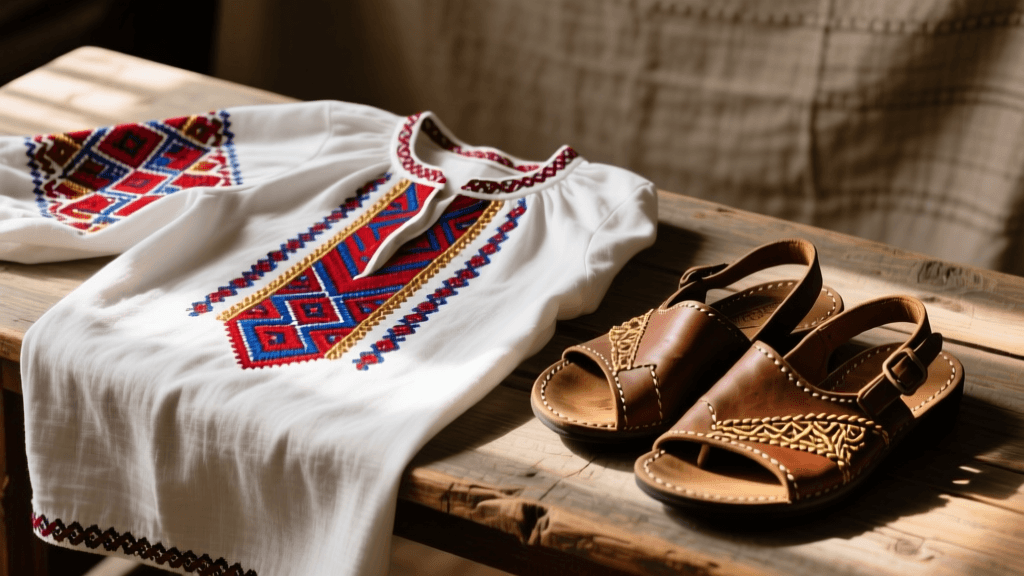
Conversely, the Hutsul region in the Carpathian Mountains offers a stark visual contrast. Hutsul embroidery is characterized by dense, geometric cross-stitch patterns utilizing a vibrant palette of black, red, yellow, and green. The motifs often feature solar signs, rhombuses, and stylized flora. According to the UNESCO Intangible Cultural Heritage frameworks, the preservation of these specific regional dialects of stitch is vital to maintaining cultural identity. In 2026, Hutsul wool-blend vests (keptar) adorned with brass chains and leather appliqué are highly sought after, with authentic vintage pieces from the mid-20th century fetching upwards of €600 at specialized Kyiv and Lviv auctions.
Polish Folk Costumes: The Łowicz and Kraków Regions
Poland’s folk dress landscape is incredibly fragmented, with over 60 distinct regional costumes documented by ethnographers. Two regions stand out for their vibrant textile traditions and continued presence in contemporary 2026 heritage festivals: Łowicz and Kraków.
Łowicz Stripes and Natural Dyes
The Łowicz costume is instantly recognizable by its pasiaki (striped) textiles. Historically woven on handlooms using wool, the stripes were originally dyed with natural botanicals. In 2026, there has been a massive revival in using historical dye recipes. Artisans are once again utilizing weld for bright yellows, madder root for deep reds, and woad for blues. A complete women’s Łowicz outfit, featuring the heavily striped wool skirt, linen blouse, and a bead-embroidered velvet bodice, represents a significant investment. Cooperative weavers in the Masovian Voivodeship currently price full bespoke sets between €800 and €1,200, driven by the rising cost of ethically sourced, locally spun wool.
Kraków Florals and the Gorset
The Kraków costume, particularly the women’s gorset (corset), is a masterclass in floral appliqué and embroidery. The bodice is typically made of dark velvet or wool, heavily adorned with sequins, beads, and silk thread. The Adam Mickiewicz Institute notes that the Kraków costume became a sort of national symbol in the 19th century, which unfortunately led to widespread commercialization and historical inaccuracy. Today’s 2026 revivalists are correcting this by strictly adhering to pre-WWII village patterns, avoiding the neon synthetic threads and plastic sequins that plagued late-20th-century tourist iterations. Authentic Kraków coral bead necklaces, a mandatory accessory, have seen a 40% price increase in 2026 due to global supply chain shifts in the Baltic amber and coral markets, now averaging €150 for a genuine multi-strand piece.
Baltic Traditions: Lithuanian and Latvian Woven Sashes
Moving north to the Baltic states, the focus of traditional dress shifts from surface embroidery to the structural mastery of weaving. The Lithuanian tautinis kostiumas and Latvian tautas tērps are defined by their intricate woven accessories, most notably the juosta (sash).
The Art of the Juosta
The juosta is not merely a decorative belt; it is a complex textile artifact woven using pick-up techniques, tablet weaving, or inkle looms. Lithuanian sashes from the Aukštaitija region often feature geometric patterns in natural linen tones with subtle accents of red or black wool. In 2026, the study of historical weave structures has been aided by digital archiving projects supported by institutions like the Metropolitan Museum of Art's Costume Institute, which provides open-access research on historical European textile structures.
Modern weavers in Vilnius and Riga are combining these ancient pick-up patterns with contemporary, sustainably sourced merino and linen yarns. A hand-woven, 10-centimeter-wide juosta measuring three meters in length takes an experienced weaver approximately 40 hours to complete. Consequently, the 2026 retail price for an authentic, hand-woven Baltic sash ranges from €120 to €250, depending on the complexity of the pick-up pattern and the fineness of the yarn.
Comparative Analysis: Eastern European Folk Dress in 2026
To help collectors, reenactors, and cultural enthusiasts navigate the diverse landscape of Eastern European folk dress, we have compiled a comparative overview of the key regional garments discussed above.
| Region / Country | Key Garment | Primary Textile | Dominant Motif / Technique | 2026 Est. Bespoke Cost |
|---|---|---|---|---|
| Poltava, Ukraine | Vyshyvanka (Shirt) | Hand-loomed Linen / Hemp | White-on-white cutwork | €250 - €400 |
| Hutsulshchyna, Ukraine | Keptar (Vest) | Sheepskin / Wool Blend | Geometric cross-stitch, leather appliqué | €300 - €600 |
| Łowicz, Poland | Pasiaki (Skirt/Apron) | Hand-woven Wool | Botanically dyed warp-faced stripes | €800 - €1,200 (Full Set) |
| Kraków, Poland | Gorset (Bodice) | Velvet / Heavy Wool | Floral embroidery, sequin appliqué | €350 - €550 |
| Aukštaitija, Lithuania | Juosta (Woven Sash) | Linen / Wool Blend | Pick-up weaving, geometric symbols | €120 - €250 |
Sourcing and Caring for Heritage Textiles in 2026
As the demand for authentic Eastern European folk dress grows in 2026, so does the market for high-quality replicas and mass-produced imitations. When sourcing garments, prioritize artisan cooperatives and verified heritage guilds over generalized e-commerce platforms. In Poland, look for creators affiliated with the Stowarzyszenie Twórców Ludowych (Folk Artists Association). In Ukraine, the Shchyrytsia project and similar Lviv-based heritage hubs offer verified, ethically produced garments that directly support local artisans and cultural preservation efforts.
Caring for these garments requires a departure from modern laundry habits. Hand-loomed linens and naturally dyed wools must be washed in cold water using pH-neutral, lanolin-rich detergents. Never machine-wash a hand-embroidered vyshyvanka or a velvet gorset. For storage, avoid wire hangers which distort the shoulder seams of traditional linen shirts; instead, fold them using acid-free tissue paper to prevent crease degradation, and store them in breathable cotton garment bags in a climate-controlled environment.
Conclusion
The traditional folk costumes of Eastern Europe are living textiles. In 2026, the revival of the Ukrainian vyshyvanka, the Polish pasiaki, and the Baltic juosta represents more than just a fashion trend; it is a profound reclamation of regional identity and historical craftsmanship. By understanding the distinct techniques, supporting authentic artisans, and properly caring for these garments, we ensure that the rich textile heritage of Eastern Europe continues to be woven into the fabric of the future.