Dressing for Bon Odori: Yukata and Happi Festival Guide
The Intersection of Tradition and Movement: Bon Odori Attire
The Bon Odori festival is one of Japan's most vibrant and participatory cultural events. Held during the Obon season in mid-summer, this traditional dance festival was originally performed to welcome and comfort the spirits of ancestors. Today, it has evolved into a massive community celebration where thousands of people gather in public squares, shrine grounds, and parks to dance in unison. Unlike passive theatrical performances such as Noh or Kabuki, Bon Odori is an active, communal performance. Because of this, the costumes worn must strike a delicate balance between historical authenticity, visual impact, and practical mobility.
Choosing the right garment for a Japanese summer matsuri (festival) or Bon Odori performance requires an understanding of fabric dynamics, traditional tailoring, and the physical demands of the dance. Standard formal kimono are entirely unsuitable for these events due to their heavy silk fabrics, restrictive layering, and delicate construction. Instead, performers and participants rely on specialized summer garments designed to breathe, move, and withstand the intense heat and humidity of the Japanese summer. According to the Japan National Tourism Organization, summer festivals are a cornerstone of Japanese cultural tourism, and dressing appropriately is a sign of respect for the host community and the ancestral traditions being honored.
The Core Garments: Yukata vs. Happi
When attending or performing in a Bon Odori dance, participants generally choose between two primary garments: the yukata or the happi coat. The choice often depends on the specific regional dance style, the dancer's gender, and the level of physical exertion required.
Yukata for Dance: Fabric, Fit, and Function
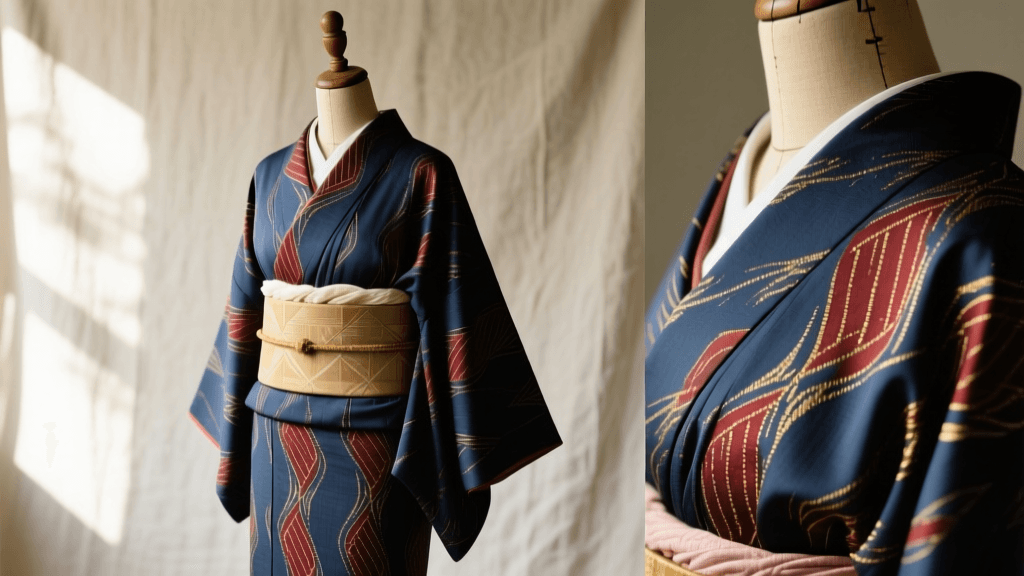
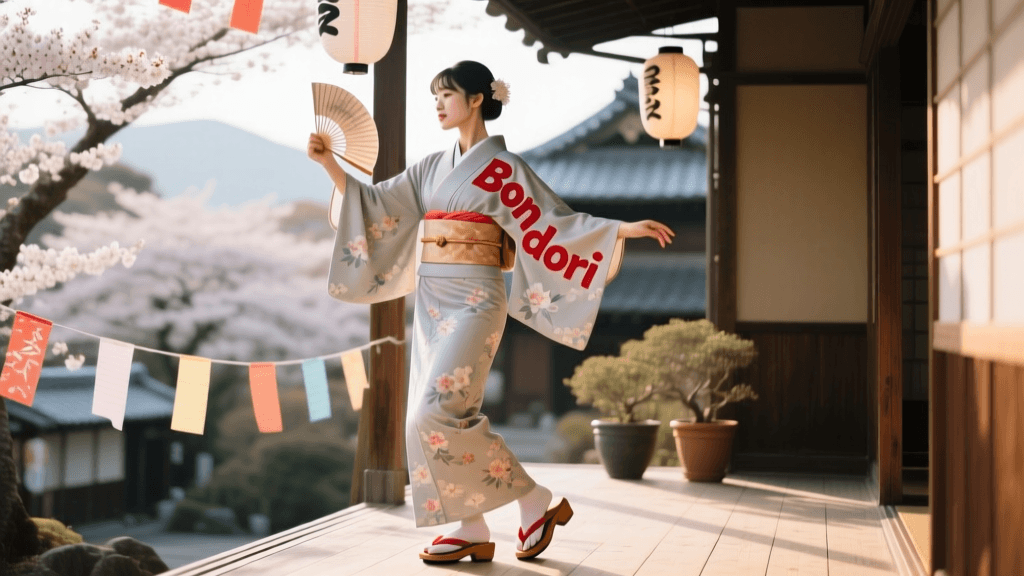
The yukata is a lightweight, unlined cotton kimono that serves as the standard summer festival attire. For performance purposes, the fabric must be 100% cotton or a highly breathable cotton-linen blend. Synthetic polyester yukata, while cheap and wrinkle-resistant, trap heat and moisture, making them dangerous and deeply uncomfortable for active dancing in temperatures that frequently exceed 30°C (86°F).
Traditional yukata are cut from a single bolt of fabric known as a tanmono, which measures approximately 38 centimeters in width. Because the garment is constructed from straight rectangular panels, it lacks the curved tailoring of Western clothing. For a dancer, the most critical measurement is the mitake (total length). A properly fitted yukata for performance should measure roughly the dancer's height minus 20 centimeters. This allows for a deep ohashori (the waist tuck), which not only adjusts the hemline but provides extra fabric that can be let out if the garment shifts during vigorous movement. To prevent tripping during fast-paced dances like the Gujo Odori, female dancers often secure the hem slightly higher using a koshihimo (tying cord) to create a breezier, more mobile silhouette.
The Happi Coat: The Dancer's Uniform
For high-energy group dances, drumming performances, and neighborhood association parades, the happi coat is the undisputed uniform of choice. Originally worn by Edo-period firemen and house servants, the happi is a short, wide-sleeved cotton jacket that falls to the mid-thigh or knee. It is worn open at the front, usually over a thin cotton undershirt or a mesh cooling layer, paired with matching or contrasting cotton trousers (tattsuke bakama or simple suteteko).
The most authentic festival happi coats are dyed using traditional aizome (Japanese indigo) techniques. Indigo dye is not merely aesthetic; it possesses natural antibacterial and deodorizing properties, which are essential for garments worn during heavy physical exertion in humid weather. The back of the happi typically features the mon (crest) or kanji of the local chokai (neighborhood association) or festival committee. As noted by cultural heritage guides at Japan Experience, the happi coat fosters a profound sense of communal identity, transforming individual dancers into a unified, moving tapestry of local pride.
Essential Footwear and Headwear for the Stage
A performance costume is incomplete without the correct footwear and accessories. Footwear in Japanese festival dance dictates the dancer's center of gravity and their ability to execute the suriashi (sliding step), a foundational movement in traditional Japanese dance where the feet glide along the ground without lifting the toes.
- Tabi and Zori: The standard pairing consists of white cotton split-toe socks (tabi) and flat sandals (zori) made of woven rush or vinyl. The split-toe design allows the dancer to grip the thong (hanao) of the sandal, providing stability during turns.
- Jika-Tabi: For rigorous performances, parades, or dancing on rough asphalt, modern performers heavily favor jika-tabi. These are split-toe boots made of cotton canvas with vulcanized rubber soles. They offer the traditional aesthetic and toe-grip of standard tabi but provide the shock absorption and traction of a sneaker. Brands like Marugo and Rikio are the industry standards for festival performers.
- Geta: Wooden clogs (geta) are sometimes worn by women in specific regional dances to create a percussive clicking sound that complements the shamisen music. However, they require immense ankle strength and are generally avoided for high-speed group dances.
For headwear, the tenugui is indispensable. This thin, rectangular cotton towel (typically measuring 90cm by 35cm) is tied around the head in the hachimaki style to keep sweat out of the eyes and secure loose hair. It can also be tied under the chin or draped over the neck to protect against sunburn during daytime parades.
Actionable Guide: Sizing, Costs, and Procurement
Purchasing festival attire requires careful timing and an understanding of Japanese sizing metrics. The best time to buy or order custom happi coats is in May or early June, well before the July and August festival rush, to allow time for international shipping or custom indigo dyeing.
| Garment | Material | Avg Cost (USD) | Sizing Tip | Performance Use |
|---|---|---|---|---|
| Yukata | 100% Cotton | $40 - $150 | Length should match your height minus 20cm for the ohashori waist tuck. | Graceful, fluid Bon Odori dances and evening festivals. |
| Happi Coat | Indigo-Dyed Cotton | $60 - $200 | One size fits most; the shoulder seam should drop comfortably past the collarbone. | High-energy Matsuri drumming, parades, and group dances. |
| Jika-Tabi | Cotton canvas, rubber sole | $25 - $60 | Measure foot in centimeters; Japanese sizing runs exact. Buy half-size up if wide. | Rigorous dancing, street parades, and stage performances. |
| Tenugui | Thin Cotton Terry | $10 - $30 | Standard 90cm x 35cm rectangle. Look for 'toka' (woven) edges for durability. | Sweat absorption, headwear, and neck protection. |
For international buyers, reputable online vendors such as Ichiroya, Japan Boutique, and specialized Amazon Japan sellers offer authentic, performance-grade garments. Avoid cheap, polyester 'costume' versions sold on generic party supply websites, as they lack the structural integrity and breathability required for actual dance performance.
Securing the Garment: Obi Knots for Active Movement
The obi (sash) is the anchor of the yukata. For festival dancing, the knot must be secure enough to withstand hours of jumping and spinning, yet flat enough not to interfere with arm movements or crowd navigation.
For Women: The Bunko or Taiko Knot
While the elaborate taiko musubi (drum knot) is beautiful, it is bulky and can throw off a dancer's balance. For Bon Odori, women typically use a simplified, flatter bunko musubi (butterfly knot) or a secure, flat library knot. To ensure the obi does not slip during the dance, performers should use a datejime (a wide, elasticized under-sash) and a obi-ita (obi board) to keep the fabric perfectly flat and taut against the torso.
For Men: The Kai-no-Kuchi Knot
Men wearing yukata or happi coats utilize the kai-no-kuchi (clam's mouth) knot. This is a flat, compact, and highly secure knot tied at the back or slightly to the side. It sits low on the hips, which lowers the dancer's center of gravity—a crucial biomechanical advantage for the deep, grounded stances required in traditional Japanese festival dances.
Festival Etiquette and Movement Dynamics
Wearing traditional Japanese garments fundamentally changes how you move. The straight cut of the yukata and the narrow sleeve openings (sodeguchi) naturally restrict wide, sweeping arm movements, encouraging the elegant, inward-focused gestures characteristic of Bon Odori. Dancers must learn to move from the core, keeping their elbows slightly tucked and their hands graceful.
'The clothing of the matsuri is not merely a costume; it is a physical boundary that teaches the body the limits and the grace of the tradition. When you tie the obi and step into the tabi, you are adopting the posture of your ancestors.'
— Traditional Arts Instructor, Kyoto Prefecture
Furthermore, festival etiquette dictates that garments must be kept neat. If your yukata hem comes loose during a dance, it is customary to step to the edge of the dance circle to adjust it, rather than stopping in the center of the formation. The left side of the yukata must always overlap the right side; reversing this is strictly reserved for dressing the deceased and is considered highly offensive in a celebratory context.
Conclusion
Participating in a Bon Odori festival or Japanese summer matsuri is a profoundly immersive experience. By selecting the appropriate performance-grade garments—breathable cotton yukata, indigo-dyed happi coats, and functional jika-tabi footwear—you ensure that you are not only visually harmonizing with the community but also physically prepared for the demands of the dance. Understanding the measurements, costs, and functional history behind these garments elevates your participation from mere attendance to a genuine, respectful embodiment of Asian cultural tradition.