Dressing the Divine: A Guide to Mythological Hanfu Styling
The Intersection of Myth and Wardrobe
The contemporary Hanfu movement has transcended strict historical reenactment, evolving into a vibrant medium for cultural storytelling and mythological expression. While historical accuracy remains important to many enthusiasts, a thriving subculture has emerged around Shenhua Hanfu (mythological Hanfu). This style draws inspiration from ancient deities, celestial beings, and legendary creatures, blending traditional garment structures with theatrical, ethereal aesthetics. According to Encyclopedia Britannica's archives on Chinese mythology, these legends have shaped Chinese art, literature, and spiritual life for millennia, providing a rich visual vocabulary for modern fashion.
Styling mythological Hanfu requires a deep understanding of traditional silhouettes, combined with creative liberties in fabric manipulation, color theory, and accessory pairing. Whether you are preparing for a Hanfu convention, a themed photoshoot, or a cultural festival, this guide provides actionable advice on constructing and styling garments for China's most iconic mythological figures.
Core Mythological Archetypes and Garment Breakdown
Chang'e: The Moon Goddess
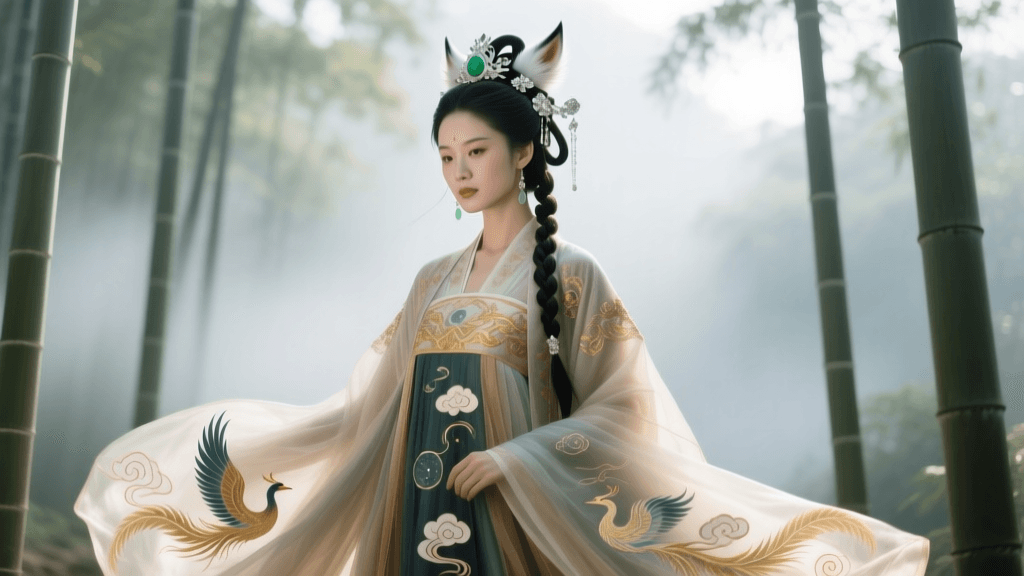
Chang'e is the epitome of celestial grace, famously residing on the moon after consuming the elixir of immortality. Her styling prioritizes weightlessness, flowing lines, and an ethereal color palette of lunar whites, pale blues, and silvers.
- Core Garment: Qixiong Ruqun (chest-high pleated skirt) paired with a Daxiushan (large-sleeved sheer robe).
- The Pibo (Ribbon Shawl): This is the most critical element for achieving Chang'e's 'floating' illusion. For a dramatic, wind-catching effect, your Pibo should measure at least 300cm in length and 45cm in width. Silk organza or lightweight chiffon is mandatory to ensure it catches the breeze without weighing down the shoulders.
- Skirt Measurements: To create the illusion of gliding, the hem sweep of the chest-high skirt should be a minimum of 400cm. Use 3cm-wide knife pleats, and weigh down the inner hem with a thin, flexible wire or lead tape so the skirt flares perfectly during spins.
Huli Jing: The Nine-Tailed Fox Spirit
Fox spirits in Chinese folklore are shapeshifters known for their allure, cunning, and connection to the natural and spiritual realms. Styling a Huli Jing allows for bolder colors, layered textures, and a slightly more daring silhouette.
- Core Garment: A layered Beizi (Song-style open-front jacket) over a Mamianqun (horse-face skirt). The Mamianqun's flat front and heavily pleated sides mimic the movement of a fox's tails when walking.
- Color Palette: Vermilion red, burnt gold, and stark white. Gradient-dyed fabrics (ombre) are highly effective here to represent the mystical aura of the spirit.
- Sleeve Construction: Opt for Pipa-shaped sleeves that taper at the wrist but feature a massive 120cm wingspan at the elbow. This allows for dramatic hand gestures and mimics the folding of animal limbs.
- Textural Accents: Incorporate ethically sourced faux fur collars or cuffs to subtly hint at the creature's true form without resorting to full cosplay fursuits.
Long Wang: The Dragon King
The Dragon Kings rule the waters and the weather, demanding garments that project authority, structure, and opulence. Their styling borrows heavily from imperial court dress but incorporates elemental motifs.
- Core Garment: Yuanlingpao (round-collar robe) with a structured leather or stiffened fabric belt. The robe should feature a Buzi (rank badge) on the chest, but instead of historical civil/military ranks, use a five-clawed dragon or crashing wave motif.
- Fabric Choice: Zhuanghua (woven brocade) or Xiangyunsha (gambiered mud-silk). Xiangyunsha provides a dark, water-like sheen that is perfect for a sea deity. As noted by UNESCO's Intangible Cultural Heritage list, traditional Chinese silk craftsmanship like sericulture and specialized dyeing techniques are essential to achieving these authentic, luxurious textures.
- Shoulder Structure: Add subtle shoulder padding or use heavily embroidered Yunjian (cloud shoulders) to give the wearer a broad, commanding, and statuesque presence.
Nuwa: The Creator Goddess
Nuwa, the goddess who created humanity and repaired the pillar of heaven, is often depicted with a serpentine lower half. Translating this into Hanfu requires earthy, grounded elegance.
- Core Garment: Shenyi (deep robe) that wraps tightly around the torso and flares dramatically at the floor, mimicking a serpent's coil.
- Motifs: Five-colored stones (representing the stones she used to patch the sky) can be incorporated as embroidered accents or jade pendants along the waistband.
Comparison Chart: Mythological Hanfu Builds
When planning your mythological wardrobe, budgeting and fabric selection are crucial. Below is a structured comparison to help you plan your DIY or commissioned builds.
| Mythological Figure | Archetype | Core Garment | Recommended Fabric | Est. Material Cost (USD) |
|---|---|---|---|---|
| Chang'e | Celestial Deity | Qixiong Ruqun + Pibo | Silk Organza, Chiffon | $80 - $140 |
| Huli Jing | Spirit/Creature | Beizi + Mamianqun | Ombre Jacquard, Faux Fur | $120 - $200 |
| Long Wang | Elemental Ruler | Yuanlingpao + Yunjian | Xiangyunsha, Brocade | $250 - $400 |
| Nuwa | Creator Goddess | Curved-Hem Shenyi | Raw Silk, Linen Blends | $90 - $150 |
Fabric Selection and Sourcing Advice
The success of a mythological Hanfu build relies heavily on how the fabric interacts with light and movement. While historical Hanfu prioritizes modesty and structure, mythological Hanfu prioritizes theatricality.
- Silk Organza: Essential for outer layers, Pibo ribbons, and sleeve extensions. It holds its shape while remaining translucent. Source 100% silk organza rather than polyester, as polyester organza reflects light with a cheap, plastic-like shine that ruins photography.
- Jacquard and Brocade: Ideal for horse-face skirts and structured jackets. Look for 'shadow jacquard' which reveals its pattern only when the light hits it at specific angles, perfect for the subtle magic of a fox spirit.
- Sourcing: For DIY sewists, platforms like Taobao offer raw silk by the meter (typically 114cm wide). Expect to pay between $15 to $30 per yard for authentic mulberry silk charmeuse. For international buyers without access to Chinese e-commerce, specialized Etsy sellers and independent Hanfu brands often offer 'mythology-inspired' capsule collections, though at a premium (often $150+ per set).
Accessorizing the Divine
Accessories bridge the gap between a historical garment and a mythological character. According to historical records of Chinese dress, headwear and jade ornaments were strict indicators of status and spiritual alignment in ancient times. In mythological styling, they become magical artifacts.
- Hairpieces: Chang'e requires a Lotus Crown or crescent moon Buyao (step-shake hairpins) crafted from lightweight resin or filigree metal. The Dragon King necessitates a structured Guan (topknot crown) made of dark wood or oxidized brass.
- Jade and Stone: Nuwa and earth deities should be adorned with large, unpolished Bi discs (jade donuts) and raw crystal pendants. Avoid perfectly polished, mass-produced beads; raw, asymmetrical stones convey ancient, elemental power.
- Props: A beautifully painted silk fan, a wooden guqin (zither), or a glowing paper lantern can instantly contextualize your character in a photoshoot.
Practical Tips for Photoshoots and Conventions
Wearing mythological Hanfu in public or on set presents unique logistical challenges due to the exaggerated proportions of the garments.
- Manage the Hemlines: A 400cm skirt sweep will drag and collect dirt instantly. For outdoor shoots, use hidden skirt clips or a bustle to pin the back layers up during transit, releasing them only when the camera is rolling.
- Wind is Your Co-Director: Ethereal deities look static without wind. Invest in a portable, battery-operated leaf blower or a dedicated photography wind fan. Aim the wind from a 45-degree angle to catch the Pibo and sleeves without blowing hair directly into the model's face.
- Undergarments Matter: Mythological Hanfu often features sheer outer layers. Wear a seamless, skin-toned base layer or a traditional Moxiong (tube top) that matches the outer garment's color palette. Never wear modern, brightly colored lingerie beneath translucent silk organza.
- Convention Safety: If wearing a Dragon King's structured Yunjian or a Fox Spirit's massive sleeves to a crowded convention, be hyper-aware of your spatial footprint. Use a waist chain to tie back excess sleeve fabric when navigating tight spaces or eating.
Conclusion
Mythological Hanfu is a testament to the enduring power of Chinese folklore. By understanding the foundational structures of traditional garments and applying creative, character-driven modifications, you can bring ancient legends into the modern world. Whether you are channeling the lunar grace of Chang'e or the elemental fury of the Dragon King, the key lies in respecting the textile traditions of the past while embracing the boundless imagination of myth.