Douyin Street Style: Blending Hanfu with Modern Urban Fashion
The Rise of Guochao on Douyin
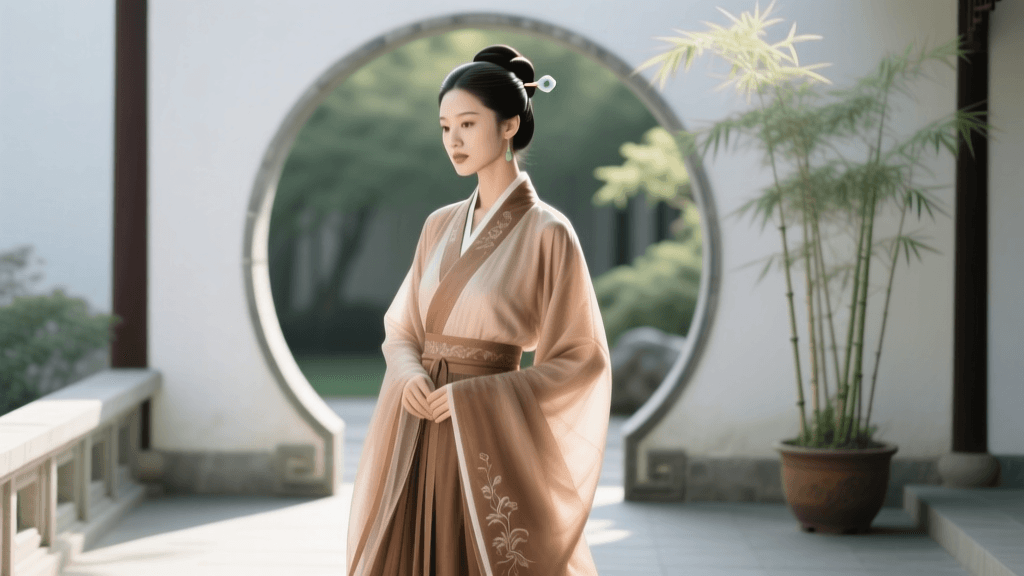
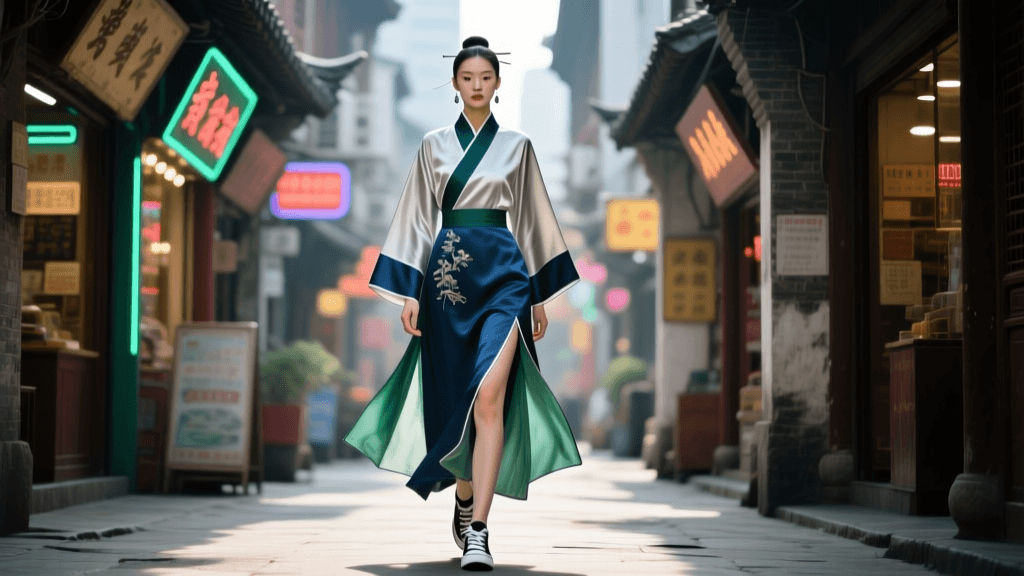
The intersection of ancient heritage and hyper-modern urban life has birthed one of the most fascinating fashion movements of the decade: Guochao, or the "National Trend." While traditional Hanfu was once reserved for historical reenactments, photography shoots, or niche cultural festivals, the algorithmic powerhouse of Douyin (the Chinese counterpart to TikTok) has propelled it into the mainstream streetwear consciousness. Chinese street fashion influencers are no longer just wearing historical garments; they are actively remixing them, creating a hybrid aesthetic that honors the past while firmly planting its feet in the concrete of modern metropolises like Chengdu, Shanghai, and Hangzhou.
According to a comprehensive report by Reuters, the Hanfu revival has been heavily driven by China's Gen Z and Millennial demographics, who view traditional clothing not as a costume, but as a profound expression of cultural identity and cutting-edge fashion. On Douyin, hashtags related to Hanfu street snaps and daily wear have amassed tens of billions of views, transforming ancient silhouettes into viral, everyday streetwear.
The Anatomy of the Viral Mamian Skirt
If there is one garment that serves as the undisputed anchor of Douyin street fashion, it is the Mamian skirt (horse-face skirt). Originating in the Ming Dynasty, the Mamian skirt is characterized by its flat, unpleated front and back panels, flanked by deeply pleated sides. This architectural structure makes it uniquely suited for modern urban mobility. Unlike the flowing, floor-dragging skirts of the Tang or Song dynasties, the Mamian skirt can be tailored to hit precisely at the ankle or mid-calf, allowing for dynamic movement, cycling, and navigating crowded subway systems without the fabric catching on debris.
Influencers on Douyin frequently highlight the skirt's "spin factor." The heavy, structured pleats fan out spectacularly during slow-motion street snaps, a cinematic technique that dominates the platform's fashion algorithm. To achieve this, street-style enthusiasts favor modern jacquard weaves and metallic-threaded polyester blends over traditional, fragile silks. These modern fabrics offer a weight of around 200-250 GSM (grams per square meter), providing the necessary stiffness to hold the pleats sharp while catching the neon lights of the city at night.
Traditional vs. Douyin Street-Style Pairings
The genius of the Douyin street-style movement lies in its deliberate subversion of historical accuracy in favor of modern proportions and utility. Below is a comparison of how traditional elements are remixed for the urban environment.
| Element | Traditional Hanfu | Douyin Street-Style (Guochao) |
|---|---|---|
| Outerwear | Pifeng (Silk Embroidered Cape) | Oversized Leather Biker Jacket or Trench Coat |
| Top | Ao (Lined Jacket) or Shan | Fitted Turtleneck, Crop Top, or Graphic Tee |
| Bottom | Mamian Skirt (Silk/Brocade) | Mamian Skirt (Polyester/Jacquard, 95cm length) |
| Footwear | Cloud Shoes or Embroidered Flats | Chunky Sneakers, Combat Boots, or Mary Janes |
| Accessories | Jade Hairpins, Silk Pouches | Metallic Chokers, Crossbody Bags, Sunglasses |
The "Xin Zhong Shi" (New Chinese Style) Movement
Beyond full Hanfu, Douyin has popularized Xin Zhong Shi, or "New Chinese Style." This is a more subdued, highly wearable evolution of traditional garments designed for the office, the cafe, and the street. Instead of full historical ensembles, influencers pair a single traditional element with contemporary basics. A popular Douyin formula involves the Song Dynasty Beizi (a long, open-front coat with side slits) worn over a simple white ribbed tank top and high-waisted denim jeans.
The Beizi's straight, vertical lines create a slimming, elongating effect that appeals to modern fashion sensibilities. Influencers often source Beizi made from linen-cotton blends or lightweight crepe, avoiding the shiny brocades that can look overly theatrical in daylight. The color palettes for Xin Zhong Shi lean heavily into muted, earthy tones: celadon green, ink black, lotus pink, and unbleached ivory, mirroring the traditional Chinese aesthetic of "leaving blank space" (liu bai) in ink wash paintings.
Actionable Styling Guide: Footwear, Layering, and Proportions
For global enthusiasts looking to replicate the Douyin street-style aesthetic, mastering proportions and footwear is critical. The goal is to create a visual tension between the ancient and the avant-garde.
- Footwear as an Anchor: The most viral Douyin street snaps feature Mamian skirts paired with aggressive, modern footwear. Chunky sneakers (like the Balenciaga Track or Nike Air Force 1s) add a streetwear edge and elevate the hemline, preventing the skirt from dragging. Alternatively, knee-high leather combat boots (such as Dr. Martens) paired with a Ming Dynasty pleated skirt create a "Dark Academia" or "Cyberpunk" crossover aesthetic that performs exceptionally well on social media.
- The Rule of Thirds: When wearing a high-waisted Mamian skirt, influencers ensure the visible top (or the outerwear cropped over it) occupies exactly one-third of the visual frame, while the skirt occupies two-thirds. Tucking in a fitted turtleneck or using a modern leather corset belt over the traditional skirt waistband sharpens the silhouette and prevents the outfit from looking shapeless.
- Layering for Climate and Contrast: In autumn and winter, Douyin creators layer traditional Jiaoling Youren (cross-collared right-lapel) tops under modern tailored blazers. The contrasting V-neckline of the traditional collar peeking out from a sharp, structured wool blazer bridges the gap between corporate attire and cultural heritage.
Sourcing, Fabrics, and Costs
The economic impact of this digital trend is staggering. As noted by China Daily, the Hanfu market has experienced exponential growth, evolving into a multi-billion dollar industry driven largely by e-commerce and social media marketing. For those outside of China looking to source authentic, street-ready pieces, platforms like Taobao and Weidian remain the primary hubs, though international proxy services (like Superbuy or Wegobuy) have made global access seamless.
When sourcing for street wear, fabric choice dictates the garment's lifespan in an urban environment. Avoid pure mulberry silk for daily street wear; it snags easily and requires expensive dry cleaning. Instead, search for imitation silk (Fang Si) or jacquard polyester blends. These materials cost between $30 and $80 USD, offer vibrant, colorfast dyeing, and can be machine-washed on gentle cycles. High-end indie brands on Taobao, such as Shi San Yu or Zhong Ling, offer premium street-ready Mamian skirts with intricate, woven metallic motifs (like dragons, cranes, or lotus flowers) ranging from $100 to $250 USD. These skirts feature reinforced waistbands and heat-set pleats that survive the rigors of daily commuting.
The Cinematic Street Snap: Chengdu and Hangzhou
To truly understand Douyin street fashion, one must look at the geography of its creation. Chengdu's Taikoo Li shopping district and Hangzhou's West Lake causeways serve as the unofficial runways for this movement. Professional street-style photographers camp in these areas, capturing influencers in slow-motion as they cross streets or spin to showcase their garments.
The "Douyin Spin" is a calculated move. Influencers use skirts with a minimum of 4.5 meters of fabric in the hem to ensure maximum volume during a spin. The camera is typically positioned at a low angle, shooting upwards to capture the dramatic flare of the pleats against the backdrop of modern glass skyscrapers or ancient temple eaves. This juxtaposition is the visual heartbeat of the Guochao movement—a declaration that traditional Chinese clothing is not a relic trapped in a museum, but a living, breathing, and evolving component of global street fashion.
Actionable Takeaways for Global Enthusiasts
Adopting the Douyin street-style aesthetic outside of Asia requires confidence and an understanding of garment mechanics. Start with a single, versatile piece: a solid-colored or subtly patterned Mamian skirt in a durable polyester-jacquard blend, hemmed to your exact ankle height. Pair it with a modern, structured leather jacket and chunky boots. By treating the traditional garment with the same styling respect as a piece of high-end contemporary fashion, you participate in a global dialogue that respects heritage while pushing the boundaries of modern streetwear. The essence of Guochao is not about perfect historical replication; it is about making the ancient undeniably relevant to the rhythm of today's streets.