Ancient Greek Chiton & Roman Toga Guide: 2026 Reenactment
Introduction to Classical Antiquity Garments in 2026
The resurgence of historical reenactment, museum-led educational programs, and Hellenic revival festivals has made 2026 a landmark year for classical antiquity dress. Across Europe and North America, enthusiasts and theater professionals are moving away from cheap, synthetic costumes in favor of historically accurate, hand-draped garments. Understanding the nuances of the ancient Greek chiton and the Roman toga is no longer just an academic exercise; it is a practical necessity for anyone participating in modern classical revivals. According to The Metropolitan Museum of Art's Heilbrunn Timeline of Art History, the brilliance of ancient Greek and Roman clothing lies not in complex tailoring, but in the masterful draping of rectangular and semi-circular textiles. This guide provides actionable, up-to-date advice on sourcing materials, taking measurements, and executing authentic draping techniques for the Doric chiton, Ionic chiton, Roman toga, and stola in 2026.
The Greek Chiton: Doric vs. Ionic Variations
The chiton was the foundational garment of ancient Greece, worn by both men and women. Despite its seemingly simple construction—a basic rectangle of fabric—the chiton was highly versatile and served as a canvas for personal expression through draping, belting, and accessorizing. In 2026, historical tailors generally divide the chiton into two primary categories: the Doric and the Ionic.
The Doric Chiton (Peplos)
The Doric chiton, often referred to as a peplos when worn by women, is the older and heavier of the two styles. Traditionally woven from heavyweight wool, it features a distinctive overfold known as the apoptygma. This overfold hangs down from the shoulders, creating a layered, sculptural silhouette that mimics the fluting of Doric columns. For modern reenactors, the Doric chiton is ideal for cooler weather festivals and autumn events. The fabric must be substantial enough to hold the structural integrity of the overfold without sagging, which is why heritage wool weavers in Scotland and Italy have seen a surge in demand for historically weighted, naturally dyed woolens this year.
The Ionic Chiton
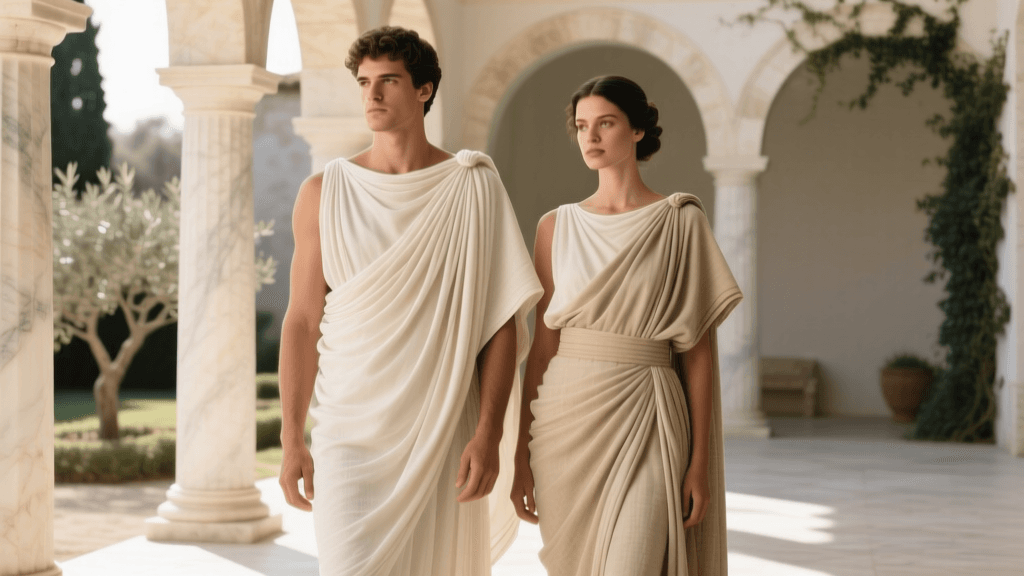
In contrast, the Ionic chiton is characterized by its lighter, more fluid drape. Made from fine linen or lightweight silk (for the ultra-wealthy in antiquity), the Ionic chiton is significantly wider than the Doric version. Instead of a simple shoulder pin, the top edge is pinned or sewn at multiple intervals along the arm, creating the illusion of sleeves. This style is highly favored for summer reenactments in 2026, as the loose, breathable linen allows for maximum airflow while maintaining an elegant, statuesque appearance. The Ionic chiton is typically belted high under the bust or at the natural waist, and the excess fabric is often bloused over the belt to create a kolpos.
Roman Garments: The Toga and Stola
While Greek dress heavily influenced Roman fashion, the Romans developed their own distinct garments that served as powerful markers of citizenship, gender, and social status. As noted in The Met's comprehensive guide on Roman Dress, Roman clothing was deeply tied to the civic and moral identity of the wearer.
The Toga: Draping and Social Significance
The toga is perhaps the most iconic, yet notoriously difficult, garment of the ancient world. It was strictly reserved for male Roman citizens. Far from a simple bedsheet, the authentic toga was a massive semi-circular piece of wool, measuring up to 18 feet in length and 7 feet in width. Draping a toga requires practice and often the assistance of a vestiplicus (a specialized slave in antiquity, or a helpful friend in modern reenactment). The draping involves creating the sinus (a deep, pouch-like fold across the chest) and the umbo (a decorative knot or fold resting on the chest to anchor the heavy wool). In 2026, reenactors have begun utilizing lightweight, traceable Merino wool blends to prevent heat exhaustion during summer parades, though purists still advocate for 100% unblended, fulled Roman-style wool for the most accurate drape and weight distribution.
The Stola: Women's Traditional Dress
The female equivalent of the citizen's toga was the stola, a long, sleeveless overdress worn over the basic tunica. The stola was the ultimate symbol of the respectable Roman matron. It was characterized by the instita, a decorative flounce or border at the hem, and was held up by shoulder straps or small fibulae. Modern historical seamstresses recreating the stola in 2026 often use crisp, high-thread-count linen or lightweight wool crepe, ensuring the garment pools elegantly at the feet while allowing for ease of movement during domestic or public reenactment activities.
Sourcing Materials for Historical Accuracy in 2026
The success of any ancient garment relies entirely on the textile. Modern synthetic blends will drape poorly, trap heat, and look visibly inauthentic in high-definition photography. Below is a comparison chart of recommended fabrics for classical reenactment in 2026, including current market pricing for heritage textiles.
| Fabric Type | Historical Use | 2026 Sourcing Recommendation | Estimated Cost per Yard |
|---|---|---|---|
| Heavyweight Linen | Doric Chiton, Tunics | Belgian or Irish heritage looms | $28 - $35 |
| Lightweight Linen | Ionic Chiton, Stola | Organic Eastern European flax | $22 - $28 |
| Fulled Merino Wool | Toga, Himation, Peplos | Traceable Italian/Australian mills | $40 - $55 |
| Organic Cotton Blend | Modern Theater Compromise | Not historically accurate | $12 - $18 |
Draping Techniques and Practical Measurements
To create a functional and beautiful Doric chiton (peplos) for a modern wearer, follow these precise measurement and draping steps. This method ensures the garment fits the individual's proportions while maintaining historical integrity.
- Step 1: Calculate the Width. Measure the wearer's arm span from wrist to wrist. Add 12 to 18 inches to this measurement to allow for the necessary fullness and side draping. Cut your wool or heavy linen to this width.
- Step 2: Calculate the Height. Measure from the wearer's shoulder down to their ankle. Add 12 inches to this length to account for the apoptygma (the top overfold) and the blousing effect over the belt.
- Step 3: Create the Overfold. Fold the top 12 inches of the fabric down towards the front. This creates the double-layered chest panel characteristic of the Doric style.
- Step 4: Wrap and Pin. Wrap the fabric around the body, aligning the folded edge at the top. Bring the two open edges together at the side or slightly towards the front. Secure the top layers at the shoulders using two sturdy, historically accurate bronze or iron fibulae (brooches). Ensure the pins catch both the front overfold and the back layer.
- Step 5: Belt the Waist. Tie a woven wool or leather cord (the zone) around the natural waist. Pull the top layer of the fabric up and over the belt to hide the cord and adjust the hemline to the desired length. The sides can be left open for mobility or loosely stitched closed from the waist down for modesty.
Accessories and Footwear: Completing the 2026 Look
No classical garment is complete without the proper accessories. For Greek ensembles, a simple himation (cloak) draped over one shoulder adds warmth and visual complexity. Footwear should consist of leather sandals with multiple wrapping straps, or the krepides for outdoor terrain. Roman citizens would pair their tunics and togas with the calcei, a fully enclosed leather shoe that signaled civic status. In 2026, bespoke leatherworkers specializing in Roman and Greek footwear are fully booked months in advance, so early commissioning is highly recommended for festival seasons.
Conclusion
Mastering the chiton and the toga requires patience, an eye for proportion, and a commitment to quality materials. As the historical reenactment community continues to grow and demand greater authenticity in 2026, the shift away from costume-shop approximations toward genuine, hand-draped textiles has never been more pronounced. By understanding the structural differences between the Doric and Ionic styles, respecting the civic weight of the Roman toga, and investing in heritage linens and wools, you can bring the elegance of classical antiquity to life with stunning accuracy.