Ancient Greek Chiton & Peplos Reconstruction Guide 2026
The Hellenic Revival of 2026: Moving Beyond Victorian Interpretations
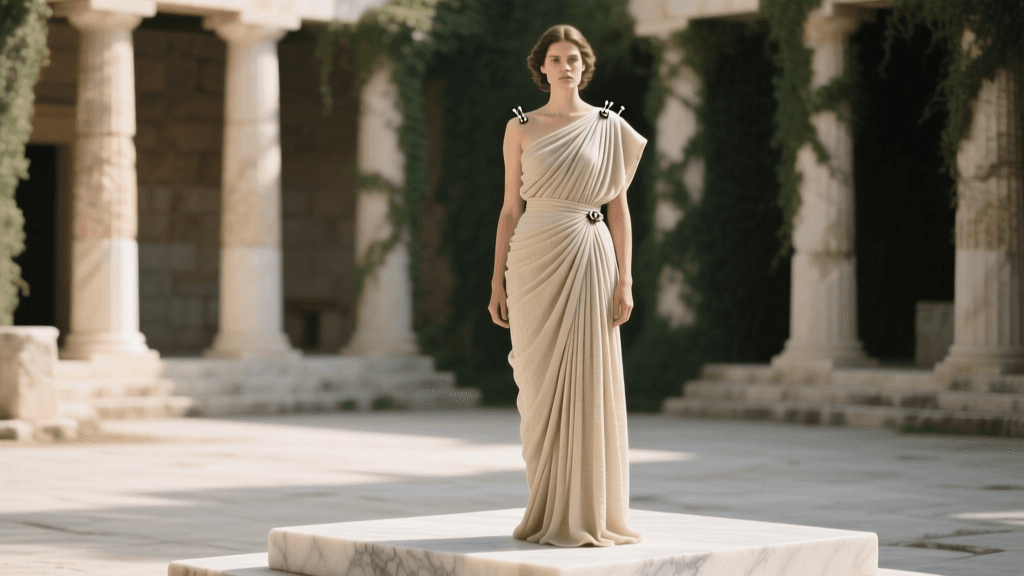
The landscape of historical reenactment and ancient textile reconstruction has evolved dramatically by 2026. Thanks to recent archaeological textile analyses and advanced digital modeling of ancient statuary, modern historians and garment makers are moving away from the stiff, overly tailored Victorian interpretations of classical antiquity. Today, the focus is on the fluid, dynamic, and unsewn nature of ancient Greek dress. According to The Metropolitan Museum of Art's Heilbrunn Timeline of Art History, the genius of ancient Greek clothing lay not in complex tailoring, but in the masterful draping of rectangular woven textiles. This guide provides a comprehensive, actionable framework for reconstructing the Doric chiton, the Ionic chiton, and the peplos using historically accurate materials and techniques relevant to 2026 standards.
Decoding the Chiton: Doric vs. Ionic
The chiton was the foundational tunic of ancient Greece, worn by both men and women. However, it was not a single, monolithic garment. It was primarily divided into two distinct styles: the Doric and the Ionic.
The Doric Chiton (Chiton Dorikos)
The Doric chiton is the older and heavier of the two variants. Traditionally woven from wool, it consists of a single large rectangle of fabric. The width of the fabric is determined by the wearer's arm span plus extra allowance for the drape, while the height is the wearer's height plus an additional 30 to 40 centimeters to allow for the kolpos (the bloused overhang). The Doric chiton is rarely sewn; instead, it is folded around the body and pinned at the shoulders using heavy bronze or iron peronai (straight pins) or fibulae (brooches). The heavy wool creates deep, sculptural folds that mimic the fluting of Doric columns.
The Ionic Chiton (Chiton Ionikos)
Introduced later and heavily influenced by Eastern Mediterranean and Persian styles, the Ionic chiton is made from lightweight, finely woven linen. Unlike the Doric version, the Ionic chiton is significantly wider. The top edge is folded down, and the garment is pinned or sewn at intervals along the arms, creating the illusion of a sleeved tunic. The sheer weight and volume of the linen allow for intricate, cascading folds. In 2026, heritage linen mills in Belgium and Ireland are producing 180 GSM (grams per square meter) tabby-weave linens that perfectly replicate the semi-translucent quality seen in Hellenistic marble sculptures.
The Peplos: The Quintessential Doric Garment
Often confused with the Doric chiton, the peplos is a distinctly female garment characterized by its unique structural fold. According to resources cataloged by the World History Encyclopedia, the peplos is a heavy woolen tube or rectangle that features an apoptygma—a deep overfold at the top of the garment that drapes down over the chest and back. This overfold could be left loose or belted. The peplos is pinned at the shoulders and often left open along one side of the leg, allowing for freedom of movement and revealing the leg during walking, a hallmark of classical Greek artistic depictions of women and goddesses like Athena.
Sourcing Authentic Textiles for 2026 Projects
Authenticity in ancient dress begins at the loom. Modern commercial fabrics are often too tightly woven, heavily finished, or blended with synthetic fibers. For a historically accurate reconstruction, you must source natural fibers with an appropriate drape and weight.
- Wool for Doric Garments: Seek out 100% worsted or woolen tabby weaves. Avoid modern gabardines or suit wools, which are too stiff. Look for heritage breed wools, such as Shetland or Soay, processed into a medium-weight fabric (approx. 250-300 GSM). The fabric should have a slight 'tooth' and a matte finish.
- Linen for Ionic Garments: Avoid stiff, heavily sized upholstery linens. You need 'handkerchief' or 'shirting' weight linen (120-180 GSM) that has been washed and softened. The yarn should be irregular (slubbed) to mimic hand-spun ancient flax.
- Dimensions: Ancient looms produced fabric in specific widths, often around 1.5 meters. To achieve the correct volume, you may need to sew two lengths of fabric together using a flat-felled seam, hiding the seam within the deep folds of the drape.
Natural Dyeing: Recreating the Ancient Palette
Contrary to the pristine white marble myth, ancient Greek garments were vibrantly colored. In 2026, natural dyeing has seen a massive resurgence among reenactors. To achieve historical accuracy, utilize mordants like alum and iron, and source the following botanical dyes:
- Saffron and Weld: For brilliant yellows and golds, often associated with priestesses and brides.
- Madder Root: For deep reds, terracottas, and soft pinks.
- Woad or Indigo: For blues, ranging from pale sky to deep navy.
- Unbleached and Sheep's Colors: Natural browns, greys, and creams were highly common for everyday wear among the lower classes and men.
Comparative Analysis: Doric Chiton, Ionic Chiton, and Peplos
| Feature | Doric Chiton | Ionic Chiton | Peplos |
|---|---|---|---|
| Primary Fabric | Heavy Wool | Fine Linen | Heavy Wool |
| Construction | Single rectangle, pinned at shoulders | Wide rectangle, pinned/sewn along arms | Rectangle with deep top overfold (apoptygma) |
| Sleeves | None (cap sleeve from drape) | Yes (created by multiple shoulder pins) | None |
| Fasteners | Large fibulae or peronai | Small pins, buttons, or sewing | Large fibulae or peronai |
| Primary Wearer | Men and Women (Archaic/Classical) | Women and Men (Classical/Hellenistic) | Women (Archaic/Classical) |
Step-by-Step Draping and Fastening Techniques
Draping a chiton or peplos is an art form that requires practice. Here is the step-by-step process for draping a standard Doric Chiton or Peplos:
- Prepare the Fabric: Lay your rectangular fabric flat. If making a peplos, fold the top edge down by 30-40 cm to create the apoptygma.
- Wrap the Body: Wrap the fabric around your body, starting at the side seam. The width should wrap around you with at least 30 cm of overlap at the side.
- Pin the Shoulders: Gather the front and back layers of fabric at the shoulder points (roughly where your collarbone meets the shoulder joint). Secure them together using historically accurate bronze fibulae (bow brooches) or peronai (straight pins with a hook at the end to catch the point).
- Adjust the Armholes: Ensure the space between the shoulder pins and the edge of the fabric is wide enough for your arms to pass through comfortably without tearing the weave.
- Apply the Zone (Belt): Tie a woven wool or linen cord belt around your waist. Pull the fabric up and over the belt to create the kolpos—the bloused effect that hides the waistline and allows the hem to fall at the correct ankle or calf length.
- Style the Overfold: If wearing a peplos, arrange the apoptygma so it hangs evenly over the belt. You can belt over or under the overfold depending on the desired silhouette and the specific historical period you are emulating.
Accessorizing the Ancient Silhouette
The chiton and peplos were rarely worn alone in public. They served as the base layer for a complex system of outerwear and accessories.
The Himation and Chlamys
The himation was a large, heavy woolen cloak worn by both genders. It was draped diagonally across the body, often wrapping under the right arm and over the left shoulder, leaving the right arm free. The chlamys was a shorter, woolen traveling cloak, typically worn by men, soldiers, and hunters, pinned at the right shoulder with a sturdy fibula.
Footwear and Headwear
While barefoot was common indoors, outdoor attire required krepides (leather sandals with intricate strapping) or embades (closed leather boots). Headwear included the petasos (a wide-brimmed felt hat for travelers) or simple linen hair wrappings and diadems for women.
Conclusion
Reconstructing ancient Greek garments in 2026 is a deeply rewarding intersection of history, textile arts, and physical movement. By abandoning modern tailoring conventions and embracing the geometric purity of the rectangle, the weaver's loom, and the draper's hand, you can achieve a silhouette that is not only historically accurate but profoundly elegant. Whether you are crafting a heavy woolen peplos for a museum demonstration or a gossamer Ionic chiton for theatrical performance, respecting the original mechanics of the drape will ensure your garment moves and breathes exactly as it did in the streets of ancient Athens.