Master DIY Hanfu Sewing: Ultimate Fabric & Pattern Guide
The Renaissance of DIY Hanfu
The global resurgence of traditional Chinese clothing, commonly known as the Hanfu movement, has inspired thousands of enthusiasts to transition from mere consumers to active creators. Sewing your own Hanfu is not just a cost-effective way to build a historical wardrobe; it is a profound journey into the structural philosophy of ancient Asian tailoring. Unlike modern Western fashion, which relies heavily on three-dimensional shaping, darts, and complex contouring, traditional Chinese garments are rooted in a two-dimensional, flat-pattern cutting system. This guide will walk you through the essential techniques, fabric selections, and measurement standards required to successfully draft and sew your first authentic Hanfu ensemble.
Core Principles of Hanfu Pattern Drafting
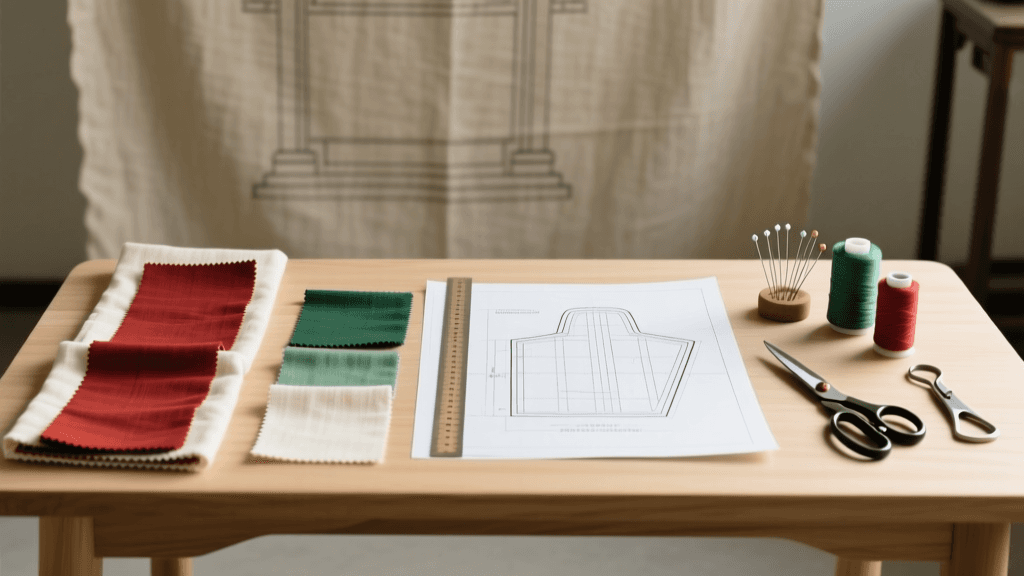
At the heart of Hanfu construction is the concept of Pingmian Caijian (flat cutting). The fabric is treated as a flat canvas, and the garment’s three-dimensional drape is achieved entirely through the way it wraps and ties around the human body. The most iconic feature of this system is the Jiaoling Youren (cross-collar, right lapel). When drafting your pattern, the front panels must overlap symmetrically, with the left side crossing over the right and securing at the right side seam or hip. This geometric approach means that sleeves and bodices are often cut from a single continuous piece of fabric, minimizing waste and preserving the integrity of the textile's woven motifs.
The Ultimate Fabric Selection Guide
Selecting the appropriate textile is arguably the most critical step in DIY Hanfu sewing. The historical accuracy, drape, and seasonal comfort of your garment depend entirely on your fabric choice. According to Encyclopedia Britannica, silk has been the cornerstone of Chinese textile history for millennia, prized for its luster, strength, and ability to hold intricate dyes. However, modern Hanfu practitioners utilize a wide array of materials to balance historical aesthetics with everyday practicality.
For those seeking ultimate historical authenticity, natural silk varieties such as Xiangyunsha (gambiered Cantonese silk) or Song brocade are unparalleled. The production of these luxury textiles is deeply tied to Chinese heritage, so much so that the traditional sericulture and silk craftsmanship of China is officially recognized and protected by UNESCO as an Intangible Cultural Heritage. While authentic silk offers a magnificent drape and historical prestige, it requires meticulous care, specialized sewing machine needles (such as Microtex or sharp size 70/10), and is often cost-prohibitive for beginners.
For everyday wear, summer festivals, or beginner sewing projects, plant-based and semi-synthetic fibers are highly recommended. Linen and cotton-linen blends provide excellent breathability and a structured drape that works beautifully for Aoqun (jacket and skirt) styles. Tencel and high-quality rayon offer a fluid, heavy drape that mimics the movement of silk charmeuse but at a fraction of the cost and with much easier maintenance. When purchasing fabric, always check the weight. For flowing skirts (Qun), aim for fabrics between 100 and 150 GSM (grams per square meter). For structured jackets (Ao), look for heavier weights around 180 to 220 GSM.
Fabric Comparison Chart for Hanfu Sewing
| Fabric Type | Best Used For | Drape Quality | Sewing Difficulty | Estimated Cost (per yard) |
|---|---|---|---|---|
| Mulberry Silk (Charmeuse/Crepe) | Formal Ruqun, Summer Shenyi | Fluid, Luxurious | High (Slippery, frays) | $25 - $60+ |
| Raw Silk / Silk Noil | Structured Ao, Ming Dynasty Jackets | Textured, Moderate | Medium | $20 - $40 |
| Linen / Cotton-Linen Blend | Everyday Aoqun, Song Dynasty Styles | Crisp, Structured | Low (Easy to handle) | $12 - $25 |
| Tencel / Viscose Rayon | Flowing Skirts, Wei-Jin Style | Heavy, Fluid | Medium (Shifts while cutting) | $10 - $20 |
Essential Measurements for Traditional Fit
Because Hanfu does not rely on darts or tailored waistlines, your measurement list is surprisingly concise compared to Western tailoring. However, specific traditional measurements must be taken to ensure the garment proportions are historically accurate and visually balanced.
- Tongxiu (Total Sleeve Length): Unlike Western patterns that measure from the shoulder seam, traditional Hanfu sleeves are measured from the center back of the neck, across the shoulder, down to the wrist or desired hand coverage. A standard Guangxiu (wide sleeve) might measure 140cm to 160cm from center back to cuff.
- Yichang (Garment Length): Measured from the prominent vertebra at the base of the neck down to the desired hemline. For a standard Ru (top), this usually falls just below the hips or at the mid-thigh, depending on the dynasty being replicated.
- Xiongwei (Bust/Chest Circumference): Because the garment wraps, you must add significant ease. A minimum of 15cm to 20cm of positive ease must be added to your actual bust measurement to allow for the overlapping front panels and comfortable movement.
- Qunchang (Skirt Length): Measured from the natural waist (or under-bust for Qixiong Ruqun) down to the ankle bone. Always add 5cm for hem allowances.
Step-by-Step Sewing Instructions
Once your fabric is pre-washed and your flat pattern is drafted on pattern paper, you are ready to cut and sew. Always use sharp fabric shears or a rotary cutter to ensure clean edges, especially when working with slippery silks or fraying linens.
Step 1: Assemble the Bodice (Ru)
Begin by joining the center back seam if your fabric width was not wide enough to cut the back in one piece. Next, attach the front lapels. The right front panel will feature an extended tie, while the left panel will have a tie attached to the right side seam. Sew the shoulder seams (if not cut on a fold), and then attach the sleeves. Traditional sleeves are often rectangular or slightly trapezoidal, sewn directly into the straight armhole.
Step 2: Edge Finishing (Bian)
Historical garments rarely used modern sergers or overlock stitches. Instead, raw edges were enclosed using bias binding or narrow hems. Cut 2-inch wide strips of fabric on the bias for curved necklines, and on the straight grain for straight edges. Fold the strips in half, pin them to the raw neckline and front lapel edges, and sew with a 1/4 inch seam allowance. Fold the binding over to the inside of the garment and slip-stitch by hand for an invisible finish, or topstitch by machine for durability.
Step 3: Constructing the Pleated Skirt (Qun)
Hanfu skirts, such as the Mamianqun (horse-face skirt) or Baidiqun (hundred-pleat skirt), require precise pleating. Use a pleating board or mark your pleats with chalk and a ruler. For a standard Mamianqun, you will need two overlapping panels of fabric, each featuring a flat, unpleated section in the center (the 'horse face') and tightly knife-pleated sections on the sides. Baste the pleats in place, attach the waistband, and secure the long, flowing skirt ties.
Step 4: Final Pressing
Pressing is what separates a homemade-looking garment from a professional historical reproduction. Use a steam iron and a pressing cloth to flatten all seams, set your pleats, and mold the bias binding around the neckline. The flat-cut nature of Hanfu means that crisp, well-pressed seams are vital for the garment to drape correctly on the body.
Cost and Time Investment for Beginners
Embarking on a DIY Hanfu project requires a realistic understanding of the time and financial investment involved. Below is an estimated breakdown for a standard, beginner-friendly Jiaoling Ruqun (cross-collar top and pleated skirt) set using mid-range linen or Tencel fabrics.
| Project Phase | Estimated Time | Estimated Cost (USD) | Notes |
|---|---|---|---|
| Research & Pattern Drafting | 4 - 6 Hours | $15 (Pattern paper, rulers) | Time decreases significantly after the first draft. |
| Fabric Sourcing & Prep | 2 - 3 Hours | $40 - $70 (5-7 yards) | Always pre-wash and iron before cutting. |
| Cutting & Marking | 2 - 4 Hours | $0 | Pleating skirts takes the majority of this time. |
| Machine Sewing | 6 - 10 Hours | $0 | Assumes basic proficiency with a sewing machine. |
| Hand Finishing & Pressing | 3 - 5 Hours | $0 | Slip-stitching bindings and setting pleats. |
| Total Estimated | 17 - 28 Hours | $55 - $85 | Highly cost-effective compared to retail imports. |
Conclusion
Sewing your own Hanfu is a deeply rewarding endeavor that bridges the gap between historical appreciation and modern craftsmanship. By mastering the flat-pattern cutting method, selecting appropriate textiles, and honoring traditional construction techniques, you do more than create a beautiful garment—you actively participate in the living preservation of Asian sartorial heritage. Whether you are stitching a lightweight summer Ruqun from Tencel or hand-finishing a luxurious silk Mamianqun, the skills you develop will fundamentally change how you view, wear, and respect traditional clothing.