Authentic Native Regalia: Southwest & Plains 2026 Guide
Understanding Regional Distinctions in Indigenous Dress
North American Indigenous clothing and textile traditions represent a profound intersection of environment, spirituality, and history. As we navigate the cultural landscape in 2026, it is more important than ever to recognize that Native American dress is not a monolith. The garments, regalia, and everyday textiles created by Indigenous artisans are deeply tied to their specific geographic regions and tribal nations. For collectors, cultural enthusiasts, and ethical fashion advocates, understanding the distinct differences between the arid Southwest and the expansive Great Plains is essential for proper appreciation and ethical sourcing.
This comprehensive guide explores the unique garment traditions of the Southwest—focusing on Diné (Navajo) weaving and Pueblo textiles—and contrasts them with the intricate beadwork and regalia of the Plains tribes, including the Lakota, Cheyenne, and Crow. We will also provide actionable, up-to-date advice on how to ethically source authentic pieces in 2026, complete with current market pricing and care instructions.
Southwest Traditions: Diné Weaving and Pueblo Textiles
The Southwest region, encompassing the high deserts and mesas of Arizona, New Mexico, and Utah, has fostered textile traditions that are globally renowned for their geometric precision and durability. The environment here dictates the materials: cotton, yucca fibers, and, most notably, sheep's wool.
The Diné (Navajo) Weaving Tradition
Diné weaving is arguably the most recognized Indigenous textile art in North America. Introduced to sheep herding by the Spanish in the 16th century, the Diné adapted the Churro sheep, whose long-staple, low-lanolin wool is perfectly suited for hand-spinning and weaving. In 2026, the preservation of the Navajo-Churro sheep breed remains a critical cultural and agricultural initiative, directly impacting the authenticity and quality of traditional rugs and wearing blankets.
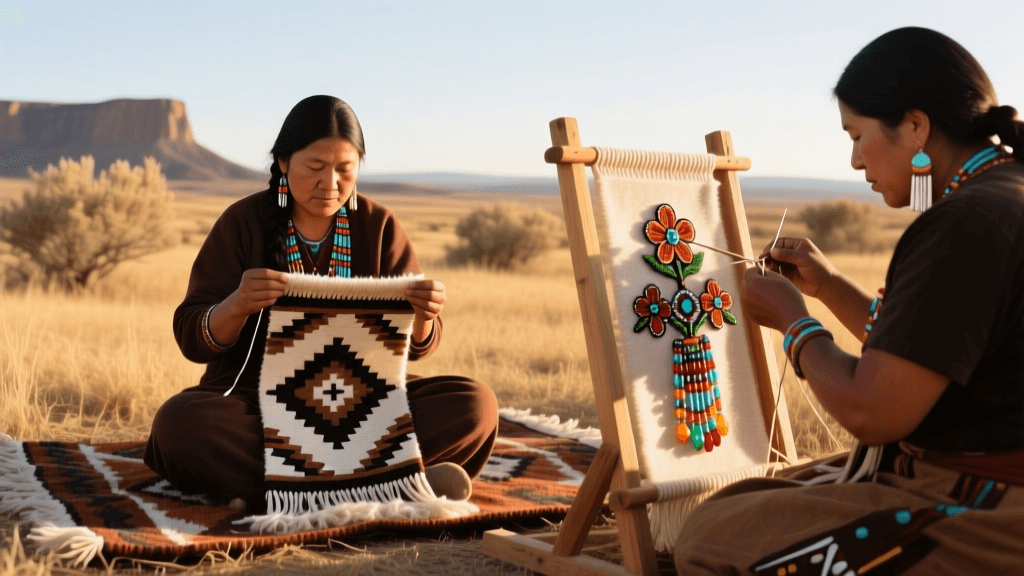
Traditional Diné weaving is done on an upright loom, a practice that has remained largely unchanged for centuries. The weaver creates a continuous warp, meaning the textile has no raw edges. Historically, these textiles were worn as bii'éé' (dresses) and shoulder blankets. Today, while floor rugs are the primary commercial output, traditional wearing blankets and shawls are still commissioned for ceremonies and special occasions.
In 2026, a genuine, hand-spun Navajo-Churro wool rug measuring 3x5 feet from a master weaver typically commands a market price between $2,500 and $6,000, reflecting the hundreds of hours of labor from shearing to the final weave.
Pueblo Embroidery and the Manta Dress
While the Diné are famous for weaving, the Pueblo peoples (including the Hopi, Zuni, and Taos) have a rich history of cotton cultivation and embroidery. The traditional Pueblo woman's garment is the manta dress, a rectangular piece of dark wool or cotton cloth wrapped around the body, leaving one shoulder bare, and secured with a woven sash or belt. The edges are often adorned with intricate, geometric embroidery using yarn.
For men, traditional Pueblo ceremonial dress often includes a white cotton kilt, embroidered sashes, and fox-skin accessories. In 2026, authentic Pueblo embroidered shawls and mantas are highly sought after, with gallery prices ranging from $800 for smaller, contemporary pieces to over $3,500 for large, ceremonially significant garments featuring complex, multi-color embroidery.
Plains Traditions: Lakota, Cheyenne, and Crow Regalia
Transitioning from the arid Southwest to the sweeping grasslands of the Great Plains, the garment traditions shift dramatically. Historically nomadic or semi-nomadic, Plains tribes relied heavily on animal hides—primarily bison, elk, and deer—before the introduction of trade cloth. Today, Plains regalia is characterized by its dynamic movement, elaborate beadwork, and the integration of trade materials.
The Evolution and Mastery of Plains Beadwork
Before European contact, Plains artisans decorated hides with porcupine quills and natural pigments. The introduction of glass seed beads through trade networks revolutionized Plains dress. In 2026, master beadworkers primarily use high-quality Czech glass seed beads, specifically sizes 11/0 and 13/0, known for their uniform shape and vibrant, lightfast colors.
Plains beadwork is typically executed using the lazy stitch (or lane stitch) technique, which creates distinct, ribbed bands of geometric patterns. This technique is iconic to the Lakota, Cheyenne, and Arapaho. Fully beaded garments, such as yoke dresses, moccasins, and cradleboards, represent the pinnacle of this art form. A pair of fully beaded, hard-soled Plains moccasins crafted by a recognized artisan will generally cost between $450 and $900 in the current 2026 market, while a fully beaded dance yoke can exceed $3,000.
Ribbon Shirts and Crow Elk-Tooth Dresses
The ribbon shirt is a pan-Indian garment that has become a staple of Plains and broader Native American formal and ceremonial wear. Originating from the trade of silk ribbons, these shirts feature intricate, symmetrical ribbon appliqué work. In 2026, contemporary Indigenous fashion designers are reimagining the ribbon shirt with modern tailoring while maintaining traditional appliqué techniques, making them popular for everything from powwows to corporate environments.
Among the Apsáalooke (Crow) Nation, the elk-tooth dress remains a profound symbol of wealth, skill, and community standing. Historically, the teeth of elk (specifically the ivories or buglers) were collected by hunters and given to their wives or female relatives to adorn dresses. A single dress could feature hundreds of teeth. Today, due to the scarcity of real elk ivories, many artisans use high-quality synthetic replicas or bone carvings, though dresses made with authentic, naturally shed or hunted elk teeth remain priceless family heirlooms rarely sold on the open market.
2026 Comparison Chart: Southwest vs. Plains Garments
| Feature | Southwest (Diné & Pueblo) | Plains (Lakota, Cheyenne, Crow) |
|---|---|---|
| Primary Historical Materials | Navajo-Churro wool, hand-spun cotton, yucca fiber | Bison/elk/deer hide, later trade wool and cotton |
| Defining Decorative Technique | Loom weaving, geometric tapestry, yarn embroidery | Lazy stitch beadwork, quillwork, ribbon appliqué |
| Iconic Garment | Diné wearing blanket, Pueblo manta dress | Beaded yoke dress, Ribbon shirt, Elk-tooth dress |
| 2026 Avg. Price (Master Artisan) | $2,500 - $6,000 (Large Rug/Blanket) | $450 - $3,000+ (Moccasins to Beaded Yokes) |
| Care & Maintenance | Dry clean only or specialized textile washing; avoid direct sunlight | Spot clean leather; store beadwork flat to prevent thread stress |
Ethical Sourcing and the Indian Arts and Crafts Act
As the global interest in Indigenous fashion and home goods continues to surge in 2026, so does the proliferation of counterfeit, mass-produced Native-inspired goods. These knockoffs not only deceive consumers but actively harm Indigenous economies by undercutting authentic artisans. To ensure your purchases directly support Native communities, you must be vigilant and informed.
The cornerstone of ethical purchasing in the United States is the Indian Arts and Crafts Act. This federal truth-in-advertising law prohibits misrepresentation in marketing of Indian arts and crafts products within the United States. It is illegal to offer or display for sale any art or craft product in a manner that falsely suggests it is Indian-produced, an Indian product, or the product of a particular Indian or Indian Tribe.
Actionable Steps for Ethical Purchasing in 2026
- Verify Tribal Enrollment: Always ask the seller or gallery if the artist is an enrolled member of a state or federally recognized tribe. Authentic sellers will proudly provide this information.
- Buy Directly from Cooperatives: Organizations like regional Pueblo pottery and textile guilds or Navajo weaving cooperatives ensure that the vast majority of profits go back to the artisans and their communities.
- Request Documentation: In 2026, many high-end Indigenous galleries and direct-to-consumer artisan platforms provide digital certificates of authenticity that include the artist's name, tribal affiliation, materials used, and the time taken to create the piece.
- Consult Authoritative Databases: Utilize resources from institutions like the Smithsonian National Museum of the American Indian to educate yourself on historical accuracy, regional styles, and traditional materials before making significant investments.
Caring for Authentic Indigenous Garments
Investing in authentic Native American clothing and textiles requires a commitment to proper preservation. These items are not just garments; they are cultural artifacts and wearable art.
For Southwest wool textiles, never hang heavy Diné rugs or wearing blankets, as the weight will distort the warp threads and ruin the structural integrity. Always store them rolled, never folded, in acid-free tissue paper within a climate-controlled environment. Moths are the primary enemy of Churro wool; use natural cedar blocks rather than chemical mothballs, which can degrade the natural dyes.
For Plains beadwork and leather, the care is equally specific. Leather hides are susceptible to drying out and cracking. Keep beaded moccasins and bags away from extreme heat and direct sunlight, which can fade the vibrant Czech glass beads and desiccate the hide. If a beaded item becomes soiled, use a slightly damp, soft cloth to gently wipe the beads, but never submerge the leather in water. Store beaded garments flat; hanging heavy beaded yokes or dresses can cause the sinew or nylon beading thread to stretch and snap over time.
Conclusion
The garment traditions of Indigenous North America are living, breathing practices that continue to evolve while maintaining deep roots in ancestral knowledge. Whether you are drawn to the mathematical precision of a Diné woven blanket or the vibrant, rhythmic geometry of Lakota beadwork, understanding the regional context enriches your appreciation. By prioritizing ethical sourcing, respecting the legal frameworks designed to protect Indigenous intellectual property, and committing to proper garment care, you help ensure that these vital cultural traditions continue to thrive for generations to come.