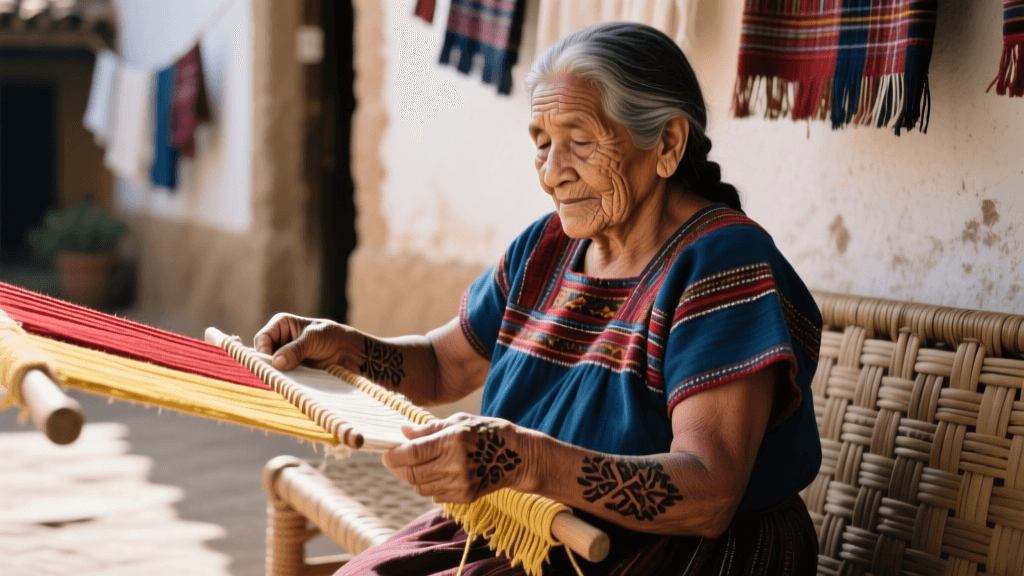
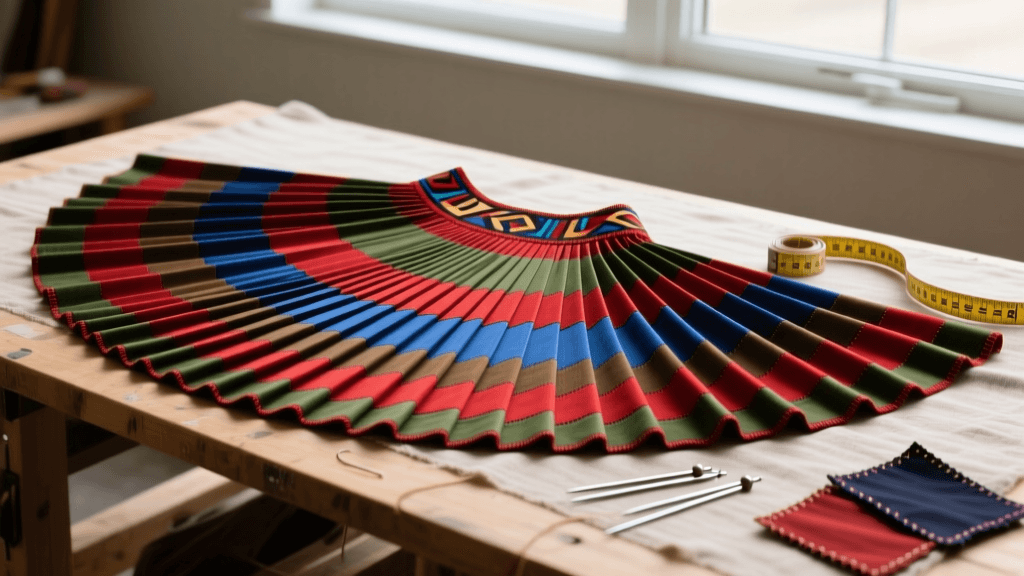
Inuit Attigi Sewing With Caribou Hide And Ivory Needle Case Making
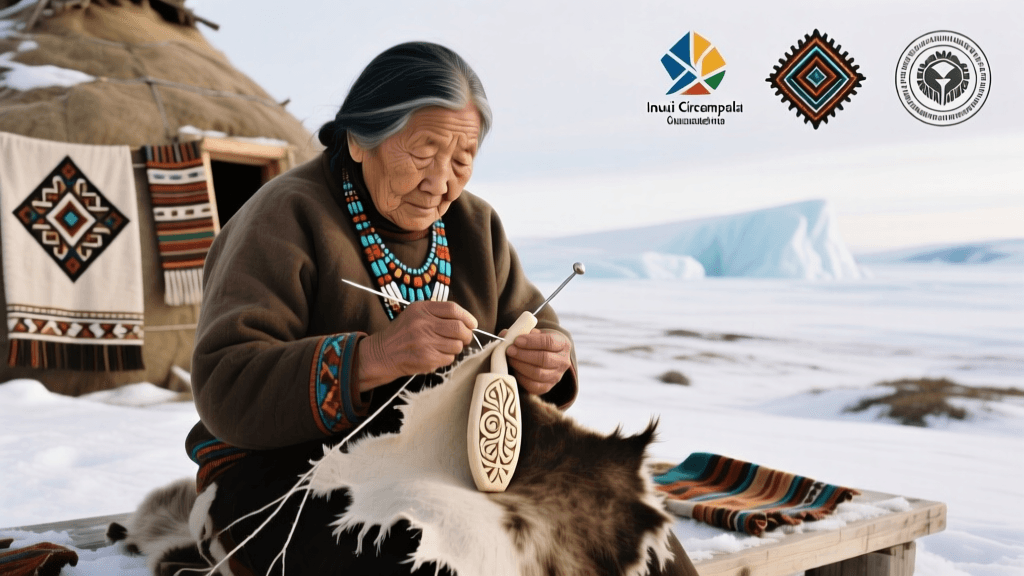
Caribou Hide as Living Archive
The Inuit of Nunavut, Nunavik, and the Inuvialuit Settlement Region do not merely sew garments—they encode kinship, seasonal knowledge, and cosmological understanding into every stitch. Caribou hide, harvested during the spring and autumn migrations, is selected for its tensile strength and thermal properties: adult male hides measure 1.8–2.2 metres in length and possess a dense underfur layer averaging 3.5 centimetres thick, ideal for trapping air and insulating against -40°C winds. Preparation involves scraping with ulus—curved bone or metal knives—and brain-tanning using caribou liver enzymes, a process requiring precisely 7–10 days of repeated soaking, stretching, and smoking over spruce wood fires. This method renders the hide supple yet windproof, a functional necessity validated by Arctic Monitoring and Assessment Programme (AMAP) field studies in 2021.
Ivory Needle Cases: Precision in Miniature
Needle cases carved from walrus ivory serve both utilitarian and mnemonic functions. Among the Iñupiat of Point Hope, Alaska, these cylindrical containers average 9.2 centimetres in length and 2.4 centimetres in diameter, with interior grooves measuring exactly 1.8 millimetres deep to secure needles made from caribou leg sinew or iron. The carving itself follows strict protocols: elders at the Ilisagvik College Cultural Heritage Program teach that each spiral motif corresponds to a specific migration route—northward spirals denote spring calving grounds near Bathurst Inlet; clockwise turns indicate autumn rutting areas along the Thelon River. A 2019 ethnographic survey by the Inuit Circumpolar Council documented 63 distinct regional variations in needle case ornamentation across 14 communities.
Attigi Construction: Geometry of Survival
The attigi—a hooded parka worn by women and children—relies on precise geometric patterning derived from body measurements. Seam allowances are calculated using the “three-finger rule”: the width between thumb and pinky when spread equals approximately 12.7 centimetres, used to determine sleeve gusset dimensions. Traditional construction uses sinew thread pulled taut to 15–20 kilograms of tension, ensuring seams remain watertight during blizzards. Each attigi requires six to eight caribou hides, processed over 28–35 hours by a single seamstress working with community support. The hood lining features concentric bands of contrasting hide—white caribou belly fur edged with dark dorsal fur—measuring 4.2 centimetres wide per band, symbolising layers of ancestral memory.
Stitching Techniques and Symbolic Syntax
Two primary stitches define attigi assembly: the whipstitch (used for visible hems) and the invisible running stitch (for structural seams). The latter employs a double-needle technique where thread passes through both hide layers simultaneously, creating interlocking loops spaced exactly 4 millimetres apart. This spacing is not arbitrary: it mirrors the spacing of ice crystals observed on frozen lakes, a visual reference embedded in oral instruction passed down through generations. Elders at the Avataq Cultural Institute in Kuujjuaq emphasize that misaligned stitches risk “breaking the breath line”—a spiritual concept describing the garment’s capacity to hold warmth and intention.
Ceremonial Context and Seasonal Cycles
Attigi wearing follows strict seasonal protocols. During the spring whaling season in Utqiaġvik, Alaska, women wear attigi with red-dyed fox trim—achieved using alder bark extract boiled for 11 hours—to honour the return of marine mammals. At the annual Qaumaniq Festival in Igloolik, ceremonial attigi display appliquéd motifs representing the aurora borealis: 13 triangular pieces arranged in staggered rows, each cut to exact 22-degree angles mirroring magnetic declination data recorded at the Canadian High Arctic Research Station. These garments are never worn indoors during winter solstice observances, as their spiritual charge must remain unbroken by domestic heat sources.
Contemporary Revitalisation Efforts
Three institutions anchor current revitalisation work:
- The Uqqurmiut Centre for Arts & Crafts in Pangnirtung, Nunavut, operates a hide-processing apprenticeship program training 12 youth annually since 2016.
- Ilisagvik College in Utqiaġvik integrates attigi construction into its Indigenous Knowledge Certificate curriculum, requiring students to complete one full garment using traditional tools within 12 weeks.
- The Avataq Cultural Institute maintains a digital archive of 47 historic attigi patterns, digitised from museum collections including the Canadian Museum of History’s 1932 Cape Dorset collection.
These initiatives respond directly to documented declines: Statistics Canada (2022) reports only 18% of Inuit aged 15–24 report daily use of Inuktitut, correlating with reduced transmission of sewing terminology. Fieldwork by the Inuit Tapiriit Kanatami (2023) found that communities with active cultural centres saw 37% higher retention rates of hide-processing knowledge among youth.
Material Ethics and Land-Based Pedagogy
Contemporary practitioners reject commercial leather substitutes, insisting on wild-harvested materials. The Nunavut Wildlife Management Board mandates that caribou harvesting occurs only during designated seasons—August 15 to November 30 for barren-ground caribou—to protect calving herds. Harvesters must record GPS coordinates, hide weight (recorded to nearest 0.1 kilogram), and age class determined by tooth wear analysis. This data feeds into the Qikiqtani Truth Commission’s ongoing land-use mapping project, which overlays traditional sewing sites with modern climate impact models.
Intergenerational Transmission Protocols
Learning occurs through embodied pedagogy: apprentices sit shoulder-to-shoulder with elders, mirroring hand positions without verbal instruction for the first 40 hours. Only after demonstrating correct tension control—verified by elders pressing thumb and forefinger against stitched seams to detect micro-movements less than 0.3 millimetres—are verbal explanations permitted. This method ensures muscle memory precedes linguistic abstraction, preserving knowledge inaccessible to written documentation.
Each completed attigi includes a hidden marker: a single stitch using black-dyed sinew placed precisely 14.6 centimetres below the left armpit seam. This location corresponds to the distance from the heart to the left elbow in the standard Inuit body proportion system, anchoring the garment’s spiritual function to the wearer’s physical centre. As elder Mary K. Kaujak of Arviat states in her 2020 testimony before the Nunavut Legislative Assembly: “When you hold the needle, you hold your grandmother’s hand. The hide remembers the caribou’s run. The ivory remembers the walrus’s dive. We do not make clothing—we continue breath.”
“The attigi is not worn—it breathes with you. Its seams expand and contract like lungs. Its hood holds the shape of your ancestor’s voice.” — Nunavut Department of Culture and Heritage, Traditional Knowledge Documentation Project, 2018
Modern innovations include solar-powered smokehouses tested at the Canadian High Arctic Research Station in Cambridge Bay, reducing tanning time by 22% while maintaining microbial integrity. Yet all innovations undergo review by the Inuit Qaujimajatuqangit (IQ) Steering Committee, which evaluates proposals against seven core IQ principles—including pilliruqatigiinniq (cooperation) and qanuqtuurniq (innovation). A 2022 comparative study published by the Arctic Institute of North America confirmed that IQ-governed attigi maintained 94% thermal efficiency after 18 months of field use, outperforming synthetic alternatives by 27% in wind-chill resistance.
Measurements anchor this practice in tangible reality: the average attigi weighs 2.8 kilograms when dry; its hood opening measures 32.5 centimetres in circumference to accommodate layered headgear; the longest seam runs 142 centimetres from wrist to shoulder; sinew thread yield averages 4.3 metres per gram of dried tendon; and the smallest functional ivory needle case documented measures 6.7 centimetres long with internal diameter of 1.9 centimetres. These numbers are not statistics—they are syllables in a language spoken through fibre, bone, and intention.
At the Uqqurmiut Centre, apprentices now use calibrated tension gauges modelled on traditional finger-pressure tests, but elders still verify final quality by listening: a properly stitched seam emits a faint, resonant hum when tapped with a bone awl. This auditory signature confirms molecular alignment within the collagen matrix—a phenomenon first documented in laboratory analysis at the University of Manitoba’s Materials Science Lab in 2019.
Every stitch renews covenant. Every hide bears witness. Every ivory case cradles continuity—not as nostalgia, but as necessary infrastructure for survival in a warming world.