Authentic Dine Velvet Shirts & Biil Dresses: 2026 Guide
The Enduring Legacy of Diné Dress in 2026
Indigenous North American dress traditions are not static relics of the past; they are living, breathing expressions of cultural resilience, identity, and artistry. Among the most iconic and recognizable garments in the Southwest are the traditional clothing of the Diné (Navajo) people. As we navigate the cultural and fashion landscape of 2026, the Diné velvet shirt and the biil (rug dress) remain central to ceremonial life, graduations, weddings, and modern Indigenous fashion. This comprehensive guide explores the evolution, regional context, and contemporary sourcing of these magnificent garments, ensuring that buyers, collectors, and cultural enthusiasts understand the profound artistry behind every stitch and weave.
The Evolution of the Velvet Shirt (Baa’ Nílí)
Before the introduction of European trade goods, Diné clothing was primarily crafted from tanned buckskin and woven yucca fibers. The transition to the iconic velvet shirt began in the late 19th century when traders introduced cotton and velvet fabrics to the reservation. By the mid-20th century, the velvet shirt had become the standard formal and ceremonial attire for Diné men and women.
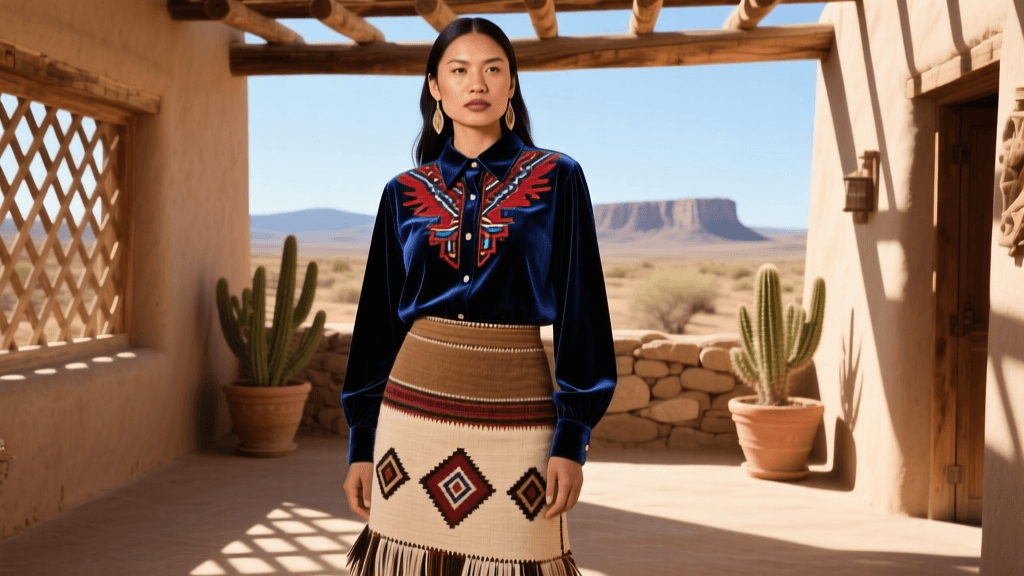
In 2026, the velvet shirt has evolved to meet modern aesthetic preferences while strictly maintaining its traditional silhouette. The classic high-necked, long-sleeved design remains the most sought-after for formal events. However, contemporary Diné designers are now incorporating sustainable, eco-friendly velvets and ethically sourced silk blends, moving away from the synthetic, mass-produced fabrics that dominated the late 20th century. The defining feature of these shirts is the elaborate silver and turquoise button work that runs down the front and adorns the cuffs.
The Art of the Silver Button
The buttons on a traditional Diné velvet shirt are masterpieces of Southwestern silversmithing. In 2026, collectors and community members alike prioritize buttons crafted using traditional tufa casting and sandcasting techniques. Artisans in hubs like Window Rock, Gallup, and Santa Fe carve intricate designs into volcanic tufa stone or packed sand, pouring molten sterling silver into the molds. These buttons are then set with natural, untreated turquoise, often sourced from legendary, now-closed mines such as the Bisbee or Lander Blue mines, making vintage and newly crafted heirloom-quality shirts highly valuable. A fully buttoned velvet shirt can feature anywhere from 12 to over 30 individual silver conchos or dome buttons.
The Biil: The Sacred Rug Dress
While the velvet shirt represents the post-contact adaptation of Diné fashion, the biil (pronounced beel) represents the deep, ancestral weaving traditions of the Diné people. The biil is a traditional two-piece dress, woven on an upright loom from the wool of the Navajo-Churro sheep. Historically, the dress was woven in two rectangular panels and sewn together at the shoulders and sides, leaving openings for the head and arms.
Today, the biil is worn with immense pride during the Kinaaldá (the traditional female coming-of-age ceremony), weddings, and high school or college graduations. In 2026, commissioning a hand-woven biil is a significant investment of both time and capital. Master weavers, who have spent decades perfecting their tension, spinning, and dyeing techniques, often have waitlists spanning several years.
Natural Dyes and the 2026 Revival
A major trend in 2026 is the aggressive return to natural, botanical dyes. While synthetic aniline dyes have been used since the 1890s, contemporary weavers and buyers are heavily favoring the rich, complex tones achieved through natural methods. Weavers are harvesting rabbitbrush for vibrant yellows, juniper berries for deep greens and browns, and utilizing wild indigo and cochineal for striking reds and purples. This revival not only produces garments of breathtaking beauty but also reinforces ecological stewardship and traditional botanical knowledge on the Navajo Nation.
Regional Context: Hopi and Pueblo Garments
To fully appreciate Diné dress, it is essential to understand the broader regional tapestry of the Southwest. The Diné share geographic and cultural spaces with the Hopi and various Pueblo nations, each of which maintains distinct textile traditions that contrast with and complement Navajo weaving.
The Hopi Wedding Sash (Monongya)
Unlike the heavy, tightly woven Diné biil, Hopi textiles are often characterized by intricate, open-weave techniques. The Hopi wedding sash, or monongya, is a masterpiece of cotton weaving. Woven by male weavers in the kivas, these wide, fringed sashes feature complex geometric patterns, often utilizing natural brown, green, and white cotton. In 2026, the Hopi sash remains a vital component of the bride's bundle, symbolizing the interconnectedness of life and the rain clouds that sustain the desert agriculture.
The Pueblo Manta Dress
In the Rio Grande valley, Pueblo women traditionally wear the manta, a rectangular woven wool garment wrapped around the body and fastened over one shoulder, leaving the other bare. Historically woven in natural brown, black, or white wool, the manta is often paired with an embroidered belt and a vibrant, woven sash. While daily wear of the manta has declined, it remains the standard ceremonial dress for Pueblo women during feast days and traditional dances, representing a direct, unbroken link to pre-contact Ancestral Puebloan clothing.
2026 Garment Comparison and Pricing Guide
For collectors, museums, and individuals looking to commission or purchase authentic Indigenous garments, understanding the current market is crucial. The following table outlines the primary materials, average 2026 commission costs, and primary uses for these Southwest garments.
| Garment Type | Primary Material | 2026 Avg. Commission Cost | Primary Use |
|---|---|---|---|
| Diné Velvet Shirt | Silk/Cotton Velvet, Sterling Silver, Turquoise | $350 - $850 (Shirt only, excludes buttons) | Formal, Ceremonial, Powwow, Graduation |
| Diné Biil (Rug Dress) | Hand-spun Navajo-Churro Wool, Natural Dyes | $2,500 - $6,000+ | Kinaaldá, Weddings, High Ceremonial |
| Hopi Wedding Sash | Hand-spun Cotton, Natural Pigments | $1,200 - $3,000 | Weddings, Dance Regalia, Ceremonial Bundles |
| Pueblo Manta Dress | Woven Wool, Embroidered Cotton Belt | $800 - $2,000 | Feast Days, Traditional Dance, Ceremonial |
Note: Prices vary wildly based on the artisan's reputation, the fineness of the weave (wefts per inch), and the rarity of the materials used, particularly vintage turquoise and hand-spun Churro wool.
Sourcing Authentically: Navigating the 2026 Market
The market for Indigenous art and clothing is unfortunately plagued by counterfeit goods, mass-produced knockoffs, and cultural appropriation. When purchasing a velvet shirt, a biil, or any Native American garment, it is imperative to ensure you are buying directly from a Native artisan or a verified, Native-owned gallery.
In the United States, the Indian Arts and Crafts Board (IACB) enforces the Indian Arts and Crafts Act, a truth-in-advertising law that prohibits misrepresentation in marketing of Indian arts and crafts products within the United States. Under this act, it is illegal to offer or display for sale any art or craft product in a manner that falsely suggests it is Indian-produced. When shopping in 2026, always ask for the artisan's tribal enrollment information and a certificate of authenticity. Reputable institutions, such as the Heard Museum in Phoenix and the National Museum of the American Indian, consistently champion and exhibit verified Native artists, providing excellent benchmarks for quality and authenticity.
Where to Buy in 2026
- Direct from Weavers and Silversmiths: Social media and dedicated Indigenous e-commerce platforms have made it easier than ever to commission directly from artisans on the Navajo Nation and Hopi mesas.
- Verified Native-Owned Galleries: Establishments in Santa Fe, Gallup, and Window Rock that have multi-generational relationships with local families.
- Museum Gift Shops and Guild Sales: Events like the annual Santa Fe Indian Market (SWAIA) remain the premier venues for purchasing high-end, authenticated garments.
Care and Preservation of Traditional Garments
Whether you are a tribal member preserving a family heirloom or a collector safeguarding an investment, proper care of these textiles is paramount. The materials used in 2026, particularly natural dyes and hand-spun wool, require specific environmental controls.
Storing Wool and the Biil
Hand-woven Churro wool is highly susceptible to moth damage and moisture. Never store a biil in a plastic bag, as this traps moisture and encourages mildew. Instead, wrap the garment in unbleached, acid-free muslin or cotton sheets. Store it in a cool, dark, and dry environment. To deter pests, use natural cedar blocks or dried lavender sachets, avoiding chemical mothballs which can permanently taint the wool with harsh odors and degrade the natural fibers over time.
Maintaining Velvet and Silver
Velvet crushes easily and attracts dust. Use a soft-bristled clothes brush to gently lift the nap of the fabric and remove surface dust. When ironing is necessary, never press directly onto the velvet; instead, use a steamer from a distance or press the garment inside out on a velvet pressing board. The silver buttons should be stored in anti-tarnish cloth pouches. If polishing is required, use a gentle, non-abrasive silver polish, taking extreme care not to let the chemicals touch the turquoise, as porous stones can absorb the polish and become permanently discolored.
Conclusion: Wearing Culture Forward
The Diné velvet shirt and the biil dress are far more than mere clothing; they are woven narratives of survival, adaptation, and profound beauty. As we move through 2026, the continued creation and wearing of these garments serve as a powerful assertion of Indigenous sovereignty and cultural pride. By understanding the deep regional traditions of the Southwest, respecting the intricate labor of the artisans, and committing to ethical, authentic sourcing, we help ensure that these magnificent textile traditions continue to thrive for generations to come.